

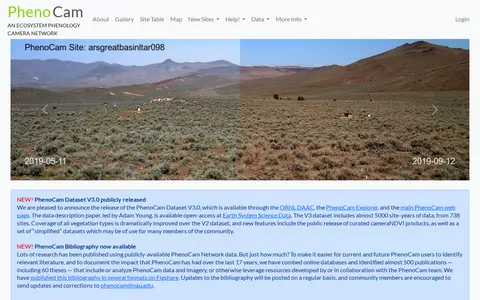
PhenoCam is a cooperative continental-scale phenological observatory that uses imagery from networked digital cameras to track vegetation phenology across ecosystems. Its image archive includes over 60 million pictures, and imagery and data are made publicly available in near-real time. The PhenoCam Dataset V3.0 includes almost 5000 site-years of data from 738 sites.
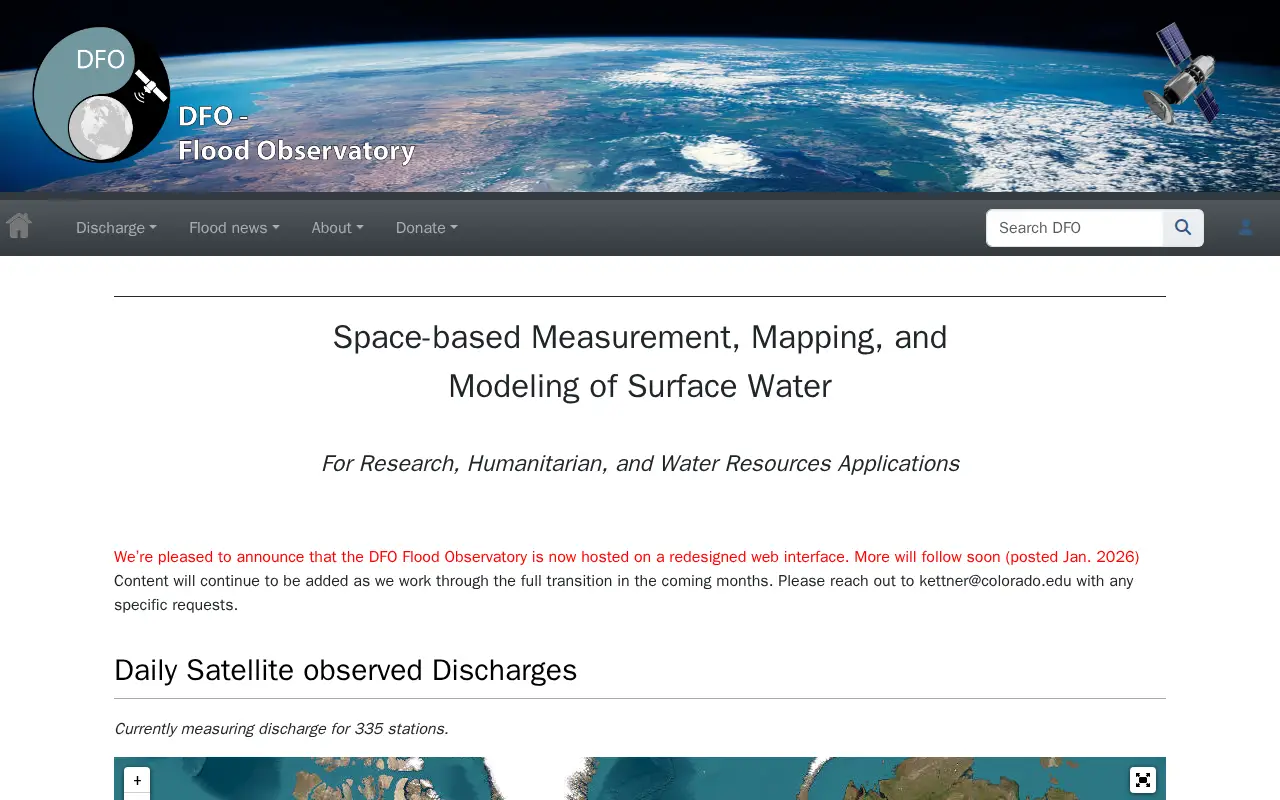
Dartmouth Flood Observatory
Search geography data collections and supporting datasets from USA.
Links
Tags
-
0PhenoCam is a cooperative continental-scale phenological observatory that uses imagery from networked digital cameras to track vegetation phenology across ecosystems. Its image archive includes over 60 million pictures, and imagery and data are made publicly available in near-real time. The PhenoCam Dataset V3.0 includes almost 5000 site-years of data from 738 sites.
-
0The IRI Data Library is a freely accessible online repository and analysis tool for climate-related data. It allows users to view, analyze and download hundreds of terabytes of data through a web browser, access datasets, create analyses with the Ingrid Data Analysis Language, monitor climate conditions in the Maproom, and download data in GIS-compatible formats.
-
0
The Estonian Biocentre Public_Data page offers human DNA sequence and genotype data from recent papers for academic research. It lists complete high coverage human genomes and Y chromosome sequence data generated by Complete Genomics, plus SNP data generated with Illumina genotyping arrays since 2008. Data is in PLINK binary PED format and lifted to Build37.
-
0
Browse research datasets and experimental data related to biology.
-
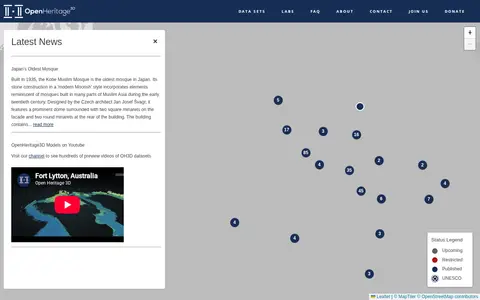
0OpenHeritage 3D is a platform that hosts 3D datasets of heritage sites. It publishes news about heritage locations, provides access to its datasets, and operates a YouTube channel with hundreds of preview videos of its 3D heritage models. The platform also offers labs, an FAQ, contact information, and accepts donations.
-
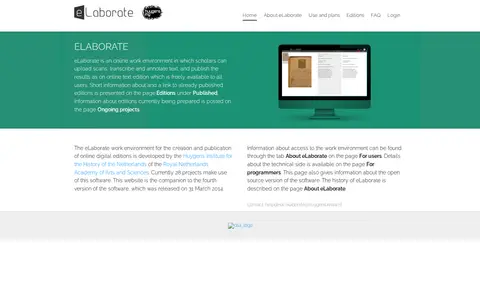
0eLaborate is an online work environment where scholars can upload scans, transcribe and annotate text, and publish results as an online text edition freely available to all users. It was developed by the Huygens Institute and is used by 28 projects. The website accompanies the fourth version, released on 31 March 2014.
Community notes
Reviews and discussion
No reviews yet
Be the first to share how this project worked for you.
Join the discussion
Sign in with a verified account to leave a review or join the discussion.
Sign in to review