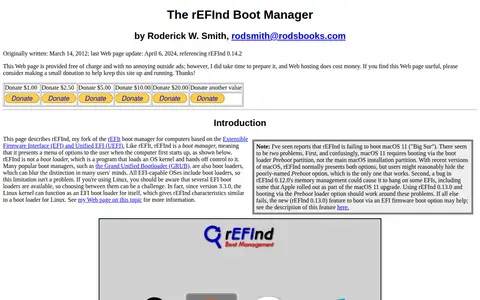
rEFInd is a boot manager for computers based on EFI and UEFI, presenting a menu of boot options at startup. It is a fork of the rEFIT boot manager and expands on its capabilities, including direct launching of Linux kernels and support for Secure Boot. It is not a boot loader.
Directory
Linux & macOS Software
Linux and macOS software covers desktop programs, distributions and documentation for Unix-like systems. Entries include desktop applications, command-line tools, package pages and distributions, along with the guides and video walkthroughs that help people set them up. Check the licence, the last release date, the system versions supported and how the software is installed. Some are official project sites, while others are community wikis or release mirrors that may lag behind. Support depends on your hardware and setup, so confirm compatibility and the current download from the project's own pages before you rely on it.
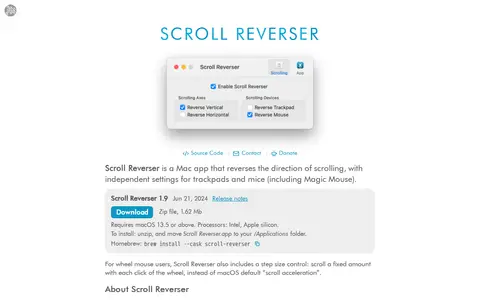
Scroll Reverser is a free, open source Mac app that reverses the direction of scrolling, with independent settings for trackpads and mice. It includes a step size control for wheel mice. Version 1.9 requires macOS 13.5 or above and supports Intel and Apple silicon processors. It is maintained by Nick Moore.
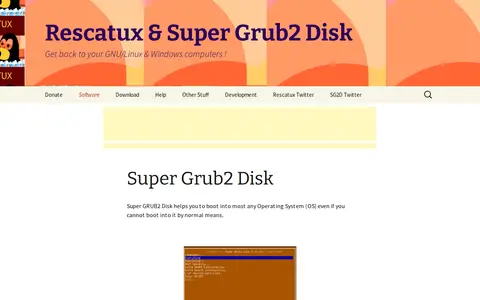
Super Grub2 Disk helps boot into most any operating system even when it cannot be booted by normal means. Its options include detecting operating systems, extracting grub.cfg entries, and enabling GRUB2's LVM, RAID and PATA support.
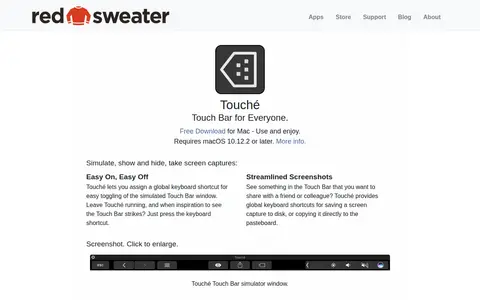
Touché is a Mac app that simulates, shows and hides Apple's Touch Bar interface and takes screen captures. It offers global keyboard shortcuts for toggling the simulated Touch Bar window and for saving or copying screenshots. It requires macOS 10.12.2 or later and is free to download.
Übersicht is a free, open-source macOS app that runs system commands and displays their output on the desktop in widgets. Widgets are written with HTML5, can show data in tables, charts and graphs, and can react to different screen sizes. Widgets use JavaScript and React's JSX.
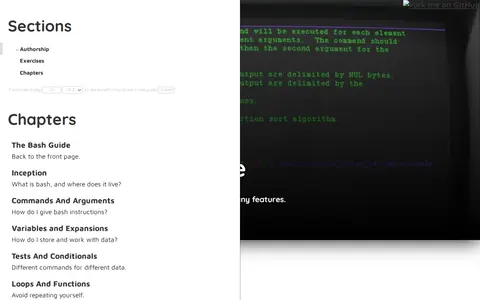
The Bash Guide is an open-source guide introducing basic and advanced concepts of the bash shell. It aims to teach newcomers, advanced users and long-time users to write safe and robust bash scripts and interact efficiently with the shell as a command line interface. The guide is a continuing work in progress, with new chapters written and existing chapters updated.
Is OpenBSD Secure? is a website that hosts the slides from a talk titled 'A systematic evaluation of OpenBSD’s mitigations' presented at the 36c3 conference. The talk examines security mitigations in OpenBSD. The site provides navigation and is licensed under CC-BY-SA.
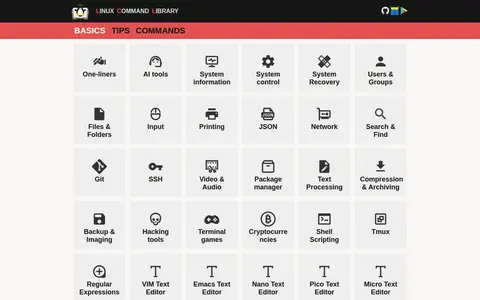
Linux Command Library is a collection of cheat sheets with Linux tips and terminal basics, covering categories such as system control, users, files, package managers, video and audio, hacking tools and terminal games. The site also links to Braincup, an open source brain training project with 41 mini-games, from the same maker.

Discord invite for joining a related community, support server, updates, or project discussion.
GNU Gzip is a data compression program written by Jean-loup Gailly for the GNU project, with Mark Adler writing the decompression part. It was developed as a replacement for compress because of Unisys and IBM patents covering the LZW algorithm. Gzip is free software distributed under the GNU General Public License.
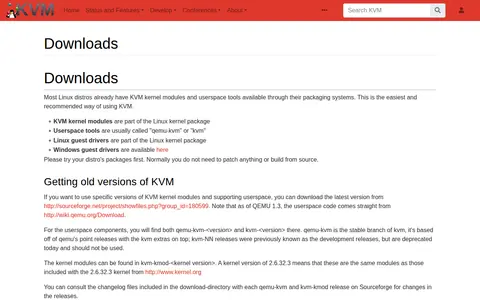
The KVM downloads page explains how to obtain KVM kernel modules and userspace tools, noting that most Linux distributions already provide them through their packaging systems, which the page calls the easiest and recommended way to use KVM. It also describes downloading older versions from Sourceforge, including qemu-kvm and kvm-kmod releases.
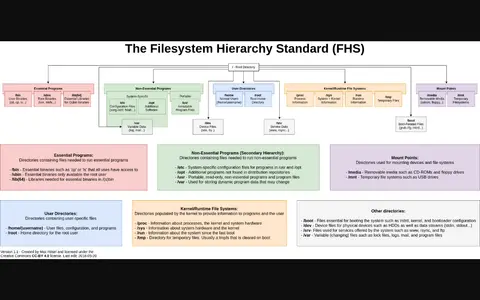
The Filesystem Hierarchy Standard is a Linux or BSD distribution resource for documentation, releases, support, or community help.
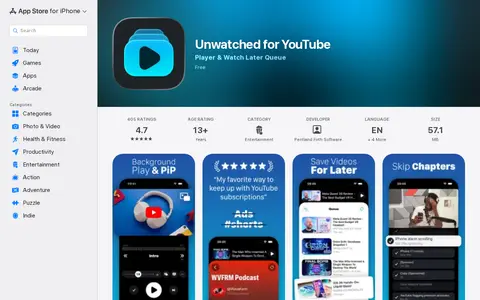
Unwatched is a Linux, macOS, BSD, or Unix resource for tools, documentation, communities, or system workflows.
VMware is a Linux, macOS, BSD, or Unix resource for tools, documentation, communities, or system workflows.
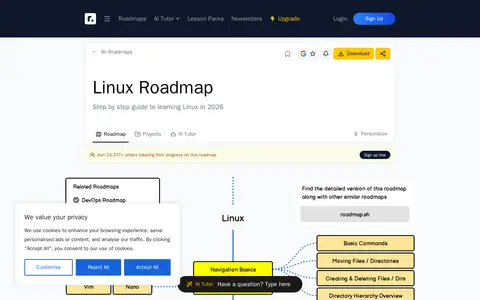
Linux Roadmap is a step-by-step guide to learning Linux in 2026, hosted on the roadmap.sh platform. roadmap.sh provides community-created roadmaps, best practices, projects, articles, resources, and learning journeys to help users select career paths and develop professional skills.
Telegram link is a Telegram channel, group, or bot link for updates, files, community posts, or support.
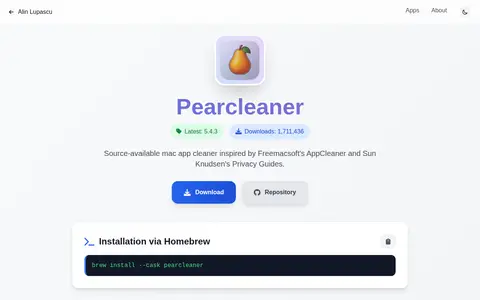
Pearcleaner is a Linux, macOS, BSD, or Unix resource for tools, documentation, communities, or system workflows.
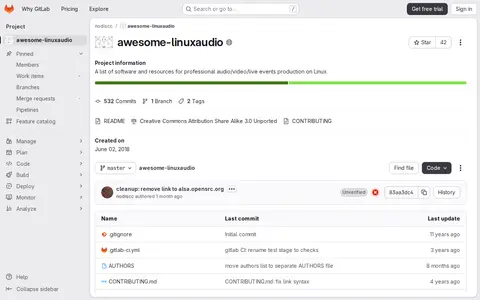
Awesome Linux Audio is a curated list of software and resources for professional audio, video and live events production on Linux. It is maintained by user nodiscc on GitLab, was created on June 2, 2018, and is published under a Creative Commons Attribution Share Alike 3.0 Unported license. The project includes contribution guidelines for the list.
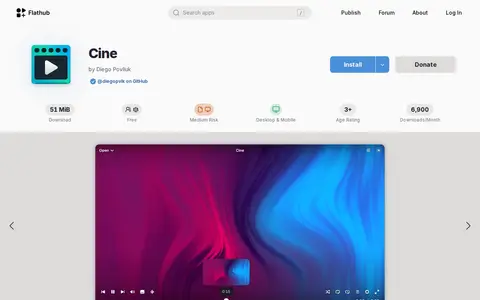
Cine is a Linux, macOS, BSD, or Unix resource for tools, documentation, communities, or system workflows.
Collector is a Linux, macOS, BSD, or Unix resource for tools, documentation, communities, or system workflows.
Extension Guide provides Linux, macOS, BSD, or Unix documentation, tutorials, manuals, and learning guides.
greetd is a minimal and flexible login manager daemon that makes no assumptions about what to launch. It can start anything runnable from a shell in a TTY, and programs that speak a simple JSON-based IPC protocol can act as greeters. The project provides agreety, a simple text-based greeter, and lists third-party greeters for graphical and console sessions.
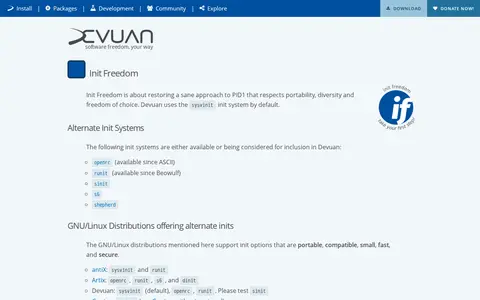
Devuan is a fork of Debian without systemd that uses sysvinit by default. Its Init Freedom page describes restoring a PID1 approach that respects portability, diversity and freedom of choice, and lists alternate init systems and distributions using them. openrc has been available since ASCII and runit since Beowulf; sinit, s6 and shepherd are considered for inclusion.
Kexts is a Linux, macOS, BSD, or Unix resource for tools, documentation, communities, or system workflows.