
huggingface.co
Creates or edits images with generative models and visual controls.
Directory
AI image generation gathers tools and references for turning text into pictures and editing images. You will find text-to-image services, model galleries, prompt libraries, upscalers and editors built on generative models. Some listings are hosted apps you open in a browser, and others are open projects you run on your own machine. Worth checking before you commit: what each tool charges for, whether it keeps your images, and what its terms say about commercial use and training data. Output quality and available features change often, so test a few prompts before you settle on one.
Creates or edits images with generative models and visual controls.

Creates or edits images with generative models and visual controls.

Text To Multiple Images SDXL is a Hugging Face Space created by ruslanmv. It allows users to input text prompts to generate detailed images, with options to add extra details, set iteration counts, and provide a seed for reproducible results. The space is currently paused.

Text-to-Music And Text-to-Image Generator is a Hugging Face Space created by HarshRathi09. It accepts text prompts to generate either musical compositions or images, allowing users to turn ideas into audio or visual content. The space is currently running.

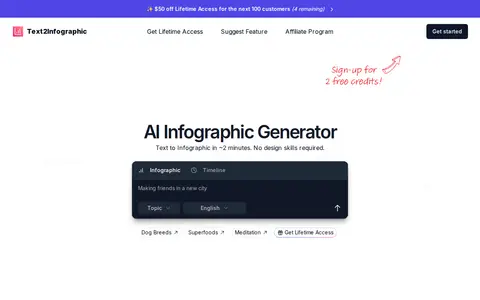
Text2Infographic is an AI infographic generator. It converts user-provided text into visual infographics for uses including blogs and social media. The tool is described as requiring no design skills and producing outputs in approximately 2 minutes.
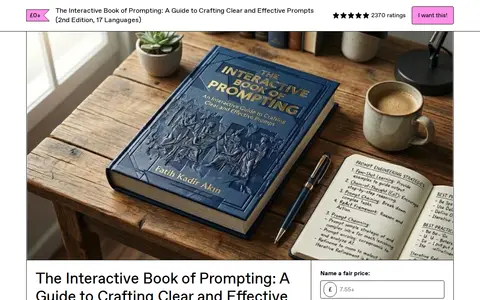
The Art of ChatGPT Prompting: A Guide to Crafting Clear and Effective Prompts creates or edits images with generative AI and text-based controls.
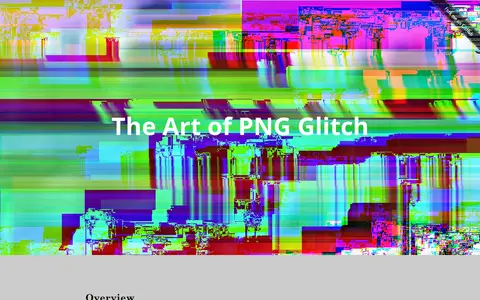
A documentation page about glitching PNG images. It covers the format's checksum system, the transcode process, filters, and other elements that influence the appearance of glitches, noting that PNG's CRC32 checksum makes simple binary edits fail.
The copyright conundrum of AI art is an article from The Verge examining copyright issues related to generative AI. It covers image generation tools including Midjourney, Stable Diffusion, and DALL-E, discusses questions of AI art ownership, and notes that copyright concerns impact generative AI development around training data and output control.
Creates or edits images with generative models and visual controls.

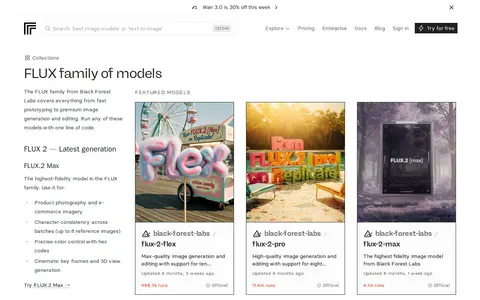
The FLUX.1 family of models on Replicate is a collection of Black Forest Labs' FLUX AI models for image generation and editing. Users can run the models with one line of code, fine-tune them with custom data, and edit images using Flux Fill, Depth, and Canny tools. The collection includes multiple FLUX model variants suited for different use cases.
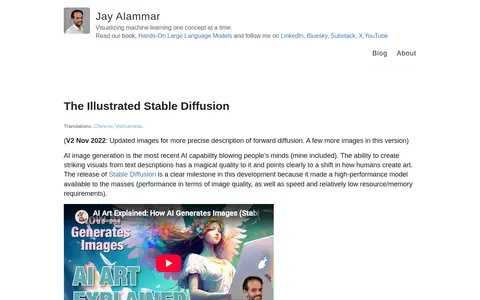
A gentle illustrated introduction by Jay Alammar to how Stable Diffusion works, covering the components of Stable Diffusion, what diffusion is, painting images by removing noise, diffusion on compressed latent data, and the text encoder. It focuses on image generation from text only (text2img) and includes translations into Chinese and Vietnamese.
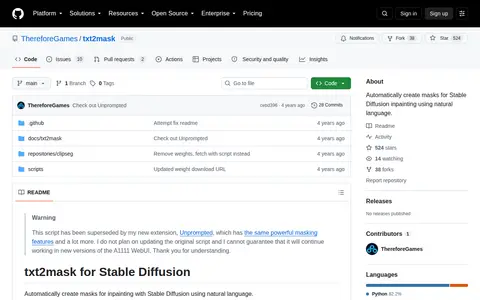
Automatically create masks for Stable Diffusion inpainting using natural language.
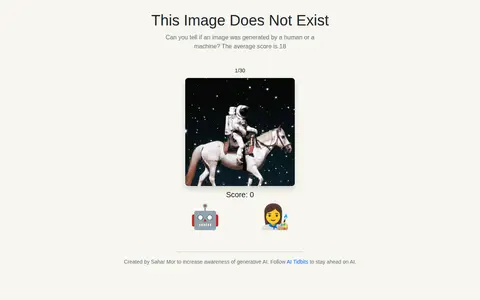
Test your ability to tell if an image is human or computer generated.

this VQGAN+CLIP Animations notebook creates or edits images with generative AI and text-based controls.

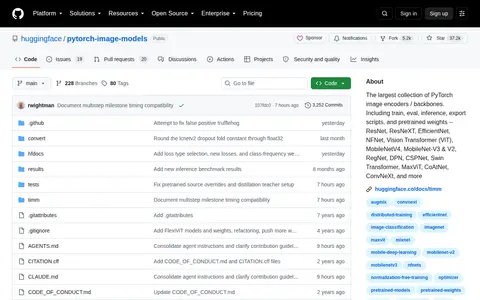
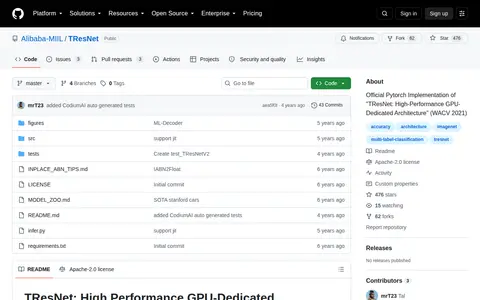
timm is a collection of PyTorch image encoders and backbones, including train, eval, inference and export scripts with pretrained weights. It covers architectures such as ResNet, EfficientNet, Vision Transformer, MobileNet and ConvNeXt.

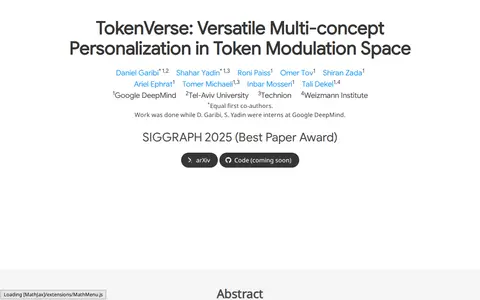
TokenVerse is a method for multi-concept personalization that uses a pre-trained text-to-image diffusion model. It can disentangle complex visual elements and attributes from a single image and combine concepts extracted from multiple images, supporting objects, accessories, materials, pose and lighting. It uses a DiT-based text-to-image model and learns modulation-space directions for each word.
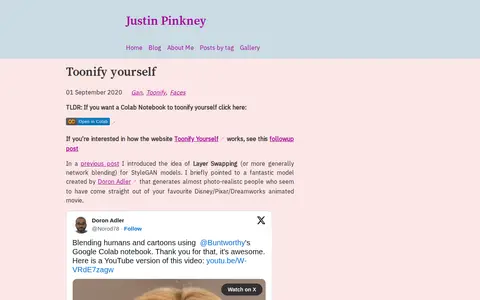
A blog post by Justin Pinkney explaining how to toonify yourself, making a photo-realistic cartoon model using StyleGAN model blending. It describes transfer learning by fine-tuning a faces model on animated film characters, then swapping layers so low resolution layers give a cartoon face structure while high resolution layers keep photo-realistic rendering.

Creates or edits images with generative models and visual controls.

A blog post presenting findings and tips on fine-tuning Stable Diffusion with the Dreambooth technique using Diffusers. It describes experiments with hyperparameters and settings, recommending a low learning rate and progressively more training steps, and notes that faces need more steps and prior preservation.
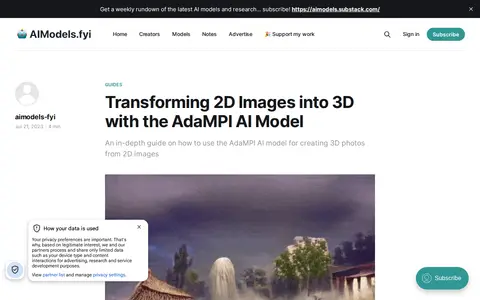
A guide describing the AdaMPI model, which converts single, in-the-wild 2D images into 3D photos. It covers inputs and outputs and a step-by-step usage walkthrough, and notes limitations such as complex scenes with intricate 3D geometry that may not convert perfectly.
Creates or edits images with generative models and visual controls.

Udio is an AI music generator accessible through its official website. The site invites visitors to discover, create and share music with the world, using current technology to produce AI music in seconds.
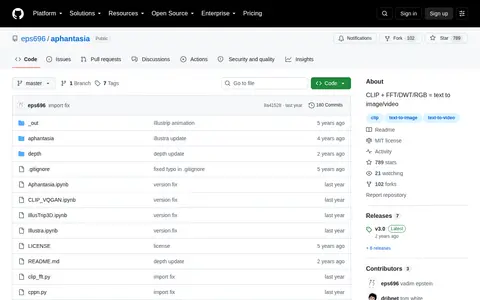
Aphantasia is a collection of text-to-image tools built on the CLIP model and the Lucent library, with FFT/DWT/RGB parameterizers for no-GAN generation. It grew out of the artwork of the same name and offers text-to-image and text-to-video generation.

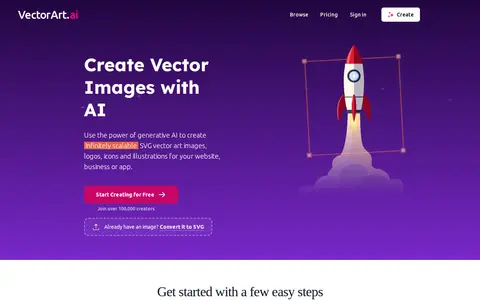
VectorArt.ai is an AI vector art generator that creates SVG images, logos, icons and illustrations from text prompts. Users describe an image, generate it and download it as a scalable SVG file. The site also offers a library of free AI-generated illustration sets and an image-to-SVG conversion option.