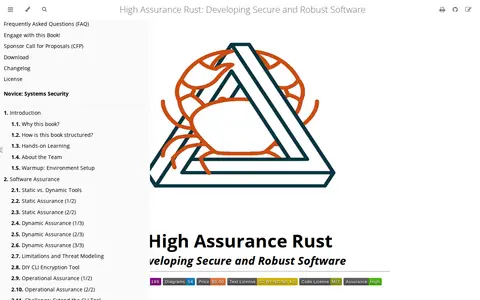

High Assurance Rust is a book about developing secure and robust software. It presents a project-based approach to systems programming and low-level software security, teaching Rust by re-implementing a major dynamic collection from its standard library. It discusses using open-source software assurance tools, including rustc, libFuzzer, rr, qemu, differential fuzzing and deductive verification.

Directory
Search results
Published directory entries matching your search.
r/rustdesk is a Reddit community or thread with discussion, guides, updates, or shared resources.
Rust Clash documents game fixes, settings, compatibility, archives, or technical gaming references.
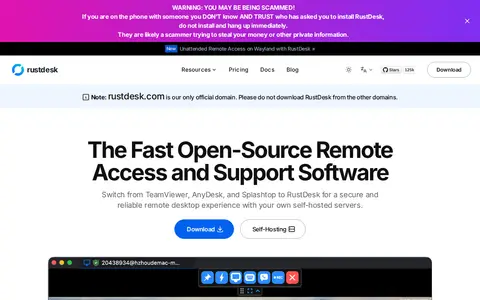
RustDesk is a system utility for Windows, hardware checks, cleanup, process control, or desktop customization.

rustorka is a non-English web resource for regional media, books, tools, communities, or learning.
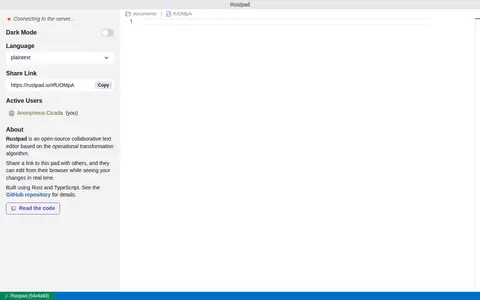
Rustpad helps clean, compare, sort, transform, count, or format text in the browser.
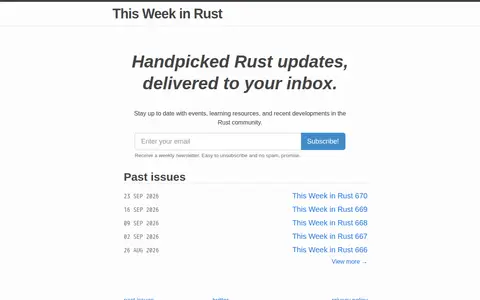
Weekly newsletter covering Rust language updates, crates, articles, jobs, and community news.
Official Rust implementation of Tor with developer documentation and project tracking.
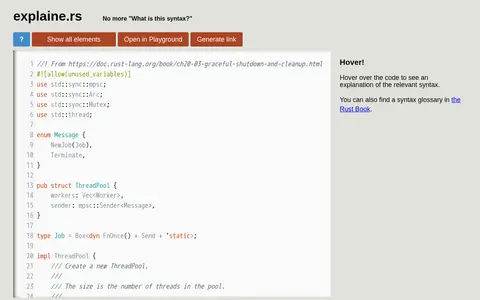
explaine.rs is an interactive playground for exploring the syntax of the Rust programming language. Users write Rust code in an editor, and an analyzer explains keywords, punctuation and other code elements when clicked or tapped. The site states it is a work in progress and requires a WebAssembly-compatible browser.
Louisiana Tech University is a public research university located in Ruston, Louisiana. It is ranked as a top-tier national research university and is the #1 public university in the state. The institution offers more than 135 undergraduate, graduate, and certificate degree programs, and maintains a network of over 117,000 alumni.
Rusticaland provides a free custom Rust client, a launcher, and vanilla, Onegrid and monthly Rust servers that cracked and legit players can join. The project states it has run for over seven years.
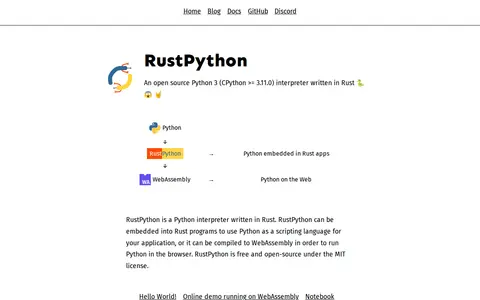
RustPython is an open source Python 3 interpreter written in Rust. It can be embedded into Rust programs as a scripting language or compiled to WebAssembly to run Python in the browser. It is released under the MIT license.
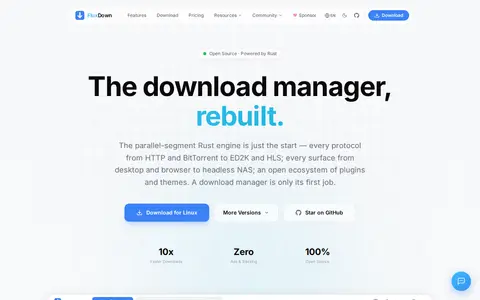
FluxDown is a free and open source download manager with a Rust engine. It is GPU-rendered and supports HTTP, FTP, BitTorrent, eD2K, HLS and DASH in a single queue. Available builds include Windows, macOS, Linux, Docker/NAS, Android and a browser extension.
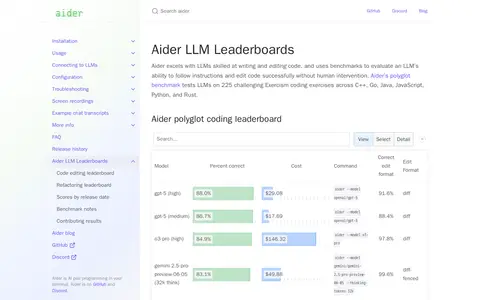
Aider LLM Leaderboards presents quantitative benchmarks of LLM code editing skill. The polyglot benchmark tests LLMs on 225 Exercism coding exercises in C++, Go, Java, JavaScript, Python and Rust, and benchmarks evaluate an LLM's ability to follow instructions and edit code without human intervention.
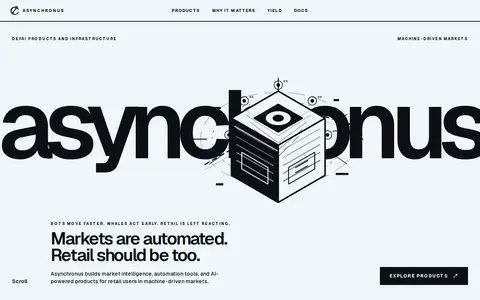
Asynchronus builds market intelligence, automation tools and AI-powered products for retail users in machine-driven markets, including the Terminal market intelligence interface and the Predictions event-driven forecasting product. It describes a DeFAI ecosystem and an open-source Rust strategy framework named Noragami that is coming soon.
Compiler Explorer is an interactive online compiler that shows the assembly output of compiled C++, Rust, Go and other code. It offers configurable compilers and instruction set filters, shareable URLs, local file loading, and optional AI explanations that users can disable with a no-ai directive.
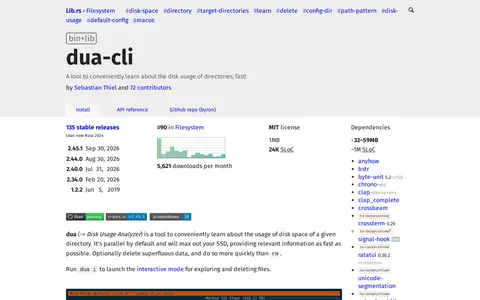
dua (Disk Usage Analyzer) is a Rust tool to conveniently learn about the disk usage of directories. It is parallel by default and optionally deletes superfluous data. An interactive mode is launched with dua i for exploring and deleting files. It is distributed via Cargo and various package managers.
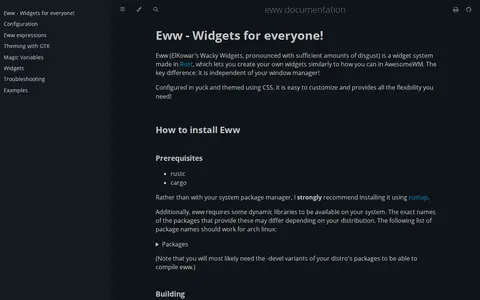
Eww (ElKowar's Wacky Widgets) is a widget system written in Rust that lets users create their own widgets similarly to AwesomeWM. It is independent of the window manager and is configured in yuck and themed using CSS. Building requires rustc, cargo and dynamic libraries such as gtk3 and pango, with separate X11 and Wayland build options.
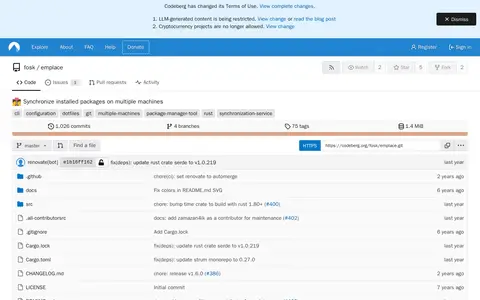
emplace is a command-line tool written in Rust that mirrors installed software across multiple machines, outputting a human-readable RON file to sync. It supports git-based push and pull of updates and works with package managers including Apt, Nix, Pacman, Snap, Homebrew, Cargo, Pip, and npm, on Bash, Zsh, Fish, and Nu shells.
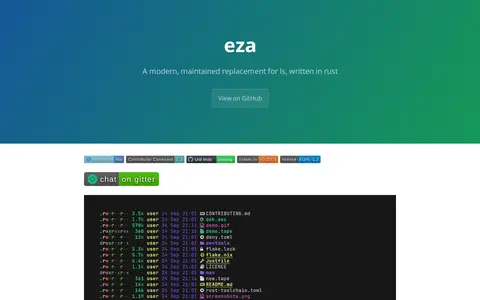
eza is a command-line file listing tool described as a more featureful, user-friendly version of ls. It lists files with colour, icons, Git status and a tree view in one small binary. It offers recursive tree output with depth limits, relative dates, clickable hyperlinks and colours distinguishing file types. It is written in Rust, licensed EUPL-1.2, and packaged for Windows, macOS, Linux and BSDs.
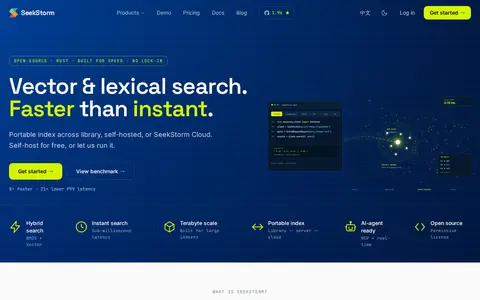
SeekStorm, associated with the name FAROO, is an open-source vector and lexical search engine written in Rust. It is offered as an embeddable library, a self-hosted server, or a managed cloud service. The system provides fast hybrid search with features such as facets, filters, ranking, and typo tolerance. SeekStorm targets use cases including e-commerce, documentation, applications, and AI agent retrieval, positioning itself as a permissive alternative to services like Algolia and Elasticsearch.
Ruffle is an open source Flash Player emulator written in Rust. It targets desktop and the web using WebAssembly and is intended to run Flash content natively on modern operating systems and browsers. The project reports partial ActionScript compatibility, with most AVM 1 content expected to work and AVM 2 support being improved.
A free, continuously evolving downloadable book collecting community knowledge on 2D game development. It does not teach a specific tool, instead offering tips and tricks applied to any engine or built from scratch. Editions are available in pseudocode, Python, C++, JavaScript, Lua and Rust; some versions require thorough revision.

goose is an open source AI agent that runs on the user's machine. It is available as a desktop app for macOS, Linux and Windows, a CLI, and an API built in Rust. The agent is general-purpose, covering code, workflows, research, writing and automation. It connects to 70+ extensions via the Model Context Protocol and works with 15+ LLM providers, including API keys or existing subscriptions.