
Invidious is an open source alternative front-end to YouTube. It offers a privacy-focused interface that does not track users, allows subscribing to channels and creating playlists without a YouTube account, removes ads, supports Sponsorblock, is available in many languages, and provides a documented REST API for developers.
Directory
Search results
Published directory entries matching your search.
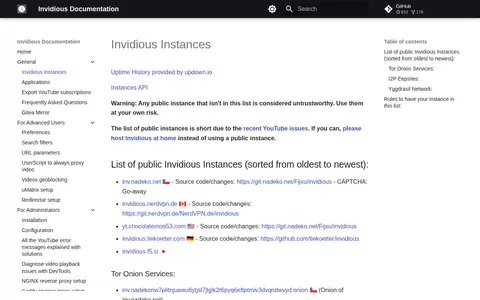
Official Invidious documentation page listing public Invidious instances, sorted from oldest to newest, with addresses for clearnet, Tor onion services, I2P eepsites and the Yggdrasil network. It states that public instances not in the list are considered untrustworthy and lists rules instances must meet to be included.
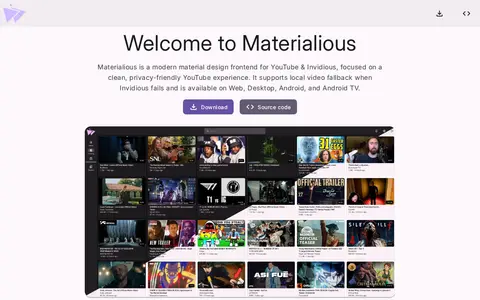
Materialious is a material design frontend for YouTube and Invidious aimed at a clean, privacy-friendly experience. It runs on Web, Windows, Android, Android TV, Docker, macOS and Linux, and supports local video fallback when Invidious fails.
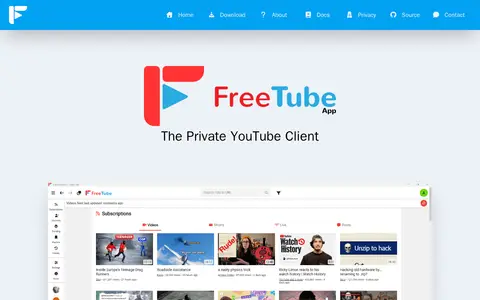
FreeTube is an open-source desktop YouTube client focused on privacy for Windows, Mac and Linux. It stores subscriptions, playlists and history locally, does not track viewing habits, and shows no ads. It scrapes data locally or optionally uses the Invidious API, and subscriptions can be imported from YouTube.
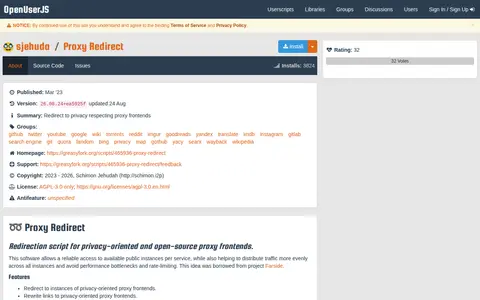
Proxy Redirect is a userscript that redirects to and rewrites links toward privacy-oriented proxy frontends, covering services such as Invidious, Nitter, Redlib, Searx and Wikipedia. The author states it allows reliable access to available public instances per service and helps distribute traffic across instances. It is published on OpenUserJS under AGPL-3.0-only.
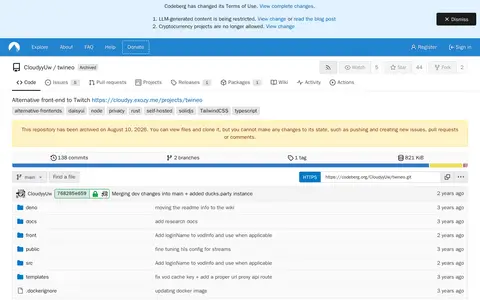
Twineo is a privacy-focused alternative front-end to Twitch, inspired by Invidious and Nitter. It requests media through a server to avoid trackers, aims to load only requested resources, and is open-source. The Codeberg repository was archived on 2026-08-10.