
wikia.schneedc.com
Intro provides conversational AI for questions, tasks, and general assistance.
Directory
Published directory entries matching your search.
Intro provides conversational AI for questions, tasks, and general assistance.
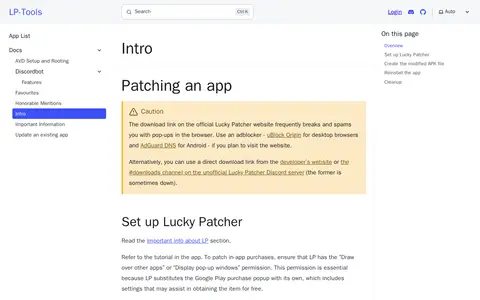
A documentation page explaining how to patch an app with Lucky Patcher. It covers obtaining Lucky Patcher, granting required permissions, creating a modified APK file with multi-patch options, and reinstalling the app. It notes the official download site frequently breaks and suggests adblockers or alternative download sources.

INTRO HD is a site offering free After Effects templates, Premiere Pro templates and video templates, alongside other downloads such as plugins, motion graphics, sound effects and Final Cut Pro and DaVinci Resolve items.
Introduction To Gfwmass is a non-English web resource for regional media, books, tools, communities, or learning.

Lab Safety Guide / Intro is an educational resource for documentaries, courses, books, reference material, or self-learning.
No-Intro catalogs the best available copies of ROMs and digital games, providing DAT files for ROM managers and an online database. The site links to a wiki, forums and community channels.

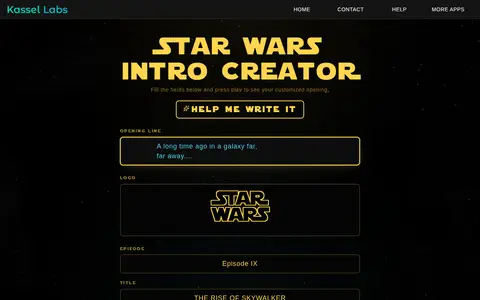
Star Wars Intro Creator is a free tool for creating Star Wars opening crawl sequences. Users can write their own text, preview the crawl playing instantly, share the finished sequence for free, and optionally download it as an HD or Full HD video.

A community-driven database for intro, recap, credits, and preview timestamps for TV shows and movies. Related projects include plugins and addons for Jellyfin, Emby, Kodi, Stremio Enhanced and IINA, an MPV script, a browser extension, an NPM package and a Plex sync tool.
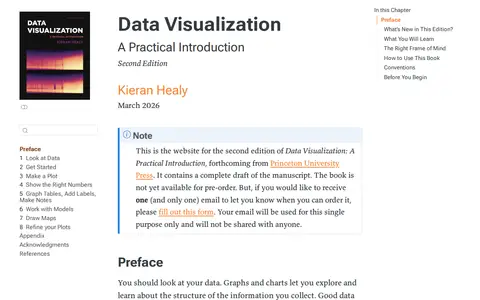
This is the website for the second edition of Data Visualization: A Practical Introduction by Kieran Healy, forthcoming from Princeton University Press. It contains a complete draft of the manuscript, and the book is not yet available for pre-order. According to the preface, the book teaches the ideas and methods of data visualization in a reproducible way.

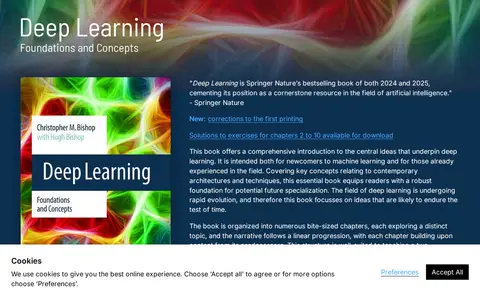
A book offering a comprehensive introduction to central ideas underpinning deep learning, intended for newcomers to machine learning and those already experienced in the field. It covers concepts relating to contemporary architectures and techniques and includes a self-contained introduction to probability theory. Hardback, PDF eBook, and a free-to-use online version are listed as access options.

Technical guide explaining digital video concepts, codecs, formats, and compression basics.

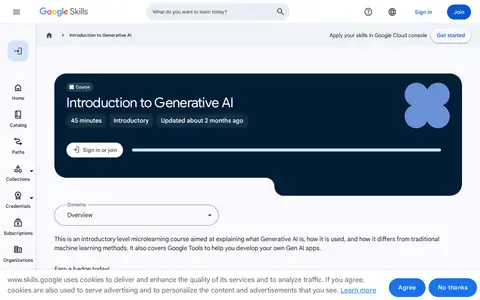
Google Cloud Skills Boost - Introduction to Generative AI provides AI-assisted learning, courses, tutorials, or study support.

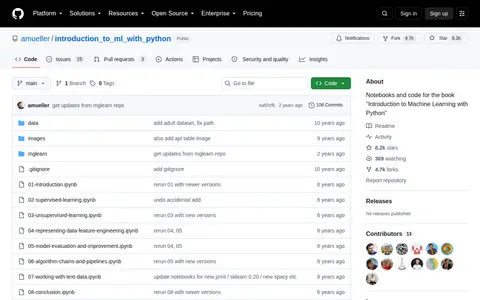
A GitHub repository holding the notebooks and code for the book "Introduction to Machine Learning with Python" by Andreas Mueller and Sarah Guido, together with the mglearn library of helper functions for figures and datasets. The book requires scikit-learn 0.20.0, and the code also needs numpy, scipy, matplotlib, pandas and pillow.
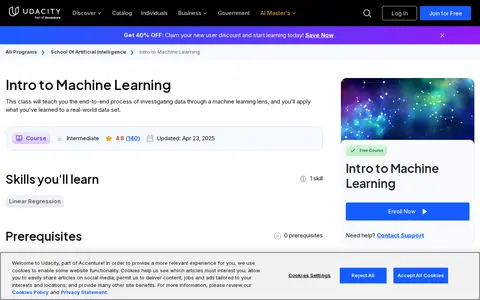
Sebastian Thrun’s Introduction To Machine Learning provides AI-assisted learning, courses, tutorials, or study support.

Greylist Trace describes three intelligence solutions, including GREYLIST GOLD, which it calls its principal asset tracing tool. The listing states that the tool searches a database of worldwide banks and regulated financial services firms to identify banks and branches where a person of interest has a relationship. A special introductory offer for new clients is mentioned.

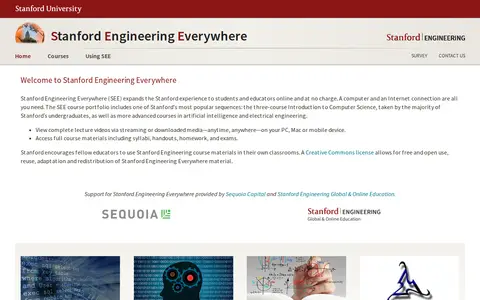
Stanford Engineering Everywhere is an online offering of Stanford engineering courses available to students and educators at no charge. Its course portfolio includes a three-course Introduction to Computer Science sequence and more advanced courses in artificial intelligence and electrical engineering. Lecture videos can be streamed or downloaded, and full course materials include syllabi, handouts, homework and exams.

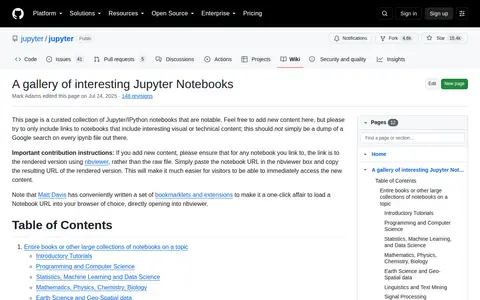
This is a curated gallery of interesting Jupyter Notebooks, organized by topic categories including introductory tutorials, programming and computer science, statistics and machine learning, data science, mathematics, physics, chemistry, biology, earth science, geo-spatial data, linguistics, and text mining.

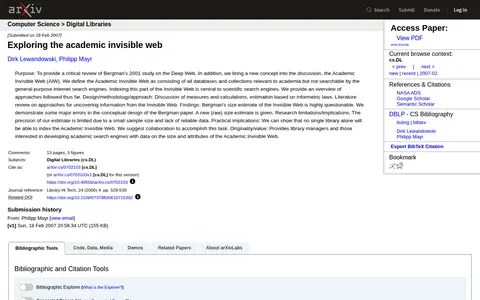
This arXiv paper by Dirk Lewandowski and Philipp Mayr provides a critical review of Bergman's 2001 study on the Deep Web. It introduces the concept of the Academic Invisible Web, defined as databases and collections relevant to academia but not searchable by general-purpose internet search engines, and reviews approaches for indexing it. The authors question Bergman's size estimate and suggest collaboration.

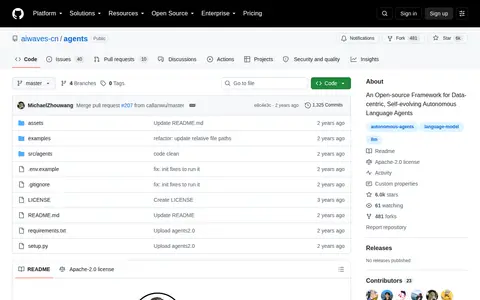
Agents is an open-source framework for data-centric, self-evolving autonomous language agents. It introduces agent symbolic learning, which treats an agent pipeline like a computational graph and uses prompt-based loss, back-propagation and weight updates to train agents. The project also supports optimizing multi-agent systems and was updated to Agents 2.0 with agent learning and evaluation support.
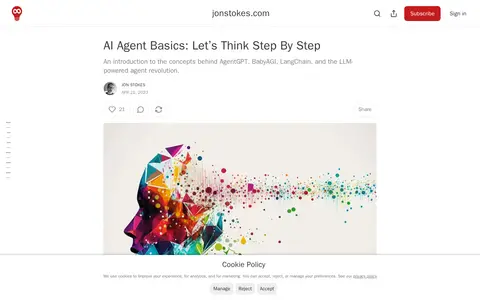
A newsletter post by Jon Stokes introducing the concepts behind AgentGPT, BabyAGI, LangChain and LLM-powered agents. It covers core agent concepts, how LLMs make plans, chain of thought reasoning, action planning, and example prompt-response pairs.

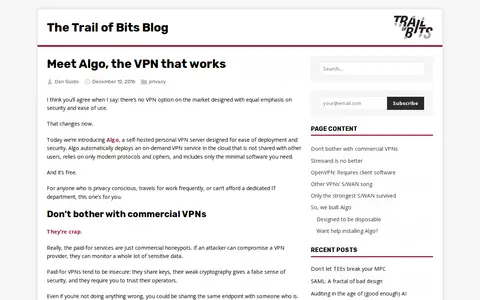
Algo is a self-hosted personal VPN server introduced by Trail of Bits in December 2016. It automatically deploys an on-demand VPN service in the cloud that is not shared with other users, relies on only modern protocols and ciphers, and includes minimal software. The project is described as free.

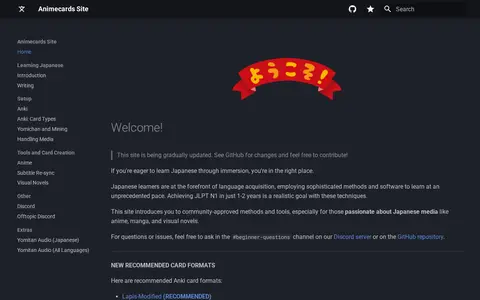
AnimeCards is a site introducing Japanese learning methods and tools, with emphasis on using Japanese media for language immersion. It recommends Anki card formats, including Lapis-Modified. The site is being gradually updated and invites contributions via GitHub.

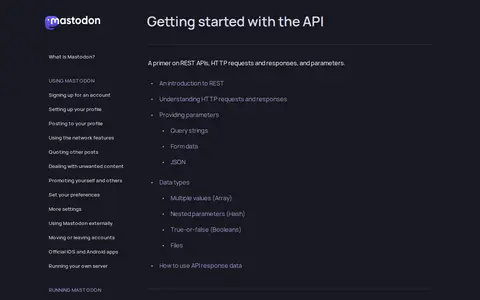
This page introduces the Mastodon REST API, which provides access to Mastodon data over HTTP with JSON payloads. It explains REST concepts, HTTP request and response methods such as GET, POST, PUT, PATCH and DELETE, and how to provide parameters via query strings, form data or JSON, using cURL examples.
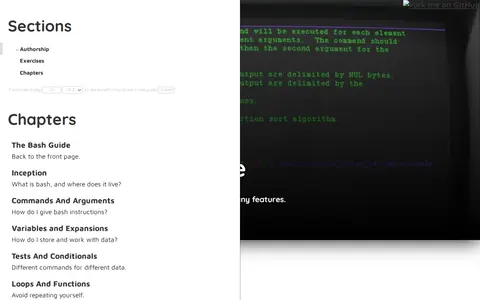
The Bash Guide is an open-source guide introducing basic and advanced concepts of the bash shell. It aims to teach newcomers, advanced users and long-time users to write safe and robust bash scripts and interact efficiently with the shell as a command line interface. The guide is a continuing work in progress, with new chapters written and existing chapters updated.