
github.com
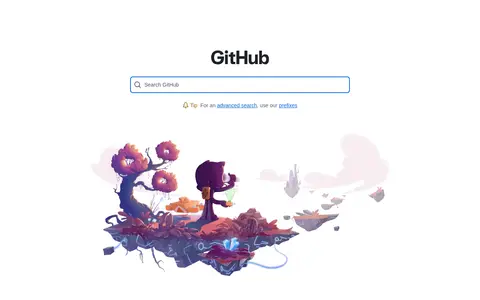
GitHub Code Search is a code search feature on the GitHub software development platform. GitHub is used by more than 150 million people to discover, fork, and contribute to over 420 million software projects.
Directory
Published directory entries matching your search.
GitHub Code Search is a code search feature on the GitHub software development platform. GitHub is used by more than 150 million people to discover, fork, and contribute to over 420 million software projects.

GitHub Code Search is a code search feature on the GitHub platform, a service used by more than 150 million people to discover, fork, and contribute to over 420 million software projects.

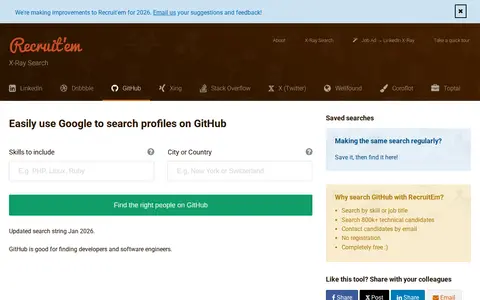
A free search tool for recruiters that uses Google to find developers on GitHub by skill and location. Each search also returns links to developers' personal github.io sites, which often include a CV and contact details. No registration is required, and searches are saved.
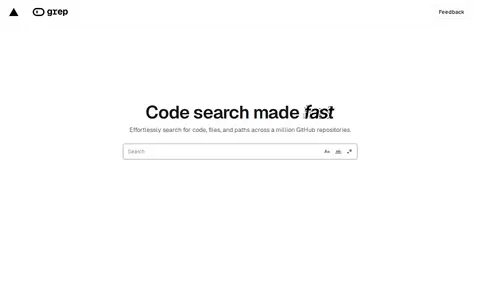
Code search engine for finding strings and patterns across public GitHub repositories.

Search tool for discovering public GitHub repositories, code, users, and project references.
Search index for awesome lists, curated GitHub collections, and developer resources.

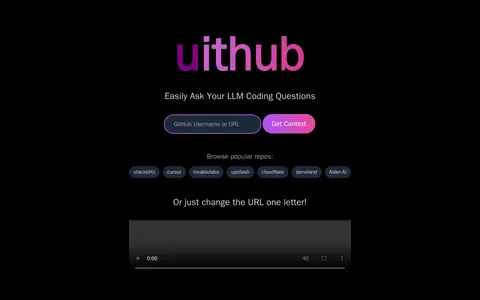
uithub provides GitHub repository context for use with LLMs. Changing one letter in a GitHub URL, from G to U, returns full repository context. The site also offers an API for obtaining LLM context and lists example uses such as code verification, code search and changelog tracking.
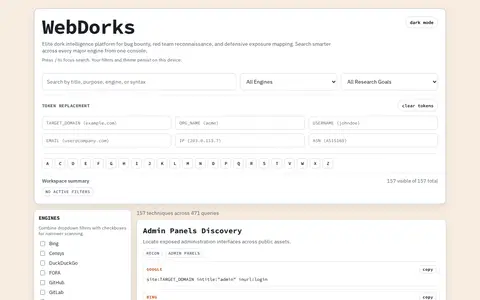
GitHub Dorks helps developers write, search, review, test, or manage code and projects.

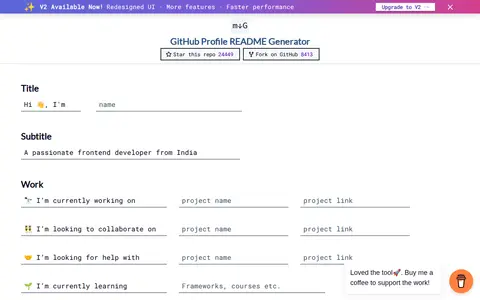
GitHub Profile Readme Generator helps developers write, search, review, test, or manage code and projects.
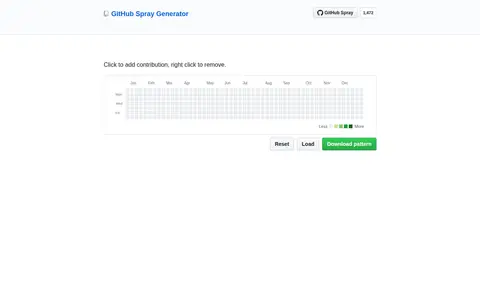
GitHub Spray helps developers write, search, review, test, or manage code and projects.

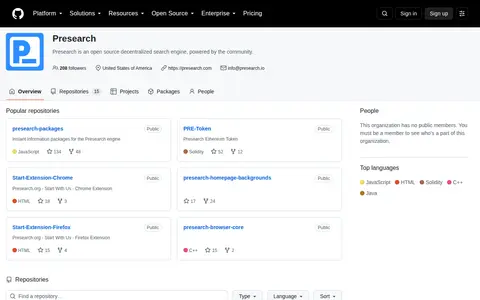
Presearchofficial is the official GitHub repository for Presearch, an open source decentralized search engine powered by its community. The repository hosts the project's source code and associated resources for the search engine platform.

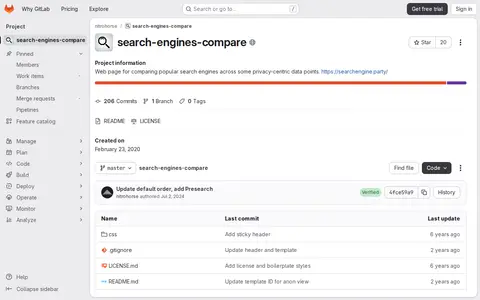
Search Engines Compare is a code project with source, releases, documentation, or setup notes.

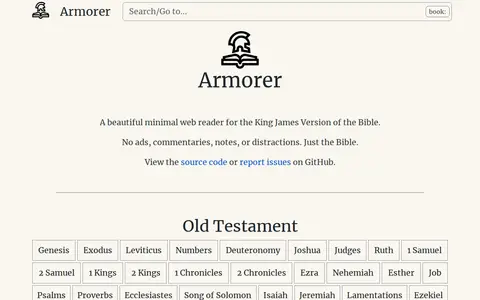
A minimal web reader for the King James Version of the Bible, organized into the Old and New Testaments. It presents the text without ads, commentaries or notes, and its source code is available on GitHub for viewing or reporting issues.

Cipher387 is an open source project with code, documentation, and setup resources for OSINT resources.

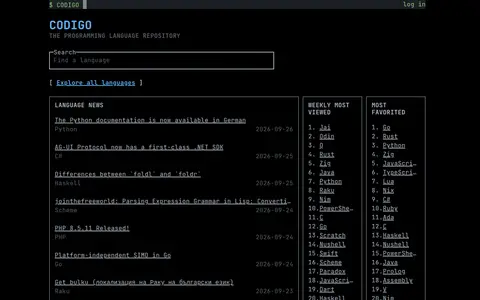
Codigo is a programming language repository for discovering trending languages, following language news, and exploring language details including code examples. It offers search and comparison of languages and lists the PyPL and TIOBE indexes and most GitHub pushes.

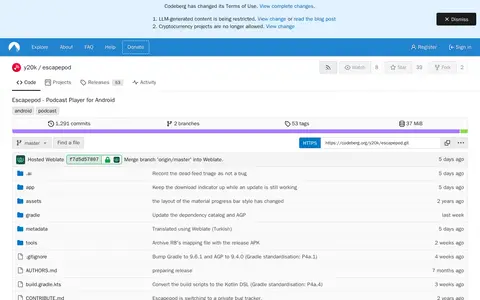
Escapepod is a free, open source podcast player for Android under the MIT license. It uses a minimalistic two-screen approach: a list of podcasts and a list of episodes for one podcast. It lacks podcast discovery, offering only a simple search, and opens RSS podcast links tapped in a web browser. APKs on Codeberg Releases are signed with a listed certificate.

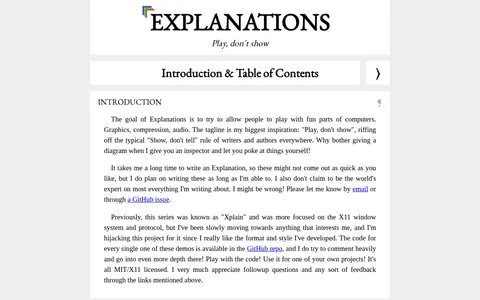
Explanations is a series of articles aiming to let people play with fun parts of computers, such as graphics, compression and audio. Its tagline is "Play, don't show". The series was previously known as Xplain and focused on the X11 window system and protocol. The source code for all demos is available on GitHub under the MIT/X11 license.

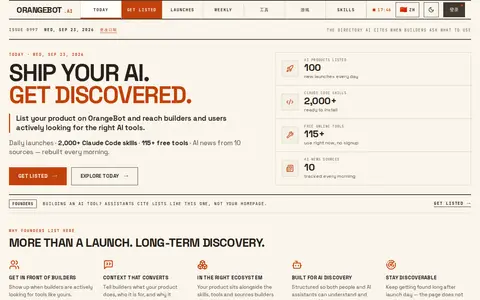
OrangeBot.AI is a curated directory referenced by AI when builders seek tool recommendations. It tracks over 2,000 Claude Code skills, offers free in-browser development tools, and publishes a daily brief covering updates from Hacker News, GitHub Trending, Product Hunt, Hugging Face, Techmeme, and App Store rankings.

The Python Data Science Handbook by Jake VanderPlas is published as a website containing the full text, organized into chapters on IPython, NumPy, Pandas, Matplotlib and machine learning. The text is released under the CC-BY-NC-ND license and the code under the MIT license; the content is available on GitHub as Jupyter notebooks.