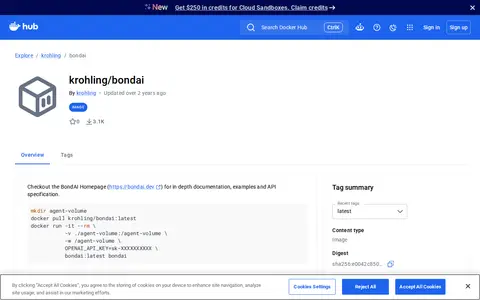

This Docker Hub listing provides the krohling/bondai Docker image for the BondAI agent tool. The 258.4 MB image was last updated almost 3 years ago. Users can run the image via a Docker command that mounts a local volume and configures an OpenAI API key, and can refer to the BondAI homepage for full documentation, examples, and API specifications.
Directory
Search results
Published directory entries matching your search.
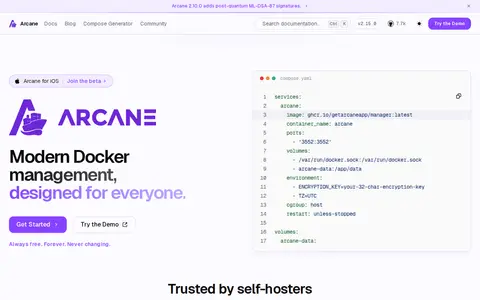
Arcane is a free, open-source Docker management UI covering containers, images, volumes, networks, Compose projects, and remote hosts. It runs as a single container that manages Docker on the same host through the Docker socket and can be installed with Docker Compose or a Linux install script. Documentation also covers agents for managing other Docker hosts.
Docker Hub is a container registry where developers and open source contributors find, use and share container images. It supports building, pushing and pulling images, and offers Docker Official Images, Verified Publisher, Sponsored OSS and Sandbox Kits.
Docker Mailserver is a self-hosted mail server provided as a Docker image, supporting SMTP, IMAP, LDAP, anti-spam, and anti-virus. It uses configuration files instead of an SQL database and includes a setup.sh script for configuration and administration.
Diun is a Docker image update notifier that tracks container images on a registry and reports when a tracked tag or digest changes. It checks images on a schedule and sends notifications through services such as Gotify, Mail, Slack and Telegram. It can discover images from providers including Docker, Containerd, Kubernetes, Swarm, Nomad, Dockerfile and File, and runs as a single binary or official Docker image under the MIT license.
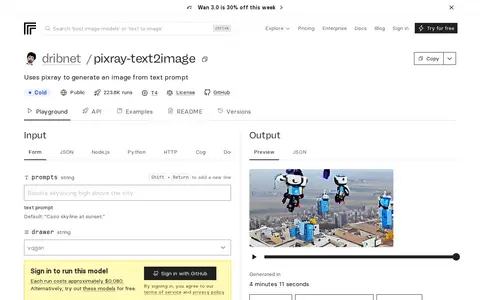
pixray-text2image is a public Replicate model that uses pixray to generate an image from a text prompt. It runs on Nvidia T4 GPU hardware, with predictions typically completing within 6 minutes, and is also open source and runnable on one's own computer with Docker.
LinuxServer.io is a community group that builds and maintains Docker images. Its images share a common base using s6-overlay, and rebuild automatically when upstream applications or dependencies are updated. Setup guides are provided on GitHub and a documentation site, with support through Discord and a Discourse forum.
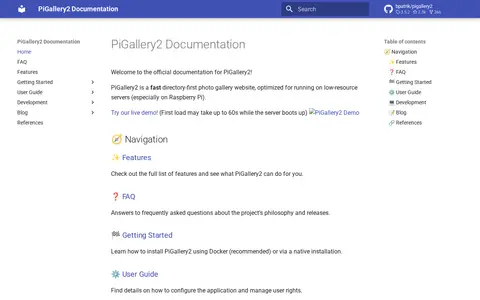
PiGallery2 is a self-hosted directory-first photo gallery website optimized for low-resource servers, especially Raspberry Pi. It offers a photo viewer with an information panel, maps using photo location data, and advanced searching with boolean logic, negation, exact and wildcard matching. Installation is possible via Docker or native setup.
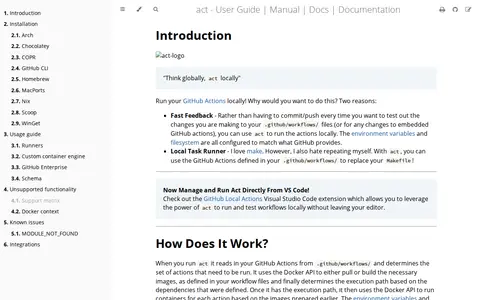
act runs GitHub Actions locally, reading workflows from .github/workflows/ and determining which actions to execute. It uses the Docker API to pull or build the necessary images and run containers for each action, with environment variables and filesystem configured to match GitHub.
Bioconductor is an open source project that develops and shares software for precise and repeatable analysis of biological data. It uses the R statistical programming language and offers software, annotation and experiment packages, with two releases each year. Docker images are provided for every release, and support is offered for use in AnVIL.
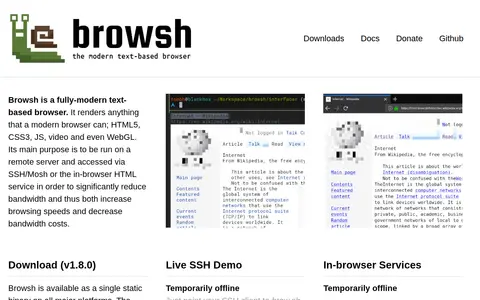
Browsh is a text-based browser that renders modern web content to a TTY terminal, running on a remote server and accessed via SSH/Mosh or an in-browser HTML service to reduce bandwidth. It is available as a single static binary on all major platforms and requires a recent 57+ version of Firefox; a Docker image is also available. The browser client output is not updated in real time nor interactive.
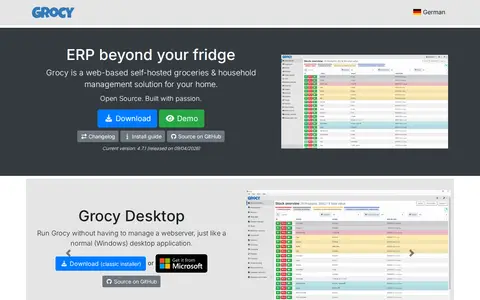
Grocy is a web-based, self-hosted groceries and household management solution for the home, released as open source. It supports barcode-assisted purchase tracking, shopping lists with minimum stock amounts, grouped products by assortments, recipe stock checks, and meal planning. Related tools include a desktop version, Docker image, Home Assistant add-on, and mobile and barcode helper apps.
Krita is a free and open source painting program made by artists, licensed as GNU GPL. It provides multiple brush types and brush engines, layers, drawing assistants, stabilizers, vector and text tools, and 2D animation features through a customizable interface with dockers and dark and light themes.
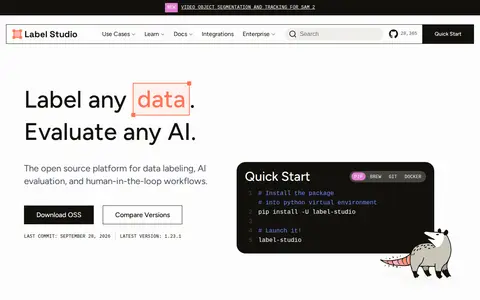
Label Studio is an open source data labeling and annotation platform for multi-modal data, including text, images, audio and time series. It lists uses such as LLM and agent evaluation, computer vision, NLP and document tasks, and audio transcription. It offers API, Python SDK and webhooks, and is available via pip, Homebrew, Git and Docker.
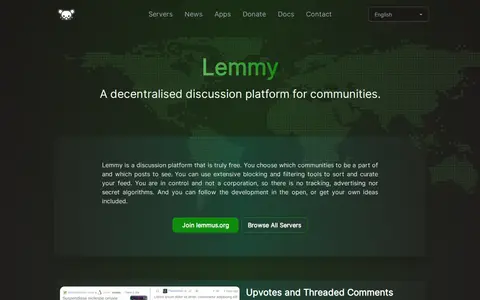
Lemmy is a decentralized discussion platform for communities. Posts can be upvoted or downvoted and support threaded comments. It consists of interconnected servers and can be self-hosted via Docker or Ansible. It offers apps for iOS, Android, desktop and web and is open source.
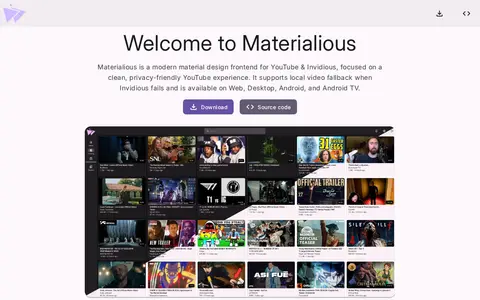
Materialious is a material design frontend for YouTube and Invidious aimed at a clean, privacy-friendly experience. It runs on Web, Windows, Android, Android TV, Docker, macOS and Linux, and supports local video fallback when Invidious fails.
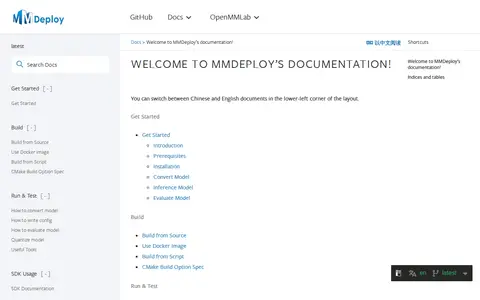
MMDeploy is documented at version 1.3.1 and covers getting started, converting, running, evaluating and quantizing models, building from source or Docker image, and SDK usage. Its backend support pages describe ncnn, ONNX Runtime, OpenVINO, PPLNN, SNPE, TensorRT, TorchScript, RKNN, TVM and Core ML, and its codebase support covers several OpenMMLab projects.
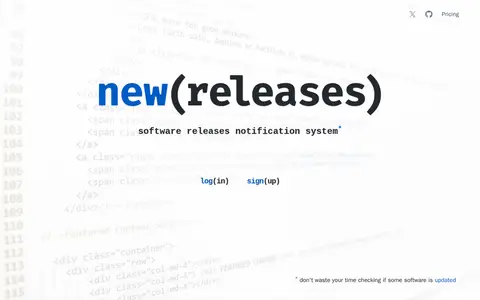
A release tracker for software developers and DevOps that sends notifications when software is updated. It supports many providers including GitHub, GitLab, Codeberg, Gitea, Bitbucket, package registries and Docker image tags, and delivers messages through email, webhooks and instant messengers. The service is free and accepts donations.
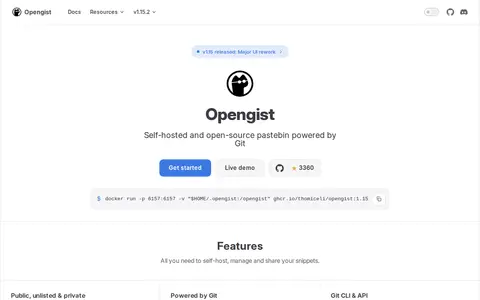
Opengist is an open-source, self-hosted pastebin powered by Git. Snippets are stored in Git repositories and can be managed with standard Git commands or a web interface. It supports public, unlisted, and private snippets, multiple files per snippet, revisions and diffs, syntax highlighting, and login through OAuth2 providers, LDAP, and passkeys. It is written in Go and can run as a single binary, Docker image, or Kubernetes deployment, backed by SQLite, PostgreSQL, or MySQL.

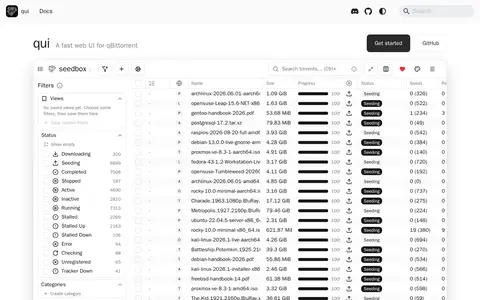
qui is a web UI for qBittorrent. It manages one or many qBittorrent instances from a single page, with cross-seed, rule-based automations, scheduled backups with restore, orphan scanning and a reverse proxy endpoint. It runs as a single binary or Docker image on Linux, macOS and Windows, using SQLite by default or Postgres. It is free and open source under GPL-2.0-or-later.
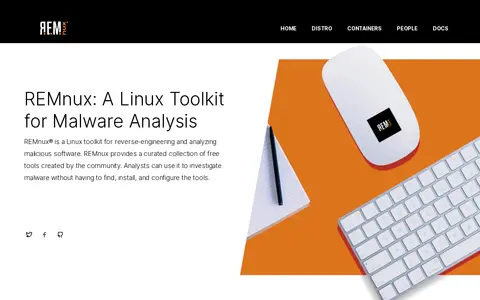
REMnux is a Linux toolkit for reverse-engineering and analyzing malicious software. It provides a curated collection of free community-created tools for hands-on malware investigation, distributed as a virtual machine, a from-scratch install on a dedicated host or compatible Ubuntu system, and Docker images of popular analysis tools.
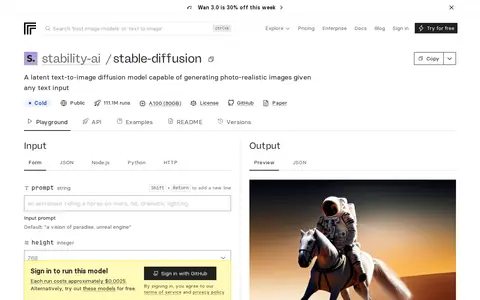
Stable Diffusion is a latent text-to-image diffusion model that generates photo-realistic images from text prompts, with support for versions 1.5 and 2.1. It is available to use via API on Replicate and can be run locally using Docker.