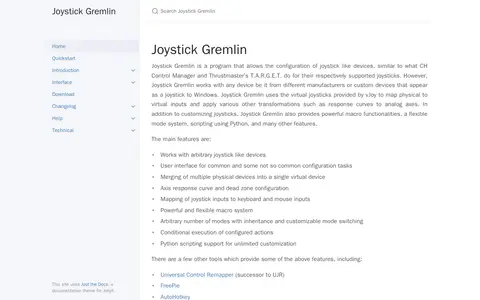
Joystick Gremlin is a program for configuring joystick-like devices from any manufacturer or custom devices recognized by Windows. It uses vJoy virtual joysticks to map physical inputs to virtual ones and applies transformations such as response curves to analog axes. It also offers macros, a mode system and Python scripting.
Directory
Search results
Published directory entries matching your search.
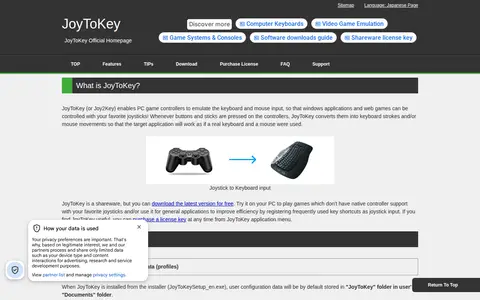
JoyToKey is a shareware utility that lets PC game controllers emulate keyboard and mouse input, so Windows applications and web games can be controlled with joysticks. Users can create profiles and assign keyboard or mouse actions to joystick buttons. It is available as a free download, with a license key available for purchase.
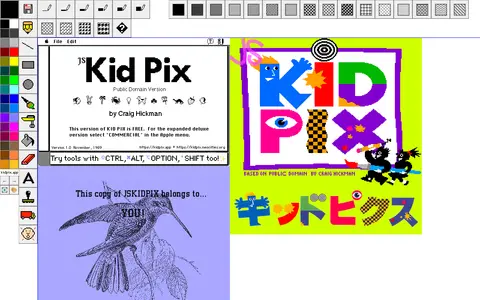
JS Kid Pix helps discover apps, SaaS products, no-signup tools, clones, or software alternatives.
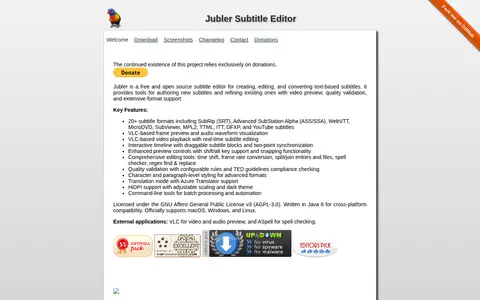
Edit subtitles with an open source desktop application.
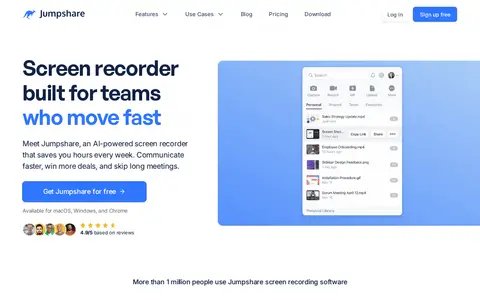
JumpShare is an AI-powered screen recording and sharing application for macOS and Windows. It supports screen, webcam, or combined recording with audio, includes video editing tools, and allows users to share recorded content. Additional features include screenshot and GIF capture, video analytics, and custom video player branding.

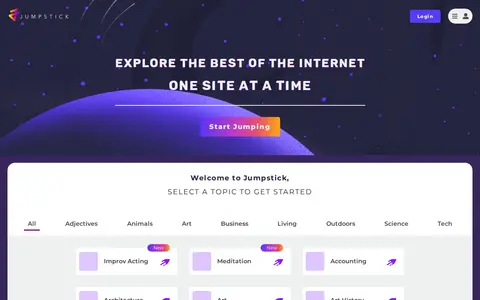
Jumpstick is a guide for discovering interesting websites through curated topic collections. Users select a topic and click a jump button to explore sites, and a Chrome extension is offered.

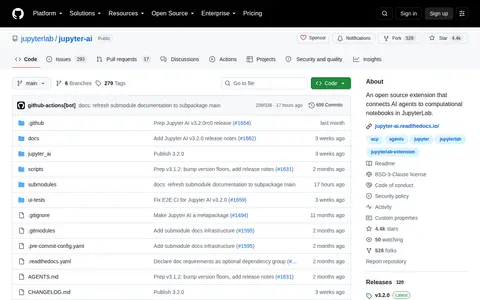
Jupyter AI is an open source extension that connects AI agents to computational notebooks in JupyterLab. It provides a native chat UI and integrates agents through the Agent Client Protocol, with a permission system requiring approval before files are written or commands executed. It is under incubation in the JupyterLab organization.
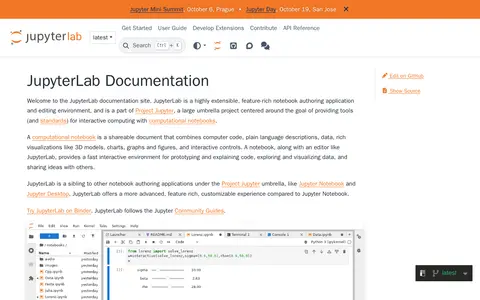
JupyterLab is an extensible notebook authoring application and editing environment within Project Jupyter. A notebook combines code, text descriptions, data and visualizations. JupyterLab provides an environment for prototyping and explaining code, exploring and visualizing data, and sharing ideas. It is a sibling to Jupyter Notebook and Jupyter Desktop and is described as offering a more advanced, customizable experience than Jupyter Notebook.
JustSketchMe is a browser-based character posing tool for artists, using 3D models, props, lighting and a pose library to build pose references. It also offers exporting screenshots and 3D models. Apps are listed for iOS, Android, Mac and Windows. The project is free, with a Pro tier available via subscription.
Supports software work with AI-assisted coding, testing or application development.
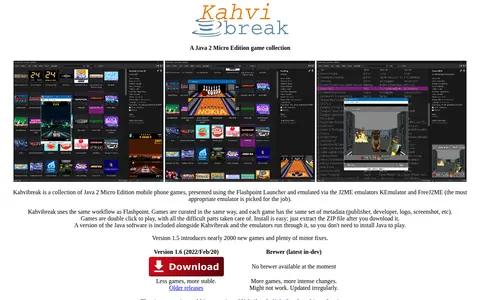
Kahvibreak is a collection of Java 2 Micro Edition mobile phone games presented through the Flashpoint Launcher and emulated with the J2ME emulators KEmulator and FreeJ2ME. The project states the most appropriate emulator is picked for each game, and a version of Java is included so users do not need to install it.
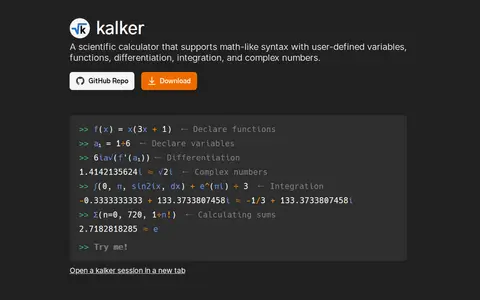
Kalker is a scientific calculator application that supports user-defined variables and functions, ambiguous input syntax, differentiation, integration and complex number calculations. It runs natively on Windows, macOS, Linux and Android, and operates in web browsers via WebAssembly. The tool uses math-like syntax for input and supports sum calculations alongside standard and advanced mathematical operations.
Kanazawa Medical University maintains a news page listing institutional announcements and research items. Entries include a call for applications for a full-time English faculty position, appointments of faculty to editorial roles, and published research on ventricular arrhythmias and mouse zygote development. A brochure is available for download.
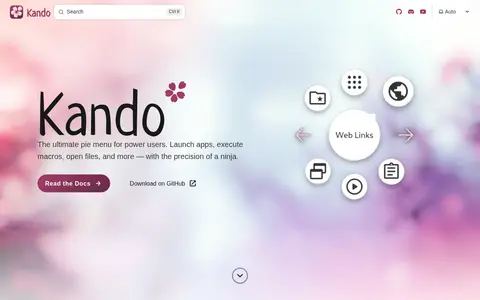
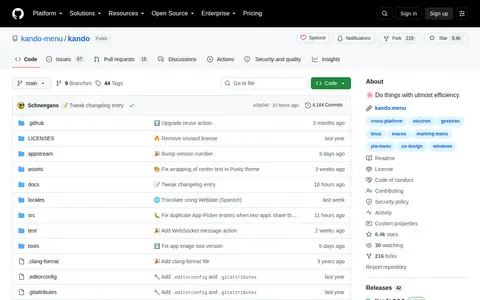
Kando is an open source, cross-platform pie menu for launching applications, executing keyboard macros and opening files. It is designed for mouse, stylus, touch or controller input, and supports Windows, macOS and Linux. Menus can be bound to shortcuts and nested into submenus, and it is described as completely free.
Kando is a cross-platform pie menu for the desktop, described as an alternative way of interacting with a computer. It can be used to launch applications, simulate keyboard shortcuts and open files. It is designed for mouse, stylus, touch or controller input and can also be controlled with a keyboard. It runs on Windows, macOS and Linux, and an example menu opens with Ctrl+Space on most platforms.
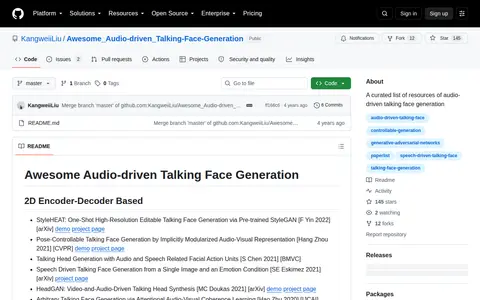
A curated GitHub list of resources on audio-driven talking face generation. It organizes research papers and projects, including encoder-decoder and StyleGAN-based methods, pose-controllable and lip-sync work, and 3D model-based approaches.
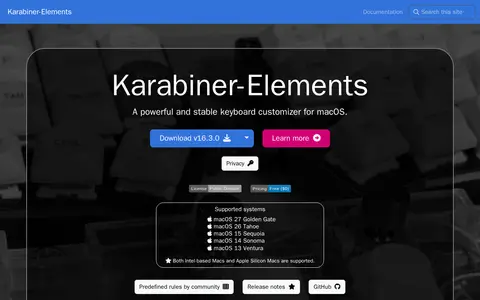
Karabiner-Elements is a keyboard customizer for macOS. It offers simple key mappings configured from a GUI, predefined rules that can be imported from the Internet, and support for writing custom rules. Both Intel-based Macs and Apple Silicon Macs are supported.
Self-hosted app for saving bookmarks, notes, and web resources in a personal knowledge library.
Karakoram International University is a university in Gilgit-Baltistan with a main campus and Hunza, Ghizer and Diamer campuses. Its site offers admissions, an academic calendar, scholarships, a library, a business incubation centre and annual reports. BS Fall Admissions 2026 applications were open with a September 10, 2026 deadline; a second merit list was posted.
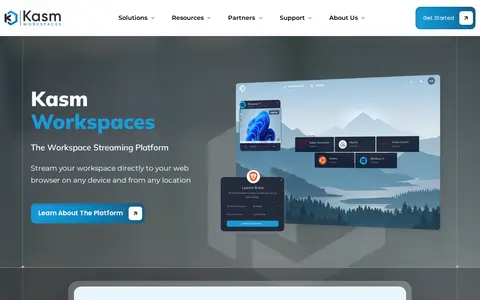
Kasm Workspaces is a platform that streams applications, desktops and web resources to a web browser. It covers remote browser isolation, Desktop as a Service and OSINT workloads. Editions include Community, Starter and Enterprise.
Watch-party and screen-sharing app for streaming videos together with friends or groups.
Katz DDL is a software download or discovery resource for apps, installers, releases, or tools.
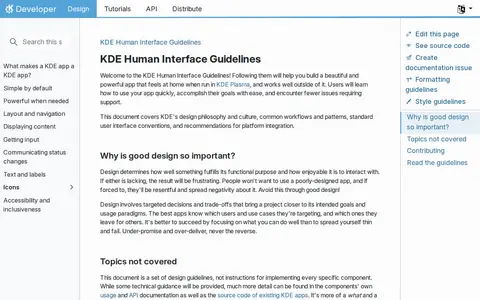
The KDE Human Interface Guidelines are a document covering KDE's design philosophy and culture, common workflows and patterns, standard user interface conventions, and recommendations for platform integration. It aims to help developers build applications that feel at home in KDE Plasma and work well outside of it. The guidelines are described as a living document that welcomes contributions and as design guidance rather than implementation instructions.