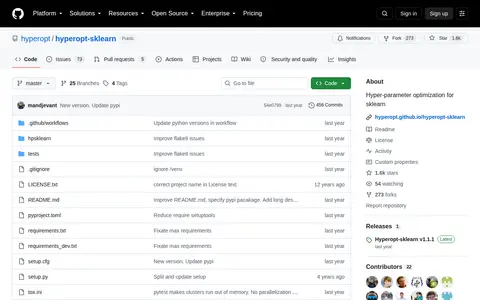

hyperopt (hyperopt-sklearn) is an open-source project that provides hyper-parameter optimization functionality for the scikit-learn (sklearn) machine learning library. It is hosted as a public repository on GitHub for collaborative development.
Directory
Search results
Published directory entries matching your search.
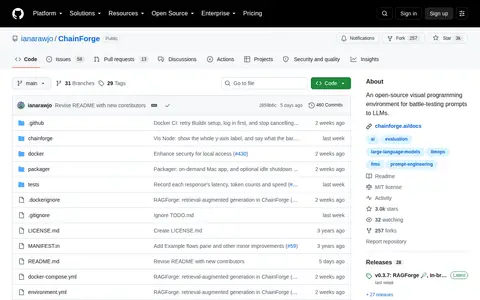
ChainForge is an open-source visual programming environment for battle-testing prompts to large language models. It supports querying multiple models at once, comparing response quality across prompts, models and model settings, and setting evaluation metrics to visualize results. Built on ReactFlow and Flask, it can be installed locally with pip or tried on the web, where features are limited.
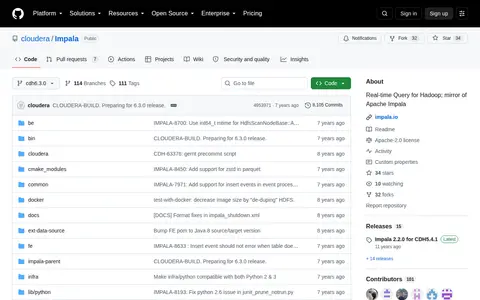
Impala is a distributed C++ query engine for SQL queries over petabytes of data stored in Apache Hadoop clusters. It supports data in HDFS, Apache HBase and Amazon S3, window functions and subqueries, and uses LLVM for on-the-fly code generation. It is Apache-licensed and open source, and the repository is a mirror of Apache Impala.
Interview Solver is a technical interview preparation platform and AI copilot for software engineering candidates. Its native desktop application for macOS and Windows provides real-time, screen-sharing-invisible assistance during live coding interviews, including LeetCode-style problem solutions, system design diagrams, voice transcription, and answers tailored to a user's resume or job description.
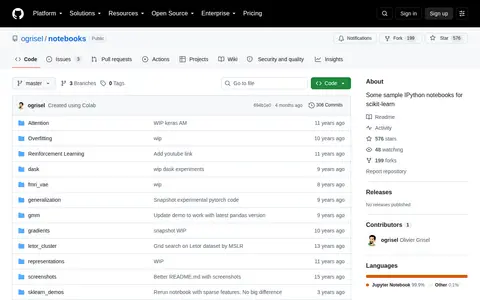
The ipython-notebooks repository, hosted on GitHub under the user ogrisel, contains sample IPython notebooks for use with the scikit-learn machine learning library. It is an open-source project that accepts contributions from GitHub users.
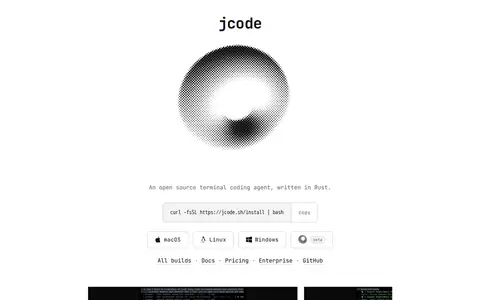
jcode is an open-source terminal coding agent written in Rust. It supports agent swarms, background tasks, and a small RAM footprint, and is installed with one command on macOS, Linux, or Windows. Login flows connect subscription and API model providers, and the agent itself is free while hosted inference plans are available.
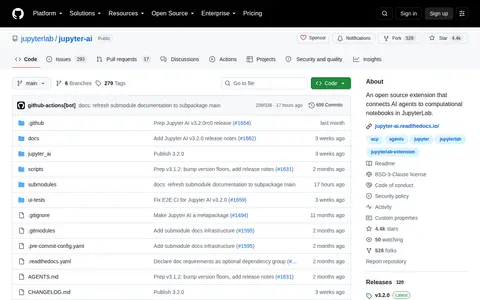
Jupyter AI is an open source extension that connects AI agents to computational notebooks in JupyterLab. It provides a native chat UI and integrates agents through the Agent Client Protocol, with a permission system requiring approval before files are written or commands executed. It is under incubation in the JupyterLab organization.
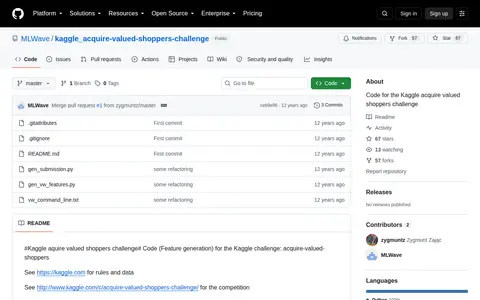
A GitHub repository holding code for the Kaggle acquire valued shoppers challenge, including feature generation scripts. The README points to Kaggle for rules and data and to a competition page and MLWave site for tutorials and discussion.
Supports software work with AI-assisted coding, testing or application development.

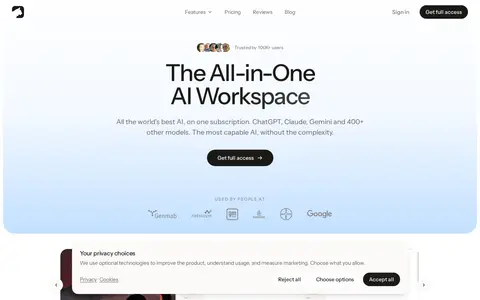
ChatGPT, Claude, Gemini and 350+ AI models in one all-in-one AI workspace. Images, video, audio, code — one subscription, no juggling.
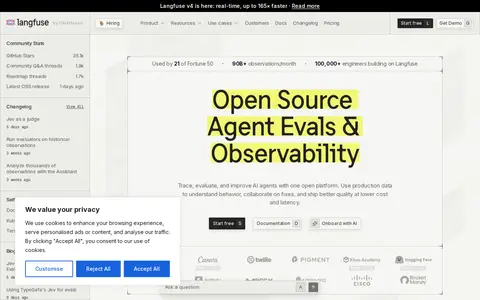
Langfuse is an open source platform for tracing, evaluating and improving AI agents. It connects tracing, monitoring, datasets, experiments and evaluation in one continuous loop, capturing every LLM call, tool invocation and retrieval step. The platform includes prompt management, a playground, experiments and human annotation, and works with any language or framework supporting OpenTelemetry instrumentation.
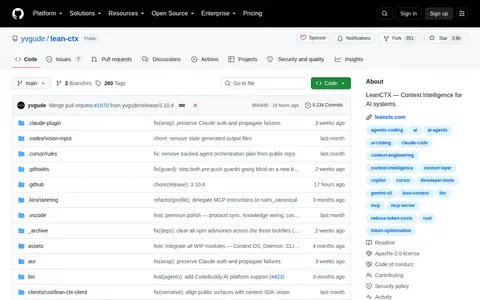
LeanCTX is an open-source context gateway that sits between AI tools and the information they read. It selects task-relevant context, applies supported access and content controls, and records observable context operations and evidence. The engine can run locally through CLI, MCP, hooks and proxy paths, and an SDK embeds supported engine capabilities in applications.
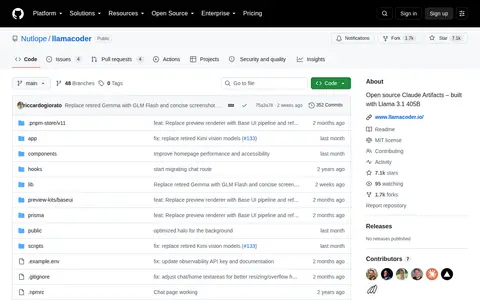
Llama Coder is an open source Claude Artifacts alternative that generates small apps with one prompt, powered by Llama 3 on Together.ai. It uses Llama 3.1 405B from Meta for the LLM and an in-browser preview renderer.
LlamaIndex is a platform focused on AI agents for document optical character recognition (OCR) and workflow automation. Its LlamaParse tool is designed to process complex documents including those with tables, charts and images, and can perform parsing, extraction, splitting, classification and indexing of document content.

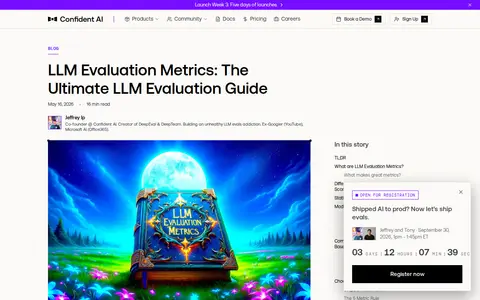
This is a blog post from Confident AI that serves as a guide to LLM evaluation metrics. It covers retrieval-augmented generation (RAG) metrics such as faithfulness and answer relevancy, agent metrics, LLM-as-a-judge approaches, and includes working DeepEval code examples.
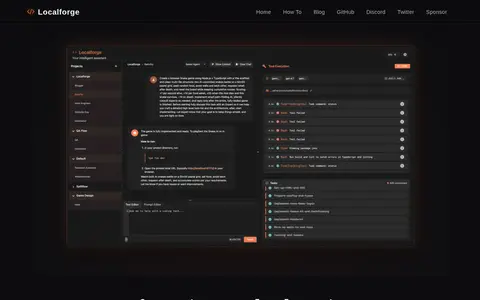
Localforge is a free, open-source desktop GUI for Codex AI, Claude and other LLMs. It runs locally and lets autonomous agent loops edit files, run tests and work on large multi-file codebase tasks. It supports swapping providers and storing prompt templates, and is distributed under the MIT license.
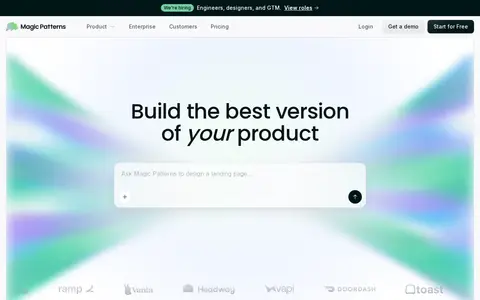
Magic Patterns is an AI design tool for product teams that turns prompts into production-ready UI. It can use existing components and design rules to generate prototypes, and offers an infinite canvas with collaboration. A changelog describes PDF uploads and export options.
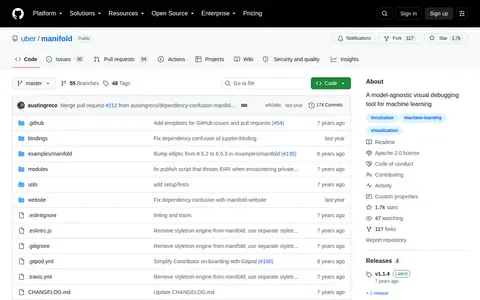
A model-agnostic visual debugging tool for machine learning.
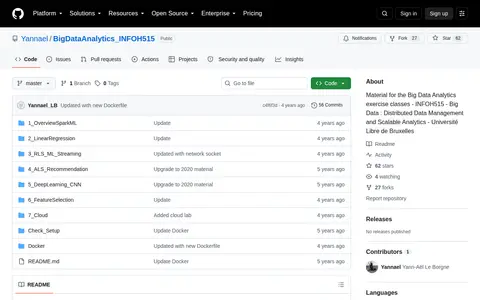
A repository of material for the exercise classes of a Big Data Analytics master course. Hands-on sessions cover Spark and its machine learning library, Map/Reduce implementations of linear regression and alternating least squares, streaming analytics with Recursive Least Squares, and image classification with convolutional neural networks. Material is provided as Jupyter notebooks.
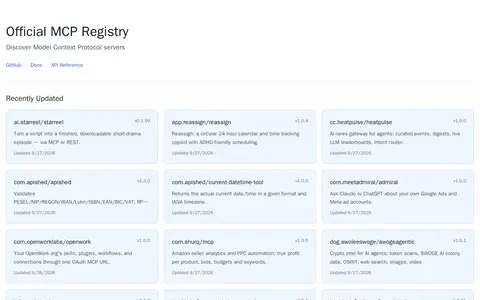
A registry for discovering Model Context Protocol servers, with links to GitHub and API reference documentation. The site lists recently updated servers and provides a base URL for API access.
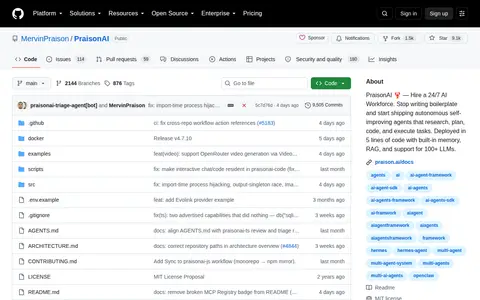
PraisonAI is an open-source project hosted on GitHub under the MervinPraison/PraisonAI repository. It enables the deployment of autonomous, self-improving AI agents capable of researching, planning, coding, and executing tasks. The tool includes built-in memory and retrieval-augmented generation (RAG) capabilities, supports over 100 large language models, and can be deployed with 5 lines of code.
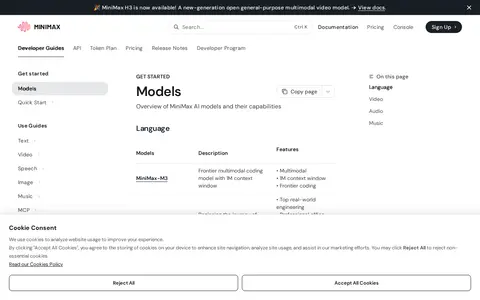
Documentation for MiniMax, covering setup, features, and practical usage.
Overview of MiniMax AI models and their capabilities.