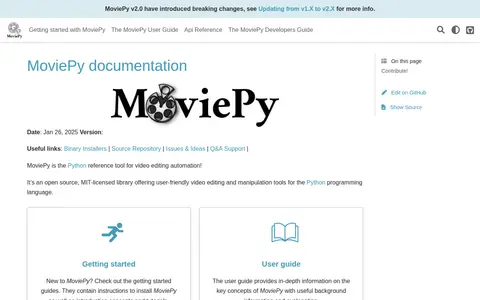
MoviePy is an open source, MIT-licensed Python library offering video editing and manipulation tools. The documentation describes it as a reference tool for video editing automation and states that it works on Windows, Mac, and Linux.
Directory
Search results
Published directory entries matching your search.

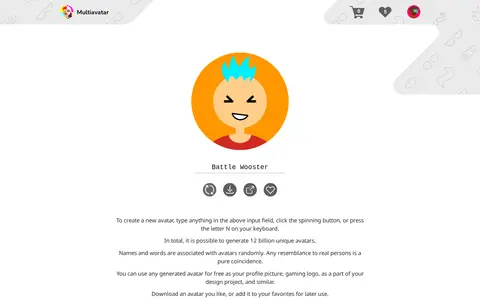
Multiavatar is an open-source multicultural avatar generator that can produce 12 billion cryptographically unique avatars. Names and words are associated with avatars randomly. Generated avatars can be used free as profile pictures, gaming logos or design elements, and the generator is written in JavaScript, PHP, Python and Solidity.
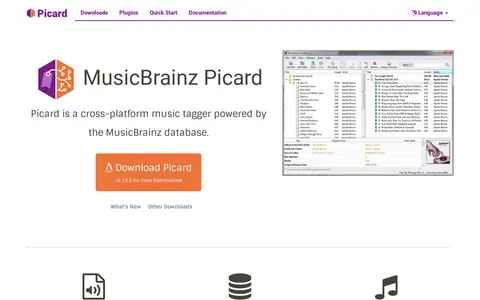
MusicBrainz Picard is a cross-platform music tagger written in Python and powered by the MusicBrainz database. It supports formats such as MP3, FLAC, OGG, M4A, WMA and WAV, uses AcoustID audio fingerprints, and can look up entire CDs. It is open source under GPL 2.0 or later and supports scripting and plugins.
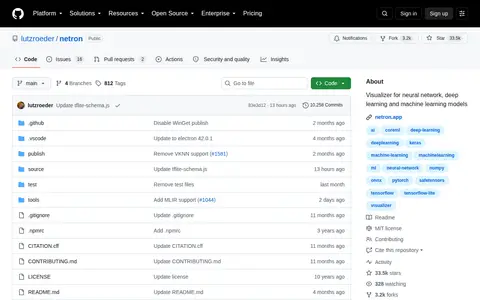
Netron is a viewer for neural network, deep learning and machine learning models. It supports formats including ONNX, TensorFlow Lite, PyTorch, TensorFlow, Core ML, OpenVINO, Keras, Caffe, Darknet, Safetensors and NumPy. It is available as a browser version and installers for macOS, Linux and Windows, plus a Python package. Experimental support exists for MLIR, JAX, GGUF and other formats.
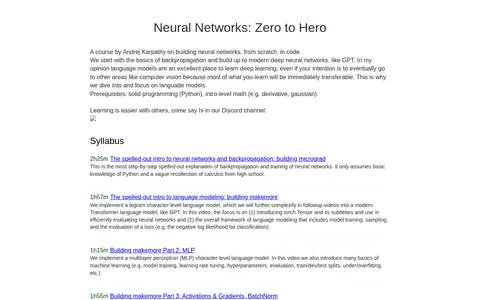
A course by Andrej Karpathy on building neural networks from scratch in code, starting with backpropagation basics and building up to modern deep neural networks like GPT. Prerequisites are solid Python programming and intro-level math such as derivatives and gaussians.
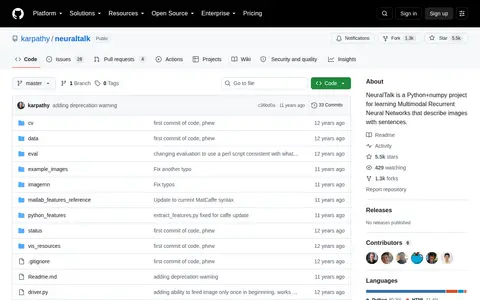
NeuralTalk is a Python+numpy project for learning Multimodal Recurrent Neural Networks that describe images with sentences.
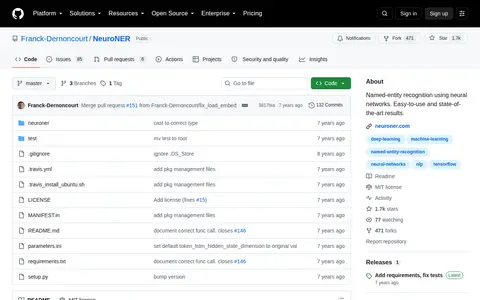
NeuroNER is a program that performs named-entity recognition using neural networks. It relies on Python 3 and TensorFlow 1.0+, optionally uses the BRAT annotation tool, and provides installation instructions, sample datasets and pretrained models.
A guide page for OpNewblood, aimed at people new to Anonymous. It explains setting up IRC chat for regular contact with other Anonymous users and browsing the internet without exposing location or other sensitive information. It describes IRC as an old, low-resource chat method supporting Python or Perl scripts, FiSHLiM message encryption and file transfers.
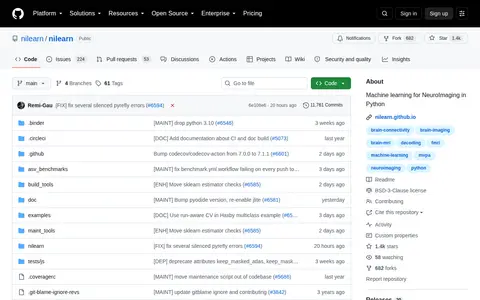
Nilearn provides statistical and machine-learning tools for analyses of brain volumes and surfaces, with documentation and a community. It supports general linear model based analysis and uses the scikit-learn toolbox for multivariate statistics, with applications such as predictive modeling, classification, decoding and connectivity analysis. It is written in Python and installable with pip.
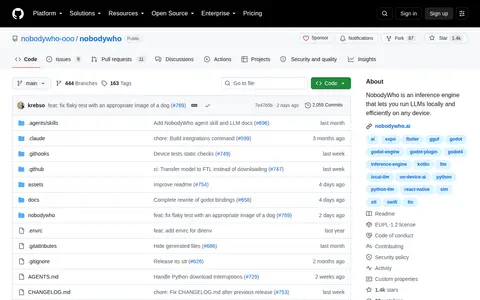
NobodyWho is an inference engine that runs LLMs locally and offline on any device, powered by llama.cpp. Bindings are available for Kotlin, Swift, React Native, Flutter, Python and Godot. It supports GGUF models, tool calling, multimodal input, text-to-speech and speech-to-text.
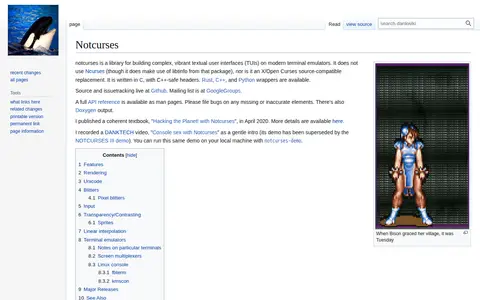
Notcurses is a C library for building complex textual user interfaces on modern terminal emulators. It does not use Ncurses, though it uses libtinfo from that package, and is not a source-compatible X/Open Curses replacement. Rust, C++, and Python wrappers are available. Source and issue tracking are hosted on GitHub, with a man page API reference.
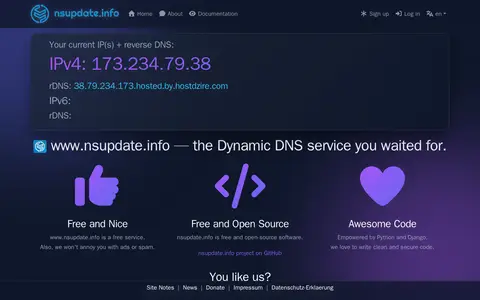
nsupdate.info is a free dynamic DNS service and free and open-source software. It is written in Python and Django, and the site states it will not display ads or spam.
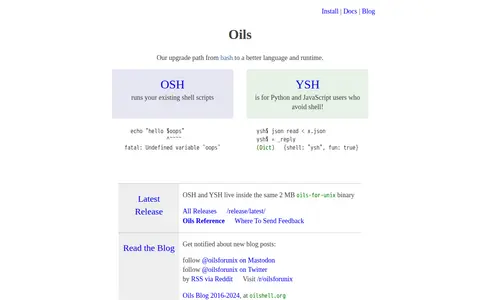
Oils is a project offering OSH, which runs existing shell scripts, and YSH, intended for Python and JavaScript users who avoid shell. Both live inside the same 2 MB oils-for-unix binary. Published documentation includes a getting-started guide, a YSH tour, an Oils reference, and comparisons of YSH with shell idioms.
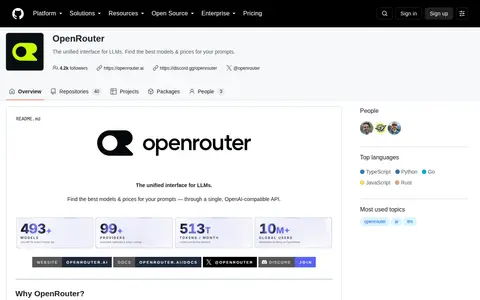
OpenRouterTeam is the GitHub organization behind OpenRouter, described as a unified interface for LLMs. The organization publishes open source SDKs for TypeScript, Python and Go, plus agent tooling, and maintains the Mintlify-hosted documentation repository for openrouter.ai/docs.
Open WebUI is a self-hosted AI interface for running AI on the user's own hardware. It connects to local or cloud models including Ollama, OpenAI, Anthropic, or compatible services, and can be extended with Python. The project offers community-shared prompts, models, tools, and functions, and lists deployment options including on-premises or air-gapped setups. Installation can be done with a pip command.
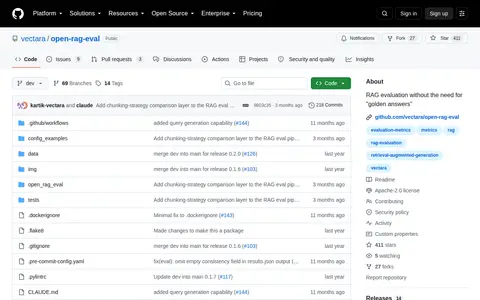
Open RAG Eval is an open-source Python evaluation toolkit for Retrieval-Augmented Generation pipelines. It provides TREC-RAG evaluation metrics and a modular design for custom metrics and connectors, with core metrics that do not require golden chunks or golden answers.
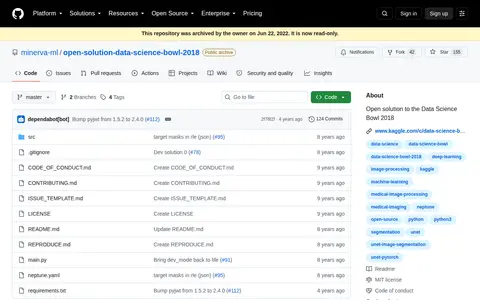
An open solution to the Data Science Bowl 2018, based on the topcoders winning solution from ods.ai. The repository was archived by the owner on Jun 22, 2022 and is now read-only. It uses PyTorch and references neptune.ml, though running it as a plain Python script is possible.
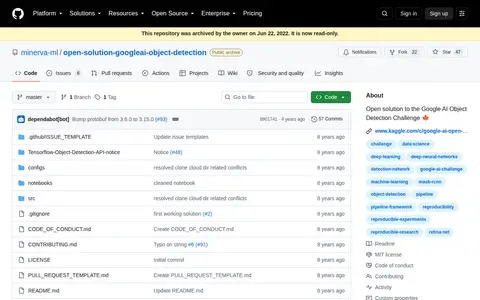
An archived, read-only GitHub repository holding an open solution to the Google AI Open Images Object Detection Track. It offers starter code, configs and notebooks, with RetinaNet training and references to the Neptune experiment platform; Neptune use is optional and the code can run as a plain Python script. The README notes the competition used Open Images Dataset V4.
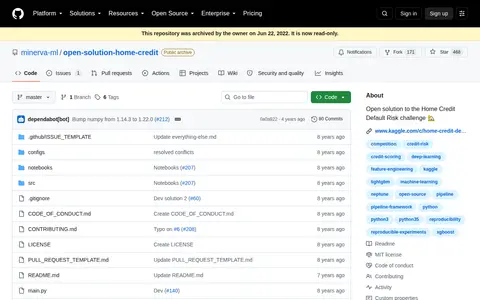
An archived, read-only GitHub repository holding an open solution to the Home Credit Default Risk challenge. It provides code, configs and notebooks plus documented solutions using LightGBM, sklearn and XGBoost with engineered features; the README lists cross-validation and leaderboard scores for each. References to Neptune are optional and the solution can run as a plain Python script.
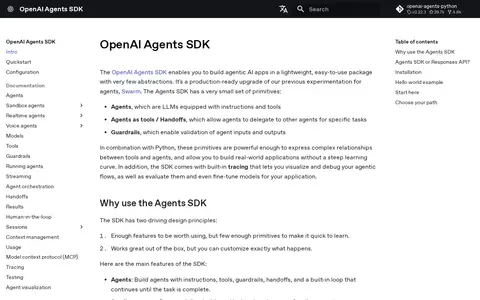
The OpenAI Agents SDK is a lightweight Python package for building agentic AI applications with few abstractions. It provides primitives including agents with instructions and tools, handoffs for delegating tasks between agents, and guardrails for validating inputs and outputs. It includes built-in tracing for visualizing and debugging agentic flows. The SDK uses the Responses API by default for OpenAI models and wraps model calls in a higher-level runtime.
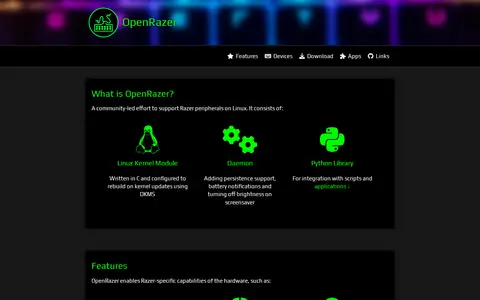
OpenRazer is a community-led effort to support Razer peripherals on Linux, consisting of a Linux kernel module, a daemon and a Python library. It exposes hardware effects, device functions such as brightness and DPI, and addressable RGB lighting, and the driver is compatible with 232 Razer peripherals.
OpenShot is a free, open-source video editor for Linux, Mac, and Windows. It provides color grading and scopes, video effects, keyframe animation, timeline editing, transitions and wipes, interactive video masks, audio visualizations, and 2D and 3D titles. The project is written with Python and PyQt5, uses a C++ backend built on FFmpeg, and is distributed under the GNU General Public License.
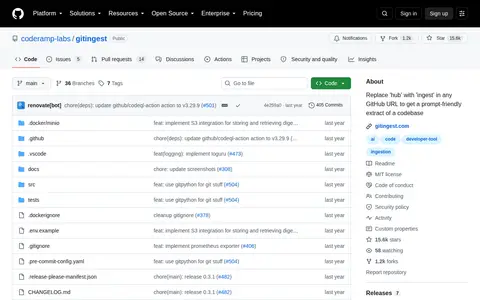
Gitingest converts any Git repository into a prompt-friendly text ingest for LLMs. Users can replace hub with ingest in any GitHub URL to access the corresponding digest. It provides a text digest from a repository URL or directory, with smart formatting for LLM prompts and statistics on file and directory structure, extract size and token count. It is available as a CLI tool and Python package.
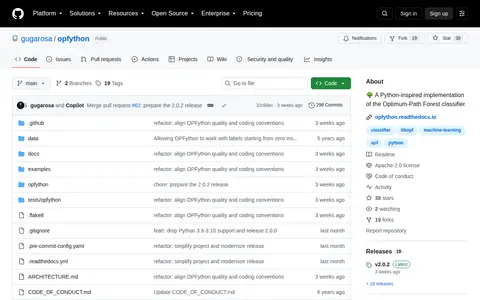
OPFython is a GitHub repository offering a Python-inspired implementation of the Optimum-Path Forest classifier. The library enables classification tasks using the optimum-path forest algorithm. It includes installation instructions, quick start guides, and classifier documentation. The project is open source and welcomes contributions from the community.