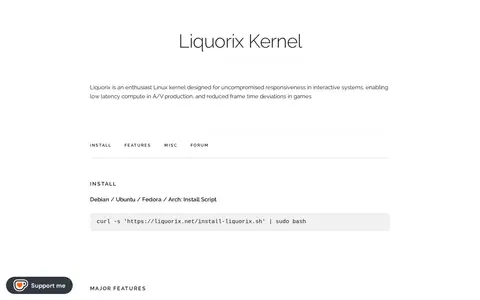

Liquorix is an enthusiast Linux kernel optimized for low latency. It provides tuning for responsiveness at the cost of throughput and power usage, a PDS process scheduler for gaming and multimedia, and a 1000hz tick rate. Binary builds are produced for Debian, Ubuntu, Fedora and Arch, installed via an install script.
Directory
Search results
Published directory entries matching your search.
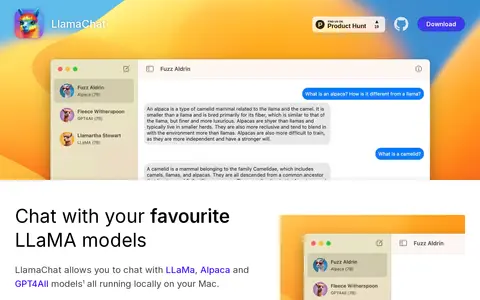
LlamaChat is a free, open-source macOS application for chatting with LLaMA, Alpaca and GPT4All models running locally on a Mac. It can import raw PyTorch model checkpoints or pre-converted .ggml model files. The application is powered by llama.cpp and llama.swift and is not distributed with any model files.
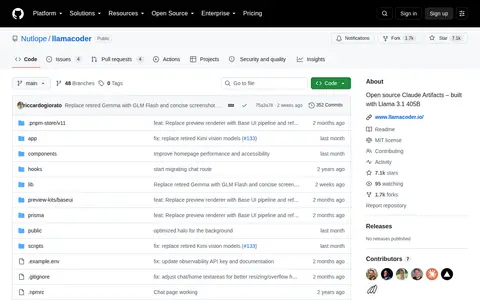
Llama Coder is an open source Claude Artifacts alternative that generates small apps with one prompt, powered by Llama 3 on Together.ai. It uses Llama 3.1 405B from Meta for the LLM and an in-browser preview renderer.
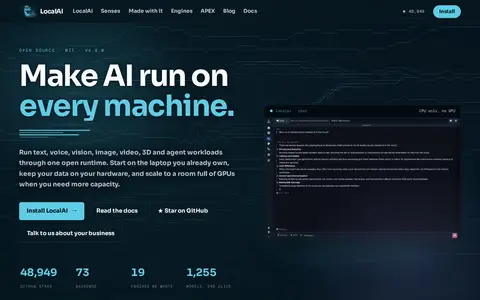
LocalAI is described as an open source AI engine that runs models, including LLMs, vision, voice, image and video, on any hardware without a GPU. It presents itself as a drop-in replacement for most upstream APIs and includes a built-in agent platform powered by LocalAGI, whose agents can reason, use tools and maintain memory. Image generation with Stable diffusion on CPU is also supported.
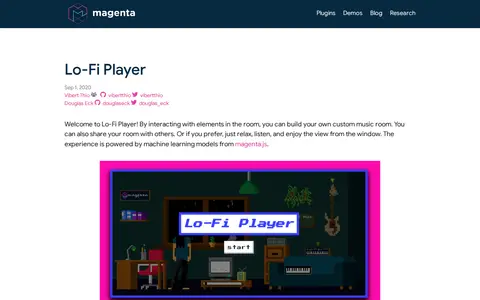
Lo-Fi Player is an interactive lofi beat player built as a virtual room. Interacting with elements in the room builds a custom music stream, with controls for melody, bass, chords, background sounds and drums. It was built by Vibert Thio, an intern on the Google Brain team, and is powered by Magenta. The page recommends a desktop window wider than 700px.
Lo-Fi Player is a virtual room in a browser where interacting with objects changes music in real time. It is powered by machine learning models from magenta.js, including MusicVAE for creating melodies and MelodyRNN for generating melodies via the radio. Users can build a custom music room and share it with others.
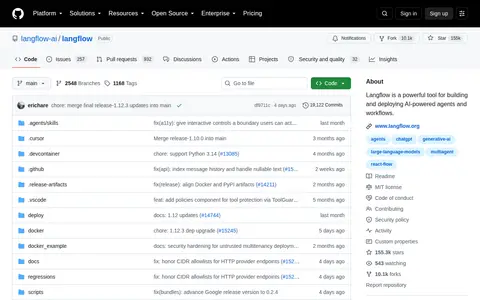
Langflow is a platform for building and deploying AI-powered agents and workflows, with a visual authoring interface and built-in API and MCP servers. It supports major LLMs, vector databases and AI tools, and allows deployment as an API, JSON export or MCP server.
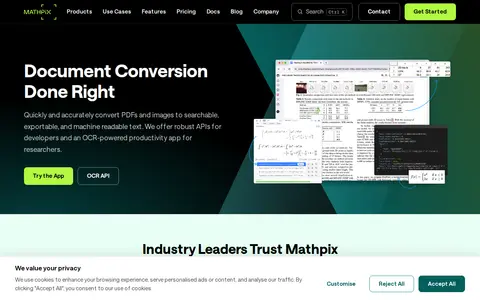
Convert images and PDFs to LaTeX, DOCX, Overleaf, Markdown, Excel, ChemDraw and more, with our AI-powered document conversion technology.
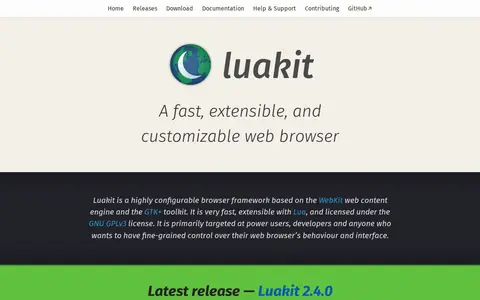
Luakit is a configurable web browser framework built on the WebKit engine and the GTK+ toolkit, extensible with Lua and licensed under GNU GPLv3. It targets power users and developers who want fine-grained control over browser behaviour and interface.
AI-powered design tools including image generation, background removal, and creative templates.
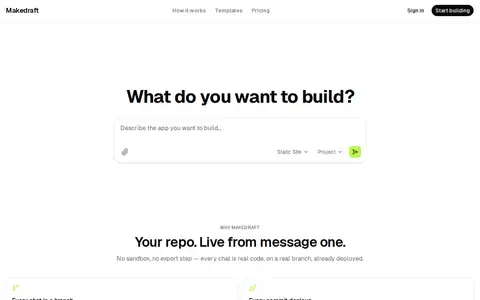
Makedraft is an AI-powered platform that builds and deploys projects from conversational instructions. It generates real code in a GitHub repository, automatically deploys each branch as a live service, and supports custom domains. It integrates with tools like Render, Supabase, and Stripe, and works with React and Next.js.
Marp, the Markdown Presentation Ecosystem, is a toolset for creating slide decks from Markdown documents. Its format is based on CommonMark, with a ruler for splitting pages. It supports directives, extended syntax, and built-in themes, with CSS theming. Markdown can be converted into presentation-ready HTML, PDF, and PowerPoint files. The ecosystem includes Marp for VS Code and Marp CLI, and is built on the Marpit framework.
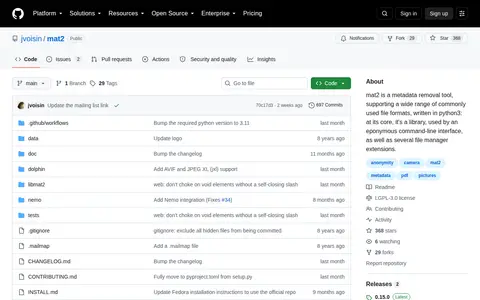
mat2 is an open source metadata removal tool written in Python 3. It supports a wide range of commonly used file formats, and is built as a library that powers an eponymous command line interface and multiple file manager extensions. The project is hosted on GitHub under the jvoisin/mat2 repository.
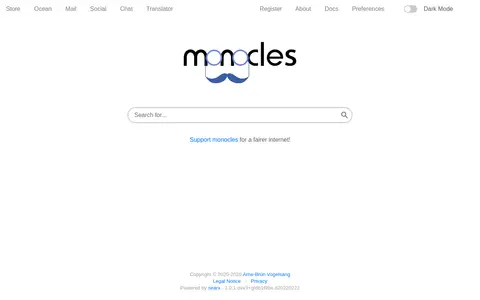
monocles.de is a search engine powered by the searx platform, offering features including store, mail, social chat, and translator functionality, with support for dark mode viewing. The service is developed by Arne-Brün Vogelsang, with copyright spanning 2020 to 2026, and runs on searx version 1.0.1.dev3+gfdb1f9be.d20220222.
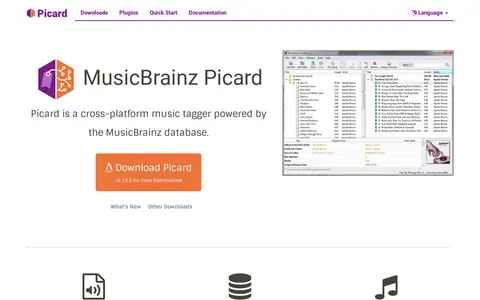
MusicBrainz Picard is a cross-platform music tagger written in Python and powered by the MusicBrainz database. It supports formats such as MP3, FLAC, OGG, M4A, WMA and WAV, uses AcoustID audio fingerprints, and can look up entire CDs. It is open source under GPL 2.0 or later and supports scripting and plugins.
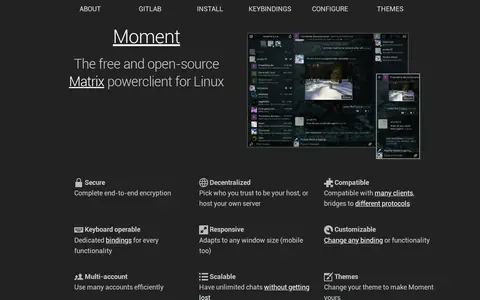
Moment is described as a free and open-source Matrix powerclient for Linux. It is a maintained fork of Mirage and is presented as keyboard operable, with dedicated bindings for every functionality. The page also states it is responsive, compatible with many clients, bridges to different protocols, and supports multiple accounts and themes.
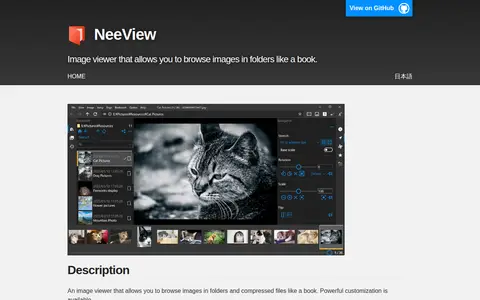
NeeView is an image viewer for browsing images in folders and compressed files like a book, with powerful customization. It supports formats such as bmp, jpg, gif, tiff, png and ico, compressed files including zip, rar, 7z, lzh, cbr, cbz and cb7, and runs on Windows 10 64bit or higher.
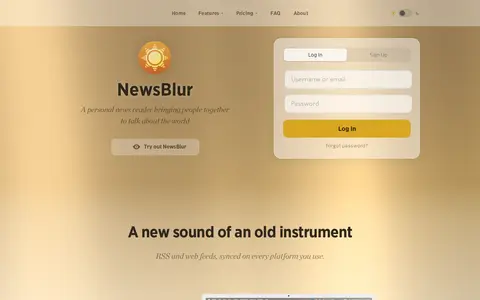
NewsBlur is a personal news reader for following RSS feeds and web feeds on web, iOS and Android. It offers intelligence training that filters stories by author, tag, title and full text, plus AI-powered story analysis and daily briefings. Stories can be archived and searched, and saved with custom tags. The software is open source.
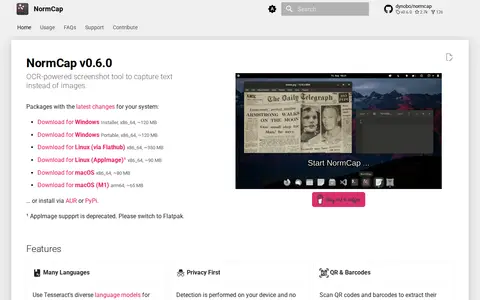
NormCap is an OCR-powered screenshot tool that captures text instead of images. It uses Tesseract language models for text detection and supports QR and barcode scanning. Detection is performed on the device and no telemetry data is collected. It is available for Windows, macOS and Linux and is licensed under GPLv3.
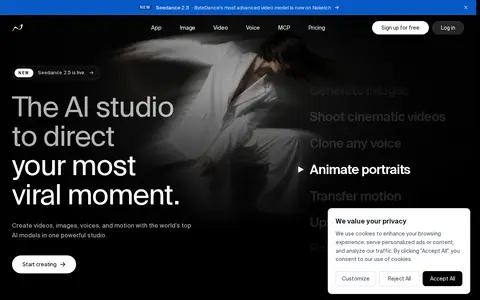
Nsketch AI is an AI-powered studio for generating and editing images and videos. It offers text-to-visual generation, upscaling tools, and a library of pre-made trend templates for creating short-form video content.
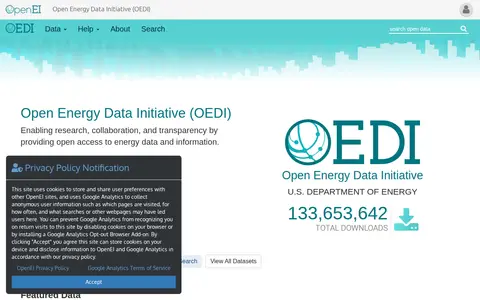
The Open Energy Data Initiative (OEDI) is a searchable online software discovery platform and knowledge base developed by NLR and powered by OpenEI. It provides open access to energy data and information to support research, collaboration and transparency, with features including curated data lakes, solar systems integration data and analytics tools, and a siting lab.

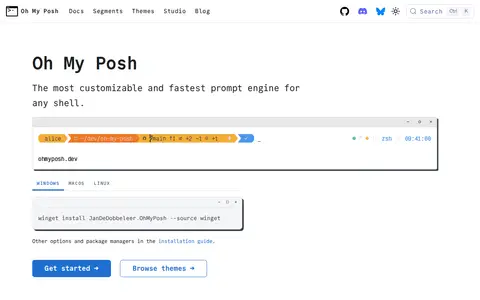
Oh My Posh is a prompt engine for shells, with one configuration intended to work across PowerShell, Bash, Zsh, Fish, Nu and others on Windows, macOS, Linux, WSL, containers and SSH. It is written in Go, and its segments run concurrently and cache results so prompts render in milliseconds. Around 120 segments cover git status, cloud context, language versions and system metrics.
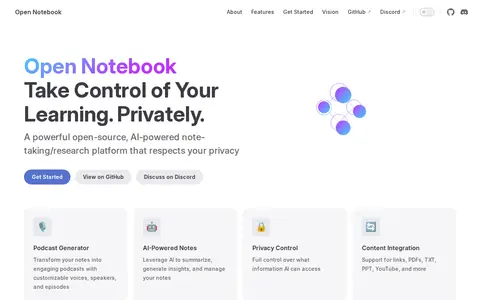
Open Notebook is an open-source, AI-powered note-taking and research platform focused on user privacy. It includes a podcast generator that transforms notes into customizable audio content, AI tools for summarizing notes and generating insights, granular privacy controls for AI data access, and support for integrating links, PDFs, text files, presentations, YouTube videos and other content types. The platform is designed for researchers, students, and learning enthusiasts.
OpenXNG is a privacy-respecting, open metasearch engine powered by SearXNG version 2026.9.26+c52ce3835. The site provides access to the SearXNG source code, issue tracker, engine statistics, public instances, and contact information for instance maintainers.