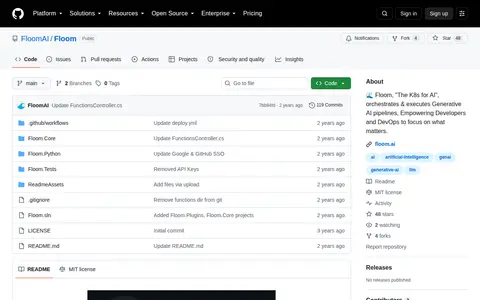

Floom is an open-source orchestration and execution tool for Generative AI pipelines, described as "The K8s for AI" and aimed at Developers and DevOps. Its repository is MIT licensed and the README states that Floom is now open-source and free for everyone, including commercial use.
Directory
Search results
Published directory entries matching your search.
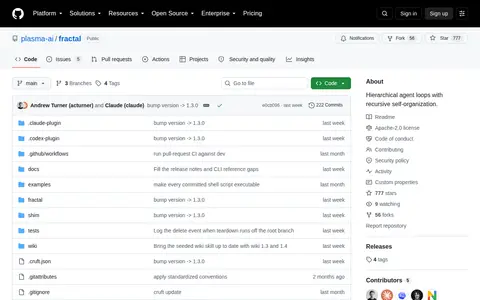
fractal is a tool for hierarchical agent loops with recursive self-organization, in which autonomous agent loops arrange themselves into a tree of git worktrees and spawn child nodes for separable subtasks. Hard caps on iterations, depth, children, cost and time bound each loop, and run metadata, including cost, is stored in a local SQLite database. Nodes run their agents without permission prompts by default.

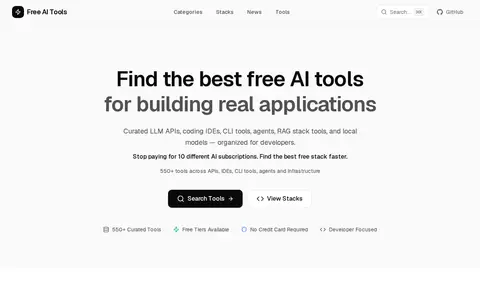
A curated directory of free AI tools for developers. It organizes LLM APIs, AI coding IDEs, CLI tools, local models, RAG stack tools and agent frameworks, with featured tools and recommended tool stacks for development scenarios.
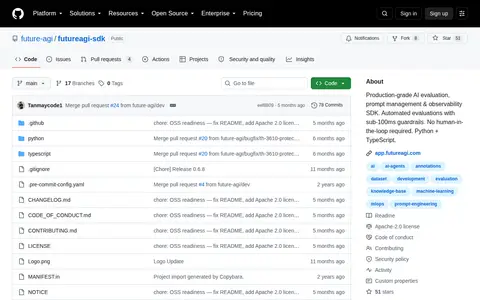
Future AGI SDK is a production-grade software development kit for AI evaluation, prompt management, and observability. It offers automated evaluations with sub-100ms guardrails and does not require human-in-the-loop. The SDK supports Python and TypeScript.
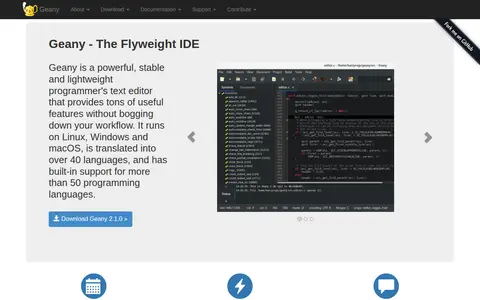
Geany is a small and lightweight integrated development environment and programmer's text editor. It runs on Linux, Windows, macOS, and other platforms, requires only the GTK3 runtime libraries, and offers syntax highlighting, code folding, symbol completion, a build system, and a plugin interface. The code is licensed under the GNU General Public Licence.

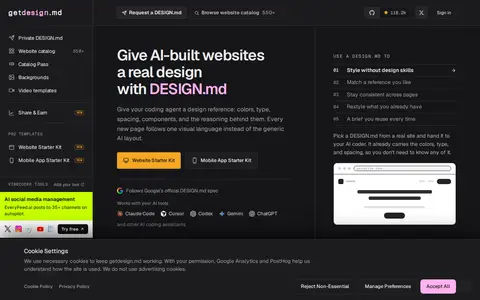
getdesign.md is a collection of DESIGN.md files containing independent design system analyses of popular websites. These files serve as design references for AI coding agents to ensure consistent visual styling across AI-built projects. It offers a catalog of over 550 public DESIGN.md files, private DESIGN.md creation services, and website and mobile app starter kits.
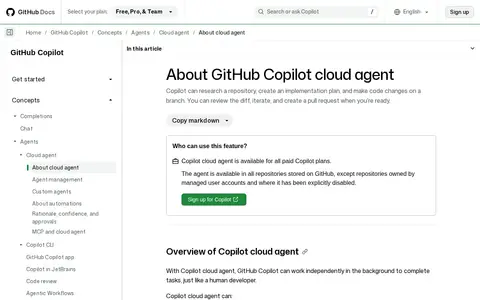
The GitHub Copilot coding agent (cloud agent) is a feature documented on GitHub Docs that can research a repository, create an implementation plan, and make code changes on a branch. Users can review code diffs, iterate on changes, and create a pull request when prepared.
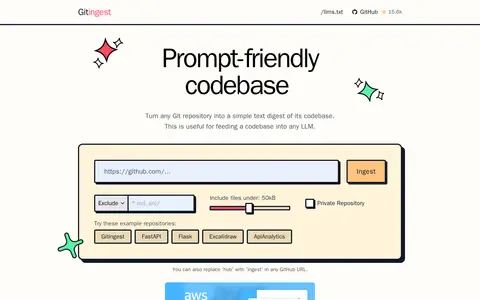
Gitingest turns a Git repository into a simple text digest of its codebase. It is intended for feeding a codebase into a large language model, and works by replacing 'hub' with 'ingest' in any GitHub URL.
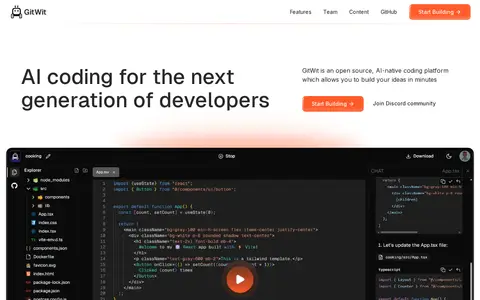
GitWit is described as an open source, AI-native coding platform intended for building ideas. The site also presents an AI Editor with AI-powered suggestions and real-time collaboration for building, testing, and deploying.
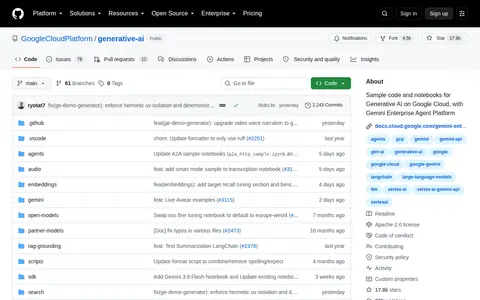
Sample code and notebooks for Generative AI on Google Cloud.
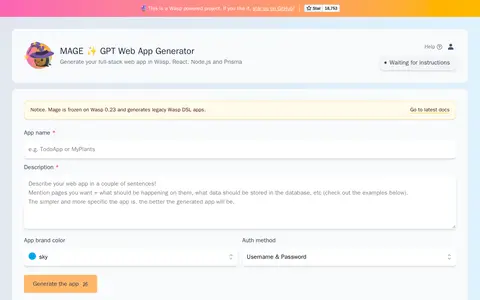
GPT Web App Generator, also referred to as MAGE, is a tool that generates full-stack web applications built with React, Node.js, and Prisma, using GPT and the Wasp full-stack framework. It is hosted at usemage.ai.
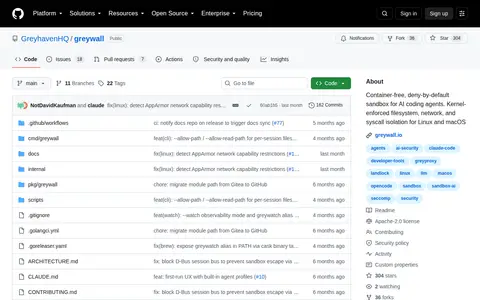
Greywall is a container-free, deny-by-default sandbox designed for AI coding agents. It provides kernel-enforced filesystem, network, and syscall isolation for Linux and macOS operating systems, and is hosted as a public repository on GitHub.
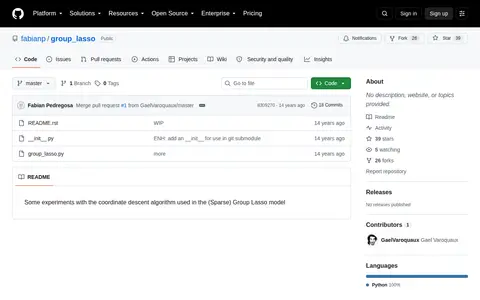
Some experiments with the coordinate descent algorithm used in the (Sparse) Group Lasso model.
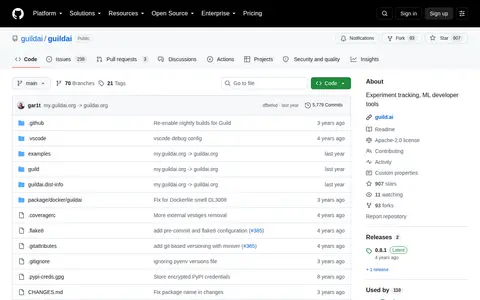
Guild AI is the source repository for an open source toolkit that automates and optimizes machine learning experiments. It runs unmodified training scripts, captures each run result as a unique experiment, and automates trials using grid search, random search and Bayesian optimization.
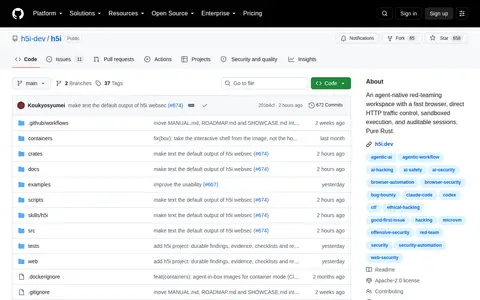
h5i is a workspace for securing web applications through two approaches: finding vulnerabilities with AI agents and proving correctness with formal verification. It provides AI agents a toolkit for browser automation, HTTP traffic manipulation and reconnaissance, and includes h5i-app, an Axum-based Rust framework for verification with Lean 4.
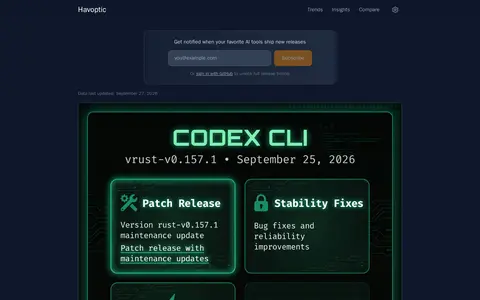
Havoptic tracks releases and changelogs for AI coding tools including Claude Code, Cursor, Codex CLI and Gemini CLI, summarizing each release in plain English with full version history and daily updates. A public API and MCP server documentation provide access to release data, cadence stats and feature comparisons without authentication.
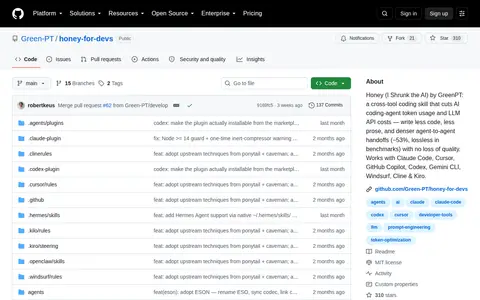
Honey (I Shrunk the AI) by GreenPT is a cross-tool coding skill that reduces AI coding-agent token usage and LLM API costs. It enables writing less code and prose and supports denser agent-to-agent handoffs, with reported 53% cost reduction and no quality loss in benchmarks. It is compatible with Claude Code, Cursor, GitHub Copilot, Codex, Gemini CLI, Windsurf, Cline, and Kiro.
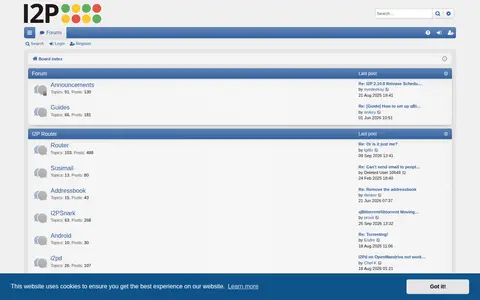
Public community forum discussing I2P software, services, development and network operations.
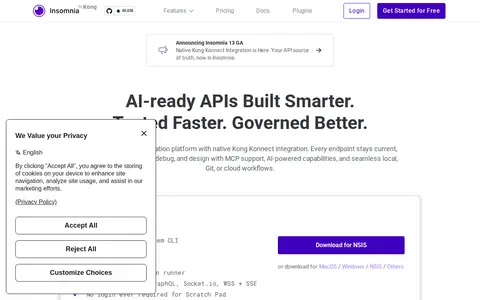
Insomnia is an open-source collaborative API development platform. It supports HTTP, REST, GraphQL, gRPC, SOAP, and WebSockets, and offers AI-native API design, testing, mocking, and debugging features. Users can store data locally, via Git, or in the cloud. The platform has a free tier, paid plans, and integrates with Kong Konnect.
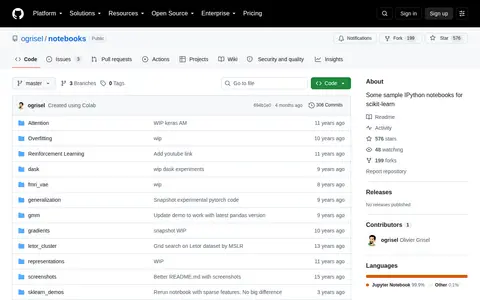
The ipython-notebooks repository, hosted on GitHub under the user ogrisel, contains sample IPython notebooks for use with the scikit-learn machine learning library. It is an open-source project that accepts contributions from GitHub users.
jcode is an open-source terminal coding agent written in Rust. It supports agent swarms, background tasks, and a small RAM footprint, and is installed with one command on macOS, Linux, or Windows. Login flows connect subscription and API model providers, and the agent itself is free while hosted inference plans are available.
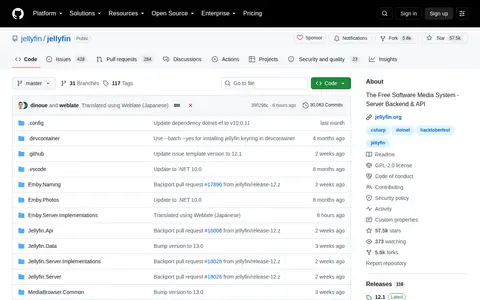
Jellyfin is a free software media system comprising a server backend and API. It is an open-source project that provides media server functionality, with its server component development hosted on GitHub.
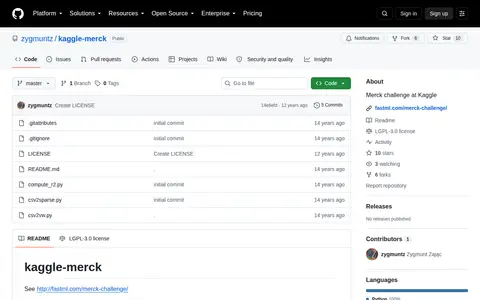
The Kaggle Merck repository, hosted on GitHub under the user zygmuntz, contains code for the Merck challenge hosted on the Kaggle data science platform. It is an open-source project that accepts contributions via GitHub.
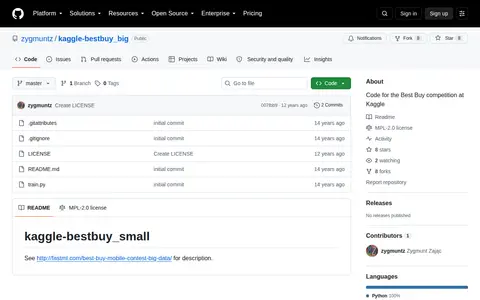
The kaggle-bestbuy big repository, hosted on GitHub under the user zygmuntz, contains code for the Best Buy competition hosted on the Kaggle data science platform. It is an open-source project that accepts contributions from GitHub users.