visualml.io
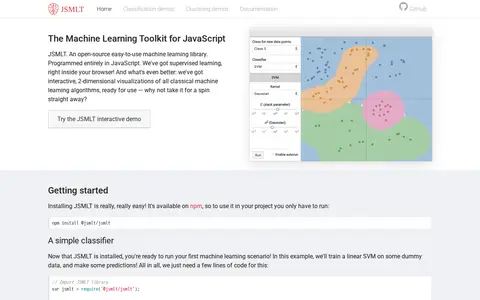
JSMLT - Machine learning toolkit with classification and clustering for Node.js; supports visualization (see ).
Directory
Published directory entries matching your search.
JSMLT - Machine learning toolkit with classification and clustering for Node.js; supports visualization (see ).

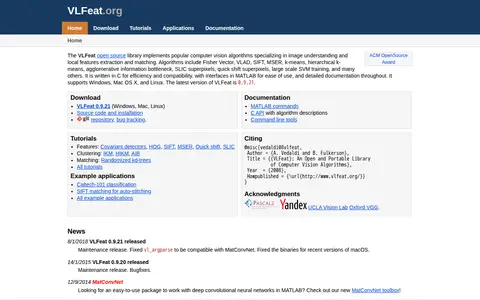
VLFeat is an open-source library of computer vision algorithms focused on image understanding and local feature extraction and matching. Algorithms include SIFT, MSER, Fisher Vector, VLAD, k-means, SLIC superpixels, and SVM training. It is written in C with MATLAB interfaces and supports Windows, Mac OS X, and Linux.

VocalRemover is a free online application that separates a song into a karaoke version without vocals and an acapella version with isolated vocals. It uses artificial intelligence algorithms and processing usually takes about 10 seconds.

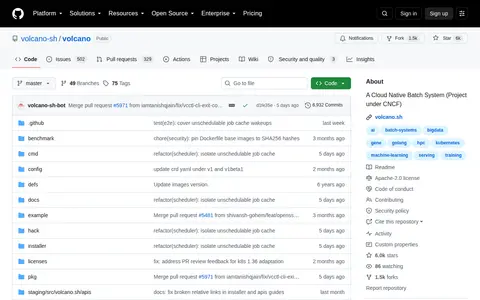
Cloud Native Batch System (Project under CNCF).

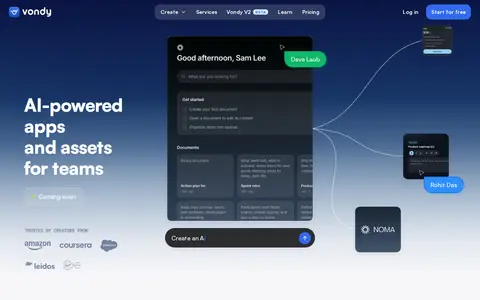
Vondy is an AI-powered platform for building apps, websites, dashboards, and internal tools by describing what is needed. It integrates payments, authentication, and GitHub. The site also lists AI generators for images, video, text, and other assets. Paid plans include monthly credits and unlimited downloads.
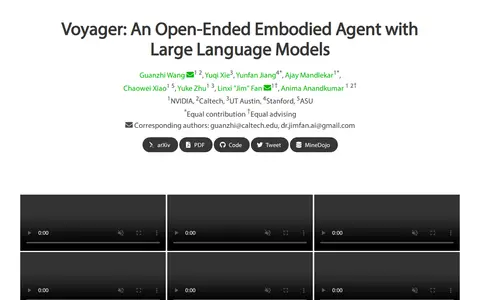
Voyager is an LLM-powered embodied agent for Minecraft that explores, acquires skills, and makes discoveries without human intervention. It combines an automatic curriculum, a skill library of executable code, and an iterative prompting mechanism using environment feedback, execution errors, and self-verification. It interacts with GPT-4 through blackbox queries, avoiding model parameter fine-tuning.

Wan AI is an AI creative platform designed to lower the barrier to creative work. It provides features including text-to-image, image-to-image, text-to-video, image-to-video, and image editing. The platform aims to enable users to generate and manipulate visual content using artificial intelligence.

Wan is an AI creative platform. It aims to lower the barrier to creative work using artificial intelligence. The site lists features including text-to-image, image-to-image, text-to-video, image-to-video and image editing.
Works with speech, voice, music or other audio using machine-learning models.

CAMEL-AI is an open-source community focused on finding scaling laws of agents for data generation, world simulation, and task automation. It builds multi-agent systems such as CAMEL, OWL, OASIS, and Loong, and conducts foundational research on multi-agent systems to improve reliability, interpretability, and robustness.

WebDev Arena is an AI tool or resource for chat, research, automation, media generation, or model development.

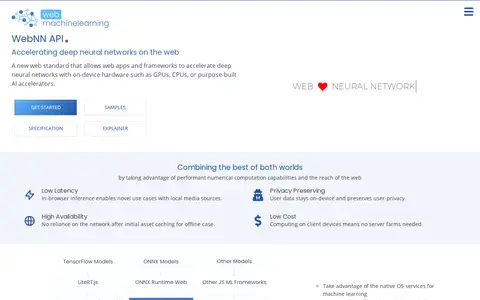
WebNN is a web standard that lets web apps and frameworks accelerate deep neural networks using on-device hardware such as GPUs, CPUs, or purpose-built AI accelerators. The introduction states that in-browser inference supports local media sources, keeps user data on-device, and needs no network after initial asset caching.

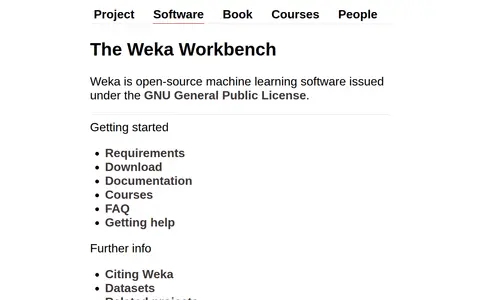
Weka is open-source machine learning software issued under the GNU General Public License. It runs in Java and is presented as a workbench for data mining, with download, documentation, courses and FAQ resources and datasets available on the project site.

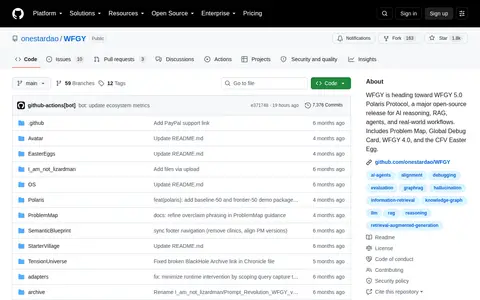
WFGY is an open-source project focused on AI reasoning, retrieval-augmented generation, AI agents, and real-world workflows. It is developing the WFGY 5.0 Polaris Protocol, and currently includes components such as the Problem Map, Global Debug Card, 4.0 version, and CFV Easter Egg.

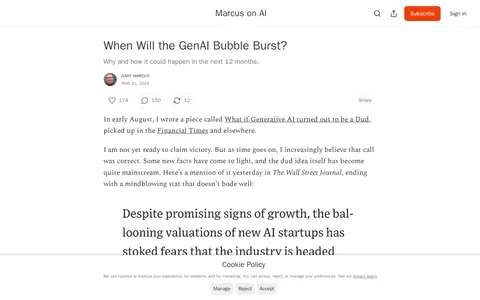
A Gary Marcus article on his Marcus on AI Substack asking when the GenAI bubble might burst and how that could happen within 12 months. It cites survey findings on generative AI and security, notes $50B in and $3B out, and argues that hallucinations remain and that the industry is built on hype.

Works with speech, voice, music or other audio using machine-learning models.

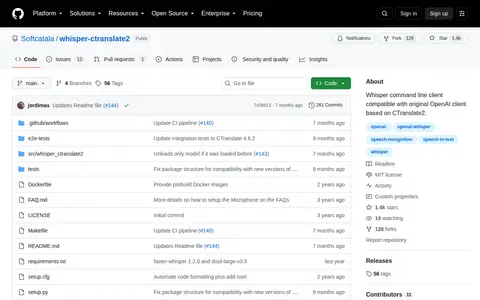
Whisper command line client compatible with the original OpenAI client and based on CTranslate2. It uses CTranslate2 and the Faster-whisper implementation. The project lists Docker images with pre-loaded models, speaker diarization, voice activity detection and live transcription from a microphone. It is installed as a Python package or run from a Docker image.

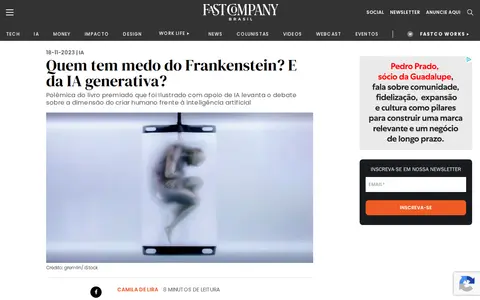
Who is Afraid of Frankenstein? And of Generative AI?

A Hackaday article by Matthew Carlson explaining why LLaMa matters. It describes LLaMa as a transformer language model from Facebook/Meta research spanning 7 billion to 65 billion parameters, and notes that llama.cpp runs inference with 4-bit quantization.

A blog post explaining why upscaling AI-generated images matters in image-to-image workflows. It describes how diffusion models apply and remove noise, and how higher-resolution reference images give the model more defined details. The post compares a low-resolution and upscaled example using Stable Diffusion's ControlNet with the canny model, and mentions upscaling options including ImgUpscaler, TopazLabs and Upscale Media.

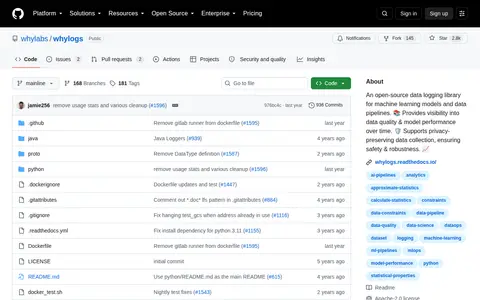
Whylogs is an open-source data logging library for machine learning models and data pipelines. It provides visibility into data quality and model performance over time, and supports privacy-preserving data collection to support system safety and robustness.

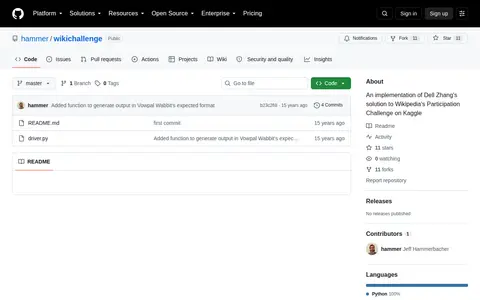
An implementation of Dell Zhang's solution to Wikipedia's Participation Challenge on Kaggle.
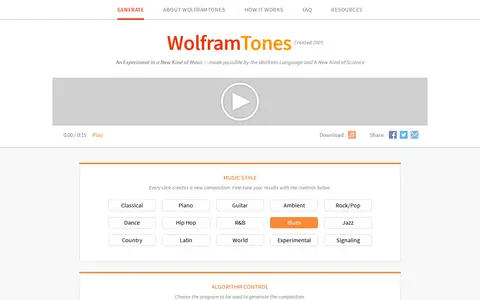
WolframTones uses AI for speech, voice, transcription, music, or other audio workflows.

Create stunning AI-generated images and cinematic videos from text prompts. Powered by state-of-the-art AI models with 100+ curated styles.