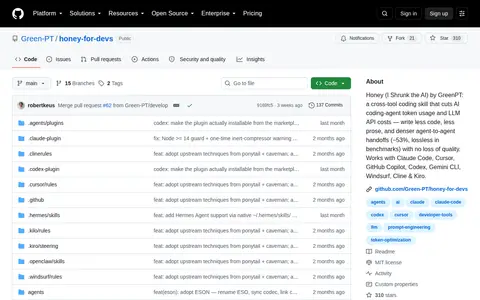

Honey (I Shrunk the AI) by GreenPT is a cross-tool coding skill that reduces AI coding-agent token usage and LLM API costs. It enables writing less code and prose and supports denser agent-to-agent handoffs, with reported 53% cost reduction and no quality loss in benchmarks. It is compatible with Claude Code, Cursor, GitHub Copilot, Codex, Gemini CLI, Windsurf, Cline, and Kiro.
Directory
Search results
Published directory entries matching your search.
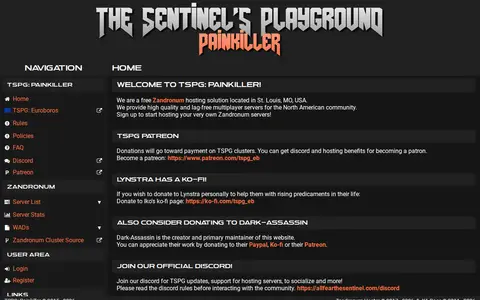
TSPG: Painkiller is a free Zandronum hosting solution based in St. Louis, MO, USA, providing multiplayer servers for the North American community. Users can sign up to host their own Zandronum servers; donations go toward payment on TSPG clusters.
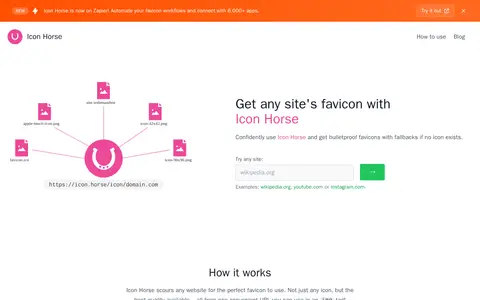
Icon Horse fetches favicons for any website from a single URL usable in an img tag. It offers sensible fallbacks when no icon exists and caches icons for speed. A free Hobby plan allows up to 1,000 icons per month without an account.
Search engineering data collections and supporting image from USA.
IEEE DataPort is a research data platform that provides open access to scientific data. It enables researchers and institutions to share research, manage data, and collaborate. The platform hosts over 13,000 datasets, offers more than 2 TB of storage via AWS S3, and provides data management tools such as DOI assignment and usage tracking.
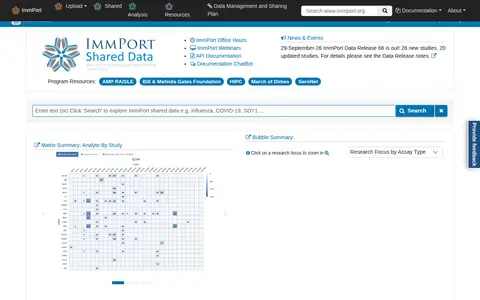
Search basic in biology and medicine data collections and supporting experimental data from USA.
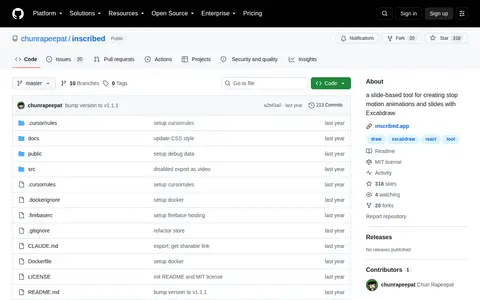
Inscribed is a slide-based tool for creating stop motion animations and slides with Excalidraw. It is an open-source project hosted on GitHub, providing code and documentation for setup and usage.
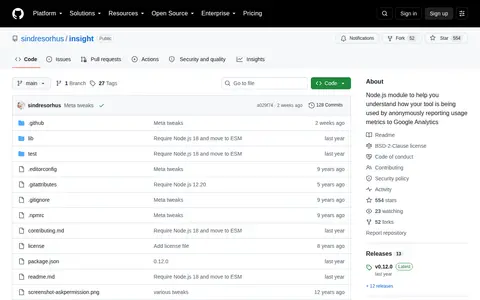
Node.js module to help you understand how your tool is being used by anonymously reporting usage metrics to Google Analytics
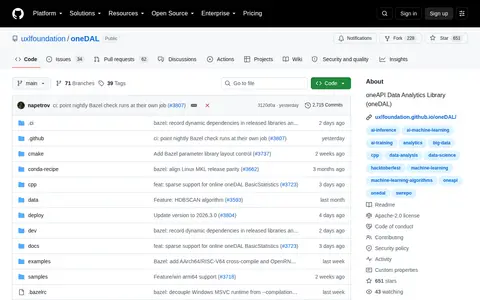
The oneAPI Data Analytics Library (oneDAL) is a library for data analytics. It is hosted on GitHub under the uxlfoundation/oneDAL repository. The repository provides usage examples, installation instructions, and documentation.
Search basic in biology and medicine data collections and supporting datasets from USA.
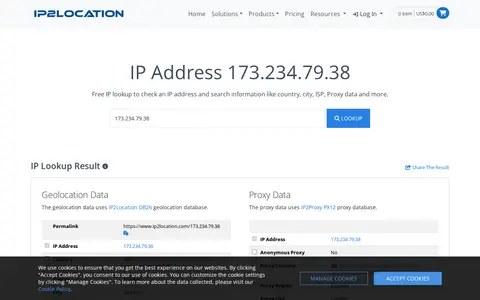
IP2Location provides a free IP lookup demo that reports geolocation and proxy data for an IP address. Results include country, region, city, coordinates, ISP, usage type, ASN, and proxy status. The demo uses the IP2Location DB26 geolocation database and IP2Proxy PX12 proxy database, and also shows an IP geolocation API response.
IPVoid is a free service from NoVirusThanks Company Srl offering online IP address, network and DNS tools. It began in 2010 as an IP blacklist checker and later added more tools, now numbering more than 80, usable from a web browser without registration.
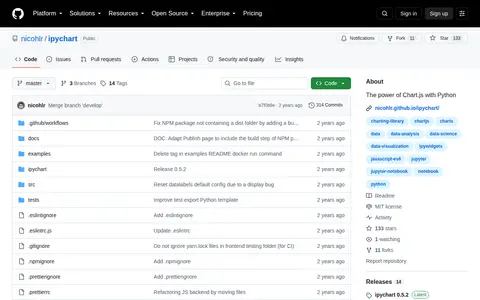
ipychart is a Python library that brings the power of Chart.js to Python. It is hosted on GitHub at https://github.com/nicohlr/ipychart. The repository includes installation instructions, documentation, usage examples, and development information.
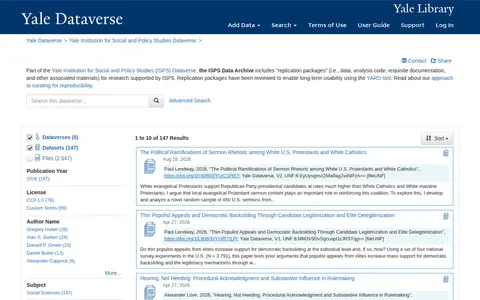
The ISPS Data Archive is part of the Yale Institution for Social and Policy Studies Dataverse. It holds replication packages, including data, analysis code and documentation, for research supported by ISPS. Replication packages have been reviewed to enable long-term usability using the YARD tool. The archive lists 147 results, with some items marked as updated with version notes.
The U.S. ISSN Center, part of the international ISSN Network, assigns International Standard Serial Numbers to serials published in the United States, including journals, magazines, newsletters, newspapers and annuals in print or online. Each medium version receives a separate ISSN. The center offers an ISSN Uplink account for submitting applications online and tracking progress.
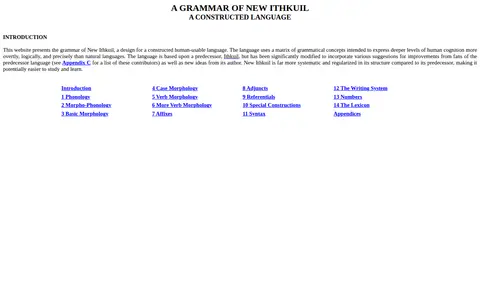
This website presents the grammar of New Ithkuil, a constructed human-usable language. The language uses a matrix of grammatical concepts intended to express deeper levels of human cognition more overtly, logically, and precisely than natural languages. It is based on a predecessor, Ithkuil, and has been significantly modified to incorporate suggestions for improvements and new ideas from its author. New Ithkuil is more systematic and regularized in its structure compared to its predecessor.
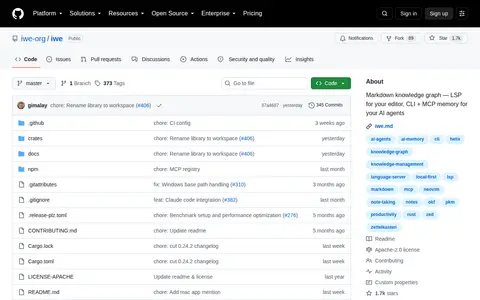
IWE is a Markdown knowledge graph tool offering an LSP for editors, a CLI and MCP memory for AI agents. It stores notes as connected Markdown documents in a project folder, usable from Neovim, Helix, VS Code, Zed, the CLI or Claude/Codex. Neither the CLI nor the Mac app includes an AI model.
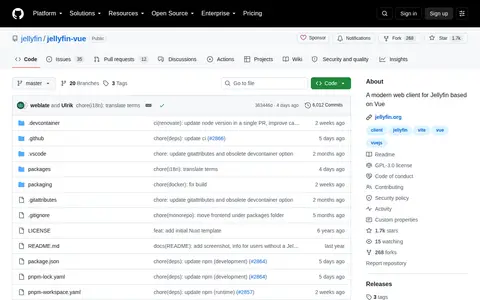
Jellyfin Vue is a modern web client for the Jellyfin media system, built using the Vue framework. It is part of the Jellyfin Project, offers end-user usage instructions and supports hosted instances. The project is maintained as an open-source repository on GitHub.
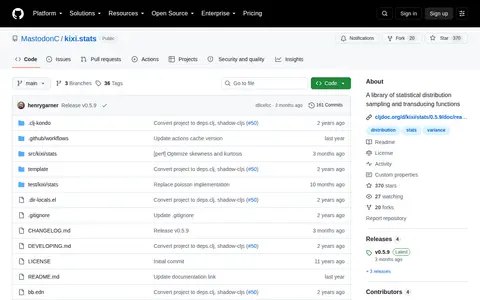
kixistats is a library of statistical distribution sampling and transducing functions. It provides tools for statistical analysis. The project is open-source and available on GitHub, with documentation, installation instructions, and usage examples.
Search agriculture, forestry and veterinary medicine data collections and supporting image from USA.
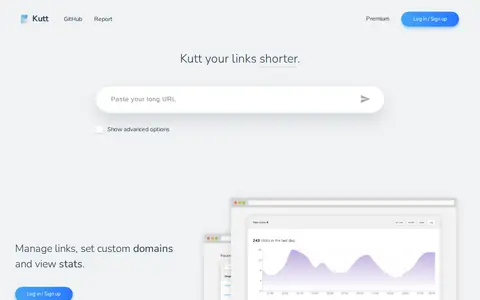
Kutt is a free, open source modern URL shortener. It supports custom domains, link management, usage statistics, an API for programmatic access, and offers browser extensions for Chrome and Firefox, with options to self-host the service.
Laws of UX is a collection of best practices that designers can consider when building user interfaces. It presents named principles such as the Aesthetic-Usability Effect, Choice Overload, Chunking, Cognitive Bias, Cognitive Load and the Doherty Threshold, each with a short explanation.
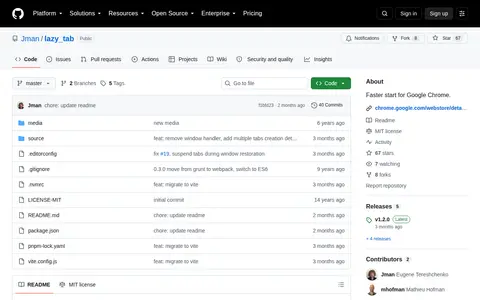
Lazy Tabs is an open source Chrome extension that discards inactive tabs to speed up browser startup and lower memory usage. Discarded tabs keep their title, favicon and position, and are left alone if pinned. It requests no permissions and performs no tracking. Discarding happens at startup, on icon click, or when several tabs are recreated in a burst.
A tutorial site presenting basic principles of Japanese grammar and usage for learners who think in a Western language. It compares and contrasts English and Japanese grammar rather than relying on memorized patterns, and Japanese examples are written in romaji rather than kana and kanji. Topics include verbs, particles and sentence structure.