
Gajim is a free, fully featured chat app for XMPP, developed by volunteers as open source software using Python and GTK. It supports end-to-end encryption and syncs chats across devices with a provider of the user's choice. It is interoperable with other chat apps and runs on Windows, macOS, and Linux.
Directory
Search results
Published directory entries matching your search.
gallery-dl is a command-line program that downloads image galleries and collections from several image hosting sites. It is cross-platform and offers command-line and configuration options plus file-naming capabilities. It requires Python 3.8+ and Requests, with optional dependencies for video downloads and conversions.
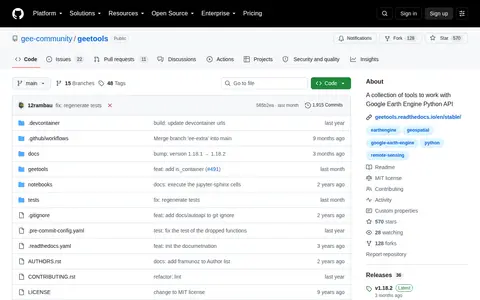
A collection of tools to work with Google Earth Engine Python API
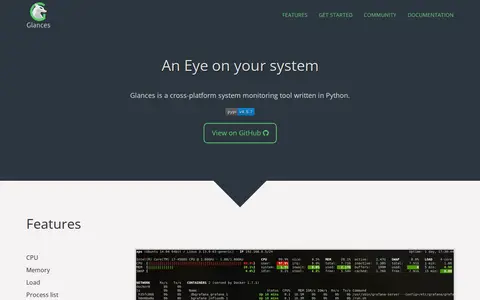
Glances is a cross-platform, curses-based system monitoring tool written in Python. It reports on CPU, memory, load, process list, network interfaces, disk I/O, sensors, filesystems and containers, and includes a web interface, an XML-RPC server and a RESTful JSON API. It can export statistics to formats and services including CSV, InfluxDB and ElasticSearch.
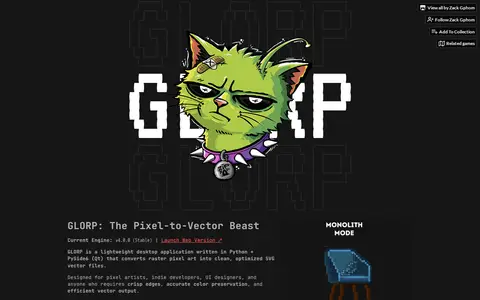
GLORP is a downloadable utility for Windows written in Python and PySide6 that converts pixel art into SVG vector files. It offers Monolith optimized paths, a Lego mode generating one rectangle per pixel, WebP export, batch folder import and drag-and-drop previews. It requires real pixel art with hard edges; upscaled images, JPEG files and blur or gradients produce broken output.
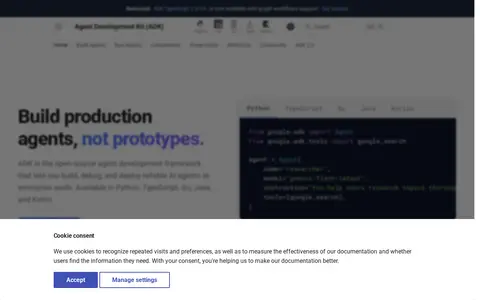
Google Agent Development Kit (ADK) is an open toolkit for building powerful multi-agent systems and production-grade agents. It supports multiple programming languages including Python, JavaScript, Go, Java, and Kotlin, and offers features such as graph workflows, multi-agent collaboration, and integration with various AI models including Gemini, Claude, and OpenAI.
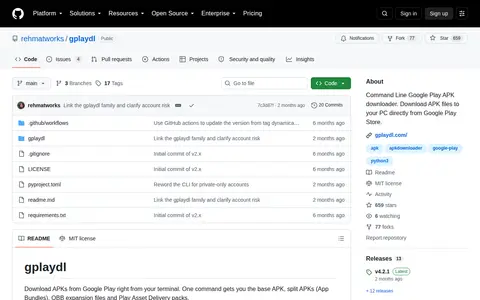
Command-line downloader for Google Play APK files. It can fetch base APKs, split APKs from app bundles, OBB expansion files and Play Asset Delivery packs. It requires Python 3.9 or newer and signs in through a Google account added with the gplaydl Authenticator app. The project notes it uses unofficial Google Play access and may lead Google to restrict accounts used with it.
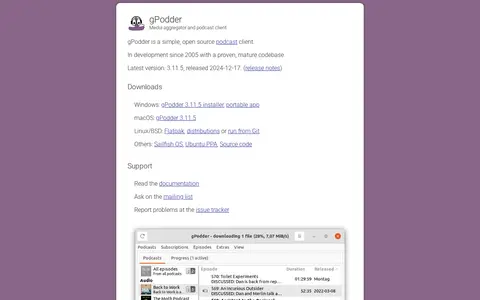
gPodder is a simple, open source podcast client and media aggregator, in development since 2005. It is written in Python and runs from a Git checkout without root, compiling, or system-wide installation. Version 3.11.5 was released 2024-12-17, with downloads for Windows, macOS, Linux/BSD and others.
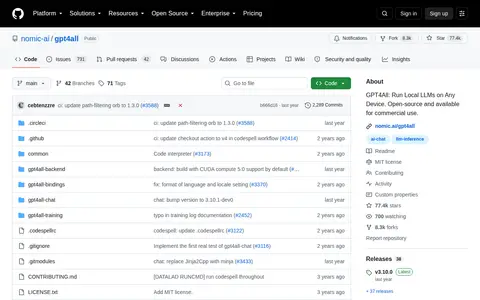
GPT4All is an open-source application for running large language models privately on desktops and laptops without API calls or GPUs. It offers installers for Windows, macOS and Linux, a Python client, and integrations with LangChain, Weaviate and OpenLIT.
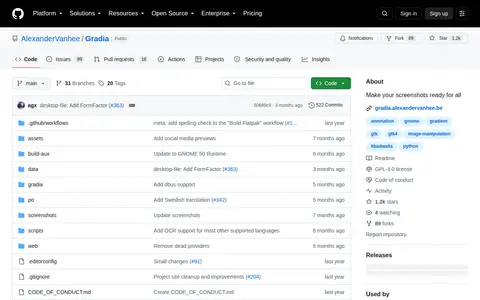
Gradia is a tool for editing screenshots so they display well on social media, including transparent or oddly sized images of application windows. It offers annotation, gradient, and image-manipulation features and is built with GTK4, libadwaita, and Python. A custom keyboard shortcut can launch it after taking a screenshot.
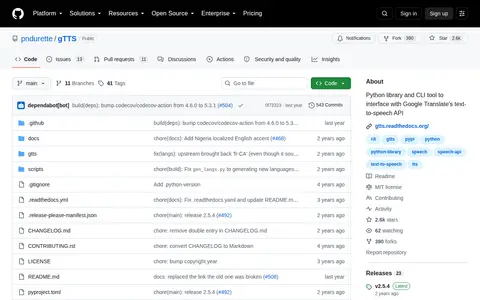
Python library and CLI tool to interface with Google Translate's text-to-speech API
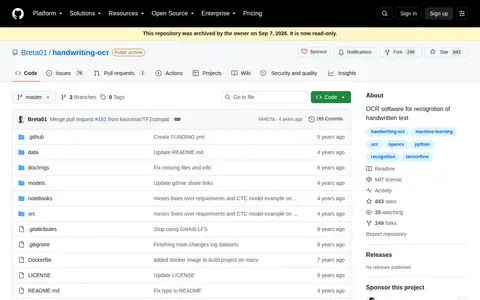
Handwriting-OCR is a project that tries to create software for recognizing handwritten text from photos, including Czech language, using computer vision and machine learning. Recognition is divided into four steps, from page detection through word separation and normalization to character recognition. It is written in Python 3.6 with Jupyter Notebook, and the repository was archived by its owner.
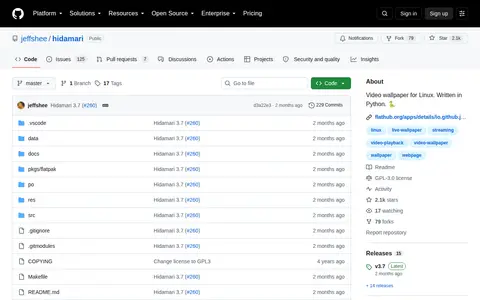
Hidamari is a video wallpaper application for Linux written in Python. It supports autostart after login, applying a static wallpaper with blur, pausing playback on maximized windows or fullscreen mode, volume control, hardware-accelerated decoding, GNOME Wayland, multi-monitor setups, streaming URLs and webpages as wallpaper. It is distributed as a Flatpak on Flathub.
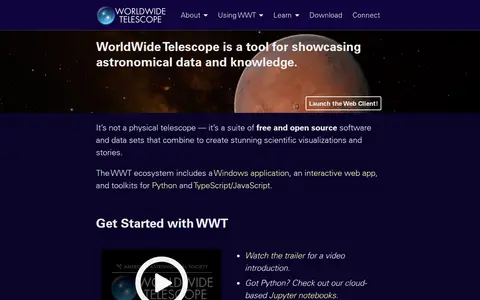
WorldWide Telescope is a suite of free and open source software and data sets that combine to create scientific visualizations and stories. Its ecosystem includes a Windows application, an interactive web app, and toolkits for Python and TypeScript/JavaScript.
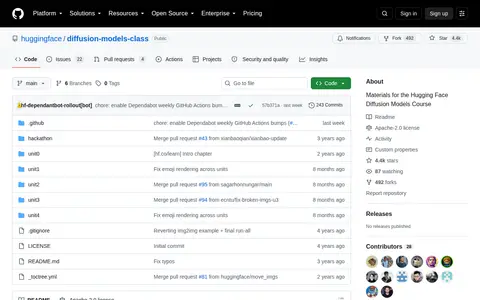
Materials for the Hugging Face Diffusion Models Course, a free course on diffusion models. It covers theory, generating images and audio with Diffusers, training and fine-tuning models, and conditional generation. Prerequisites include Python skills and basics in deep learning and PyTorch.
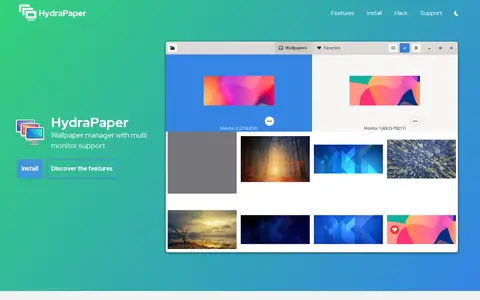
HydraPaper is a wallpaper management application. It manages wallpaper collections with folders that can be enabled or disabled, and marks favorites for quick access. Wallpapers can be set as zoomed, centered or fitted, with a black or blurred background, and random wallpapers can be set quickly. It is written in Python 3 and GTK and released under the GPL3 license.
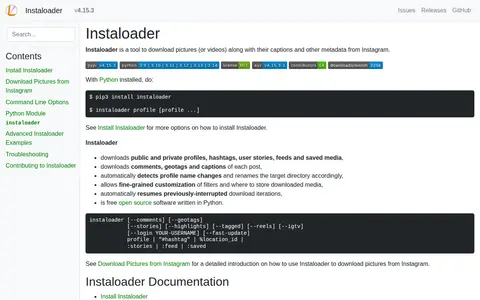
Instaloader is a free open source command line tool written in Python that downloads pictures, videos, captions and other metadata from Instagram. It downloads public and private profiles, hashtags, stories, feeds and saved media, and automatically resumes interrupted download iterations. The documentation states it is not affiliated with or endorsed by Instagram.
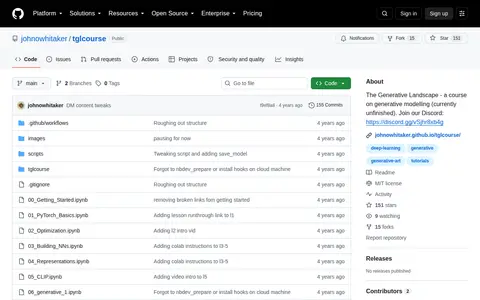
A course on generative modelling, currently unfinished, with the first approximately five lessons mostly done. It covers topics such as PyTorch basics, representations, CLIP, GANs, sequence modelling and transformers. No prior deep learning knowledge is assumed, though comfort with some Python and Jupyter Notebooks is expected.
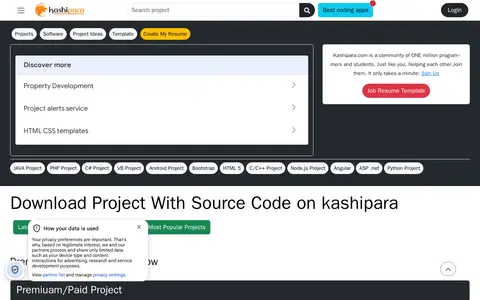
Kashipara is a site for downloading programming projects with source code. It lists projects in languages including Java, PHP, C# .NET, Android, VB, Python and HTML, CSS and JavaScript, along with project ideas and templates. It also lists premium or paid projects.
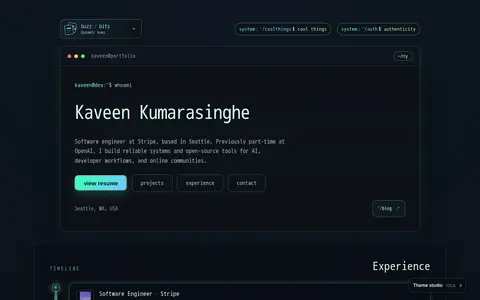
Kaveen Kumarasinghe is a software engineer in Seattle working at Stripe and previously part-time at OpenAI, building open-source tools and AI experiments. The site lists projects including GPTDiscord, an open-source Python integration that brings GPT conversations, image generation and document questions into Discord.
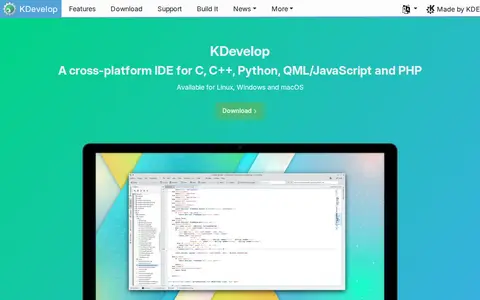
KDevelop is a cross-platform integrated development environment for C, C++, Python, QML/JavaScript and PHP. It parses projects to provide code completion, supports multiple projects in one session, and offers a Git plugin and documentation integration. It is available for Linux, Windows and macOS.
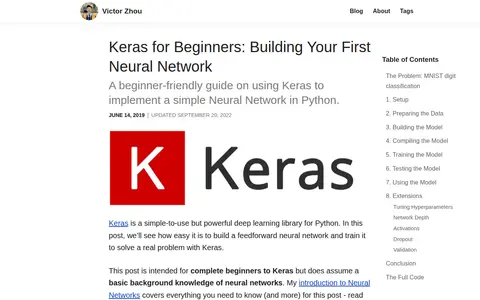
A beginner-friendly guide on using Keras to implement a simple neural network in Python. It walks through MNIST handwritten digit classification, covering setup, data preparation, building the model, compiling, training, testing and using the model. It is intended for complete beginners to Keras who have a basic background knowledge of neural networks.
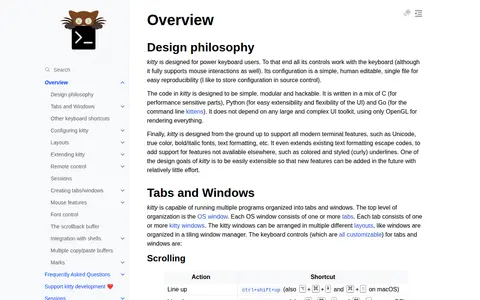
Kitty is a GPU-based terminal emulator designed for power keyboard users, with all controls accessible via keyboard and full mouse support. It runs multiple programs in tabs and windows with tiling layouts, and its configuration is a single human-editable file. Written in C, Python, and Go, it uses OpenGL for rendering and supports modern terminal features such as Unicode and true color.
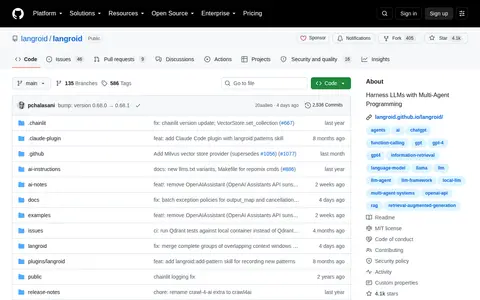
A Python framework for building LLM-powered applications through a multi-agent paradigm. Developers set up agents, equip them with optional components such as LLMs, vector stores and tools, assign tasks, and have them exchange messages to solve problems. It works with practically any LLM and does not use LangChain.