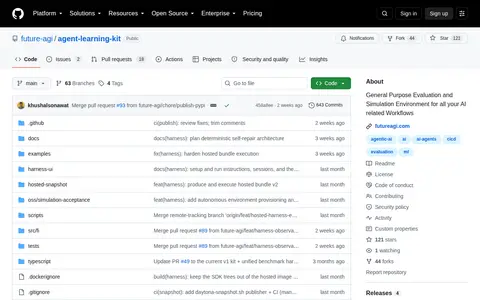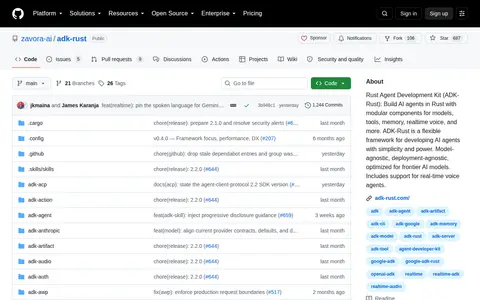

ADK-Rust is a GitHub repository for the Rust Agent Development Kit, a flexible framework for building AI agents in Rust. It includes modular components for models, tools, memory, and realtime voice support, is model-agnostic and deployment-agnostic, and is optimized for frontier AI models.
Directory
Search results
Published directory entries matching your search.
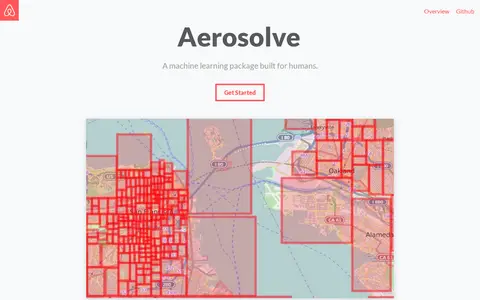
Aerosolve is a machine learning package built on the JVM. It provides features such as geo-based features, controllable quantization and feature interaction, and a feature transform language that gives developers control over features. General additive models are used. Scala handles feature training, with a lightweight Java API for run time inference.
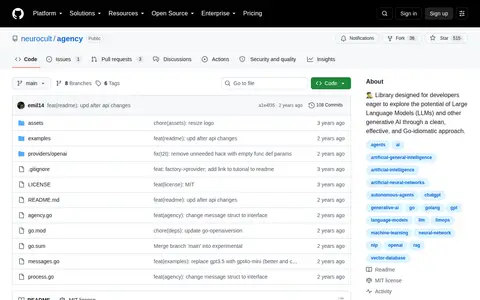
Agency is an open-source GitHub repository maintained by neurocult. It is a Go-language library intended to help developers explore large language models and other generative AI tools through a clean, effective, Go-idiomatic interface. The project provides quick start guides, feature documentation, and tutorials for users.
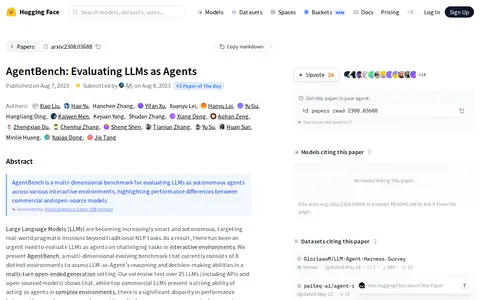
AgentBench is a multi-dimensional benchmark that consists of 8 distinct environments for evaluating LLMs as autonomous agents in interactive tasks. It assesses reasoning and decision-making abilities in multi-turn open-ended generation, and tests over 25 LLMs including APIs and open-source models.

An article by Andy Baio examining how AI companies use datasets and models from academic and nonprofit research groups. It describes Meta's Make-A-Video using Shutterstock clips and YouTube videos collected by Microsoft, and notes nonprofit datasets used for Stable Diffusion and other models. It argues this outsourcing shifts accountability and legal liability away from corporations.
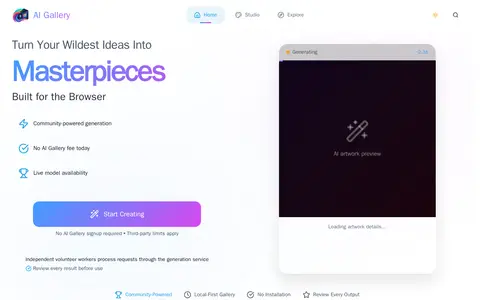
AI Gallery is a tool for creating AI artwork on volunteer GPUs. According to the site, no GPU or installation is required, and the generated gallery stays on the user's device. Help documentation covers queues, models, credits, local storage, backups and generation controls.
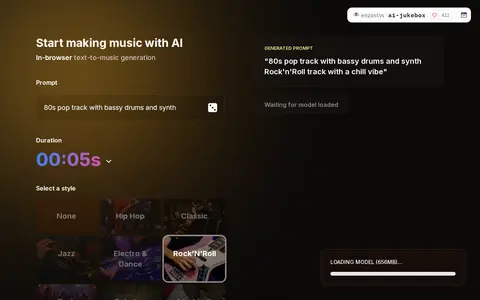
AI Jukebox is a Hugging Face Space that generates AI-powered music. Users can input a description of their desired music, select the clip length and preferred style or mood, and the app produces a matching audio clip directly in the web browser.
Creates, rewrites or summarizes written content with language models.
AI Today provides machine-learning models, research, training resources, or evaluation tools.
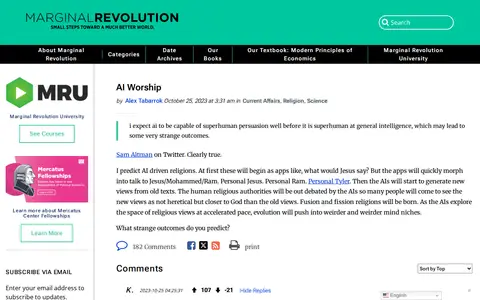
AI Worship Marginal REVOLUTION provides machine-learning models, research, training resources, or evaluation tools.
Open-source project that provides machine-learning models, research, training resources, or evaluation tools.
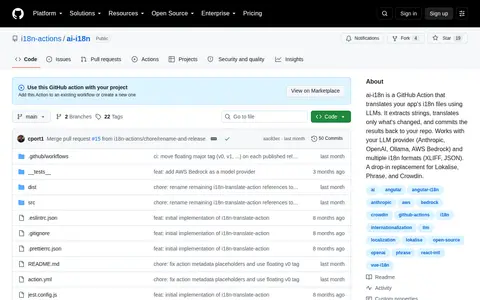
ai-i18n is a GitHub Action that translates internationalization files using large language models. It extracts strings, translates only changed content, and commits results back to the repository. Supported providers include Anthropic, OpenAI, Ollama, and AWS Bedrock, with compatibility for XLIFF and JSON formats. It serves as a drop-in replacement for services like Lokalise, Phrase, and Crowdin.
Open-source project that provides machine-learning models, research, training resources, or evaluation tools.
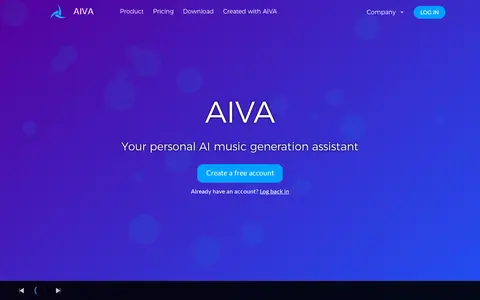
AIVA is an AI music generation assistant that creates new songs in more than 250 styles within seconds. Users can build style models, upload audio or MIDI influence, and edit generated tracks. A free plan offers non-commercial use with credit to AIVA and three downloads per month.
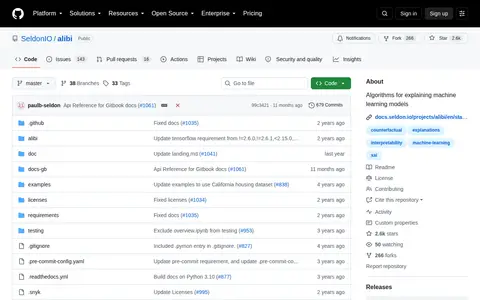
Alibi is an open-source project that provides algorithms for explaining machine learning models. Developed by SeldonIO and hosted on GitHub, it includes installation and usage documentation for pip and conda.
Alien Dreams: An Emerging Art Scene - ML@B Blog provides machine-learning models, research, training resources, or evaluation tools.
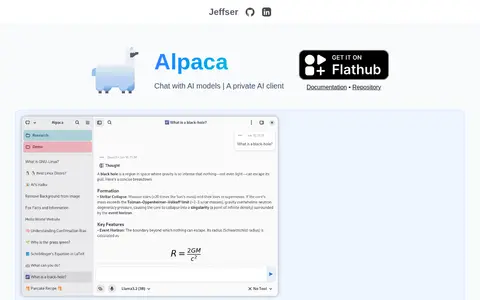
Alpaca is an Ollama client for managing and chatting with multiple models locally, described as an easy and beginner-friendly way of interacting with local AI; online providers are also available. It offers image recognition, custom models and file analysis, stores conversations locally and is licensed under GPL-3.0.
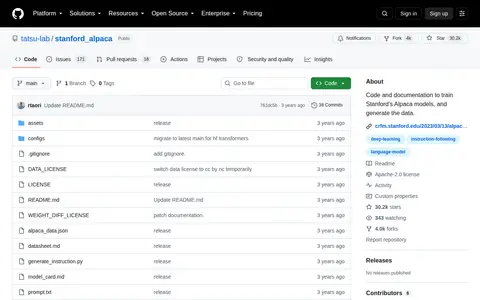
Alpaca is a project that provides code and documentation to train Stanford's Alpaca instruction-following LLaMA models and generate associated training data. It includes details on the data release, data generation process, and fine-tuning procedures.

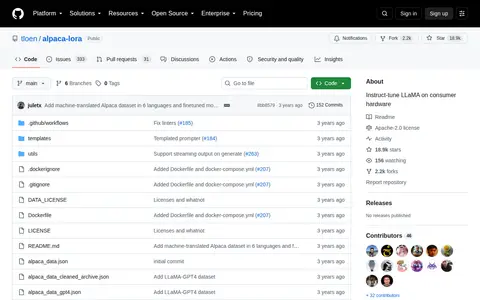
alpaca-lora is a repository with code for reproducing the Stanford Alpaca results using low-rank adaptation (LoRA). It provides an Instruct model and training code that can be easily extended to the 13b, 30b and 65b models, along with a script for downloading and inference.

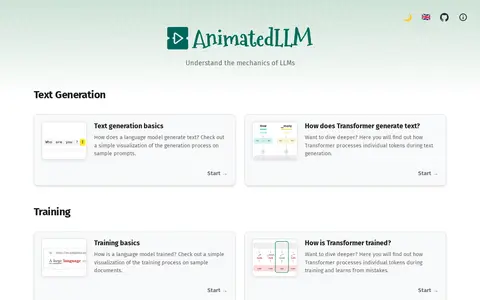
Understand how large language models work under the hood.
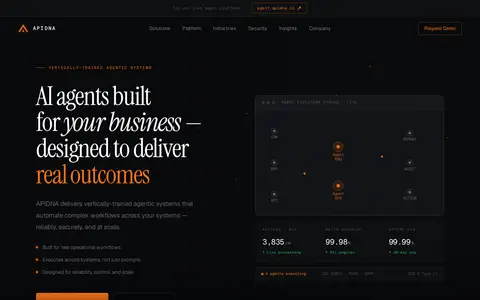
APIDNA provides machine-learning models, research, training resources, or evaluation tools.
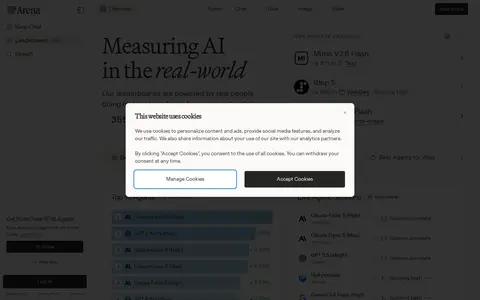
Arena is a platform that provides leaderboards to compare and benchmark leading frontier AI models across text, image, vision, and other modalities. Its rankings are powered by real user sessions from a global user base, it tracks new model releases, and offers features including live agent sessions, side-by-side model comparison, and user voting for model performance.
Arena.ai is an X account describing itself as a place where AI meets the real world. It states that it measures and advances the frontier of AI through community-driven evaluation.
Arena is a platform that allows users to interact with multiple open source and proprietary frontier AI models in a single interface for research, coding and creative tasks. It includes a model leaderboard feature, and notes that inputs are processed by third-party AI, so responses may be inaccurate.