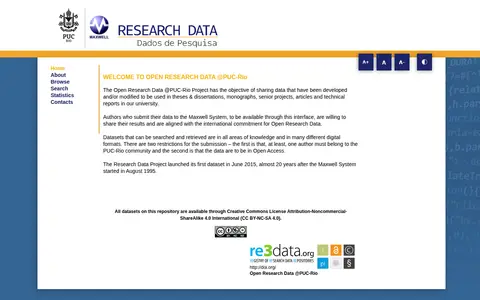
Open Research Data @PUC-Rio is a project of the Maxwell System that shares data developed or modified for theses, dissertations, monographs, senior projects, articles and technical reports at the university. Datasets span all areas of knowledge and many digital formats and can be searched and retrieved. Submission requires at least one author from the PUC-Rio community and open access data.
Directory
Search results
Published directory entries matching your search.
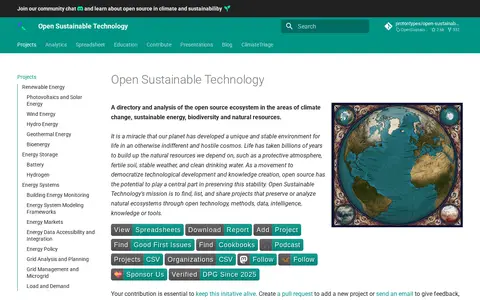
Open Sustainable Technology is a directory and analysis of the open source ecosystem in climate change, sustainable energy, biodiversity and natural resources. Its stated mission is to find, list, and share projects that preserve or analyze natural ecosystems through open technology, methods, data, intelligence, knowledge or tools. Contributions are invited via pull request or email.
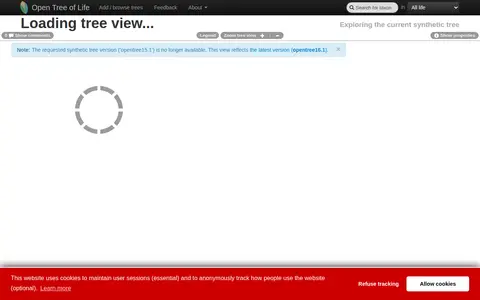
Open Tree of Life is a project that aims to make phylogenetic knowledge more accessible. The platform enables users to explore previously published phylogenetic tree estimates and synthetic phylogeny estimates generated from multiple datasets. Users can contribute to the project by uploading trees or linking trees in the system to the underlying data they are based on, to help improve the system's comprehensiveness.
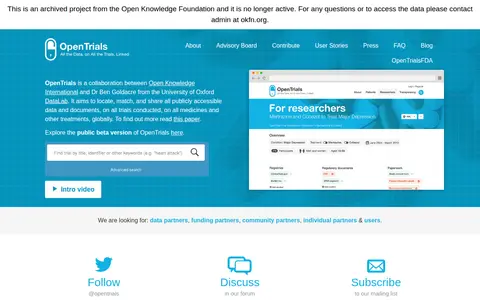
OpenTrials is a collaboration between Open Knowledge International and Dr Ben Goldacre of the University of Oxford DataLab. It aims to locate, match, and share all publicly accessible data and documents on all trials conducted on medicines and other treatments globally. A public beta version is available to explore.
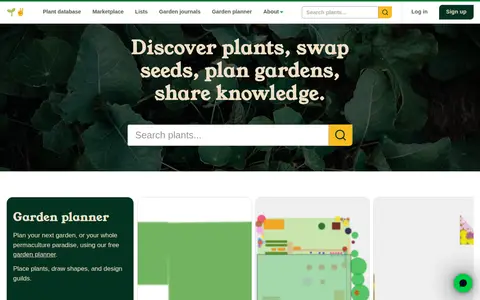
Permapeople is a platform for growing food, centred on a crowd-sourced plant database, an open marketplace and garden design tools. It also offers a garden journal and knowledge sharing, with the stated aim of supporting local food production and regenerating the environment.
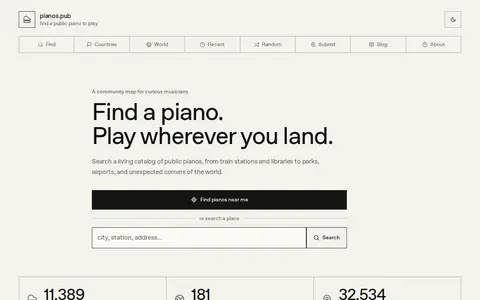
Pianos.pub is a community map that catalogs street and public pianos worldwide. It lists exact locations, photos, sightings and availability reports, and combines public datasets, historic social posts, personal knowledge and user contributions. Every piano keeps a history of sightings, comments and availability reports, and users can submit missing instruments.
The Polish Platform of Medical Research (PPM) is a knowledge base and repository covering disciplines including pharmacology and pharmacy, medical sciences and health sciences. The page lists partner institutions, including medical universities in Gdańsk, Łódź, Szczecin, Katowice, Białystok, Lublin, Wrocław, Warsaw and the Jagiellonian University Collegium Medicum.
Helps find, analyze or synthesize information for research and knowledge discovery.
Searchable repository for finding biology datasets and datasets.
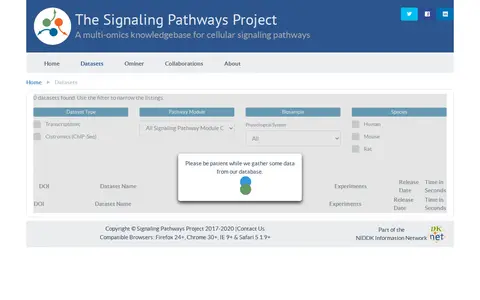
Signaling Pathways Project is a multi-omics knowledgebase for mammalian cellular signaling pathways that succeeded NURSA. It integrates transcriptomic and ChIP-Seq datasets, with preserved NURSA-curated transcriptomic data available for mining through Ominer. The datasets page lists transcriptomic and cistromics datasets, filterable by pathway module, biosample, species and release date. The notice about NURSA's retirement also mentions a planned hypothesis generation environment on dkNET.
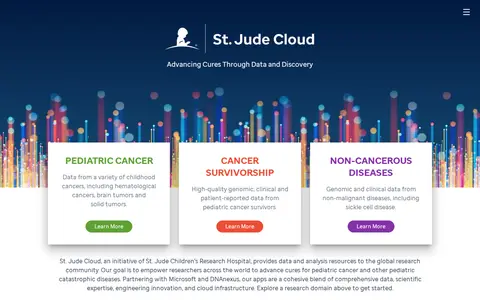
St. Jude Cloud is a pediatric catastrophic disease data sharing ecosystem created by St. Jude Children's Research Hospital. It provides data and analysis resources to the global research community, including genomic data on pediatric cancers, cancer survivorship and non-cancerous diseases. Its applications cover a genomics platform, a pediatric cancer knowledge base, visualizations, and patient-derived xenograft data.
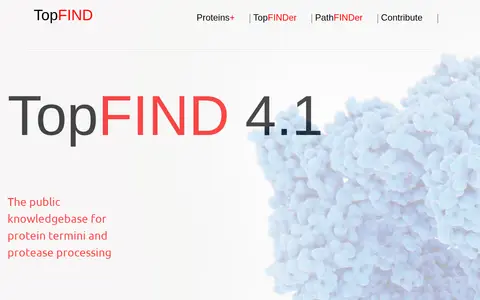
TopFIND is a public knowledgebase focused on protein termini and protease processing. It lists natural and neo N- and C- termini and protease cleavage sites across multiple covered organisms, integrates protein termini and function data with proteolytic processing, alternative transcription and translation information, and includes analysis tools TopFINDer and PathFINDer for proteomics-derived data sets.
Tuta Calendar is an encrypted calendar that organizes events with end-to-end encryption and a zero-knowledge architecture. It offers push notifications, two-factor authentication, and sharing of calendars and events. Apps are available for Android, iPhone, and open source desktop clients for Windows, macOS and Linux. It is also integrated with email.
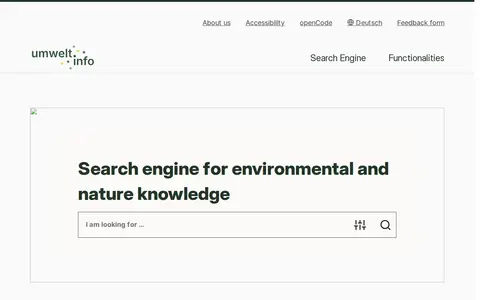
umwelt.info is a search engine for environmental and nature knowledge. It supports text queries and search filters, and lists topics such as flood risk areas, rainwater and mixed sewerage, and hazard maps. A sample search result is the Hamburg Wasserbuch, which records water use rights.
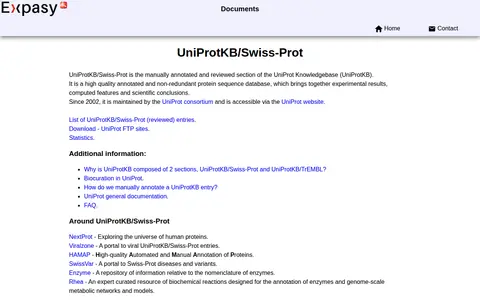
UniProtKB/Swiss-Prot is the manually annotated and reviewed section of the UniProt Knowledgebase. It is a non-redundant protein sequence database that brings together experimental results, computed features and scientific conclusions. Since 2002 it has been maintained by the UniProt consortium and is accessible via the UniProt website.
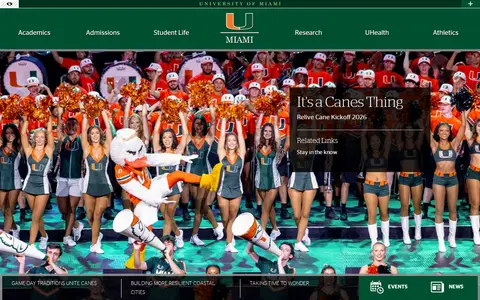
The University of Miami is described as a private research university with more than 16,000 students from around the world. It presents itself as an academic community focused on teaching and learning, the discovery of new knowledge, and service to the South Florida region and beyond.
Find and access engineering research data, with indexed text.
Dataset repository covering chemistry, with searchable datasets.
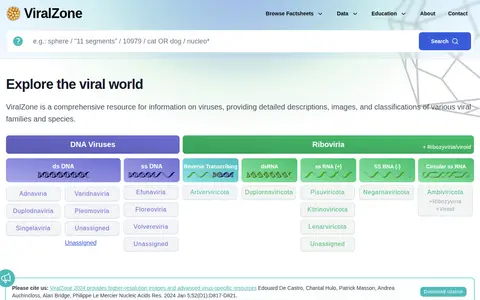
ViralZone is a knowledge resource for understanding virus diversity and a gateway to UniProtKB/Swiss-Prot viral entries. It provides descriptions, images and classifications of viral families and species, organized by genome type, and includes virus fact sheets and molecular biology pages. The site also offers ICTV virus metadata tables and links to resources for specific viruses.
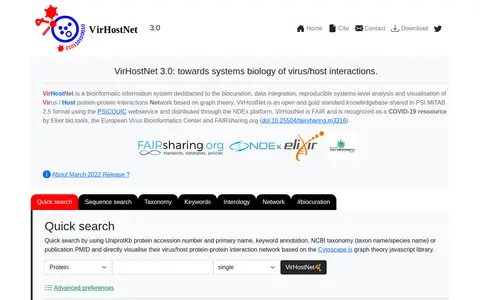
VirHostNet is a bioinformatic information system for biocuration, data integration, analysis and visualisation of virus/host protein-protein interactions. It offers quick search by protein accession, keyword, taxonomy or PMID, BLAST protein sequence search, browsing by viral taxonomy and keyword annotations, and an Interology web service. The knowledgebase is shared in PSI MITAB 2.5 format via the PSICQUIC web service and distributed through NDEx.
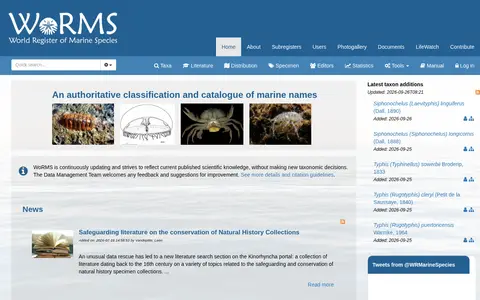
The World Register of Marine Species is an authoritative classification and catalogue of marine names. It is continuously updated to reflect current published scientific knowledge without making new taxonomic decisions. The site reports accepted marine species and marine species names, including synonyms, and offers tools such as taxon matching and web services.