
platform.minimaxi.com
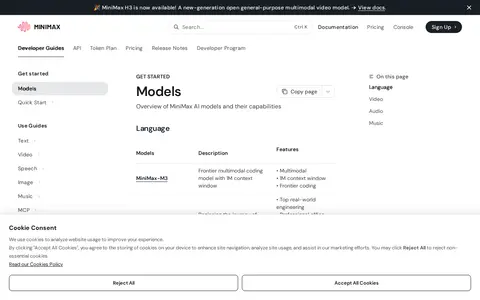
Documentation for MiniMax, covering setup, features, and practical usage.
Directory
Published directory entries matching your search.
Documentation for MiniMax, covering setup, features, and practical usage.

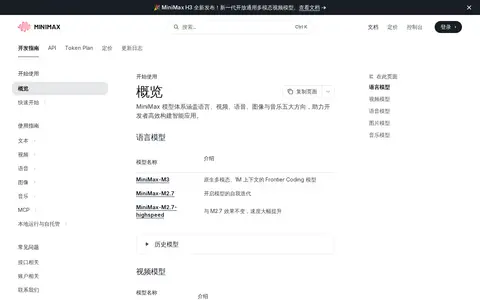
Overview of MiniMax AI models and their capabilities.

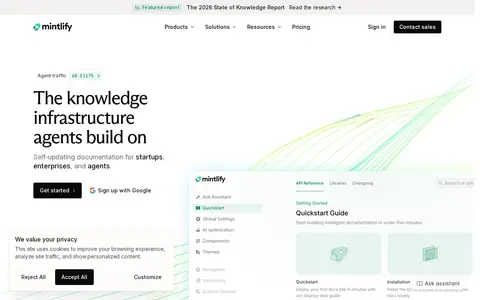
Self-updating documentation for startups, enterprises, and agents.
Mocha supports software development with code generation, analysis, debugging, or documentation.

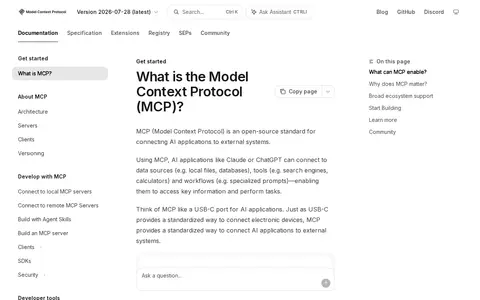
An open standard for connecting AI models to external tools and data sources. MCP Registry opensource.

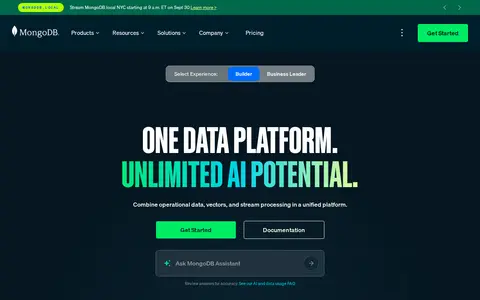
MongoDB is a document-oriented operational database that stores data in flexible JSON-like documents. The documentation describes built-in query capabilities including geospatial search, lexical search and vector search, and the platform page lists Atlas use cases such as vector search and stream processing.
Open-source project that supports software development with code generation, analysis, debugging, or documentation.

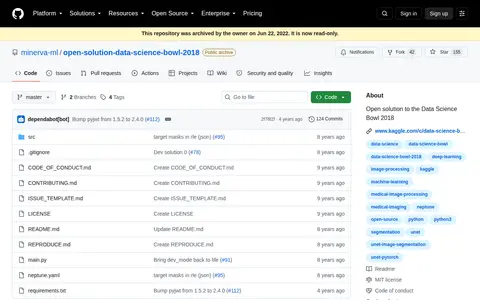
An open solution to the Data Science Bowl 2018, based on the topcoders winning solution from ods.ai. The repository was archived by the owner on Jun 22, 2022 and is now read-only. It uses PyTorch and references neptune.ml, though running it as a plain Python script is possible.

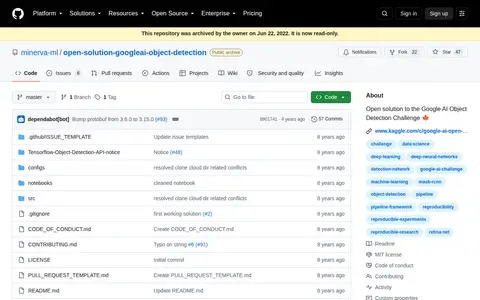
An archived, read-only GitHub repository holding an open solution to the Google AI Open Images Object Detection Track. It offers starter code, configs and notebooks, with RetinaNet training and references to the Neptune experiment platform; Neptune use is optional and the code can run as a plain Python script. The README notes the competition used Open Images Dataset V4.

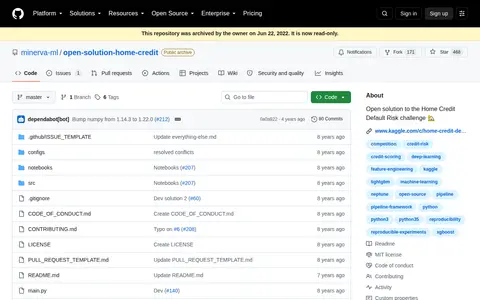
An archived, read-only GitHub repository holding an open solution to the Home Credit Default Risk challenge. It provides code, configs and notebooks plus documented solutions using LightGBM, sklearn and XGBoost with engineered features; the README lists cross-validation and leaderboard scores for each. References to Neptune are optional and the solution can run as a plain Python script.

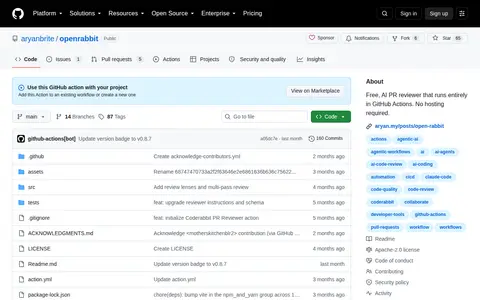
OpenRabbit is a free, open-source, self-hosted GitHub pull request reviewer. It analyzes PR diffs, consults a pluggable LLM provider such as Groq or OpenRouter, and posts a summary with inline comments. It runs entirely in GitHub Actions, so no server or hosting subscription is required, and code stays in the user's runner.

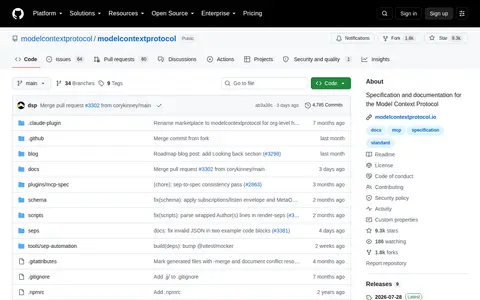
Model Context Protocol - An open standard for connecting AI models to external tools and data sources. MCP Registry.

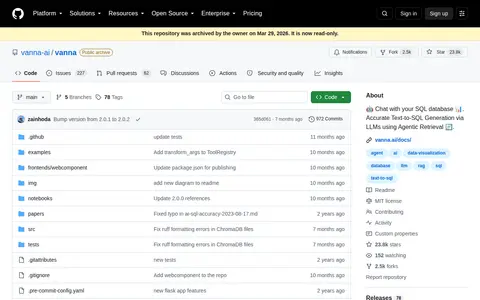
Vanna is an open source tool that enables users to interact with SQL databases via natural language. It uses large language models and agentic retrieval to generate accurate text-to-SQL queries.

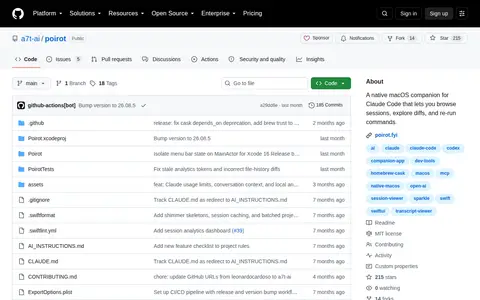
Poirot is a native macOS companion app for Claude Code. Built with SwiftUI, it lets users browse sessions, explore diffs, and re-run commands. It also provides session analytics, usage limit gauges, conversation views, and search across sessions. The app requires no login and no analytics and works offline.

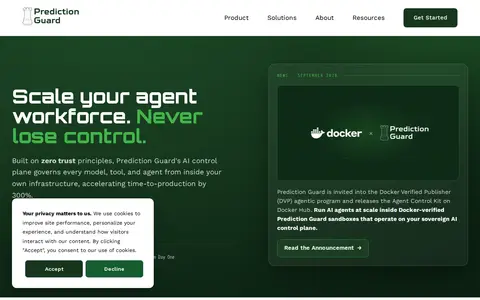
Prediction Guard is a self-hosted AI control plane described as enforcing NIST and OWASP-aligned runtime controls inside an organization's security boundary. It offers Agent Forge for creating interactive and autonomous agents, and an OpenAI, Anthropic and MCP compatible API. The site lists a Docker Verified Publisher agentic program entry and a verified Agent Control Kit on Docker Hub.

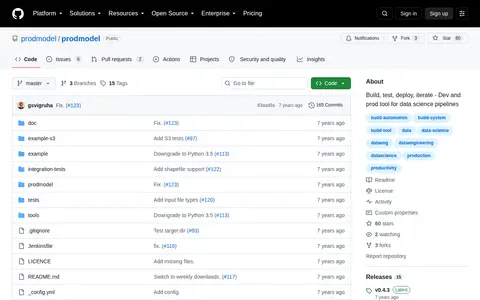
Build tool for data science pipelines.

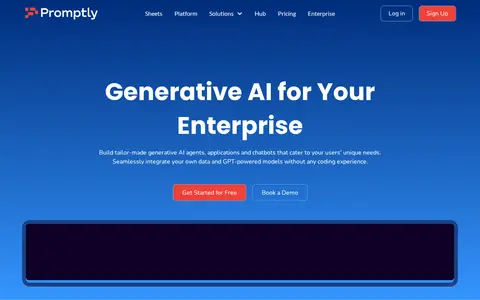
Promptly is a no-code generative AI platform built for enterprise use. It allows users to build generative AI applications, AI agents and chatbots without coding experience, and supports features including model chaining, RAG pipeline creation, custom data integration, and multi-language translation. The platform offers pre-built templates for common use cases.
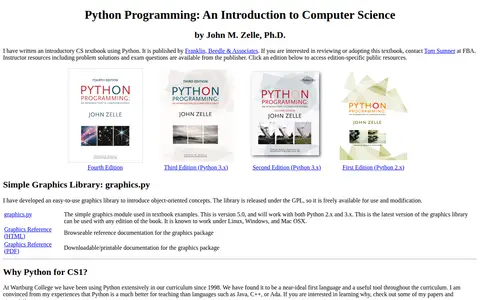
Teaching page by John M. Zelle, Ph.D., for an introductory computer science textbook written in Python and published by Franklin, Beedle & Associates. It links edition-specific public resources for four editions and offers graphics.py, a simple graphics library released under the GPL for introducing object-oriented concepts. Instructor resources including problem solutions and exam questions are available from the publisher.

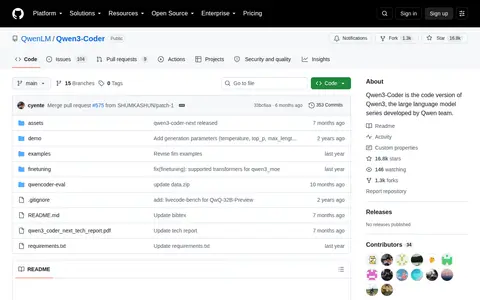
Qwen3-Coder is the code version of the Qwen3 large language model series from the Qwen team. It is offered in multiple sizes, including Qwen3-Coder-480B-A35B-Instruct, Qwen3-Coder-30B-A3B-Instruct and Qwen3-Coder-Next, and the repository supports platforms such as Qwen Code, CLINE and Claude Code.

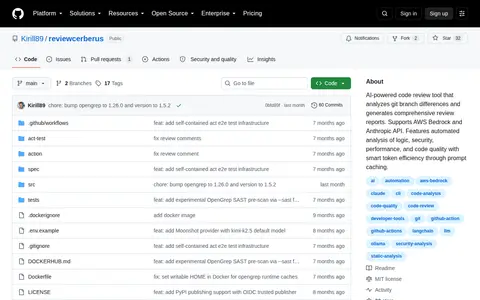
ReviewCerberus is an AI-powered code review tool that analyzes git branch differences and generates review reports. It examines logic, security, performance and code quality, and supports AWS Bedrock and Anthropic API, according to the repository. A GitHub Action posts review comments on pull requests.

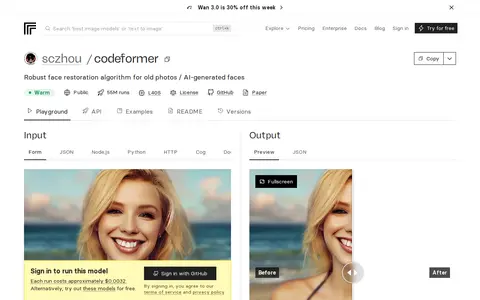
CodeFormer, developed by sczhou, is a robust open-source face restoration algorithm designed for restoring old photos and AI-generated faces. The associated web demo is intended for research purposes. It is available via the Replicate platform or for local deployment, runs on Nvidia L40S GPUs, and typically completes predictions in 3 seconds. The associated research was published at NeurIPS 2022.

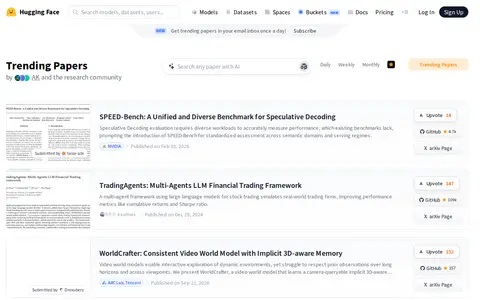
Your daily dose of AI research from AK.

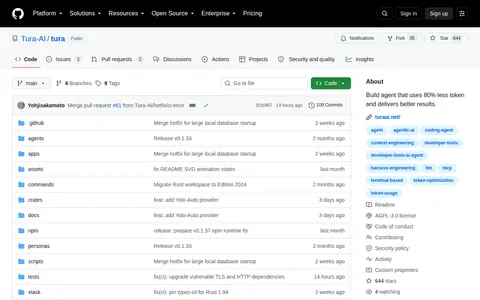
Tura is an open-source agent runtime harness that turns a task into a runtime-managed command graph, avoiding repeated model round trips in a ReAct session. The documentation describes it as a terminal-native developer tool that turns intent into verified code changes, emphasizing reading the repository first, keeping an audit trail, and proving results.

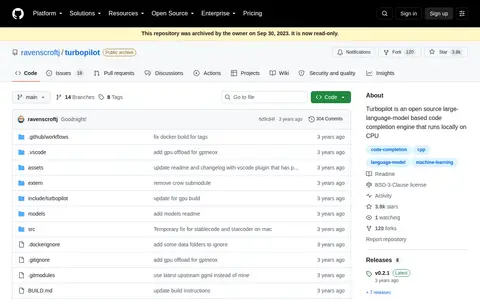
A self-hosted copilot clone that uses the library behind llama.cpp to run the 6 billion parameter Salesforce Codegen model in 4 GB of RAM.