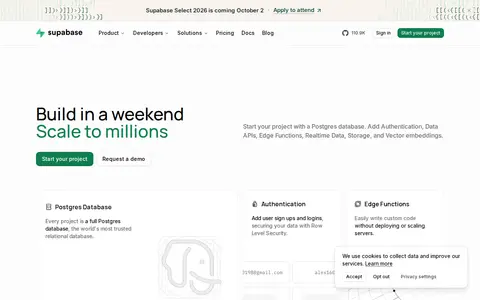

Supabase is a Postgres development platform for building applications with a Postgres database, Authentication, instant APIs, Realtime, Functions, Storage and Vector embeddings. Every project includes a full Postgres database, and the platform auto-generates a REST API from the database schema using PostgREST. Documentation covers connecting frameworks, building backends, extending databases and migrating existing data.
Directory
Search results
Published directory entries matching your search.
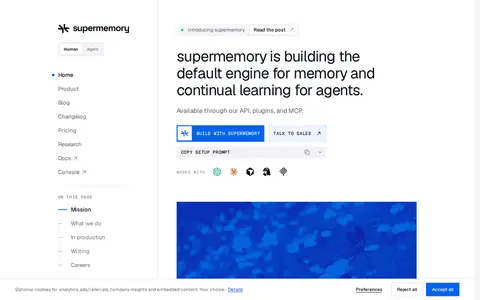
Supermemory is a memory and continual learning engine for AI agents. It extracts and stores context from users and tasks in a vector-graph database, then injects prior memories into an agent's context. It is offered through an API, plugins, and MCP, and supports ingestion of text, URLs, documents, PDFs, Office and Google Workspace files, code, markdown, images, audio, and video.
Open-source project that provides machine-learning models, research, training resources, or evaluation tools.
SVGFast converts PNG and JPG images into SVG vectors. It offers unlimited conversions without sign-up and free API access during the beta after signing in with Google or GitHub. The API returns optimized SVG from the same engine, with keys sent in an authentication header.
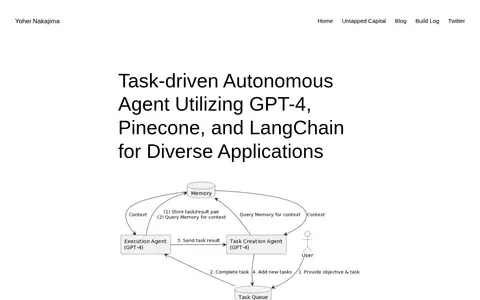
This is a blog post by Yohei Nakajima describing a proposed task-driven autonomous agent that leverages OpenAI's GPT-4 language model, Pinecone vector search, and the LangChain framework to perform tasks across diverse domains. The system can complete assigned tasks, generate new tasks based on completed results, and prioritize tasks in real time. The post outlines potential future improvements including integration of a security/safety agent, expanded functionality, generation of interim milestones, and real-time priority updates.
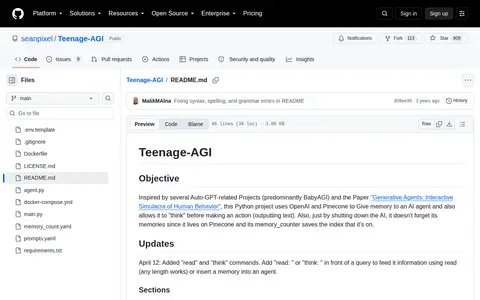
Teenage-AGI is a Python project inspired by Auto-GPT-related projects and the Generative Agents paper. It uses OpenAI and Pinecone to give an AI agent memory and let it think before acting. The agent stores queries and answers in a Pinecone vector database.
The Boolean Game is a game for learning to use boolean operations in Adobe Illustrator, Sketch, Figma, and other vector editors. Its stages include union, subtract, intersect, and difference. Game settings cover sound, tutorial display, and animation speed.
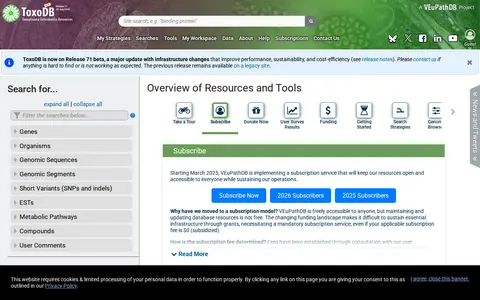
ToxoDB is a biomedical data resource hosted on the VEuPathDB platform. VEuPathDB provides FAIR access to genomic data for eukaryotic microbes including protists and fungi, as well as hosts and arthropod vectors of pathogenic species, and is working to secure long-term financial sustainability for these globally relied-upon biomedical data resources.
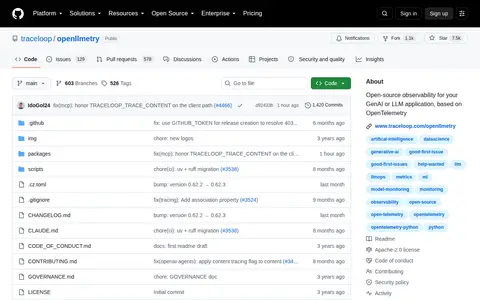
Traceloop OpenLLMetry is an open-source observability tool for GenAI and LLM applications, based on OpenTelemetry and maintained by Traceloop. It provides instrumentation for vector databases and frameworks, and includes documentation on getting started and supported destinations.
TrichDB is part of the VEuPathDB platform, which provides FAIR access to genomic data for eukaryotic microbes including protists and fungi, their hosts and arthropod vectors of pathogenic species. VEuPathDB works to secure the long-term financial sustainability of these globally used biomedical data resources.
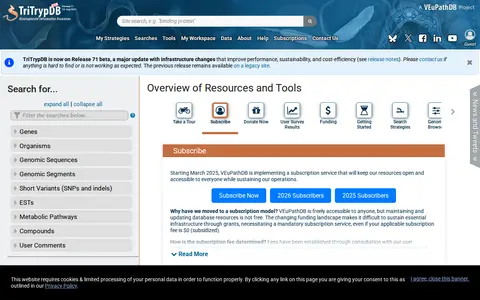
TriTrypDB is a component of VEuPathDB that provides FAIR access to genomic data for eukaryotic microbes, including protists and fungi, as well as their hosts and arthropod vectors. It supports biomedical research by offering a curated, sustainable resource for globally relied-upon data.

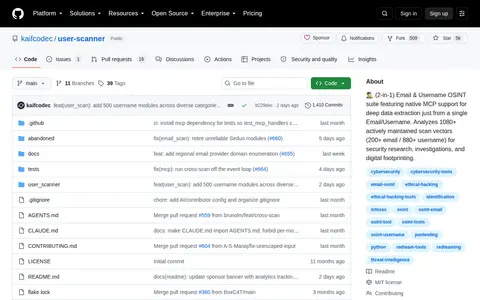
User Scanner is a two-in-one email and username OSINT suite with native MCP support. It performs deep data extraction from a single email or username, analyzing over 1080 maintained scan vectors, including more than 200 email and 880 username sources. It is intended for security research, investigations, and digital footprinting.
VectorArt.ai is an AI vector art generator that creates SVG images, logos, icons and illustrations from text prompts. Users describe an image, generate it and download it as a scalable SVG file. The site also offers a library of free AI-generated illustration sets and an image-to-SVG conversion option.
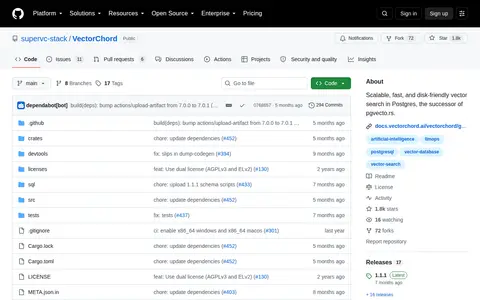
Scalable, fast, and disk-friendly vector search in Postgres, the successor of pgvecto.rs.
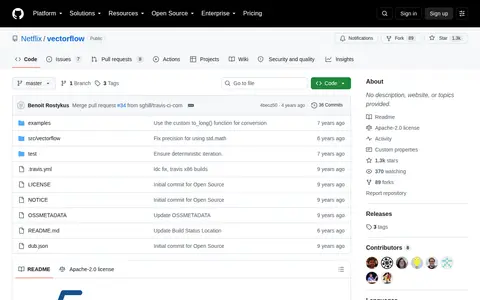
Minimalist neural network library optimized for sparse data and single machine environments.
VectorPortal is a library of free stock vector graphics, clipart and SVG files. Every file is released under the Creative Commons Attribution license (CC BY 4.0), permitting modification, sharing and adaptation with proper credit. New content from the community is added daily, and the site includes a curated Handpicked Collection.
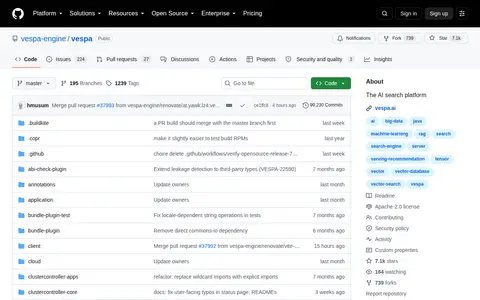
Vespa is an AI search platform. Its repository contains the code required to build and run Vespa. The project covers searching, making inferences in and organizing vectors, tensors, text and structured data at serving time and any scale. It is licensed under Apache 2.0.

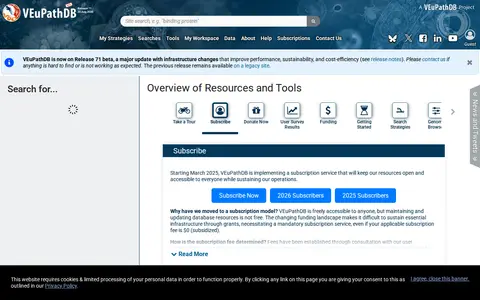
VEuPathDB is a biomedical data resource that provides FAIR access to genomic data for eukaryotic microbes including protists and fungi, as well as hosts and arthropod vectors of pathogenic species. It supports the long-term financial sustainability of globally relied-upon biomedical data resources.
VistaCreate is a free graphic design tool with thousands of templates and built-in AI tools. It offers an online design editor, AI image generation, object removal and copy assistance, plus a library of stock photos, videos and vectors. Pro adds full library access, design resizing and posting or scheduling to social media, with team collaboration for up to 10 people.
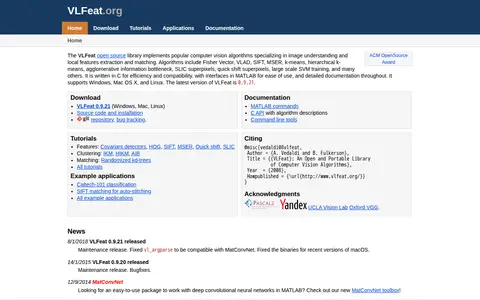
VLFeat is an open-source library of computer vision algorithms focused on image understanding and local feature extraction and matching. Algorithms include SIFT, MSER, Fisher Vector, VLAD, k-means, SLIC superpixels, and SVM training. It is written in C with MATLAB interfaces and supports Windows, Mac OS X, and Linux.
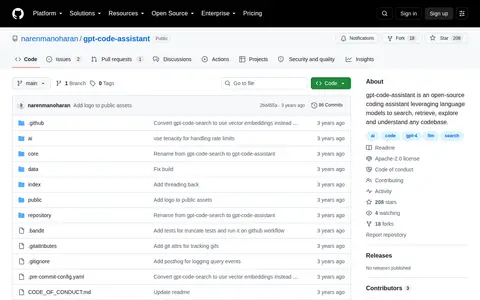
Open-source coding assistant using language models and vector embeddings to search, retrieve, explore and understand codebases. It works with local code and multiple programming languages; code snippets are only transmitted when a question is asked. Installation is via pip, and it defaults to the gpt-3.5-turbo-16k model.