
onWatch is an open-source tool developed by onllm-dev that tracks AI API quotas for services including Synthetic, Z.ai, Anthropic Claude Code, Codex, GitHub Copilot and Antigravity in real time. It functions as a lightweight background daemon that uses less than 50MB of RAM, stores data in SQLite, and provides a Material Design 3 dashboard. The tool does not collect telemetry.
Directory
Search results
Published directory entries matching your search.
Open-source project that supports deploying, serving, monitoring, or operating AI and machine-learning systems.
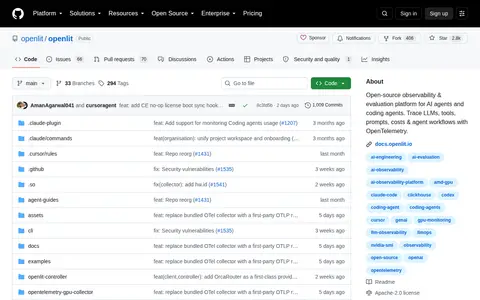
OpenLIT is an open-source agent harness engineering platform built on OpenTelemetry. It provides tracing, evaluations, guardrails, prompt and context management, and cost and GPU monitoring for the harness around AI agents and coding agents. It is free to self-host under Apache 2.0 and is described as working with many models, frameworks and harnesses.
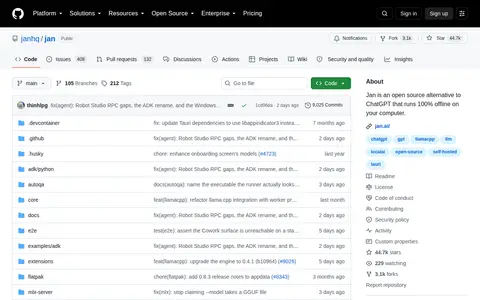
Jan is an open source alternative to ChatGPT that runs offline on the user's computer, according to the repository description. It provides local AI models downloaded and run with an OpenAI-compatible local server at localhost:1337 and supports connecting to cloud GPT and Claude models according to the README features list.
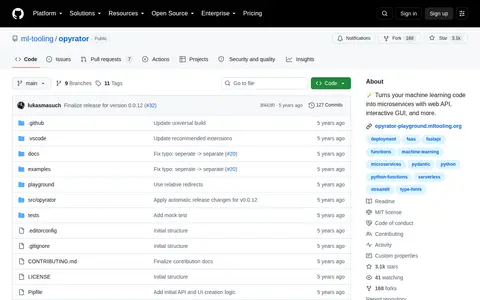
Turns your ML code into microservices with web API, interactive GUI, and more.
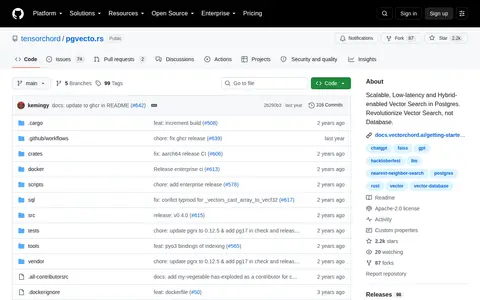
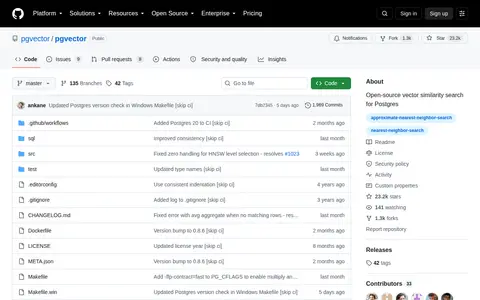
pgvecto.rs is an open-source tool that provides scalable, low-latency, hybrid-enabled vector search for PostgreSQL. It is designed to enhance vector search capabilities without modifying the core database system, per its official GitHub repository.
Open-source vector similarity search for Postgres.
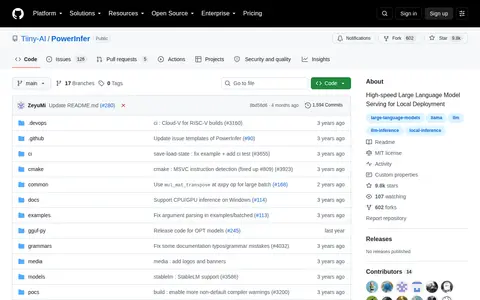
A high-speed inference engine for deploying LLMs locally.

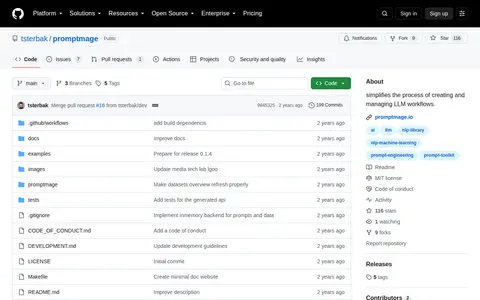
Open-source tool to simplify the process of creating and managing LLM workflows and prompts as a self-hosted solution.
Open-source project that provides machine-learning models, research, training resources, or evaluation tools.
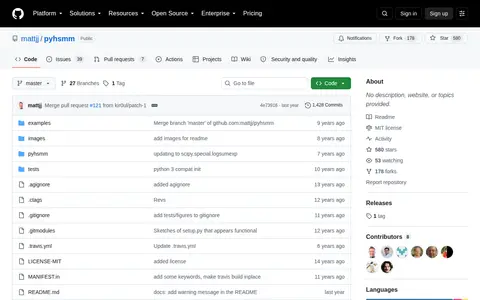
pyhsmm is a Python library for approximate unsupervised inference in Bayesian Hidden Markov Models and explicit-duration Hidden semi-Markov Models, focusing on the HDP-HMM and HDP-HSMM with weak-limit approximations. Extensions include autoregressive models, switching linear dynamical systems and factorial models. The package is stated as no longer maintained and was last tested with Python 3.7.
Open-source project that supports deploying, serving, monitoring, or operating AI and machine-learning systems.
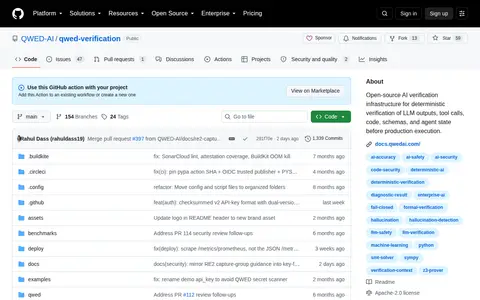
QWED is an open-source AI verification infrastructure hosted on GitHub. It provides deterministic verification for large language model outputs, tool calls, code, schemas, and agent state prior to production execution.
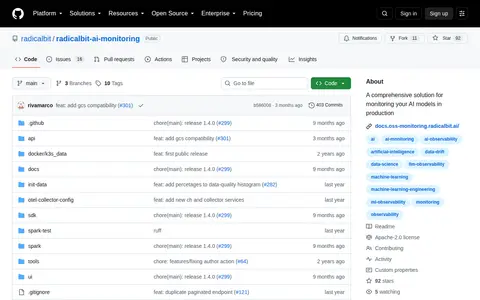
The open source solution for monitoring your AI models in production.
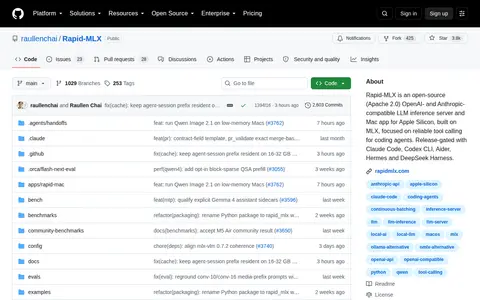
Rapid-MLX is an open-source, Apache 2.0 licensed large language model inference server and Mac application for Apple Silicon devices. It is compatible with OpenAI and Anthropic APIs, built on the MLX framework, and focused on reliable tool calling for coding agents.
Open-source project that provides machine-learning models, research, training resources, or evaluation tools.
Examples showing how to use the OpenAI vision API to run inference on images, video files and webcam streams.
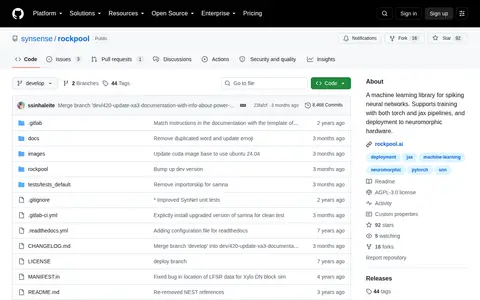
Rockpool is a Python package for developing signal processing applications with spiking neural networks. It allows users to build networks, simulate, train and test them, and deploy them in simulation or on event-driven neuromorphic compute hardware. It provides layers with simulation backends including Brian2, Torch, JAX, Numba and raw numpy.
Rune is a project that provides containers to encapsulate and deploy EdgeML pipelines and applications. It is associated with the repository hotg-ai/rune and is licensed under Apache 2.0 or MIT at the user's option.
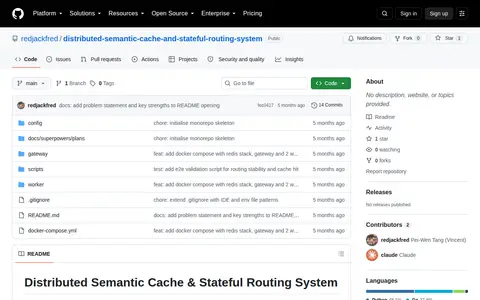
Semantic Cache Router is a distributed semantic cache and stateful routing system hosted on GitHub. It includes documentation covering the problem it addresses, its solutions, key strengths, and system architecture.
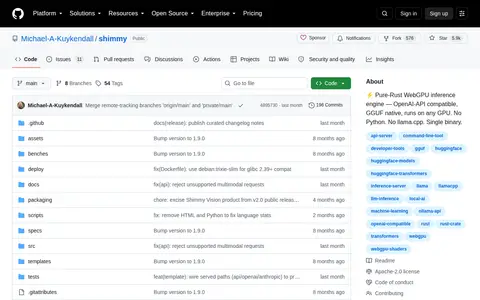
Python-free Rust inference server with OpenAI API compatibility and hot model swapping.
Open-source project that provides machine-learning models, research, training resources, or evaluation tools.
Lets you create apps for your ML projects with deceptively simple Python scripts.
TensorFlow Model Optimization is a toolkit designed to optimize machine learning models for deployment for Keras and TensorFlow. It includes techniques such as quantization and pruning to reduce model size and improve inference performance.