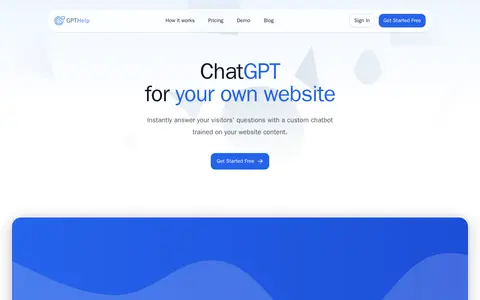
GPTHelp.ai is a service that enables users to create fully automated AI support chatbots for their websites. The chatbots are trained on the site's existing content, knowledge base and FAQs. Users can set up a chatbot in minutes, customize its design and behavior, and monitor conversations.
Directory
Search results
Published directory entries matching your search.
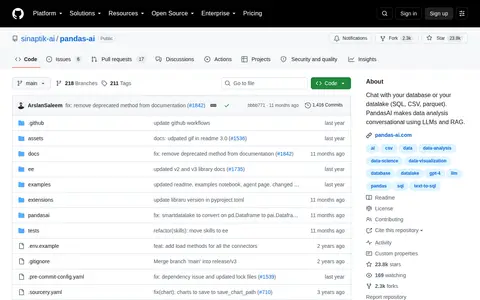
PandasAI is an open-source library that enables conversational data analysis using large language models and retrieval-augmented generation. It allows users to interact with databases or datalakes supporting SQL, CSV, and parquet file formats.
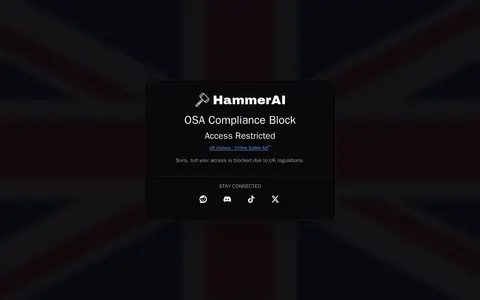
HammerAI is presented as a free and private AI chat and roleplay service. According to the site, it allows chatting with role-playing AI characters, generating images as well as writing stories. The source page displays a UK access block citing Online Safety Act regulations.
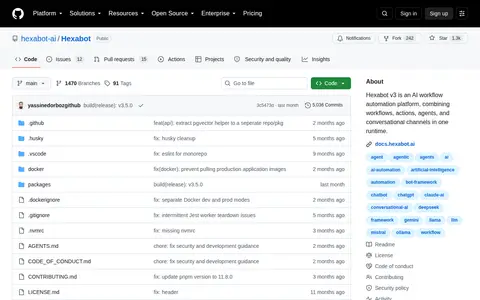
Open-Source AI Chatbot / Agent builder with support for LLMs as well as social media channels integration.
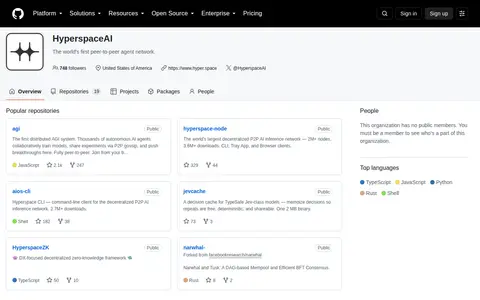
HyperspaceAI describes itself as a peer-to-peer agent network with 19 public repositories on GitHub. Among the repositories is the AGI project, which describes thousands of autonomous AI agents that train models in collaboration and share experiments via P2P gossip. Another repository, hyperspace-node, is described as a decentralized P2P AI inference network with CLI, Tray App and Browser clients.
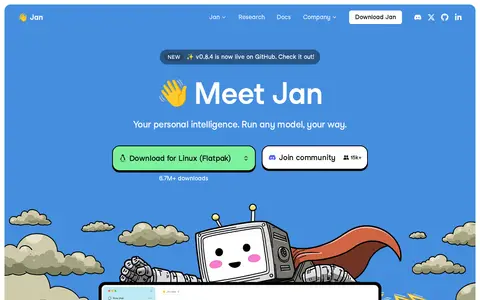
Jan is an open-source alternative to ChatGPT. It runs open-source AI models locally or connects to cloud models such as GPT and Claude. The download is offered for Mac. A memory feature is listed as coming soon.
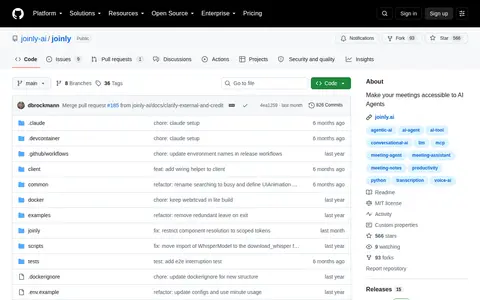
joinly is a connector middleware that enables AI agents to join and actively participate in video calls. Its MCP server provides meeting tools and resources for tasks and real-time interaction by voice or chat during meetings, across Google Meet, Zoom, and Microsoft Teams. It is open-source and self-hosted.
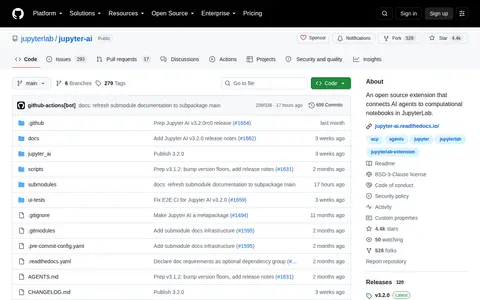
Jupyter AI is an open source extension that connects AI agents to computational notebooks in JupyterLab. It provides a native chat UI and integrates agents through the Agent Client Protocol, with a permission system requiring approval before files are written or commands executed. It is under incubation in the JupyterLab organization.
AI assistant focused on chat, long-context reading, writing, summarization, and research tasks.
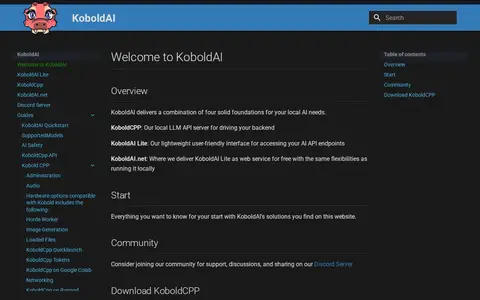
KoboldAI presents tools for local AI use. KoboldCPP is a local LLM API server for driving a backend, and KoboldAI Lite is a lightweight interface for accessing AI API endpoints. KoboldAI.net delivers KoboldAI Lite as a free web service. Downloads for KoboldCPP are offered for Windows, Linux and Mac, and community support is available on Discord.
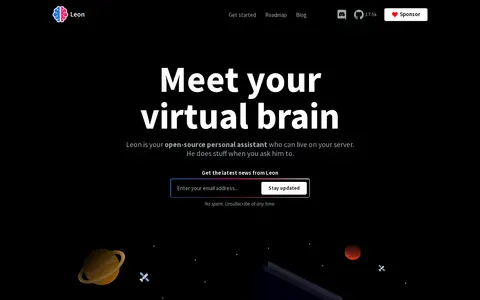
Leon is an open-source personal assistant that can run on a user's server. It is built on Node.js, Python and artificial intelligence concepts, and responds to requests. It uses a modular architecture for creating or using skills, and supports several cloud and offline text-to-speech and speech-to-text solutions.
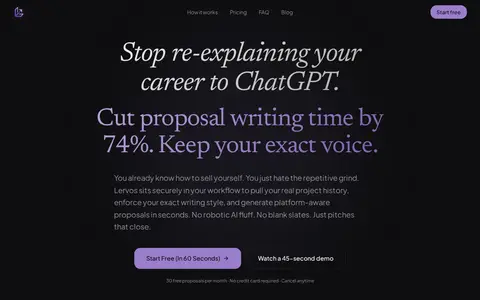
Lervos is a tool that generates freelance job proposals matched to a user's personal writing style and past project history. It remembers users' real projects and writing rules to produce platform-appropriate proposals in seconds, and offers a free starter tier with no credit card required.
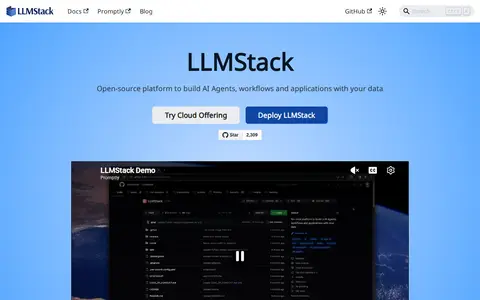
LLMStack is a no-code platform for building generative AI apps, chatbots and agents using imported data. It supports major model providers and lets users share apps publicly or restrict access with roles.
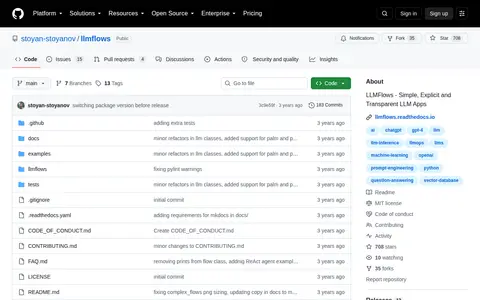
LLMFlows is a Python framework for building LLM applications such as chatbots, question-answering systems and agents. It provides abstractions for using LLMs and vector stores, with explicit classes that avoid hidden prompts or LLM calls, aiming to make monitoring, maintenance and debugging easier.
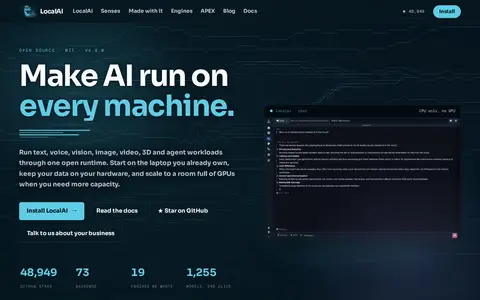
LocalAI is described as an open source AI engine that runs models, including LLMs, vision, voice, image and video, on any hardware without a GPU. It presents itself as a drop-in replacement for most upstream APIs and includes a built-in agent platform powered by LocalAGI, whose agents can reason, use tools and maintain memory. Image generation with Stable diffusion on CPU is also supported.
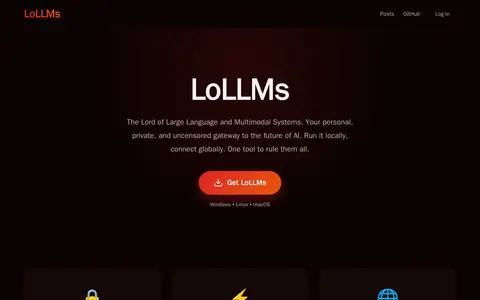
LoLLMs, described as the Lord of Large Language and Multimodal Systems, is a local AI tool for running models. It states full local execution and hardware support for NVIDIA, AMD, Apple Silicon or CPU. It is offered for Windows, Linux and macOS.
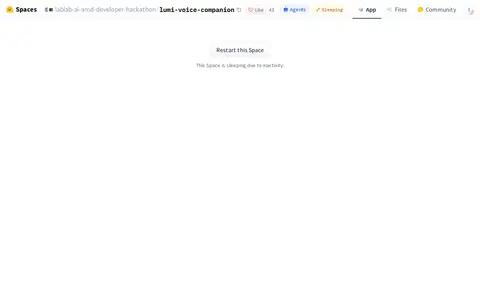
Lumi is a Hugging Face Space in an AMD developer hackathon organization, duplicated from another Space. It lets users talk or type to an AI helper designed for people with dementia or Alzheimer's, choosing a companion profile for replies. The Space is sleeping due to inactivity.
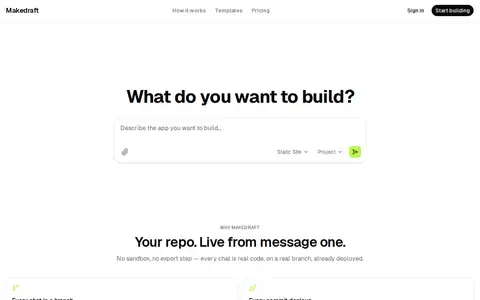
Makedraft is an AI-powered platform that builds and deploys projects from conversational instructions. It generates real code in a GitHub repository, automatically deploys each branch as a live service, and supports custom domains. It integrates with tools like Render, Supabase, and Stripe, and works with React and Next.js.
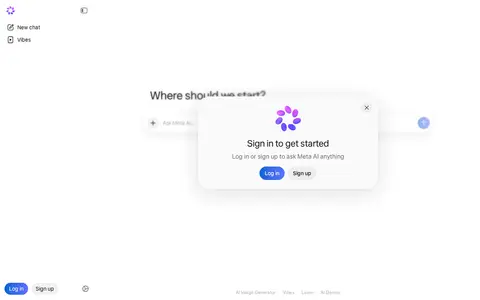
Meta's AI assistant for chat, image generation, search-style answers, and social platform features.
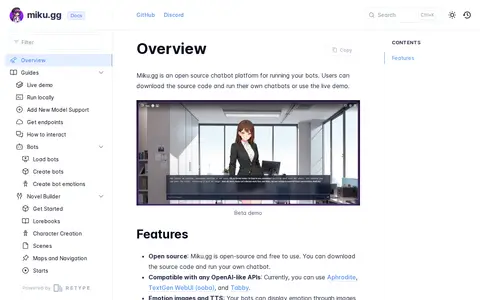
Miku.gg is an open source chatbot platform for running bots. Users can download the source code and run their own chatbots or use the live demo. It works with any OpenAI-like APIs and currently supports Aphrodite, TextGen WebUI and Tabby. Bots can show emotion through images and use TTS, with Azure TTS, NovelAI and ElevenLabs supported. A bot directory allows sharing, downloading or trying bots without local installation.
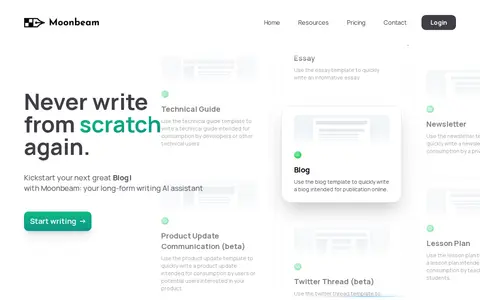
Moonbeam is an AI writing assistant aimed at long-form content such as essays, stories, articles and blogs. It offers a wizard for turning notes into outlines and paragraphs, a prompt-driven assistant named Luna, Smart Chat for editing with real-time feedback, and content cluster generation. A team plan adds collaboration and multiple users.
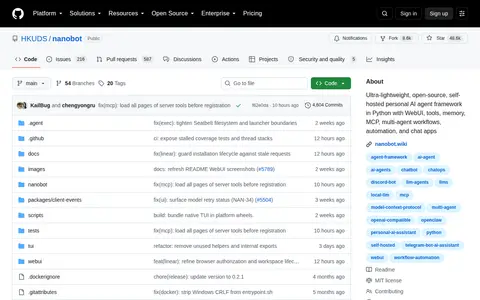
Ultra-lightweight personal AI assistant framework (~4,000 lines of Python). Supports MCP, 9+ chat channels, and extensible skills system.
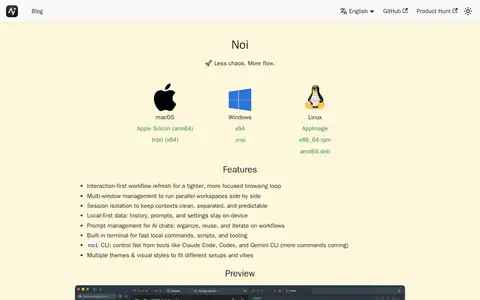
Noi is a desktop application that provides an interaction-focused browsing workflow. It offers multi-window management for parallel workspaces, session isolation, and local-first data storage for history, prompts, and settings. It also includes prompt management for AI chats, a built-in terminal, and a CLI for controlling Noi from tools such as Claude Code and Codex. Builds are listed for macOS, Windows, and Linux.
NVIDIA AI is a suite of enterprise artificial intelligence solutions offered by NVIDIA. The portfolio includes accelerated infrastructure, enterprise-grade software, and AI models. Solution areas span agentic AI, inference, conversational AI, data science, and cybersecurity. The program aims to help organizations transform into AI-enabled enterprises.