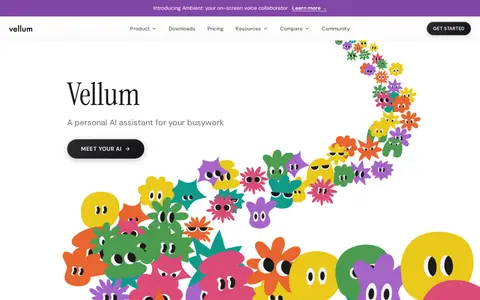
Vellum is a personal AI assistant available locally or in the cloud, with long-term memory across conversations. It can send emails, manage calendars, browse the web, create slides, write code, run research, and execute recurring background tasks. It offers fine-grained permissions requiring approval for high-stakes actions until marked trusted. Two plans exist: Base (free) and Pro packages Mighty, Super, and Ultra.
Directory
Search results
Published directory entries matching your search.
VERSO is an Integrated Library System from Auto-Graphics with a modular structure. Three packages are offered: VERSO for mid-size individual and multi-branch libraries with over 150,000 annual circulation, VERSO CONSORTIA for structures where multiple libraries act as a single system, and EXPRESS for smaller libraries with less than 150,000 annual circulation.
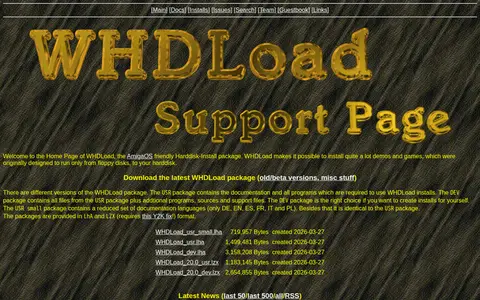
WHDLoad is an AmigaOS harddisk-install package that makes it possible to install demos and games originally designed to run only from floppy disks to a harddisk. The USR package contains documentation and programs required to use WHDLoad installs; the DEV package adds programs, sources and support files for creating installs. Packages are provided in LhA and LZX format.
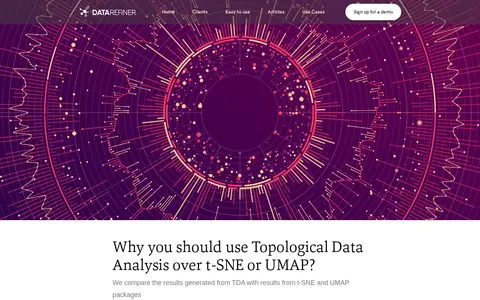
An article comparing Topological Data Analysis results with those from t-SNE and UMAP packages. It discusses advantages of TDA coupled with self-supervised learning and covers case studies in IoT, image analysis and text analysis, plus open-source libraries for starting with TDA.
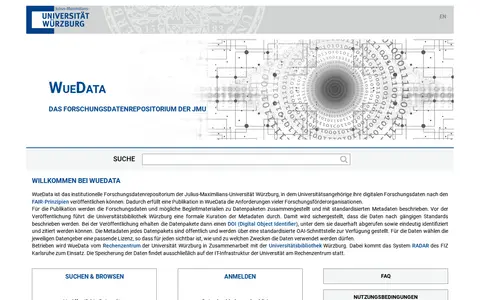
WueData is the institutional research data repository of Julius-Maximilians-Universität Würzburg, where university members can publish digital research data according to the FAIR principles. Data and accompanying materials are compiled into data packages with standardized metadata, curated by the university library, and published with a DOI. Metadata is public and available via a standardized OAI interface. It runs on the RADAR system of FIZ Karlsruhe, operated by the university computing center and library.
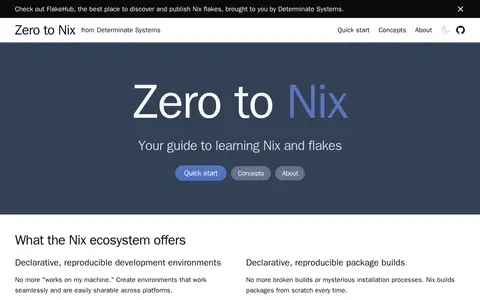
Zero to Nix is a guide to learning Nix and flakes. It describes core ecosystem components: Nix as a build tool and package manager, the Nix language, NixOS as a Linux distribution, and Nixpkgs as a collection of packages, libraries, and helper functions.