
archives.kdemo.or.kr
Archives of the Democratization Movement Memorial Foundation.
Directory
Published directory entries matching your search.
Archives of the Democratization Movement Memorial Foundation.

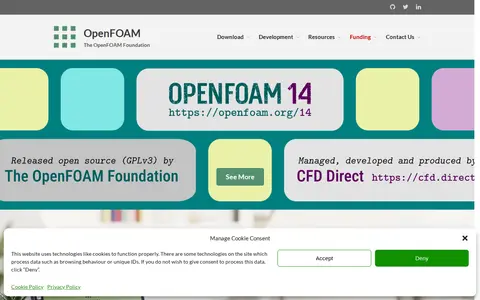
OpenFOAM is free, open source computational fluid dynamics software written in C++, owned by the OpenFOAM Foundation and distributed under the General Public Licence. It calculates fluid motion and forces, heat transfer, thermodynamics and chemistry in fluids and solids. It is produced by the core maintenance team at CFD Direct and is used in industry, government research and academia.

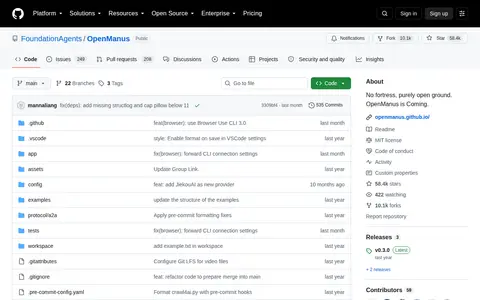
OpenManus is an open-source project with the tagline 'No fortress, purely open ground. OpenManus is Coming.' Hosted on GitHub as the FoundationAgents/OpenManus repository, its documentation includes a project demo and installation instructions for conda and uv environments.

OtterSec provides blockchain security audits and research. The firm audits Layer 1 foundations, wallets, DeFi protocols, bridges, and related infrastructure, and publishes past audits, findings, research notes, and team talks.

PoliticalTests is a website that links to a collection of political quizzes made by its author, gathered in one place for easier access. The listed tests include RightValues, 10Groups, AuthValues, 12Axes, 6Foundations and others, some based on 8values, SapplyValues and the Moral Foundations Theory. It also links to unrelated tests such as 8Values.

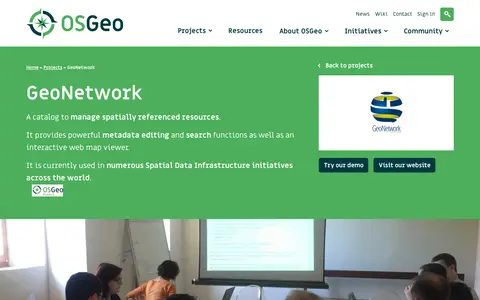
Public Geodata Repository refers to GeoNetwork, an open source data catalog designed for spatial data infrastructures. It offers metadata editing and search functionalities, and is listed as a community project under the Metadata Catalogs category by the Open Source Geospatial Foundation (OSGeo).
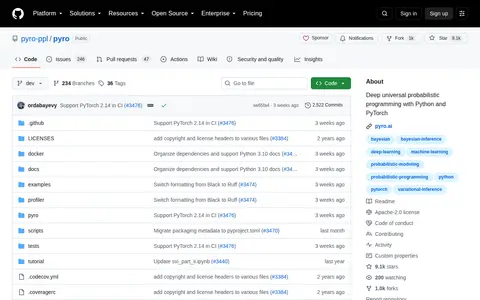
Pyro is a deep probabilistic programming library built on PyTorch, described as universal, scalable, minimal and flexible. It can represent any computable probability distribution and was originally developed at Uber AI, now maintained by community contributors including a team at the Broad Institute. It became a project of the Linux Foundation in 2019. It installs via pip as pyro-ppl.
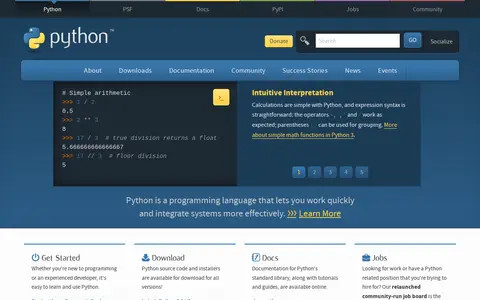
Python is a programming language whose official site provides downloads, documentation, a beginner's guide and news. The site lists application areas including web development, GUI development, AI and machine learning, scientific and numeric computing, software development and system administration. The Python Software Foundation supports the language and its community.

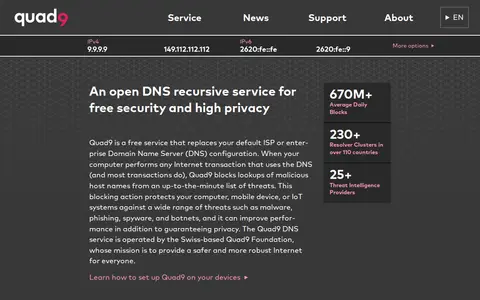
Quad9 is a free public recursive DNS service operated by the Swiss-based Quad9 Foundation. It replaces a default ISP or enterprise DNS configuration and blocks lookups of malicious host names from a threat list, aiming to protect devices against malware, phishing, spyware and botnets. Service addresses support malware blocking and DNSSEC validation, with optional encryption via HTTPS and TLS.
Qwen is an AI project whose site lists models including Qwen3Guard, a safety guardrail model built on Qwen3 foundation models for detecting risk in prompts and responses. It also lists Qwen-Image-Edit, an image editing version of a 20B Qwen-Image model, and Qwen-MT, a translation model via Qwen API supporting 92 languages.

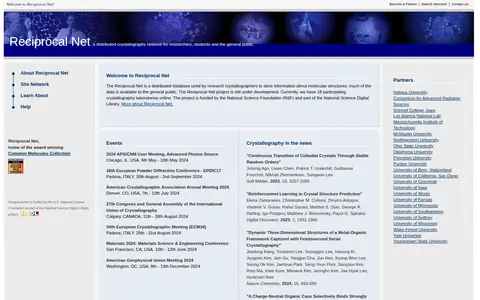
Reciprocal Net is a distributed crystallography network and distributed database used by research crystallographers to store information about molecular structures, with much of the data available to the general public. It is funded by the U.S. National Science Foundation as part of the National Science Digital Library project and is still under development, with 18 participating crystallography laboratories online.

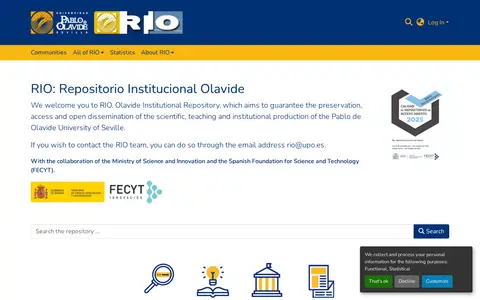
The Repositorio Institucional Olavide is the official institutional repository of the Pablo de Olavide University of Seville. It aims to guarantee the preservation, access and open dissemination of the university's scientific, teaching and institutional production, and operates in collaboration with the Spanish Ministry of Science and Innovation and the Spanish Foundation for Science and Technology (FECYT).
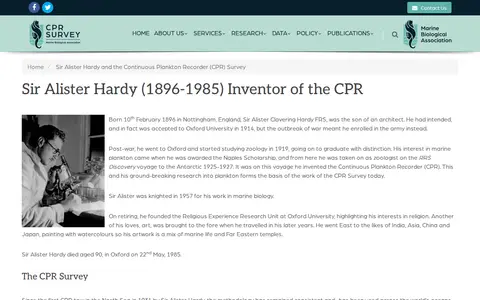
SAHFOS refers to the Sir Alister Hardy Foundation for Ocean Science, which began operating from the Citadel Hill Laboratory in Plymouth in 1990. It concerns the Continuous Plankton Recorder Survey, whose methodology has been used since the first CPR tow in the North Sea in 1931. In April 2018 the CPR Survey was incorporated into the Marine Biological Association.

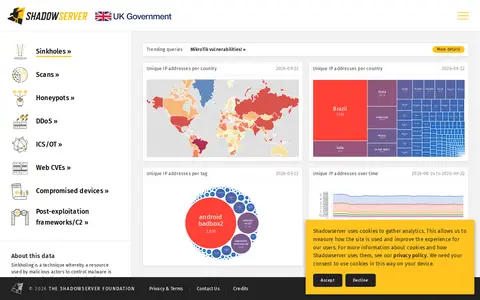
The Shadowserver Dashboard is a public cybersecurity statistics platform operated by The Shadowserver Foundation. It aggregates data from the organization's daily security monitoring activities, presenting high-level statistics derived from over 100 daily reports. These reports cover exposed attack surfaces, vulnerabilities, network misconfigurations, network compromises, and observed attacks. The dashboard provides insights into emerging threats and offers situational awareness to the wider cybersecurity community while preserving the anonymity of involved parties, and does not expose granular IP-level data.
Solitr is a free online version of Solitaire playable in the browser without downloading or registering. The page presents the goal of moving all cards to four foundations and allows options for turning one or three cards at once.

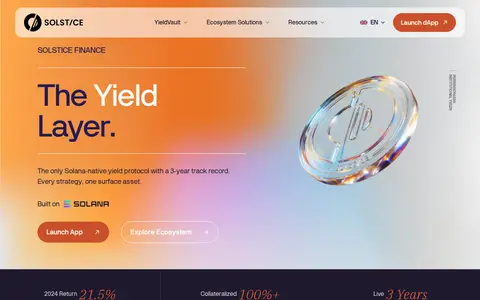
Solstice is described as a Solana-native yield protocol with a three-year track record. It uses USX, an overcollateralized settlement layer, as the foundation for yield strategies including delta-neutral yield, structured credit and AI lending yield. It offers a yield-as-a-service API for builders.
The South African Environmental Observation Network (SAEON) Open Data Platform is a metadata repository operated by SAEON, a long-term environmental observation and research facility of South Africa's National Research Foundation. The platform facilitates the publication, discovery, dissemination and preservation of earth observation and environmental data related to South Africa.

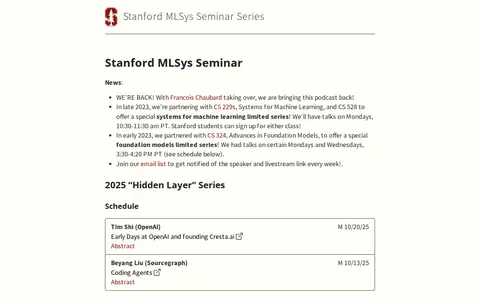
Stanford MLSys Seminar Series is a seminar series on the frontier of machine learning and systems. Its 2025 "Hidden Layer" series schedule lists talks, and earlier limited series covered systems for machine learning and foundation models. Stanford students could sign up for associated classes, and an email list provides speaker and livestream notifications.

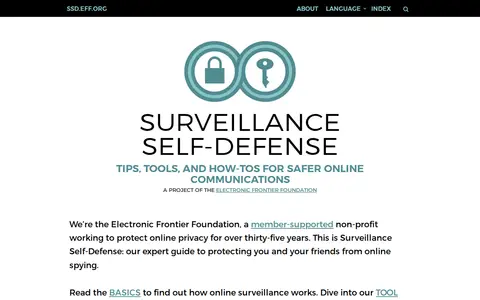
Surveillance Self-Defense is a project of the Electronic Frontier Foundation offering guides on protecting against online spying. It includes basics on how online surveillance works, tool guides for secure applications, and security scenarios for specific situations.
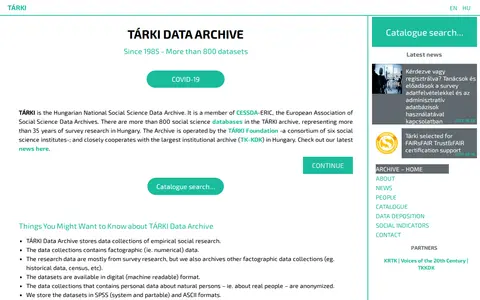
The TÁRKI Data Archive is the Hungarian National Social Science Data Archive, operated by the TÁRKI Foundation and a member of CESSDA-ERIC. Since 1985 it has stored more than 800 social science datasets from survey research and other factographic collections, mostly from Hungary. Datasets are anonymized where they contain personal data and stored in SPSS and ASCII formats. Some documentation is available only in Hungarian.
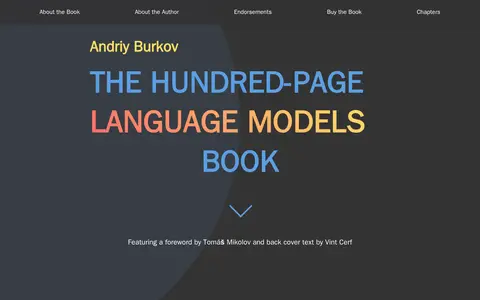
The Hundred-Page Language Models Book by Andriy Burkov is a concise hands-on guide covering machine learning basics through advanced transformer architectures and large language models. It explains AI fundamentals, text representation, count-based models, recurrent neural networks, and transformers, with mathematical foundations and Python code examples. The book targets ML practitioners and engineers building text-based applications.

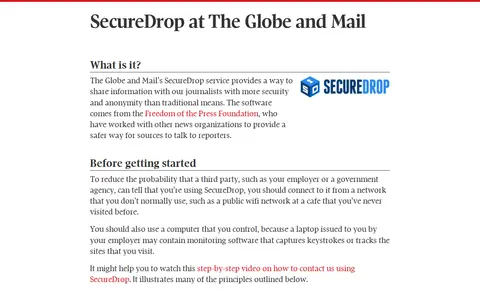
The Globe and Mail's SecureDrop service provides a way to share information with its journalists with more security and anonymity than traditional means. The software comes from the Freedom of the Press Foundation. The service uses the Tor network to anonymize interactions and is reached through the Tor Browser.

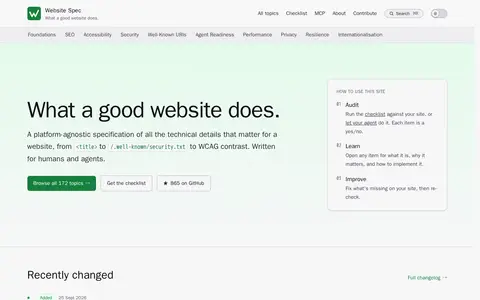
A platform-agnostic specification of the technical features a good website should have, built in the open under an MIT licence. It covers 177 topics across ten areas, including foundations, SEO, accessibility, security, performance and privacy, and offers a yes/no checklist for auditing a site. An open, read-only MCP server lets agents query the specification.

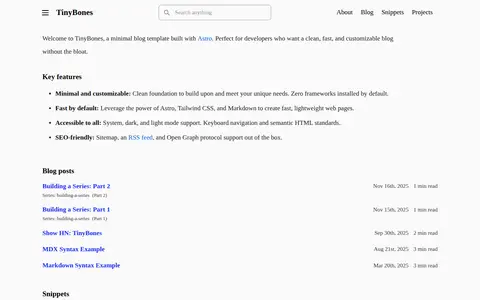
TinyBones is a minimal blog template built with Astro. It provides a clean foundation with no frameworks installed by default and uses Tailwind CSS and Markdown for lightweight pages. It includes dark and light mode support, keyboard navigation, semantic HTML, a sitemap, an RSS feed, and Open Graph protocol support.