
mylanguages.org
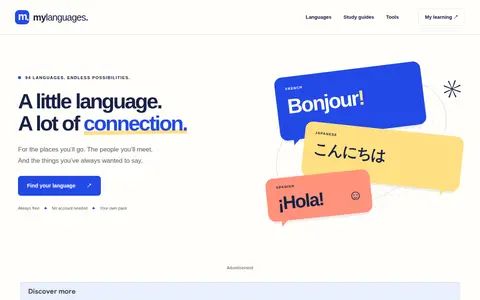
MyLanguages offers 94 free language courses with vocabulary, grammar, audio and study guides. It requires no account and lets learners save a lesson and continue later at their own pace.
Directory
Published directory entries matching your search.
MyLanguages offers 94 free language courses with vocabulary, grammar, audio and study guides. It requires no account and lets learners save a lesson and continue later at their own pace.

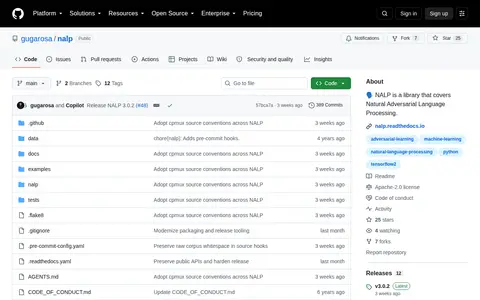
NALP is a Python library covering Natural Adversarial Language Processing. It combines natural language processing and adversarial learning, from embeddings to neural networks. The package offers corpus loading for raw text and audio, encoders, and pre-loaded neural network models. Version 3.0.2 requires Python 3.11+.

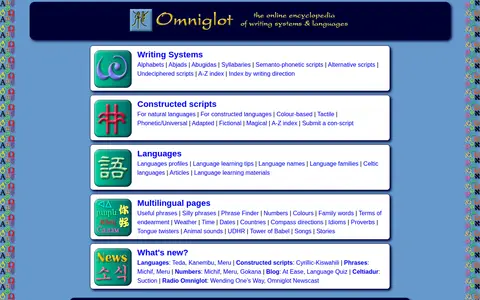
Writing-system and language reference covering alphabets, scripts, phrases, and linguistic facts.

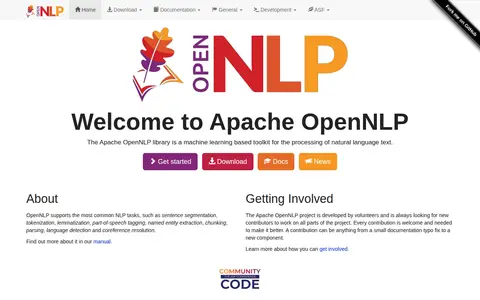
Apache OpenNLP is a machine learning based toolkit for the processing of natural language text. It supports tasks such as sentence segmentation, tokenization, lemmatization, part-of-speech tagging, named entity extraction, chunking, parsing, language detection and coreference resolution. The project is developed by volunteers and welcomes contributions, from small documentation fixes to new components.

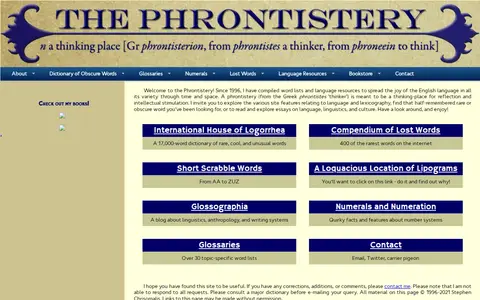
The Phrontistery is a language resource website that has operated since 1996, offering an online dictionary of obscure English words, topical word lists, etymology materials, technical vocabulary aids, lipogram resources, and essays on language and linguistics.

PolyglotClub is a language exchange community for practicing languages with native speakers and learners through conversations, events, and language exchange, online or offline. It reports over one million members worldwide.
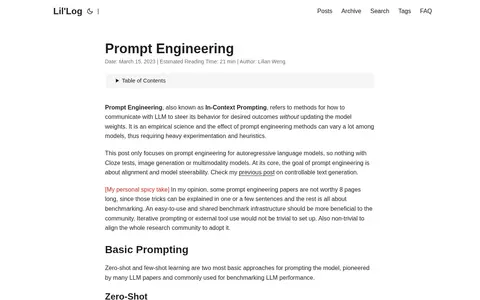
Prompt Engineering Lil'Log is a blog post focused on prompt engineering for autoregressive language models. It covers methods to steer large language model behavior without updating model weights, including zero-shot prompting, few-shot prompting, and chain-of-thought prompting.

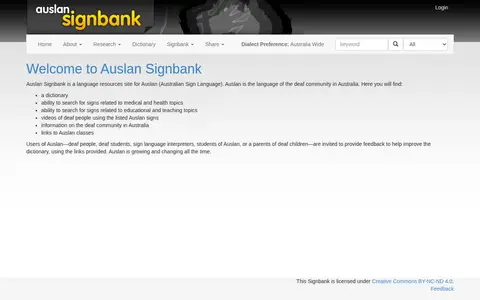
Auslan Signbank is a language resources site for Auslan, the language of the deaf community in Australia. It offers a dictionary, searches for signs related to medical and health topics and to educational and teaching topics, videos of deaf people using listed signs, information on the deaf community in Australia, and links to Auslan classes. Users are invited to provide feedback to help improve the dictionary.
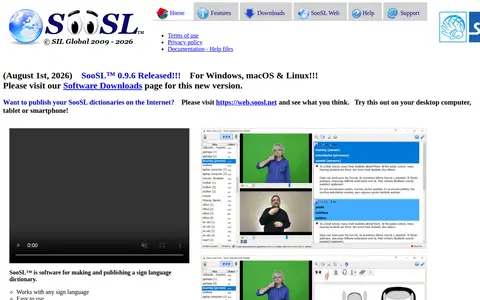
SooSL is software for making and publishing a sign language dictionary. It works with any sign language and allows videos for signs, example sentences and comments, lookup by handshape, location, motion or gloss, and glosses in written languages. Version 0.9.6 is released for Windows, macOS and Linux.
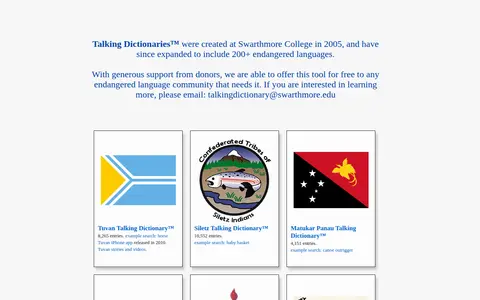
Talking Dictionaries™ were created at Swarthmore College in 2005 and have expanded to more than 200 endangered languages. The Talking Dictionary concept and platform was created by K. David Harrison in 2005, and the tool is offered free to endangered language communities.

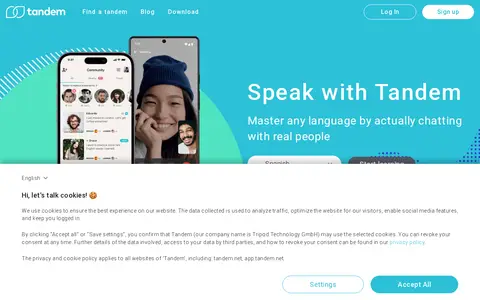
Tandem is a language exchange app where users find conversation partners. Users download the app for free, sign up, and search for partners by language, location, and interests. Conversation happens through text, voice notes, audio or video calls, with in-app correction and translation tools.
The Dark Risk of Large Language Models WIRED UK provides machine-learning models, research, training resources, or evaluation tools.

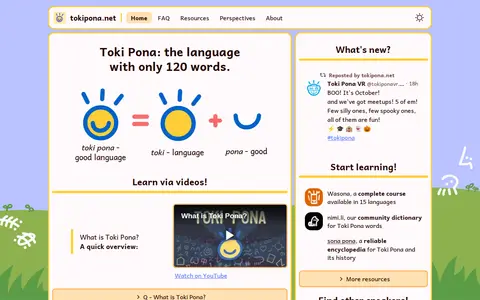
Toki Pona is a constructed language with only 120 words, presented on an official site offering videos, courses, a community dictionary and links to speaker communities. The page states the language is highly context-dependent and that speakers number in the thousands. It also lists literature, music, tools and a course available in 15 languages.

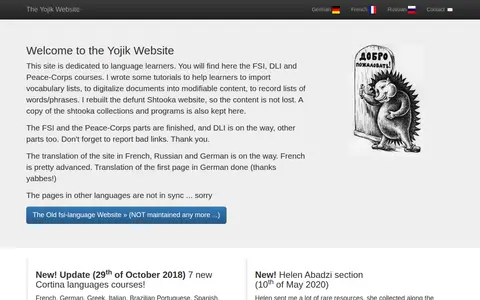
A website dedicated to language learners that hosts FSI, DLI and Peace-Corps courses, plus Shtooka audio collections and Cortina courses. It also offers tutorials for importing vocabulary lists, digitizing documents and recording word or phrase lists. The site states the FSI and Peace-Corps parts are finished and DLI is on the way.

Machine Learning ka Chilla is a video resource with tutorials, demonstrations, reviews, or related media.
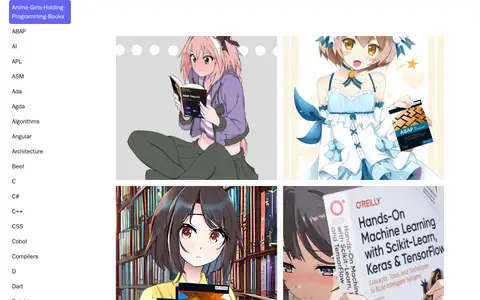
This project is a collection of image files featuring characters holding textbooks related to programming and computer science topics. The listed materials include books on ABAP, machine learning, reinforcement learning, assembly language, algorithms, deep learning and other related subjects.

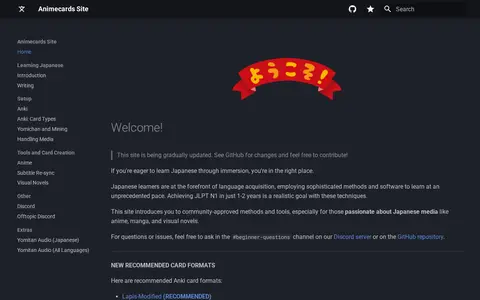
AnimeCards is a site introducing Japanese learning methods and tools, with emphasis on using Japanese media for language immersion. It recommends Anki card formats, including Lapis-Modified. The site is being gradually updated and invites contributions via GitHub.

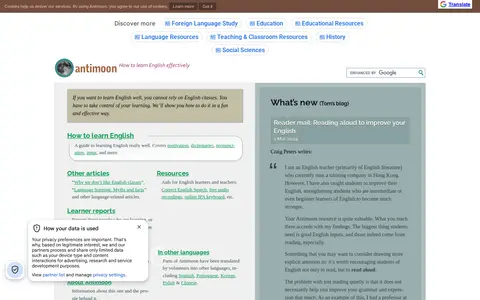
A site offering advice and inspiration for learners of English as a second or foreign language. It presents a guide to learning English well, covering motivation, dictionaries, pronunciation and input, plus articles, learner resources, learner reports and an archived discussion forum.

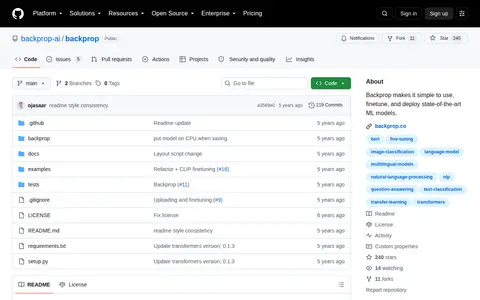
Backprop is a Python library, installable via PyPi, that enables use, finetuning and deployment of machine learning models. It provides task interfaces for conversational question answering, text classification in over 100 languages, image classification, summarisation, emotion detection and text generation, and models can be finetuned with a single line of code.

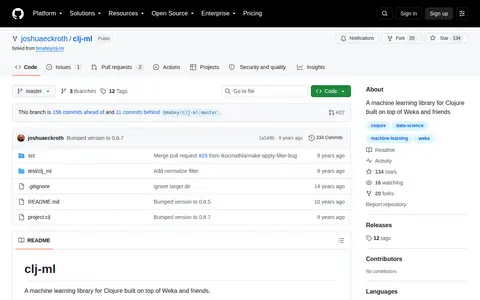
clj-ml is an open-source machine learning library for the Clojure programming language, built on top of the Weka framework and associated tools. It is hosted as a public repository on GitHub, with installation guides for Clojars and Maven, and supports a range of machine learning algorithms.

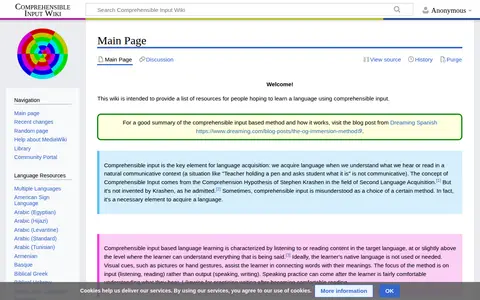
Wiki collecting comprehensible-input resources for learning languages through understandable content.

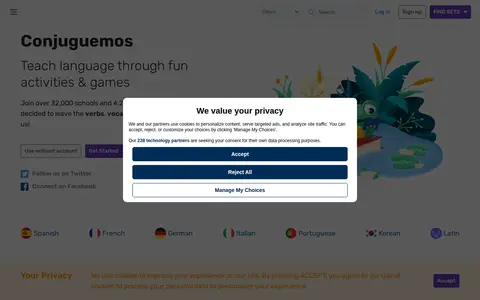
Conjuguemos is a language-learning site for practicing verb conjugations, vocabulary and grammar in Spanish, French and other languages. It offers drill activities, single-player practice games, competitive multiplayer games and textbook-aligned activities. Teachers can create, import and modify activities and use a gradebook with progress statistics. A free student tier and a free teacher plan with limited activities and stored grades are available.
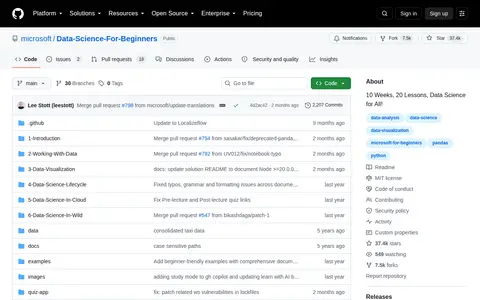
Data Science For Beginners is a public curriculum repository hosted on GitHub by Microsoft. It provides a 10-week, 20-lesson data science learning program designed for all skill levels. The repository includes documentation for getting started and offers multi-language support for learners.

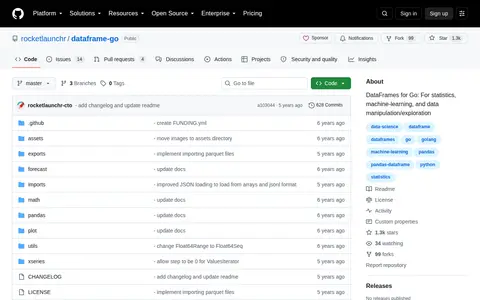
dataframe-go is a public software repository hosted on GitHub by rocketlaunchr. It provides DataFrame functionality for the Go programming language, designed to support statistics, machine learning, and data manipulation or exploration tasks.