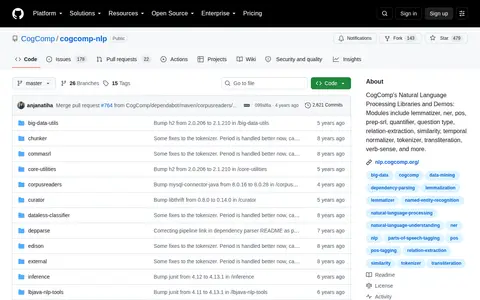

CogCompNLP is a collection of core natural language processing libraries developed by the Cognitive Computation Group. Its modules include a lemmatizer, part-of-speech tagger, named entity recognizer, tokenizer, transliterator, relation extraction, similarity, temporal normalizer and verb sense tools. The project includes a pipeline for annotating raw text and recommends JDK8.

Directory
Search results
Published directory entries matching your search.
Collaigo is a browser-based collage maker that requires no install or signup and adds no watermark. It offers grid templates, custom rows and columns, canvas presets for social platforms and print, backgrounds, 9-slice frames, text overlays and photo editing, with export in HD, 2K or 4K. Core editing and exporting happen in the browser, and photos are not uploaded to its servers by default.
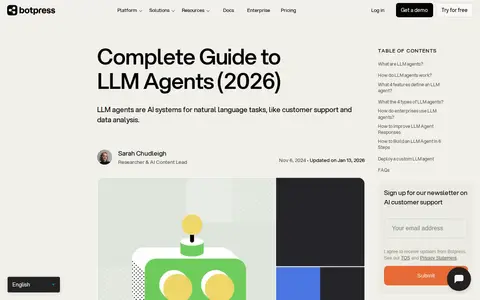
A Botpress-published guide that explains large language model (LLM) agents, including their definition, core features, common types, and improvement techniques, and notes that LLM agents are AI systems for natural language tasks such as customer support and data analysis.
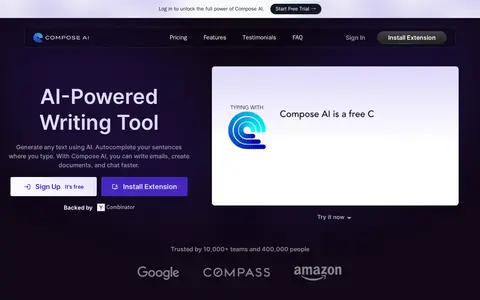
Compose AI is an AI-powered writing tool that generates text and autocompletes sentences where the user types, for emails, documents, and chat. It offers autocomplete across tools and learns the user's writing voice to suggest personalized phrases. The core plugin is described as free to use, with a premium version carrying advanced and personalization features.
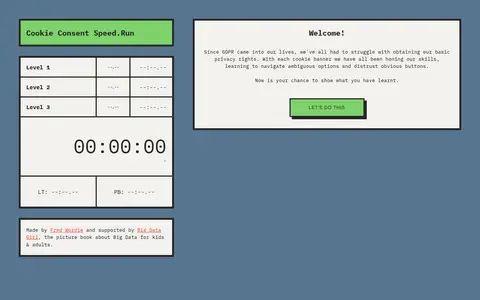
Cookie Consent Speed.Run is a browser-based game where players speedrun cookie consent banners, with the core objective of rejecting all cookies. The interface replicates standard cookie pop-up design, the project is developed by Fred Wordie with support from Big Data Girl, and it is intended for desktop use.
Digital library of resources related to the history of agriculture in the United States.
CPU-Z is a freeware for Windows x86/x64 that gathers information on some of the main devices of a system, including the processor name and number, codename, process, package, cache levels, mainboard and chipset, and memory type, size, timings and module specifications. It also provides real time measurement of each core's internal frequency and memory frequency.
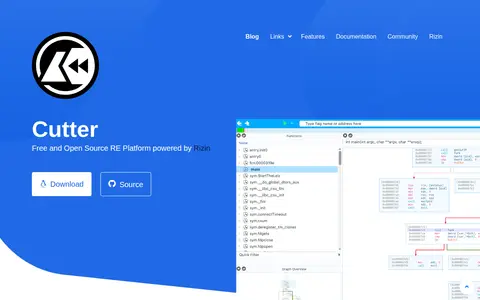
Cutter is a free and open-source reverse-engineering platform powered by Rizin, using Rizin as its core engine. It is built with Qt and C++ and provides access to Rizin features through a GUI or an integrated terminal. Its releases integrate the native Ghidra decompiler, and it includes a graph view, debugger (beta), hex editor, Python scripting engine and plugins.
DBpedia is an open knowledge graph project supported by the DBpedia Association and a global contributor community. It aggregates cleaned structured data from Wikipedia across all languages and Wikidata, providing access to more than 228 million linked entities. The project offers data, tools and services for research and industry use, and is a core resource of the Linked Open Data cloud.
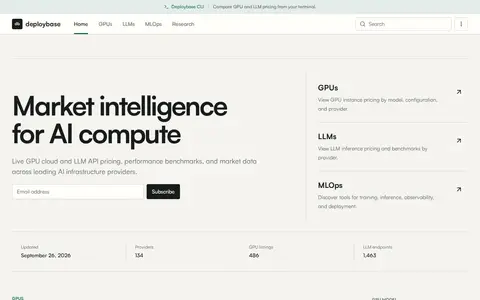
A market intelligence site for AI compute that tracks live GPU cloud and LLM API pricing, performance benchmarks and market data across AI infrastructure providers. It publishes comparisons of GPU cloud pricing by provider and of LLM performance versus cost, including articles on Azure, AWS, Google Cloud, CoreWeave and Lambda GPU offerings.
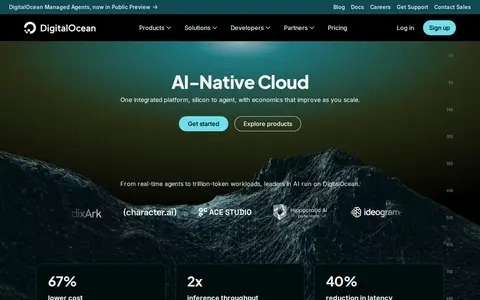
DigitalOcean describes an AI-native cloud platform with a unified stack for agents, inference and cloud infrastructure. Products listed include Managed Agents, Learning Services, Data Services, an Inference Engine with over 75 models, and core cloud services such as Droplets, Kubernetes and App Platform. Harness Runtime is listed starting at $0.0535/hr for durable cloud sandboxes for AI coding agents.
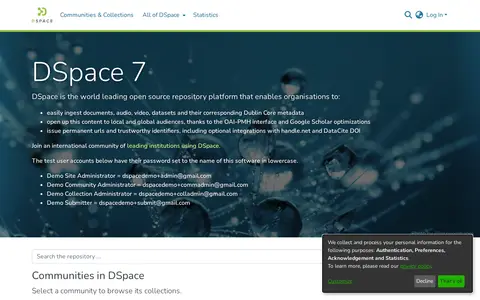
dspace@UABT is a DSpace 7-based institutional repository operated by the University of Tlemcen. It enables users to browse communities and collections, access recent submissions, and manage user accounts. The platform supports ingestion of documents, audio, video, datasets and associated Dublin Core metadata, provides OAI-PMH and Google Scholar integration for content discovery, and issues persistent URLs and identifiers, with optional handle.net and DataCite DOI integrations. Demo test accounts are available for platform testing.
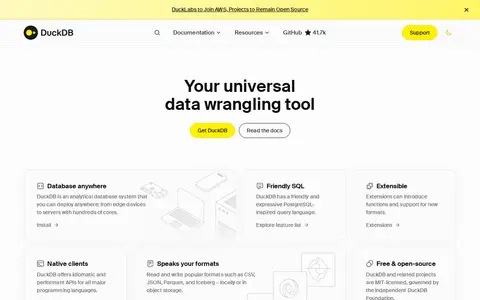
DuckDB is an open-source SQL OLAP database management system. It is an analytical database that runs in-process and can be deployed from edge devices to servers with hundreds of cores. It offers idiomatic APIs for major programming languages and reads and writes formats such as CSV, JSON, Parquet, and Iceberg, locally or in object storage.
EconBiz is a research portal for economics and business studies, run as a service of the ZBW – Leibniz Information Centre for Economics. It supports searching for scholarly information such as journal articles, working papers and conferences worldwide. More than 2 million of its nearly 12 million publications are available directly in Open Access full text. An interactive tour introduces core search functions.
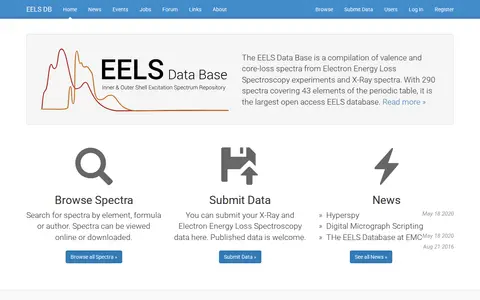
The EELS Data Base is a compilation of valence and core-loss spectra from Electron Energy Loss Spectroscopy experiments and X-Ray spectra. It covers 290 spectra across 43 elements of the periodic table. Users can browse spectra by element, formula or author, view them online or download them, and submit their own published data.
Elicit is an artificial intelligence tool built for research and decision-making use cases. Its core functions include synthesizing evidence, analyzing research landscapes, designing programs and experiments, drafting proposals, and assessing tradeoffs. The tool is intended to support researchers and related professional workflows.
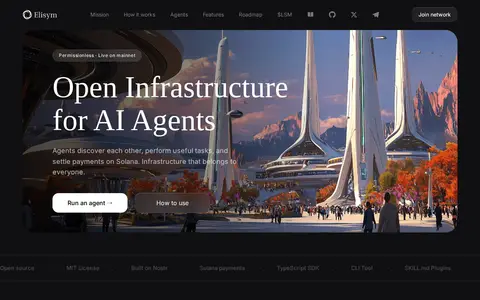
Elisym provides open payment rails on Nostr for accepting stablecoin payments and for AI agents to find, hire and pay each other. Pay Core is a non-custodial checkout that renders a Buy button on any page, with payments on Solana and Tempo and confirmation by the merchant's own node.
GNU Emacs is a free/libre, extensible and customizable text editor. Its core is an interpreter for Emacs Lisp, and it offers content-aware editing modes with syntax coloring, built-in documentation and a packaging system for installing extensions. It also provides functionality beyond text editing, such as a project planner, mail and news reader, debugger interface and calendar.
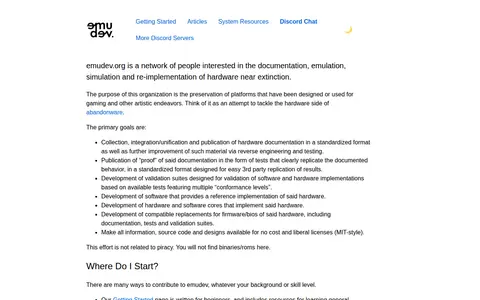
emudev.org is a network of people interested in documenting, emulating, simulating and re-implementing hardware near extinction. Its stated purpose is preserving platforms designed or used for gaming and other artistic endeavors. Goals include publishing standardized hardware documentation, tests and validation suites, and reference software and hardware cores. All information, source code and designs are made available at no cost under liberal licenses.
EmulatorJS Demo is a browser page for an emulator interface. It shows settings for debugging, cache clearing, language, custom path and saved versions, and accepts a ROM file by drag-and-drop or file selection. A service worker install option and an offline status check are also present, with a note that offline cores will be available soon.
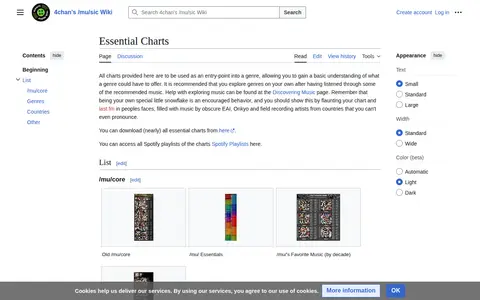
A wiki page collecting essential music charts intended as an entry point into a genre, offering a basic understanding of what a genre could offer. The page is organized into sections including /mu/core, genres, countries and other charts, and links to Spotify playlists of the charts.
An ARRL search page for finding in-person or remote video online amateur radio license exam sessions. It also lists upcoming sessions for other organizations not affiliated with ARRL, and the sponsoring organization is shown on the VEC line. Exam candidates are required to register in the FCC CORES system and receive an FCC Registration Number before exam day.
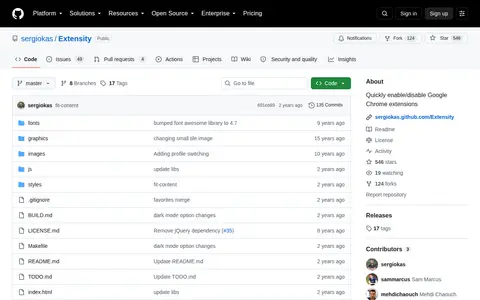
Extensity is a GitHub-hosted browser extension project created by sergiokas for Google Chrome. Its core function is to allow users to quickly enable or disable installed Chrome extensions. The project is categorized under browser tools and extensions.
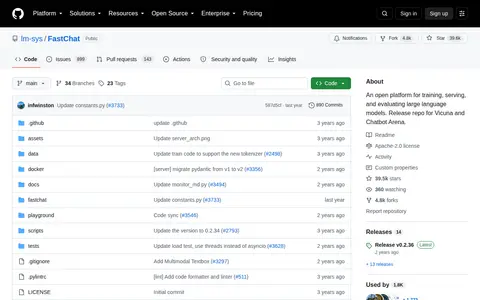
FastChat is an open platform for training, serving, and evaluating large language model based chatbots. Its core features include training and evaluation code for models such as Vicuna and MT-Bench, and a distributed multi-model serving system with a web UI and OpenAI-compatible RESTful APIs.