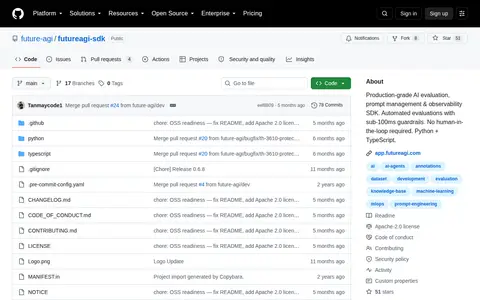

Future AGI SDK is a production-grade software development kit for AI evaluation, prompt management, and observability. It offers automated evaluations with sub-100ms guardrails and does not require human-in-the-loop. The SDK supports Python and TypeScript.
Directory
Search results
Published directory entries matching your search.
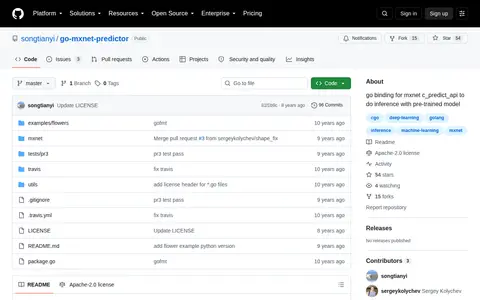
Go binding for MXNet c predict api to do inference with a pre-trained model.
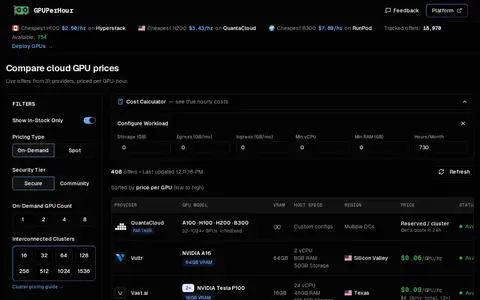
GPU Per Hour is a website that compares live cloud GPU pricing from 31 providers. It lists prices per GPU-hour for various GPU models, including H100, H200, B200, A100, and RTX 4090, and provides market snapshots and historical averages.
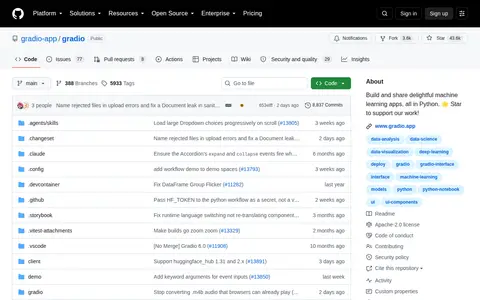
Gradio is an open-source Python library that enables developers to build and share machine learning web applications easily. It provides simple interfaces for creating demos and sharing models, supporting a wide range of ML frameworks.
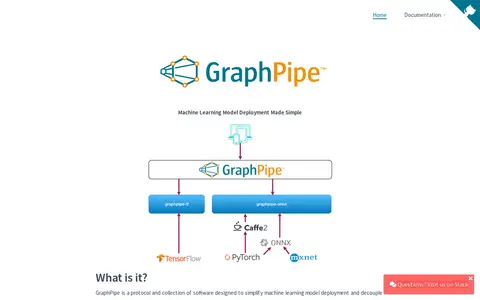
GraphPipe is a protocol and collection of software designed to simplify machine learning model deployment. It decouples deployment from framework-specific model implementations, allowing models to be served in a consistent manner across different environments.

Guild is a vendor-neutral control plane for AI agents. It lets engineering teams manage, govern, and share agents in production, with security and observability built in. Features include scoped credentials, action approval, policy enforcement, tracing, and evaluations. It supports any model or framework and provides a shared agent catalog and CLI access.
Helicone AI supports deploying, serving, monitoring, or operating AI and machine-learning systems.
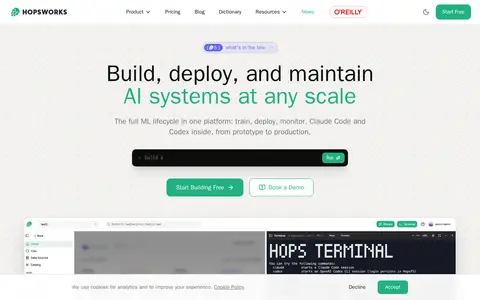
Hopsworks is a platform for building, deploying, and scaling production machine learning systems. It combines a feature store with MLOps tooling, using dual online and offline storage to manage, reuse, and serve features. The platform covers the ML lifecycle: train, deploy, and monitor. An O'Reilly book covers building batch, real-time, and LLM systems with feature stores.
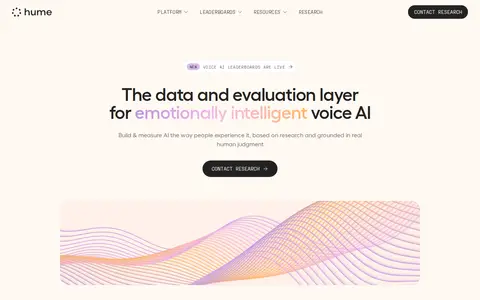
Hume provides voice AI evaluation infrastructure through its VoiceEQ platform. It turns real-world use cases into targeted evaluation suites and combines automated measurement with human judgment to diagnose failures in voice models and agents. The platform covers TTS, speech-to-speech, ASR, and cascaded systems, and the company reports support for over 50 languages.
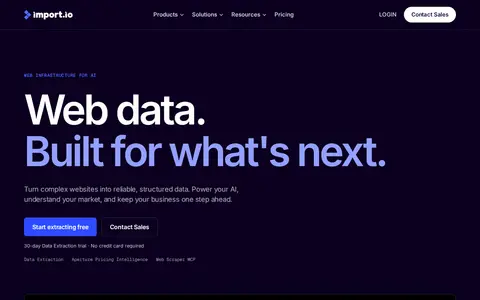
Import.io is a web data extraction and AI infrastructure platform. It converts website content into structured data, and provides web scraping tools, managed data services, pricing intelligence, and MCP tools for AI agents. It supports use cases across multiple industries including retail, ecommerce and AI development.
A 2003 book by David J.C. MacKay published by Cambridge University Press, covering information theory, inference, and learning algorithms. The site offers corrections, software, and downloadable figures. It lists a price of £35.00 or $60.00.
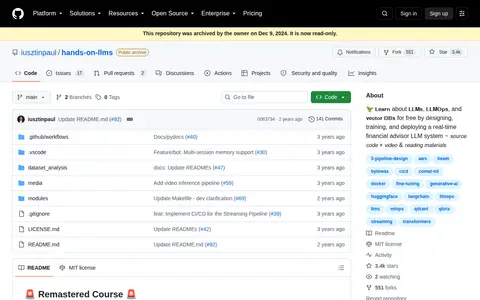
An archived educational course repository for learning about LLMs, LLMOps and vector databases by designing, training and deploying a real-time financial advisor LLM system. It includes source code, video and reading materials, and covers a training pipeline using QLoRA and a streaming pipeline ingesting financial news. The repository was archived by its owner and is read-only.
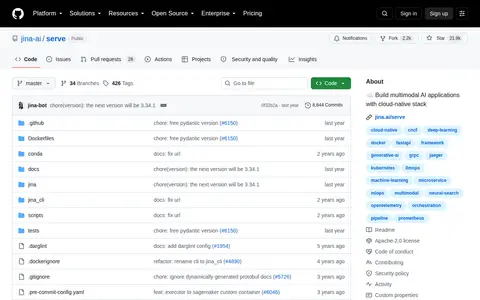
Build multimodal AI services via cloud native technologies · Model Serving · Generative AI · Neural Search · Cloud Native.
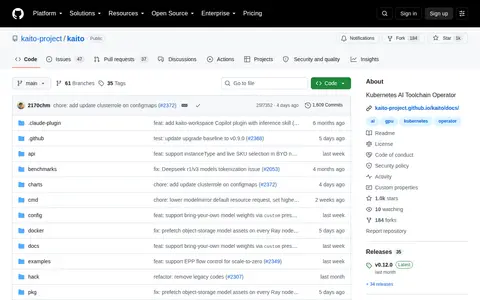
Kaito is the Kubernetes AI Toolchain Operator, an operator suite that automates LLM inference, fine-tuning and RAG engine deployment in a Kubernetes cluster. It simplifies the CRD API and provides optimized preset configurations for inference engine scheduling parameters. Workspaces are the basic CRD for managing inference and tuning workloads, and all vLLM-supported models can be run.
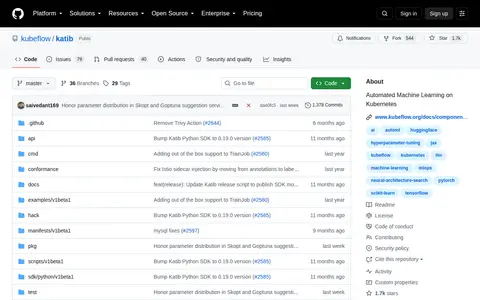
Kubeflow Katib is a Kubernetes-native project for automated machine learning (AutoML). It supports hyperparameter tuning, early stopping and neural architecture search, and is agnostic to machine learning frameworks, natively supporting frameworks such as TensorFlow, PyTorch and XGBoost. Training jobs can use any Kubernetes Custom Resources, with out-of-box support for Kubeflow Training Operator, Argo Workflows and Tekton Pipelines. A Python SDK simplifies creating tuning jobs.
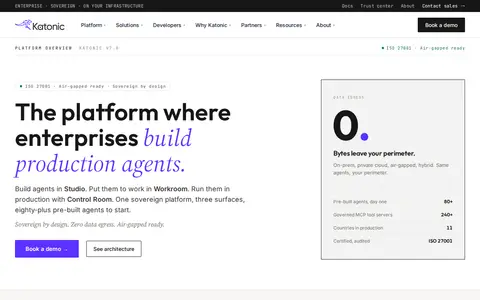
Katonic AI is a full-stack enterprise platform for building, deploying, and governing AI agents on customer-owned infrastructure, including on-premise, private cloud, and air-gapped environments. It incorporates NVIDIA NeMo guardrails, enforces zero data egress, and provides three core surfaces (Studio, Workroom, Control Room) alongside more than 80 pre-built agents and over 240 governed MCP tool servers.
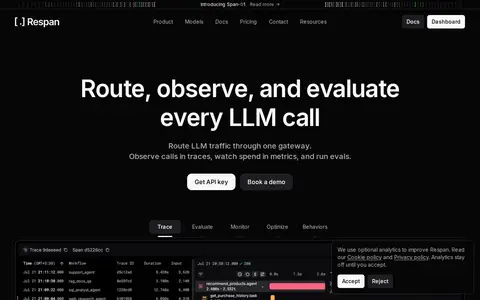
Respan is an AI gateway that routes requests to over 1,000 models through one API endpoint, with automatic fallbacks, response caching, and spending limits. It also provides built-in observability for tracing LLM calls, tool calls, and agent steps, plus automated evaluations and security testing for masking PII and red-teaming agents before launch.
Kubernetes custom resource definition for serving ML models on arbitrary frameworks.
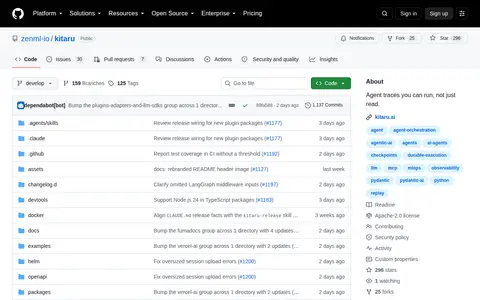
Kitaru is an open-source, self-hosted tool providing replay-based evaluations for AI agents. It records or imports production runs as sessions and replays them against a changed model, prompt, or code, with tool calls answered from the recording. It is available for Python and TypeScript and comes from the team behind ZenML.
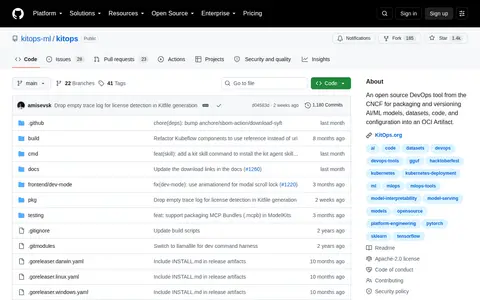
Open source MLOps project that eases model handoffs between data scientist and DevOps.
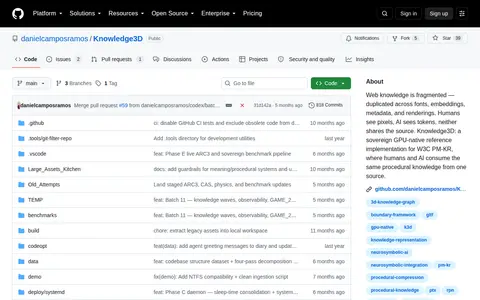
Knowledge3D (K3D) is a sovereign GPU-native reference implementation for the W3C PM-KR specification. It aims to unify web knowledge representation by allowing humans and AI to consume the same procedural knowledge from a single source, addressing fragmentation across fonts, embeddings, metadata, and renderings.
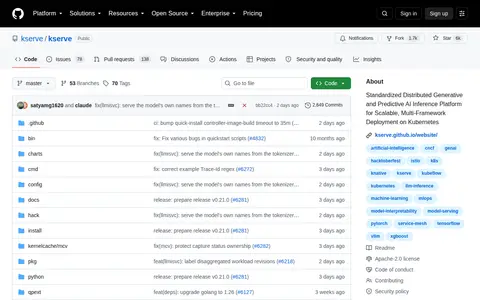
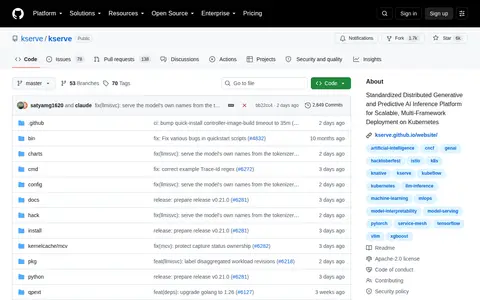
KServe is a standardized distributed generative and predictive AI inference platform for scalable, multi-framework deployment on Kubernetes. It is a Cloud Native Computing Foundation incubating project. The platform supports backends such as vLLM and llm-d for serving LLMs, and multi-framework predictive serving. Standalone installation on standard Kubernetes is described as more lightweight but without canary deployment or request-based autoscaling with scale-to-zero.
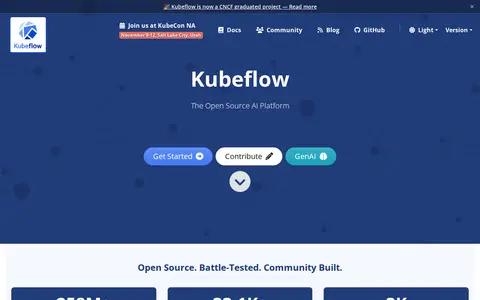
Kubeflow is described as the cloud native AI platform, composed of modular open source projects forming a Kubernetes-native stack for data and AI workloads. Its subprojects include Kubeflow Pipelines for building and deploying portable machine learning workflows, Kubeflow Trainer for distributed AI training and LLM fine-tuning, Kubeflow Katib for automated machine learning, Kubeflow Notebooks for interactive development environments, and Kubeflow Hub for indexing models and metadata. It is a Cloud Native Computing Foundation project.
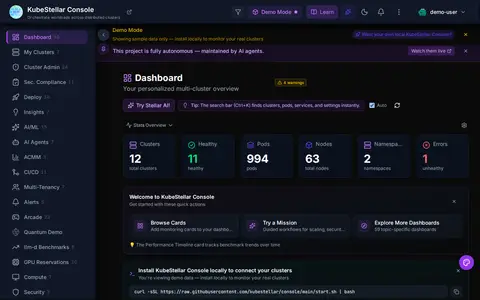
KubeStellar Console is an open-source multi-cluster Kubernetes management dashboard. It allows users to monitor clusters, deploy workloads, manage GPU resources, and troubleshoot with AI-powered missions across all your Kubernetes environments.