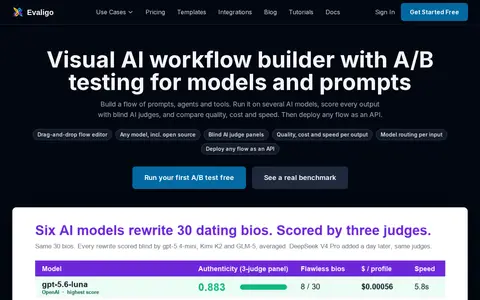

Evaligo is a visual drag-and-drop AI workflow builder platform that includes built-in A/B testing capabilities. Users can construct workflows combining prompts, agents and tools, run them across multiple AI models, score outputs using blind AI judge panels, compare performance metrics including quality, cost and speed per output, train per-input model routers, and deploy any workflow as an API. A free plan with no credit card requirement is offered.
Directory
Search results
Published directory entries matching your search.
ExplainAnything.AI supports AI agents, automated workflows, orchestration, or delegated tasks.
Uses AI agents to complete tasks, coordinate tools or automate multi-step workflows.
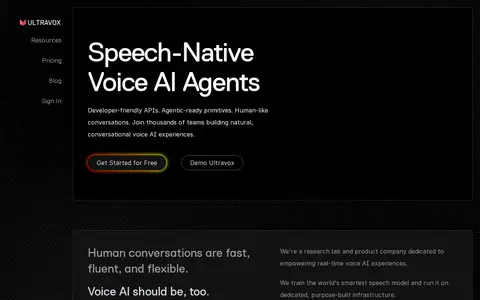
Ultravox is a real-time voice AI infrastructure layer for building voice agents. It trains a speech-native model and manages its own inference and infrastructure stack. The site offers developer-friendly APIs and agentic-ready primitives intended for natural, conversational voice agents. Ultravox has been acquired by Inworld. Pricing lists pay-as-you-go at $0 per month with the first 30 minutes free and $0.05 per minute after that.

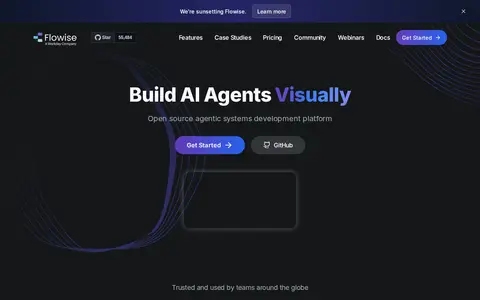
FlowiseAI is an open source generative AI development platform for visually building AI agents and LLM orchestration systems. It offers features including multi-agent workflow orchestration, chat assistants with retrieval-augmented generation support, human-in-the-loop task review, execution tracing, and APIs, SDKs and embedded chat options for integration. The project notes it is being sunset.
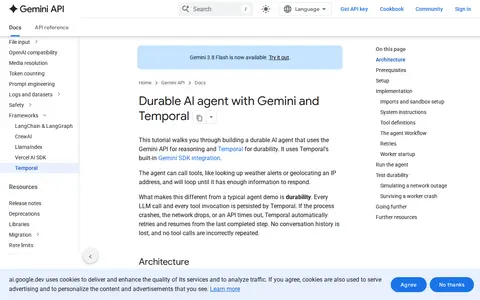
Gemini and Temporal Durable Agent is a Google AI for Developers resource providing guidance on building durable AI agents using the Gemini API and Temporal. It includes documentation covering architecture, prerequisites, setup, implementation steps, system instructions, tool definitions, agent workflow configuration and retry handling.
Google Agent Development Kit (ADK) is an open toolkit for building powerful multi-agent systems and production-grade agents. It supports multiple programming languages including Python, JavaScript, Go, Java, and Kotlin, and offers features such as graph workflows, multi-agent collaboration, and integration with various AI models including Gemini, Claude, and OpenAI.
This is a Kaggle page for a Google prompt engineering whitepaper. It invites users to join a community of builders, researchers and labs evaluating AI agents, models and frontier technology through crowdsourced benchmarks, competitions and hackathons.
Guild is a vendor-neutral control plane for AI agents. It lets engineering teams manage, govern, and share agents in production, with security and observability built in. Features include scoped credentials, action approval, policy enforcement, tracing, and evaluations. It supports any model or framework and provides a shared agent catalog and CLI access.
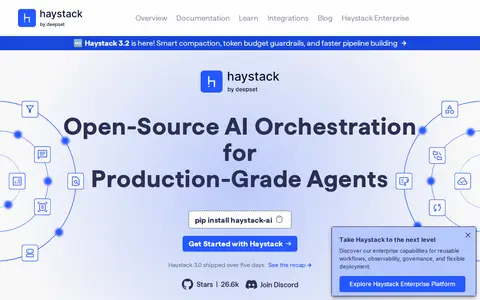
Haystack is an open-source AI orchestration framework for building production-ready, LLM-powered agents and applications. The site states it uses modular, customizable building blocks, connects to providers such as OpenAI, Anthropic, Mistral, Hugging Face, Weaviate, Pinecone and Elasticsearch, and offers both open source and enterprise options.
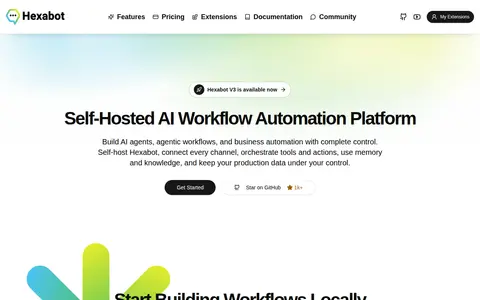
Hexabot is a self-hostable AI workflow automation platform. It is used to build AI agents and workflows that interact across channels, using MCP tools, memory and data control. Projects can be started locally with the official CLI, and the platform is source-available under the FCL-1.0-ALv2 licence.
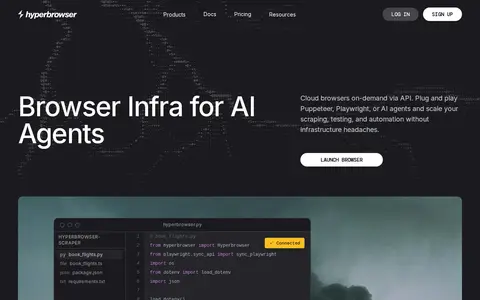
Hyperbrowser offers cloud browsers, isolated sandboxes and web data APIs for AI agents. It provides Chrome sessions and microVMs that can be launched in one call and connected to Playwright, Puppeteer or an agent. The documentation describes automating websites, running code in isolated environments and scraping web data.
HyperFrames lets AI agents compose videos by writing HTML, CSS & JS — originated by HeyGen, built for the community. Open source under Apache 2.0.
Igly supports AI agents, automated workflows, orchestration, or delegated tasks.
Kadoa is described as a web data layer for finance. Its AI agents build, monitor, and maintain web data pipelines that produce verified datasets for investment teams and AI agents, and it offers monitors, pipelines, and datasets.
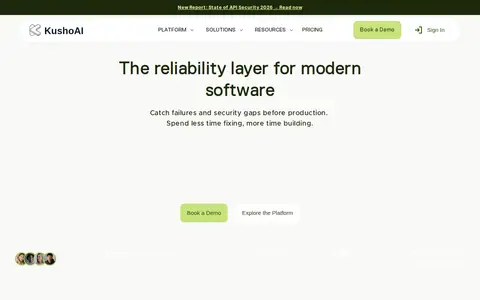
KushoAI is AI-native infrastructure for software maintenance, with autonomous agents integrated into customer CI/CD pipelines to handle continuous testing, healing, and monitoring. It automatically generates test suites from OpenAPI specifications or Postman collections to catch breaking API changes before production.
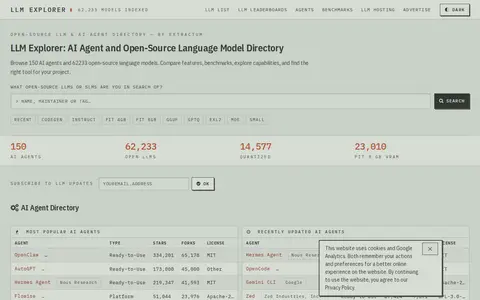
LLM Explorer is a directory of open-source language models and AI agents. It lists 150 AI agents and 64,811 open-source large and small language models, grouped into categories with benchmarks and analytics.
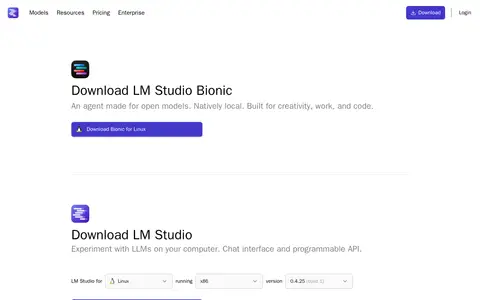
LM Studio helps build, test, automate, or manage AI agents, prompts, models, and API workflows.
Uses AI agents to complete tasks, coordinate tools or automate multi-step workflows.
Merlin AI Coach supports AI agents, automated workflows, orchestration, or delegated tasks.
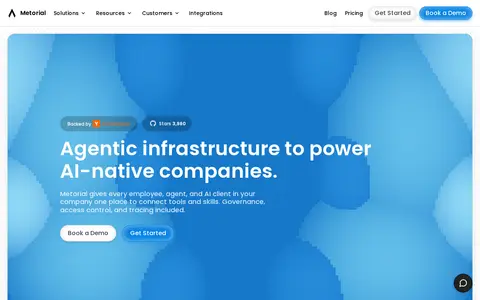
Metorial is an agentic infrastructure platform for AI-native companies. It provides a single unified platform for employees, AI agents, and AI clients to connect tools and skills, with built-in governance, access control, and tracing capabilities. The platform supports development of customer-facing agents, internal assistants, and scalable AI workforces.
MiMo Studio helps build, test, automate, or manage AI agents, prompts, models, and API workflows.
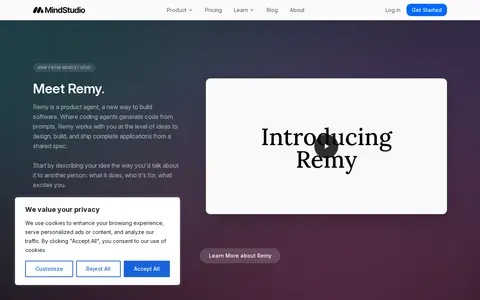
MindStudio is a visual platform for designing, building and deploying AI agents without coding, with optional code extensibility. It offers over 100 templates and connects to 200+ AI models. A product agent named Remy, in alpha, builds applications from a shared spec.