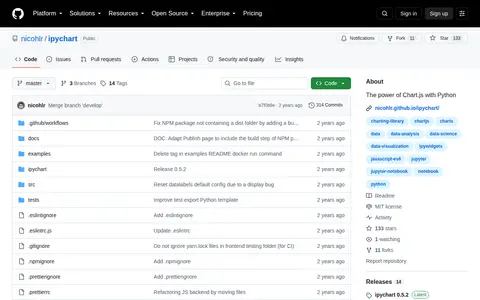

ipychart is a Python library that brings the power of Chart.js to Python. It is hosted on GitHub at https://github.com/nicohlr/ipychart. The repository includes installation instructions, documentation, usage examples, and development information.

Directory
Search results
Published directory entries matching your search.
IReader is an open-source reader app for reading light novels, web novels and ebooks, available for Android and desktop. It offers AI text-to-speech on desktop via Piper TTS, installable content sources as extensions, customizable themes and offline reading. The app reports no ads or tracking. The FAQ states it runs on Android 6.0 or newer without root access.
Public archive and research site documenting Iron March forum material and far-right networks.
The IUCN Red List of Threatened Species is a source of information on the global conservation status of animal, fungi and plant species used to inform biodiversity conservation and policy. The extract states the list divides species into nine categories, including Not Evaluated and Data Deficient.
JACQ is a jointly administered herbarium management system and specimen database serving a list of participating herbaria. It holds identifiers and links for people and scientific names that connect to external portals and other virtual herbaria and aggregators.
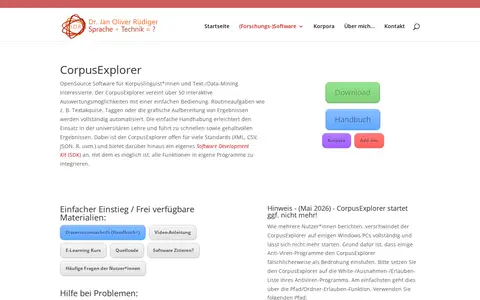
ML, DL and Data Science - with a focus on text-/data-mining.
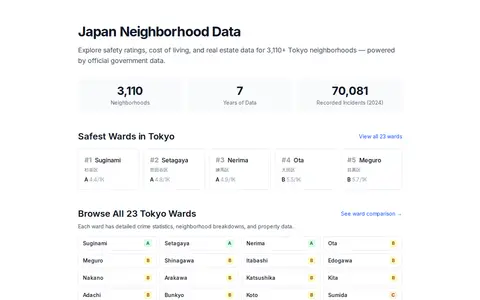
Japan Neighborhoods provides data-driven neighborhood guides for Japan. It offers crime statistics, safety scores, demographic data, cost of living, and real estate information for over 5,000 Tokyo neighborhoods. The data is sourced from official government sources and presented through safety rankings, interactive maps, and property listings.
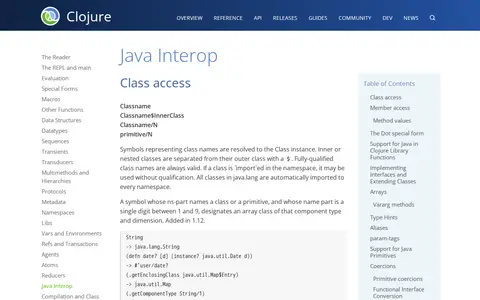
A reference page in the Clojure documentation covering Java interop, including class access, member access, the dot special form, implementing interfaces and extending classes, arrays, vararg methods and type hints.
JavaDecompiler provides an online interface for extracting source code from .class and .jar binary files. It presents several Java decompilers, including CFR, JD, Procyon, Fernflower and JAD, with notes on each. The site also links to an APK decompiler and a knowledge base. JAD is listed for historical reasons only.
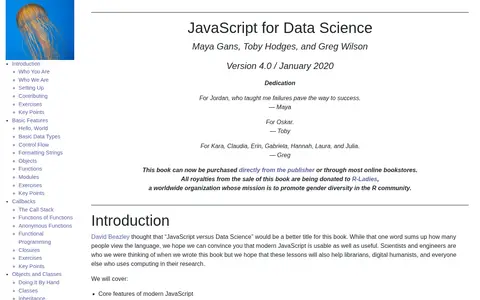
A book titled JavaScript for Data Science by Maya Gans, Toby Hodges, and Greg Wilson, version 4.0, dated January 2020. It covers topics such as callbacks, promises, objects, classes, HTML, CSS, React, data services, testing, data visualization, and a three-tier web application, with an even mix of browser and server programming. It is intended for scientists and engineers.
JDownloader is a free, open-source download management tool. Users can start, stop or pause downloads, limit bandwidth and auto-extract archives. It runs on Java and supports multiple platforms, with about 110 hoster and over 300 decrypt plug-ins listed.
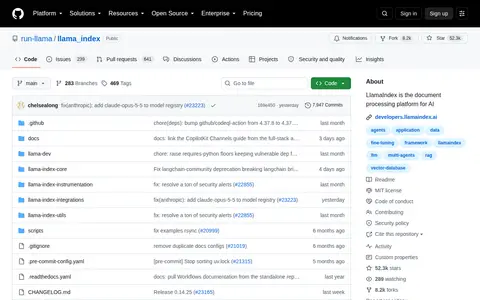
A project to make it easier to use large external knowledge bases with LLMs.
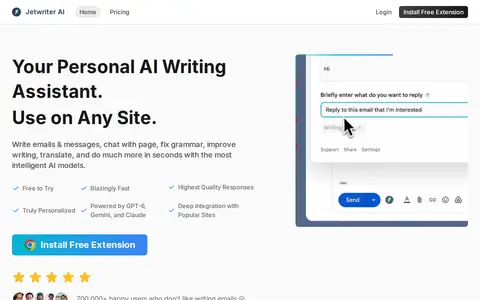
Jetwriter is an AI writing assistant available as a free browser extension, on the web, and on mobile. It writes emails and messages, corrects grammar, translates, researches, and chats with pages, using AI models including GPT-6, Claude, and Gemini. It also offers Gmail integration that drafts replies.
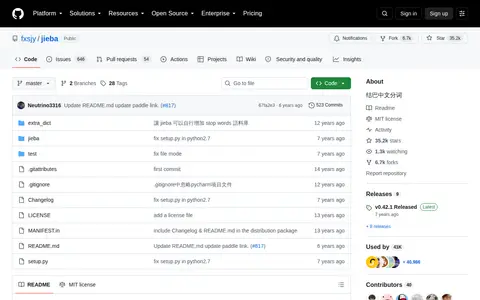
Jieba is a Chinese text segmentation module for Python. It supports four segmentation modes, including precise, full, search-engine and a paddle mode using PaddlePaddle, and offers keyword extraction based on TF-IDF and TextRank.
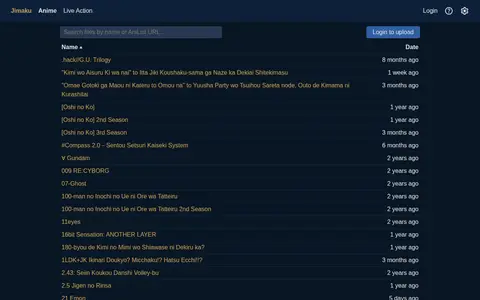
Jimaku is a subtitle site with entries for anime and live action titles, each carrying badges such as Adult, Unverified, Movie and External. It supports searching and filtering by languages including Romaji, English and Japanese, by AniList URL, and through OpenSearch in the browser address bar.
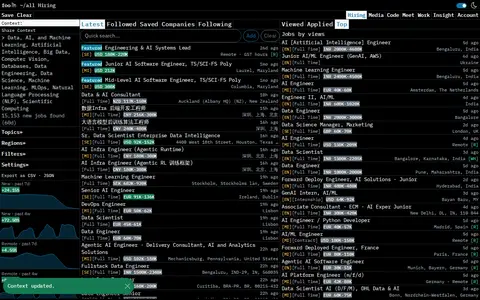
The go-to, no-nonsense, fast and lean job site in AI, ML, Data Science and Big Data.
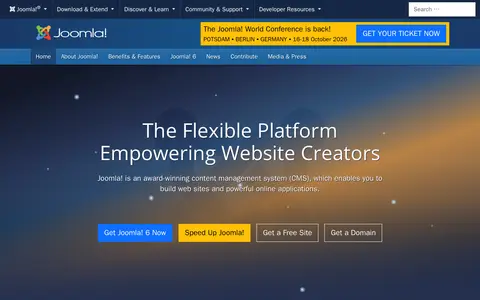
Joomla! is a free and open source content management system used to build, organize, manage and publish content for websites, blogs, intranets and mobile applications. The site lists benefits including search engine friendly and mobile friendly output, multilingual support, unlimited design, multi-user permission levels and extensibility, along with thousands of free extensions and templates.
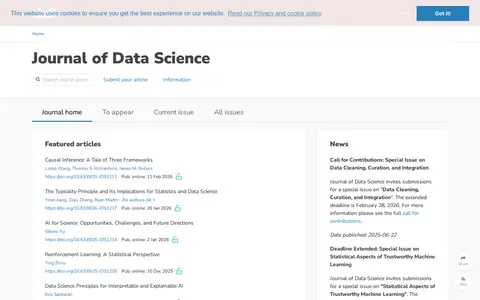
The Journal of Data Science is an academic journal listing featured articles, news, and calls for contributions. Featured articles include items on causal inference, reinforcement learning, and AI for science, each with a DOI and online publication date. The page also lists special issue calls for contributions and most-read articles.
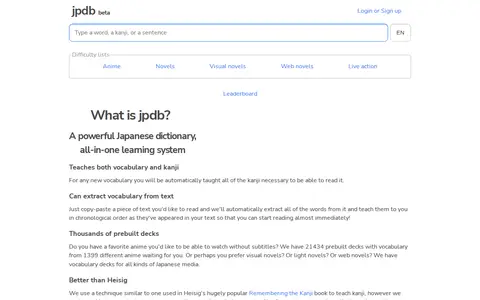
jpdb is a Japanese dictionary and learning system for kanji and vocabulary. It automatically teaches the kanji needed to read new vocabulary and can extract words from pasted text. It offers thousands of prebuilt decks with vocabulary from anime, visual novels, light novels and web novels, and uses its own spaced repetition algorithm.
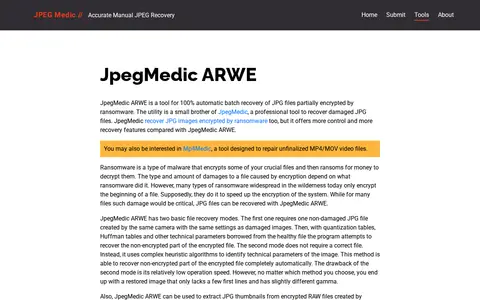
JpegMedic ARWE is a tool for automatic batch recovery of JPG files partially encrypted by ransomware. It offers two recovery modes, one requiring a non-damaged JPG file from the same camera and settings, and one using heuristic algorithms. It can also extract JPG thumbnails from encrypted RAW files. It is described as a smaller sibling of JpegMedic.
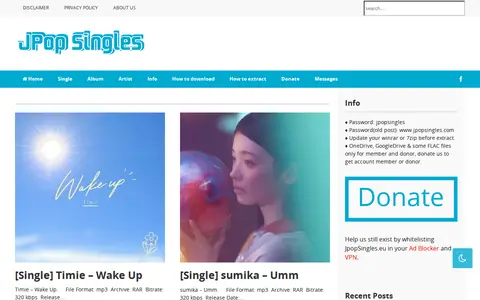
JPop Singles is a blog posting Japanese music downloads, including JPop, JRock, Enka, Shoegaze, Visual Kei, Ballad, RnB and Folk. Posts list singles and albums with file format, archive type and bitrate, such as MP3 at 320 kbps in RAR archives, with some FLAC files. It also lists a site password for extraction.
JShelter is a browser extension that controls browser APIs to limit what JavaScript on visited pages can see and gather. It is described as anti-malware software intended to mitigate threats including fingerprinting, tracking and data collection, and it offers protection levels that can restrict or forbid APIs on a site. It is available under the GNU General Public License.
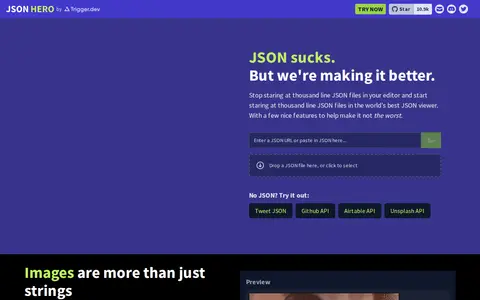
JSON Hero is a web-based JSON viewer that presents JSON files in a UI with extra features. It infers what strings represent, such as images, dates, colors, URLs and videos, shows related values for fields, and generates an inferred JSON schema. It supports searching the whole file and sharing documents, and is open source.
JSON Schema is a declarative language for annotating and validating JSON documents' structure, constraints, and data types. It enables JSON data consistency, validity, and interoperability, and has a tooling ecosystem of validators, generators, and linters. Documentation covers schema design, guides, and keyword reference.