An online repository of temporal specification patterns gathered from common specifications of concurrent and reactive systems. It provides patterns with descriptions mapping system behavior into precise statements in formal specification languages, and it supports mappings to several formalisms with tool support for automated analysis.
Directory
Search results
Published directory entries matching your search.
SNAP is a general purpose network analysis and graph mining library written in C++ that scales to large graphs and supports node and edge attributes. Snap.py provides a Python interface with most of the SNAP C++ functionality. The project also offers the Stanford Large Network Dataset Collection, a set of network datasets.

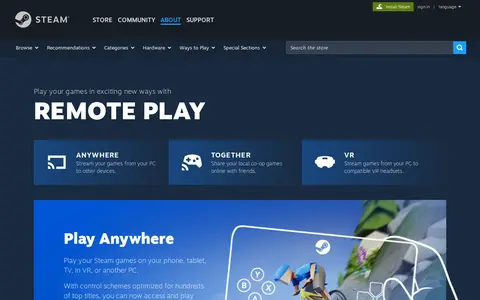
Steam Remote Play is a Steam feature for streaming games from a PC to other devices. Steam Link connects a device to a computer running Steam, and the app is offered for iOS, Android, Amazon Fire TV, Raspberry Pi, Windows, Linux, macOS and Meta Quest. Remote Play Together lets friends join local multiplayer games over the internet.
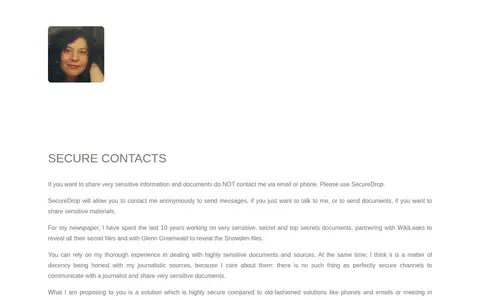
A secure contact page for journalist Stefania Maurizi directing sources to use SecureDrop rather than email or phone. Visitors access the .onion SecureDrop address through the Tor Browser to anonymously send messages or documents. The page recommends using Tails from a public computer and public WiFi at a location not usually visited.
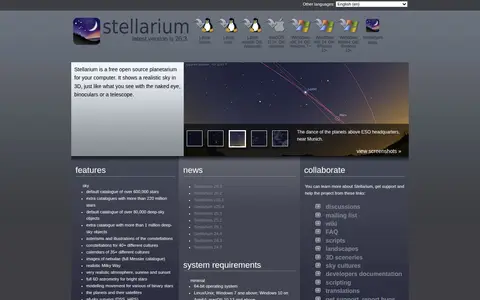
Stellarium is a free open source planetarium for computers. It shows a realistic sky in 3D, as seen with the naked eye, binoculars or a telescope, and offers time control, telescope control and a plugin system. The site describes it as easy to use and provides a features list and system requirements.
StepByStepML provides free online machine learning calculators that solve algorithms step-by-step for computer science exams. Users input a dataset and the site shows the full manual calculation for algorithms including K-Means, Minimax, KNN, A* Search, and evaluation metrics. Theory guides accompany the interactive solvers, and the site states it is built for CS students.
Stevens Institute of Technology is a private research university based in Hoboken, New Jersey, with a campus situated across the river from New York City. It provides undergraduate, graduate and corporate professional education programs with a focus on STEM and technology fields, and its curriculum incorporates hands-on research and co-op experiences for students prior to graduation. The university also hosts campus tours, information sessions and various events for prospective students.
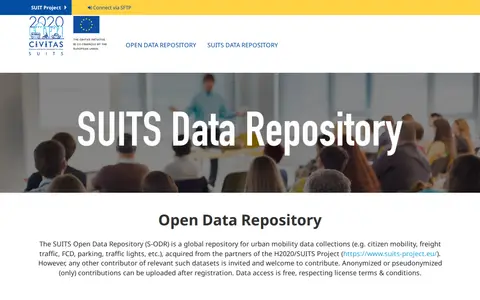
The SUITS Open Data Repository is a global repository for urban mobility data collections, including citizen mobility, freight traffic, floating car data, parking and traffic lights, acquired from H2020/SUITS Project partners. Other contributors may upload anonymized or pseudonymized datasets after registration. Visitors have open access to published collections under license terms.
Syncthing is a continuous file synchronization program that synchronizes files between two or more computers in real time. Communication is secured using TLS with perfect forward secrecy, and each device is identified by a cryptographic certificate. The protocol is documented and the source code is available on GitHub. It runs on macOS, Windows, Linux, FreeBSD, Solaris, OpenBSD and other systems, and is configured through a browser interface.
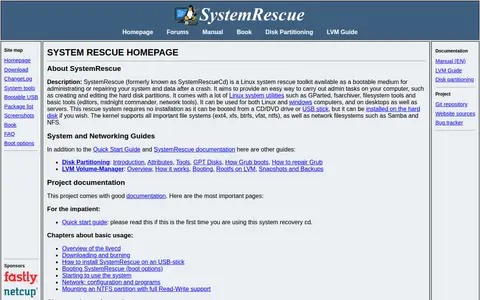
SystemRescue (formerly SystemRescueCd) is a Linux system rescue toolkit distributed as a bootable medium for administering or repairing a system and its data after a crash. It runs from a CD/DVD drive or USB stick and can also be installed on a hard disk. Included utilities cover partitioning, filesystem tools and networking, and it supports Linux and Windows computers, desktops and servers.
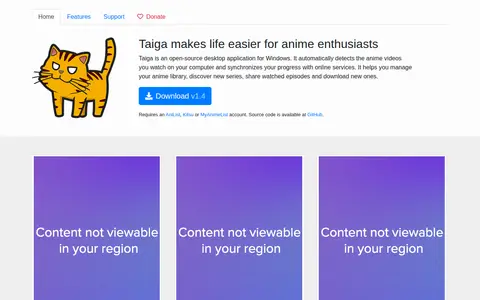
Taiga is an open-source desktop application for Windows that helps manage an anime library, discover new series, share watched episodes and download new episodes. It automatically detects anime videos watched on the computer and synchronizes progress with online services. It requires an AniList, Kitsu or MyAnimeList account.
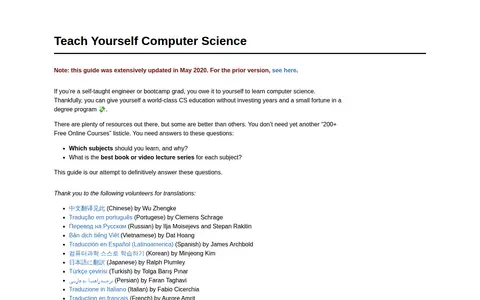
A guide to self-study computer science. It recommends nine subjects in a rough order and suggests a textbook or video lecture series for each, with about 100-200 hours of study per topic. It was extensively updated in May 2020 and has volunteer translations.
A handbook guide covering preparation for software engineering interviews. It outlines interview formats such as quizzes, online coding assessments, take-home assignments, phone screens and onsite rounds, and covers choosing a programming language, computer science fundamentals, coding practice, system design and behavioral interviews.
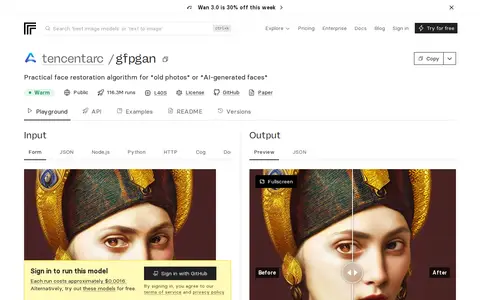
GFPGAN is a face restoration algorithm for old photos or AI-generated faces, created by tencentarc and available on Replicate. The model runs on Nvidia L40S GPU hardware and costs approximately $0.0076 to run. It is also open source and can be run on a personal computer with Docker.
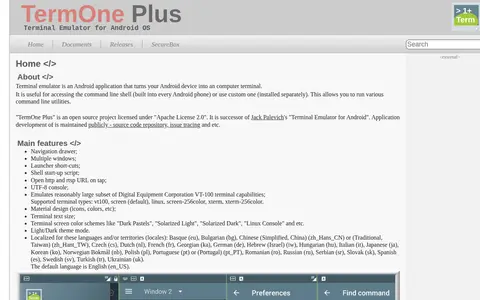
TermOne Plus is an Android terminal emulator that turns an Android device into a computer terminal for accessing a command line shell and running command line utilities. It is an open source project under Apache License 2.0 and the successor of Jack Palevich's Terminal Emulator for Android. Features include multiple windows, a navigation drawer, launcher shortcuts, UTF-8 console, and VT-100 emulation.
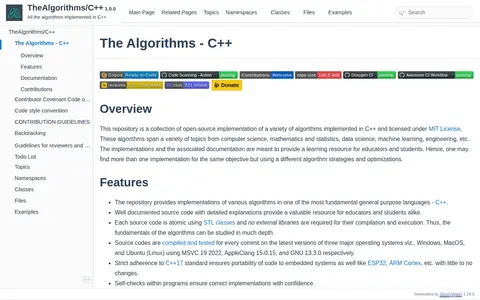
The Algorithms - C++ is a repository of open-source implementations of various algorithms in C++, released under the MIT License. It covers topics including computer science, mathematics, statistics, data science, machine learning and engineering, and is intended as a learning resource for educators and students. The documentation is generated from the source code.
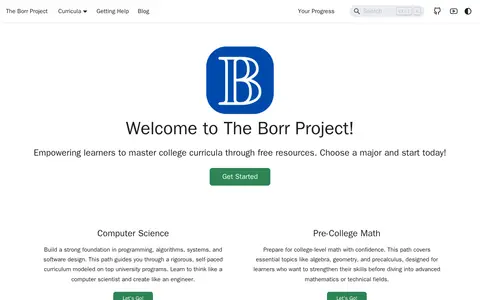
The Borr Project is a free educational initiative providing self-paced learning paths modeled on top university curricula for computer science, pre-college math, data science, and mathematics. It offers help via a Discord chat room and a public FAQ.
The Kurdish Digital Library is maintained by the Kurdish Institute of Paris and holds the largest Kurdish library in the Western World. It contains over 10,000 monographs about the Kurds in 25 languages, along with documents, reviews, newspapers, photographs, videos, posters, audio archives and music recordings. References to these works have been computerized, and selected works are being digitized.
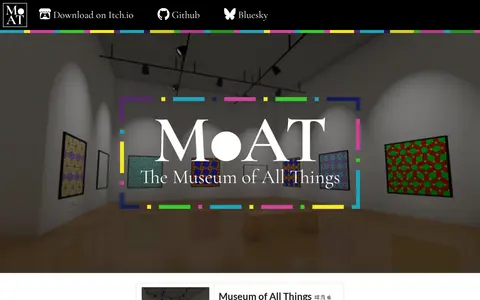
The Museum of All Things (MoAT) is a free, nearly-infinite virtual museum accessible via downloadable desktop software for personal computers. Each exhibit corresponds to a Wikipedia article, with walls displaying images and text pulled from Wikipedia and Wikimedia Commons, and hallways leading to exhibits linked from the article. It supports seven languages including English, German, French, Spanish, Japanese, Portuguese, and Bengali, and supports VR via OpenXR, though Oculus Quest is not currently supported.
The Pinouts Book is a free digital book for designers and engineers, serving as a quick reference for pinout functions in electronics projects. It covers 200 commonly used components, including connectors, single board computers, dev boards, memory cards and microcontroller chips. Pages link to official datasheets and specifications, and the latest version is reformatted for A4 printers.
The Restart Page is a free interactive experience that replicates the rebooting process of vintage operating systems. Users can initiate restart, shut down, or stand by functions to view the boot sequences of these systems. The project is a tribute to the most significant operating systems that have been part of users' geek lives, and only works on desktop computers.
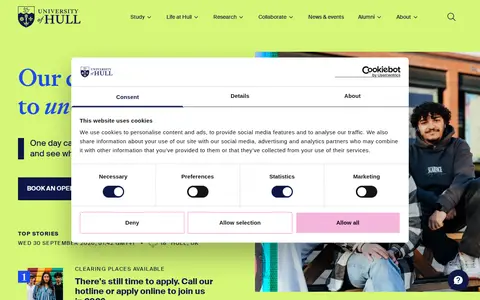
The University of Hull is a UK university offering undergraduate, postgraduate taught, postgraduate research, online and London campus study programmes. It provides a Cost of Living Bursary of £500 or £750 a year for eligible home undergraduates, a free student coach service for commuters from North Lincolnshire, and a help centre with searchable FAQs covering study, accommodation, funding and student support.
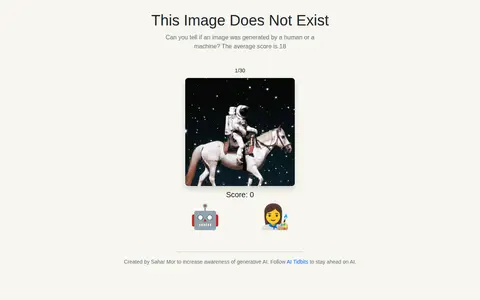
Test your ability to tell if an image is human or computer generated.
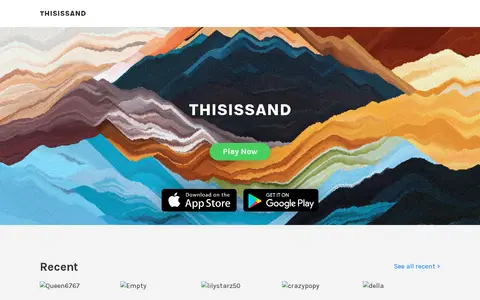
This Is Sand is a unique digital playground that lets users create and share sand art on computers or mobile devices. Users pour colored sand onto the screen to form piling sandscapes, which can be saved and shared with others.