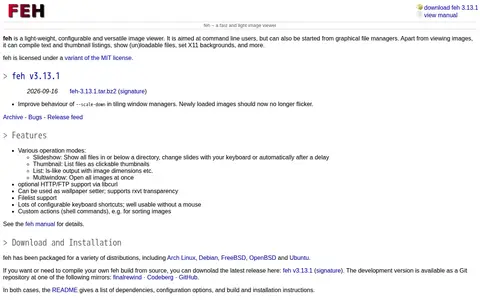
feh is a light-weight, configurable image viewer aimed at command line users that can also be started from graphical file managers. Besides viewing images, it compiles text and thumbnail listings, shows loadable files, and sets X11 backgrounds. It offers slideshow, thumbnail, list and multiwindow modes, optional HTTP and FTP support, and is packaged for several distributions.
Directory
Search results
Published directory entries matching your search.
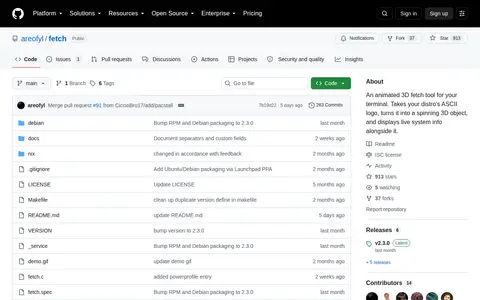
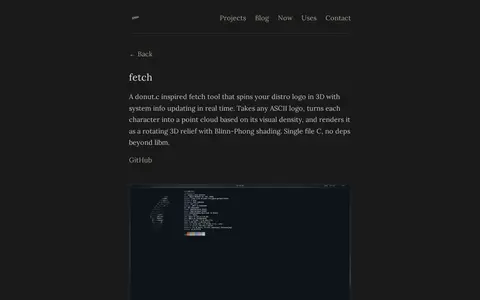
A single-file C fetch tool inspired by donut.c that renders a distro logo as a rotating 3D relief with Blinn-Phong shading while system info updates in real time. It auto-detects the distro logo from fastfetch or accepts a specified or custom logo. System info is gathered natively without fastfetch or neofetch.
Fetch is an animated 3D fetch tool for terminals. It takes a user's distribution ASCII logo, turns it into a spinning 3D object, and displays live system information alongside it.
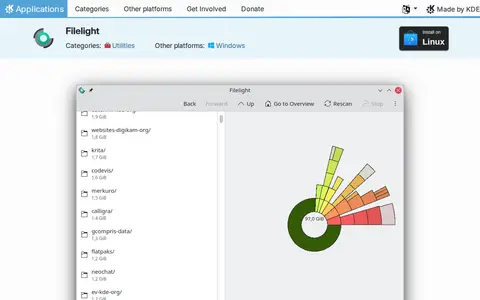
Filelight is a KDE utility application that visualizes disk usage on a computer using concentric ring displays for folders. It can scan local, remote or removable disks, show detailed file and folder information, delete unnecessary files, integrates with Dolphin, Konqueror and Krusader file managers, and offers configurable color schemes.
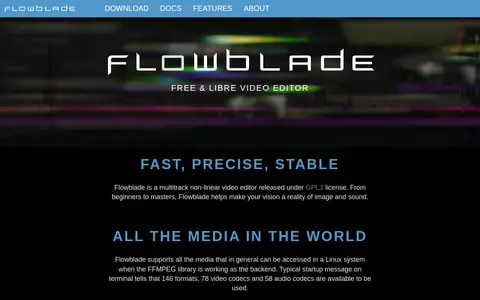
Flowblade is a multitrack non-linear video editor released under the GPL3 license. It uses the FFMPEG library as a backend for media access and provides a set of industry standard editing tools for adding, moving and trimming clips. It also includes a dedicated G'MIC tool for image filtering.
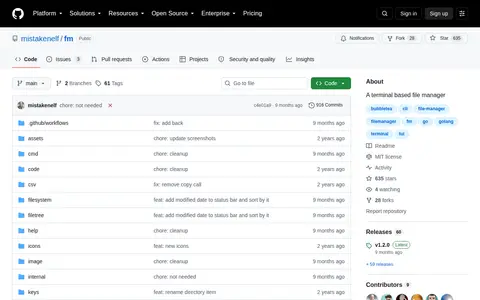
fm is a terminal-based file manager written in Go. It provides file icons requiring a nerd font, syntax highlighting for source code with customizable themes, markdown rendering, mouse support, and themes including default, gruvbox and nord. It can open the selected file in the editor set in the EDITOR environment variable and copy selected directory items to the clipboard.
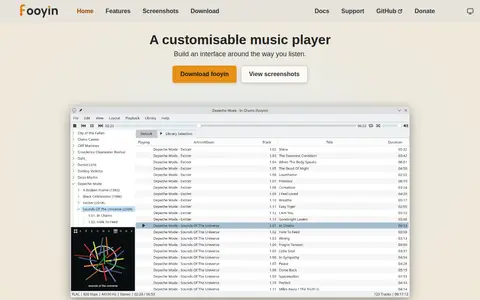
Fooyin is a customisable music player focused on flexible interface design and local collection management. Users can arrange widgets to build a personalized layout, organise and search large music libraries, and play major audio formats, internet radio, audio CDs and CUE sheets. Functionality can be extended via plugins and FooScript, which supports advanced formatting, queries and autoplaylists. The player also supports lyrics, artwork, ReplayGain, MusicBrainz metadata, AccurateRip and desktop integrations.

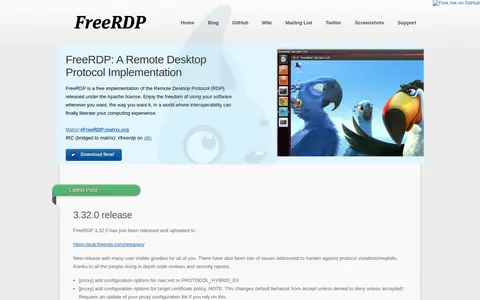
FreeRDP is a free implementation of the Remote Desktop Protocol (RDP), released under the Apache license. The project publishes releases, including regression, bugfix and security releases, and maintains a blog, GitHub, wiki, mailing list and support channels.
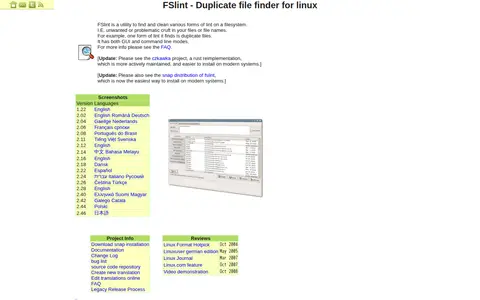
FSlint is a utility to find and clean various forms of lint on a filesystem, such as unwanted or problematic cruft in files or file names, including duplicate files. It has both GUI and command line modes. The page notes the czkawka project as a more actively maintained reimplementation.
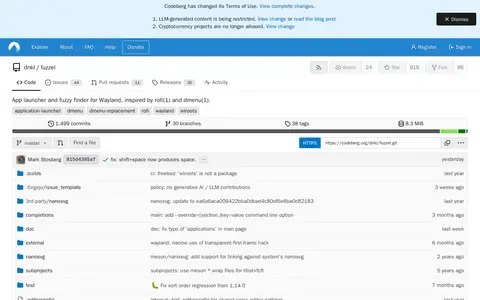
Fuzzel is an app launcher and fuzzy finder for Wayland, inspired by rofi(1) and dmenu(1). It supports app launching and dmenu mode. The project's source repository is written mostly in C.
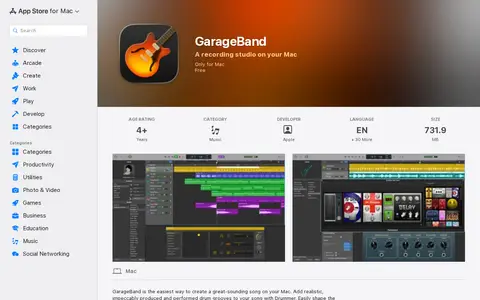
GarageBand is Apple's music creation app for Mac, offered free on the Mac App Store. It provides virtual drummers, a sound library with Smart Controls, guitar amps and pedalboard effects, and recording with up to 255 tracks. Projects can be kept up to date across Mac computers using iCloud.
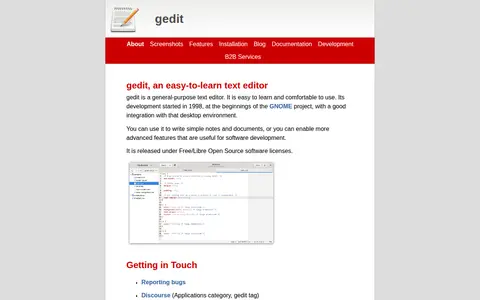
gedit is a general-purpose text editor, easy to learn and comfortable to use. Its development started in 1998 with integration with the GNOME desktop environment. It can be used for simple notes and documents or with advanced features useful for software development. It is released under Free/Libre Open Source software licenses.
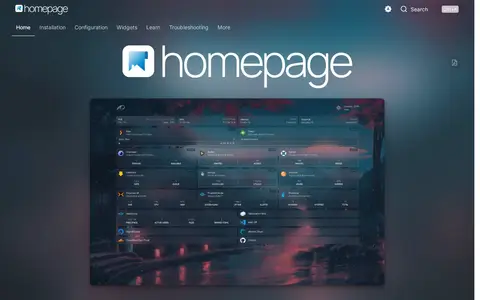
Homepage is an application dashboard described as modern, fast, secure and fully proxied, with integrations for over 100 services and translations into multiple languages. It is configured through YAML files or via Docker label discovery.
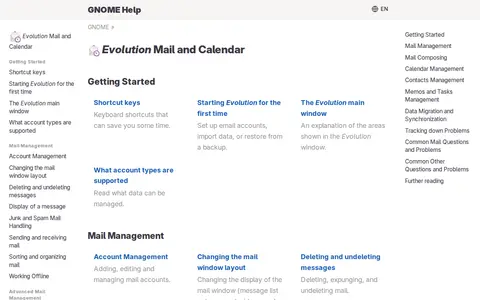
GNOME Evolution is a mail and calendar application documented on the GNOME help site. Its documentation covers mail management, composing, calendar management, contacts, memos and tasks, and data migration and synchronization. Advanced sections address IMAP subscriptions, mail encryption and certificates, and templates. Separate help pages explain why printing, attachments or help may not work and how to get help.
GNU Gzip is a data compression program written by Jean-loup Gailly for the GNU project, with Mark Adler writing the decompression part. It was developed as a replacement for compress because of Unisys and IBM patents covering the LZW algorithm. Gzip is free software distributed under the GNU General Public License.
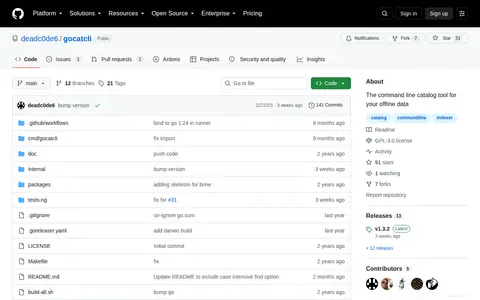
gocatcli is an open source command-line or Unix tool for terminal workflows and system use.
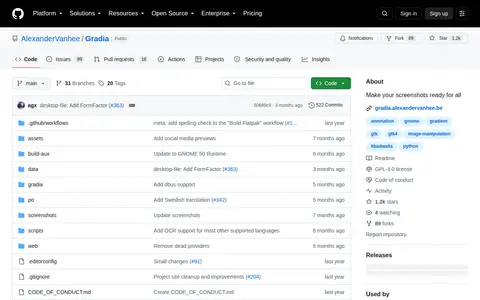
Gradia is a tool for editing screenshots so they display well on social media, including transparent or oddly sized images of application windows. It offers annotation, gradient, and image-manipulation features and is built with GTK4, libadwaita, and Python. A custom keyboard shortcut can launch it after taking a screenshot.
greetd is a minimal and flexible login manager daemon that makes no assumptions about what to launch. It can start anything runnable from a shell in a TTY, and programs that speak a simple JSON-based IPC protocol can act as greeters. The project provides agreety, a simple text-based greeter, and lists third-party greeters for graphical and console sessions.
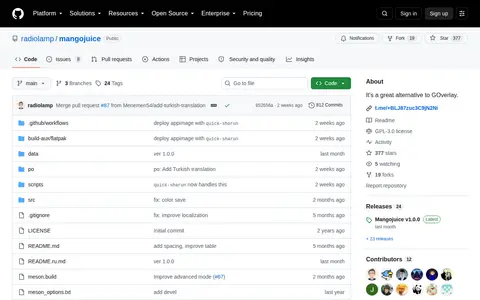
MangoJuice is a GTK4 application described as a convenient alternative to GOverlay for setting up MangoHud. It is written in Vala and provides a Devel mode for testing new features and mangohud-git versions. The project states that Devel mode is not recommended for permanent use.

Guillotine is a GNOME shell extension designed to provide a highly customizable menu for efficient command execution. It allows users to launch commands and toggle system services via the user-configured menu interface.
BSD Hardware Database is a project to anonymously collect hardware details of BSD-powered computers and help people collaboratively debug hardware related issues, check for BSD-compatibility and find drivers. Users can probe their computers to participate and share probes with BSD developers to debug and fix problems.
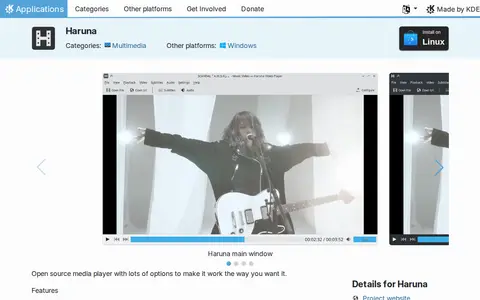
Haruna is an open source media player for KDE with configurable options. It can play online videos through youtube-dl, supports YouTube playlists, and allows playlists to overlay the video when toggled by mouse-over. It also offers auto-skip for chapters containing certain words, configurable shortcuts and mouse buttons, and a quick jump to the next chapter by middle-clicking the progress bar.
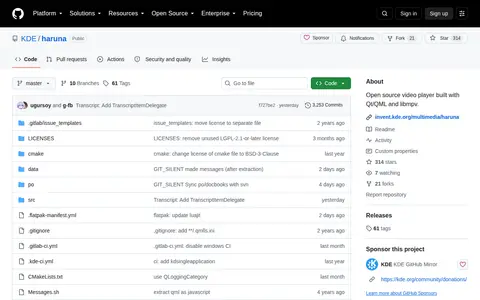
Haruna is an open source media player built with Qt/QML and libmpv. The project provides a Flatpak package, and its stated features include video preview on the seek and progress bar and playing online videos through youtube-dl.
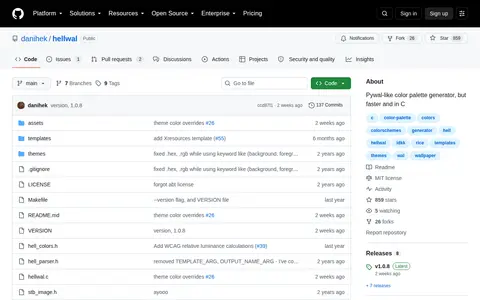
Hellwal is a color palette generator comparable to Pywal, written in C. Given a wallpaper image it generates color templates, which are saved to ~/.cache/hellwal/. Templates can reference colors 0 to 15 in hex, rgb or single rgb channel formats and support HSL and RGB operations. It is available via AUR, Homebrew and Nixpkgs, or can be built with make.