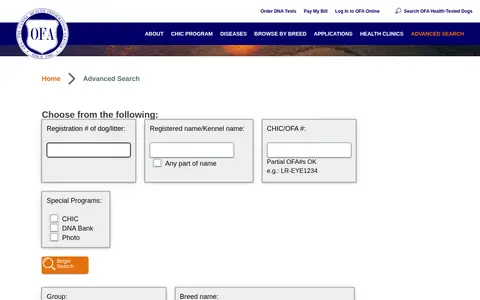

OFA Records is a resource maintained by the Orthopedic Foundation for Animals that provides access to canine health information. It offers an advanced search function for health-tested dogs, along with options to order DNA tests, pay bills, and log in to user accounts. The site includes information on funded research, the organization’s DNA repository, guidance on interpreting OFA numbers, fee schedules, educational resources, publications, quarterly reports, policies, the Canine Health Information Center (CHIC) program, breed-specific data on conditions including hip dysplasia, elbow dysplasia, eye disease, cardiac disease, respiratory function, patellar luxation, thyroid issues, and DNA-based disease tests, disease statistics by breed, and health clinic applications.
Directory
Search results
Published directory entries matching your search.
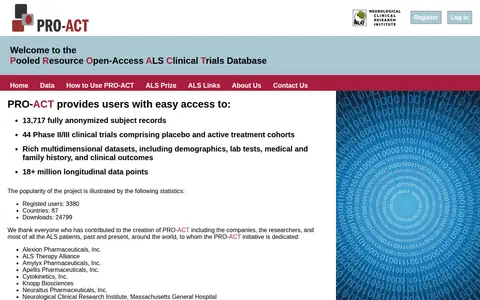
PRO-ACT is a pooled open-access database of ALS clinical trial data. It offers anonymized subject records and multidimensional datasets covering demographics, lab tests, medical and family history, and clinical outcomes. Access is provided through the project's website.
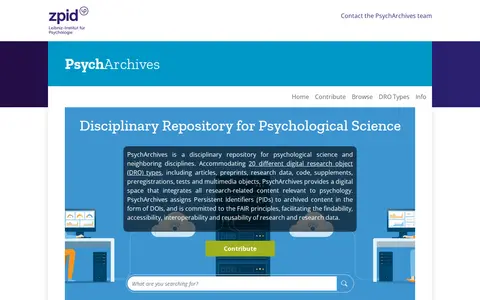
PsychArchives is a disciplinary repository for psychological science and neighboring disciplines. It accommodates 20 digital research object types, including articles, preprints, research data, code, supplements, preregistrations, tests and multimedia objects, and assigns DOIs to archived content.
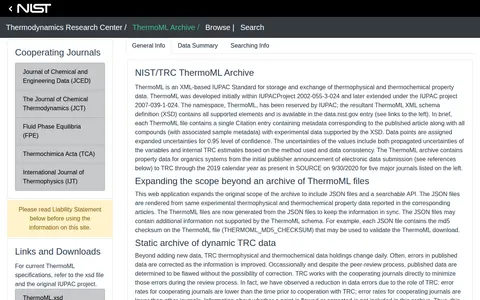
Dataset repository covering chemical and thermal process engineering, with searchable measurement and test data.
The Triticeae Toolbox hosts public breeding databases for wheat, oat and barley. It includes publicly accessible curated databases for wheat and oat, sandbox versions of these databases for user testing, a private wheat database for approved WheatCAP participants, and discontinued classic versions of the wheat and oat databases containing data up to early 2020.
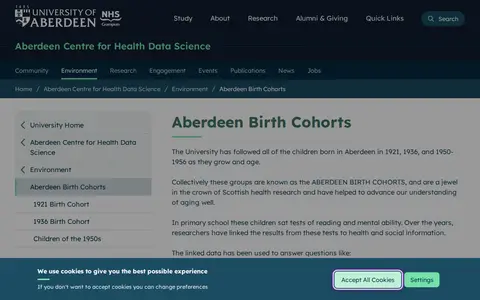
The Aberdeen Birth Cohorts are groups followed by the University of Aberdeen: children born in Aberdeen in 1921, 1936, and 1950-1956. Childhood reading and mental ability test results have been linked to health and social information to study questions about aging, mental health, and dementia. Participants born in 1921 and 1936 have been invited back for studies, and similar research is being started for the 1950s group.
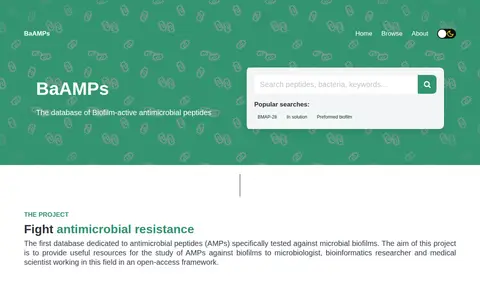
The database of Biofilm-active antimicrobial peptides is described as the first database dedicated to antimicrobial peptides tested specifically against microbial biofilms. It aims to provide open-access resources on AMPs against biofilms for microbiologists, bioinformatics researchers and medical scientists working in the field.
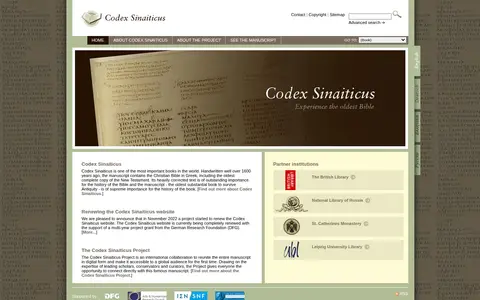
Codex Sinaiticus is a manuscript handwritten over 1600 years ago, containing the Christian Bible in Greek including the oldest complete copy of the New Testament, and is considered one of the most important books in the world. The international Codex Sinaiticus Project works to reunite the entire manuscript in digital form and make it accessible to a global audience for the first time, and the associated website provides access to the manuscript’s contents including navigation to individual biblical books and texts.
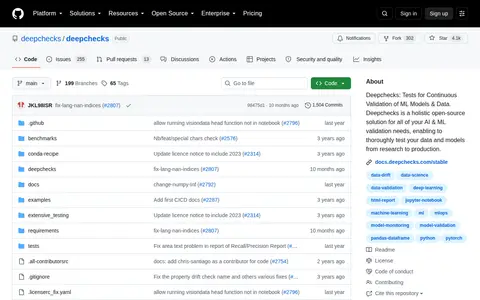
Deepchecks is an open-source project for validating machine learning models and data from research to production. It includes built-in and custom checks and suites for tabular, NLP and CV validation, CI and testing management, and monitoring of deployed models. Installation is via pip.
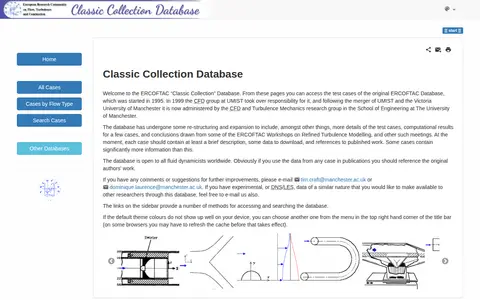
The ERCOFTAC Classic Collection Database provides access to test cases from the original ERCOFTAC Database, started in 1995. Administered by the CFD and Turbulence Mechanics research group at The University of Manchester, it offers case descriptions, downloadable data and references, and is open to fluid dynamicists worldwide.
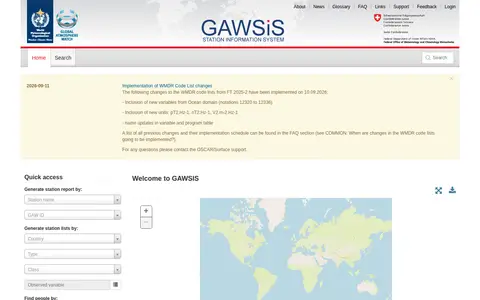
GAWSIS is the official catalogue of observing facilities, observations and contacts supporting the World Meteorological Organization's Global Atmosphere Watch Programme. It is a test environment, with the operational version available at GAWSISOSCAR.
Analyzes structured data and helps produce queries, insights or visualizations.
An open repository of psychological instruments translated into Serbian or developed by Serbian researchers and students. It lets users access and download scales and tests for research projects and store instrument translations. It was founded in 2020 at the LIRA Lab at the University of Belgrade Faculty of Philosophy.
The ROCEEH Out of Africa Database (ROAD) is a research database offering simple search functionality, with supporting documentation including table descriptions, an entity relationship diagram, a manual and FAQs. Full access requires user registration, and the service will be temporarily unavailable on September 28, 2026 from 4:00 PM to approximately 4:30 PM German time for emergency procedure testing.

SciRuby is a project providing tools for scientific computing and data visualization in Ruby. Its releases include NMatrix, a linear algebra library with dense and sparse matrix storage and tensor support, alongside visualization and statistics gems. The project describes itself as currently alpha, and it notes its gems are tested but not battle-hardened. SciRuby and NMatrix are available under the BSD three-clause license.
A personal blog by Chris Said, a data scientist at Propel. The blog is mostly about statistics, technology, and science, and the site links to blog posts on topics such as A/B testing and statistics.
Odyssey.js is an open source tool that combines maps, narratives and other multimedia into stories. It offers templates including scrolling, slide based and temporal designs, and Actions for map movements and content display. The sandbox lets users test the library and edit story content with Markdown. It is an early-stage project developed by cartodb.com with Knight Foundation funding.
Statsmodels is a Python package that complements scipy for statistical computations, including descriptive statistics and estimation and inference for statistical models. It provides linear regression models, generalized linear models, discrete models, time series analysis, survival analysis, multivariate methods and a range of statistical tests.
Supports software work with AI-assisted coding, testing or application development.
Anyword is a generative AI content platform and performance API for go-to-market teams. It adds A/B-tested data and brand context to prompts and works with any AI model or application. The platform includes a data-driven editor, content intelligence, brand voice features, and integrations with marketing channels such as Google Ads, Meta, and LinkedIn.
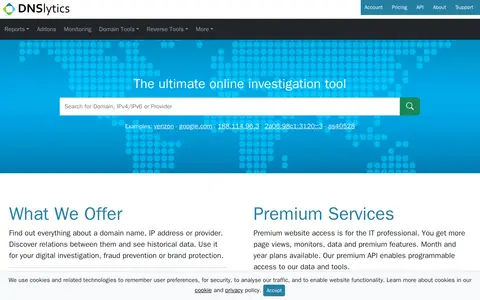
DNSlytics is an online investigation tool for viewing information about IP addresses, domain names and providers. It offers DNS lookups, email testing, WHOIS lookups, and reports on AS/BGP, CIDR and TLD data. Premium website access and a premium API provide additional page views, monitors and data.
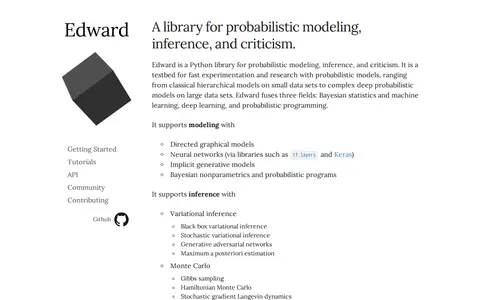
Edward is a Python library for probabilistic modeling, inference, and criticism. It is a testbed for experimentation and research with probabilistic models, from hierarchical models on small data sets to deep probabilistic models on large data sets. It fuses Bayesian statistics and machine learning, deep learning, and probabilistic programming, and is built on TensorFlow.
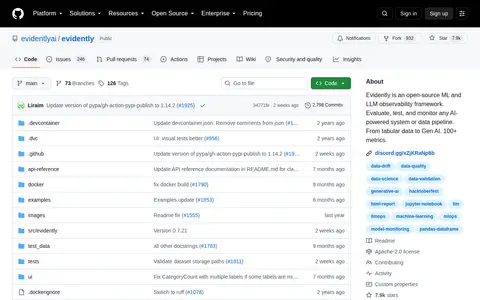
Evidently is an open-source observability framework for machine learning and large language models, hosted on GitHub under the evidentlyai organization. It enables users to evaluate, test, and monitor AI-powered systems and data pipelines, with support for use cases ranging from tabular data processing to generative AI, and includes more than 100 built-in metrics.
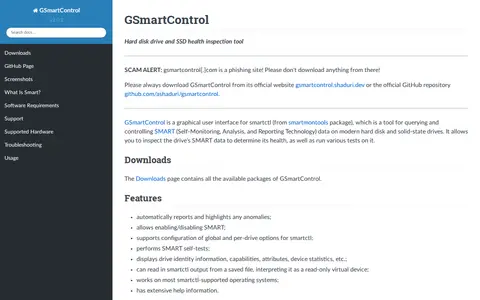
GSmartControl is a graphical user interface for smartctl from the smartmontools package, used to query and control SMART data on hard disk and solid-state drives. It can inspect SMART data to determine drive health and run self-tests. It supports SATA, PATA, and NVMe drives and works on Linux, Windows, macOS, FreeBSD, and other BSD-style systems.