
A resource funded by the ESRC that supports researchers, teachers and policymakers who depend on high-quality social and economic data. It provides trusted access and training to use the UK's largest collection of economic, population and social research data for teaching, learning and public benefit. Users can explore a data catalogue through a data selector and access help and registration advice.
Directory
Search results
Published directory entries matching your search.
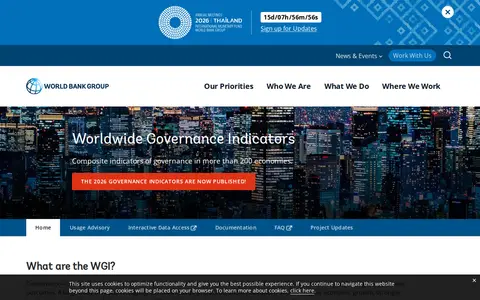
The Worldwide Governance Indicators are annual composite indicators summarizing six dimensions of governance across more than 200 economies, based on perception data from 35 cross-country sources. The World Bank publishes the 2026 update, with data covering 1996 to 2025. The indicators are intended for research, policy analysis and government reflection, not as definitive criteria for credit ratings or investment risk.
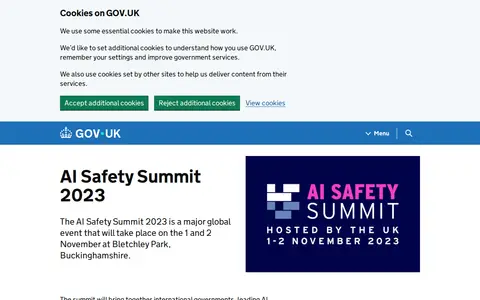
The AI Safety Summit 2023 is a global event held on 1 and 2 November at Bletchley Park, Buckinghamshire. It brings together international governments, AI companies, civil society groups and researchers to consider AI risks, especially at the frontier of development, and discuss mitigation through internationally coordinated action.
AI Weekly is an AI news publication that ranks and explains the day's most important artificial intelligence stories. It tracks AI models, agents, funding, policy and research, with updates throughout the day, and also publishes a regular numbered issue and live alerts.
The Alternative Fuels Data Center provides information, data and tools about alternative and renewable fuels and advanced vehicles. It is aimed at fleets, fuel providers, policymakers, cities, states and Clean Cities coalitions. Site resources include a station locator, state information, a tool finder, a vehicle cost calculator and maps of fueling stations.
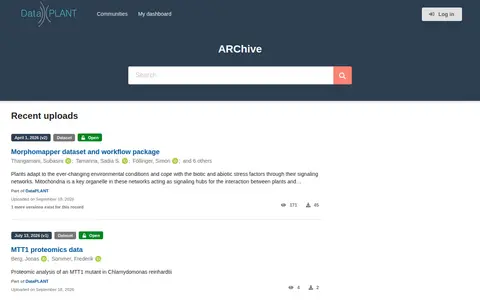
ARChive is a digital repository instance powered by the InvenioRDM platform. It organizes content into featured communities, lists recent public uploads, and provides user login access to a personal dashboard. The site includes public legal resources covering terms of use, privacy policy, and imprint details.
Cambridge Core is the books and journals platform from Cambridge University Press, replacing Cambridge Journals Online and Cambridge Books Online. It hosts the publisher's academic content. Its accessibility information states that users can change colours, contrast levels and fonts through browser settings, and can zoom in up to 400% without text spilling off the screen for most of the website. Cambridge University Press describes a transparent pricing policy for journals, under which subscription prices reflect the amount of subscription content, with subscription read costs reduced as open access content increases.
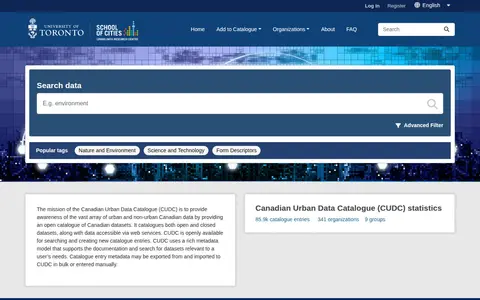
The Canadian Urban Data Repository hosts the Canadian Urban Data Catalogue (CUDC), a platform that catalogs urban datasets with metadata organized across six maturity levels covering basic information, access parameters, content details, privacy information, Indigenous data considerations, and data quality metrics.
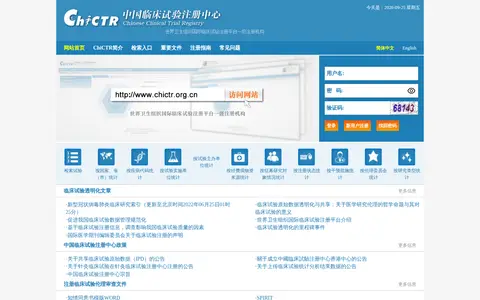
The Chinese Clinical Trial Register is a primary registry of the WHO International Clinical Trials Registry Platform. The website provides a trial search, registration guidance, and policy documents. It includes statistics by country, disease code, institution, and registration status.
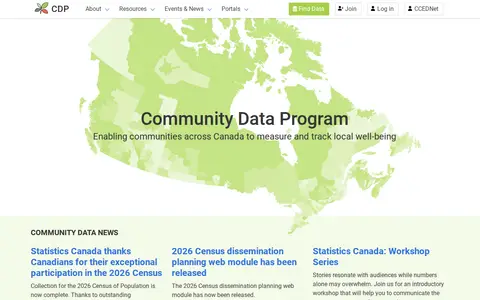
The Community Data Program is a membership-based community development initiative for Canadian public, non-profit or community sector organizations with a local service delivery or public policy mandate. It makes data accessible and useful to members through training and capacity building resources, and supports dialogue and sharing of best practices in community data use through its network.
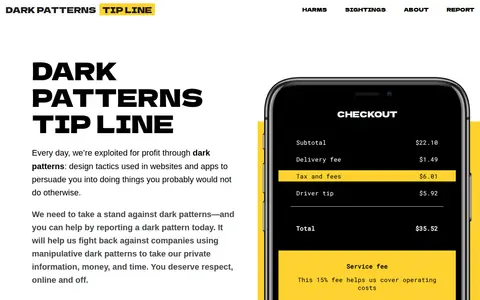
The Dark Patterns Tip Line collects reports of dark patterns, described as design tactics in websites and apps that persuade people into actions they would not otherwise take. A team of designers, academic researchers, legal experts and policy specialists leads the project. Submissions are reviewed before posting and may be used in research or to illustrate dark patterns to the public, media and policymakers.
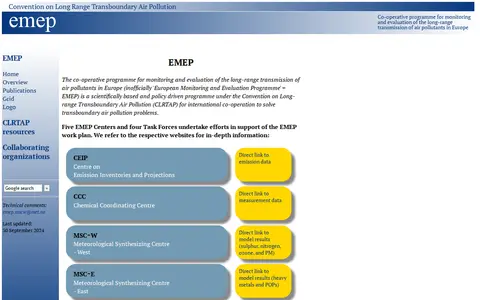
EMEP is a scientifically based, policy-driven programme under the Convention on Long-range Transboundary Air Pollution. It monitors and evaluates the long-range transmission of air pollutants in Europe. Five centers and four task forces support its work plan, covering emission data, measurement data, model results, and integrated assessment modelling.
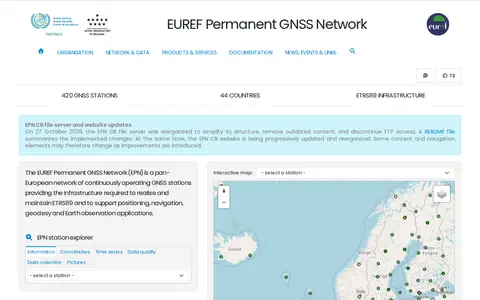
The EUREF Permanent GNSS Network is a pan-European network of continuously operating GNSS reference stations, coordinated by the EPN Central Bureau. It provides access to the European Terrestrial Reference System 89 and distributes GNSS data, station coordinates and velocities under an open-data policy. The network covers 400+ active reference stations. The EPN CB does not operate the stations; each is managed by a responsible agency or institution.
Fiddler is an AI control plane platform for enterprise AI agent deployments. It offers evaluation, monitoring, policy enforcement, governance, and cost efficiency functionality for enterprise AI systems. The platform supports use cases across government, financial services, healthcare, and insurance sectors.
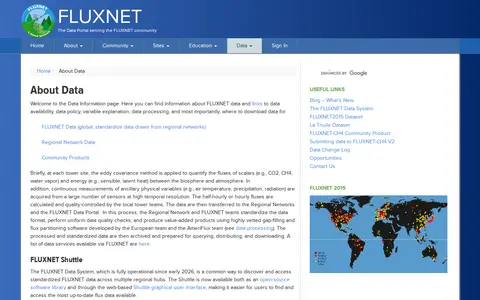
FLUXNET Data provides information about FLUXNET data and links to data availability, data policy, variable explanation, data processing, and where to download data. The FLUXNET Data Shuttle is described as fully operational since early 2026, available as an open-source software library and a web-based graphical user interface for discovering and accessing standardized flux data.
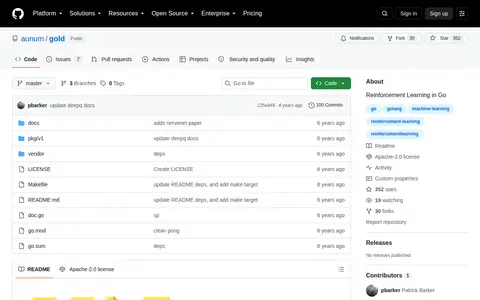
Gold is a reinforcement learning library for Go. It provides a set of agents for solving challenges in various environments, with composable tooling for creating agents and visualizing their performance. Agents include Q Learning, Deep Q learning with Double Q, REINFORCE, Natural Evolution Strategies, Hindsight Experience Replay and Proximal Policy Optimization, which is marked in progress.

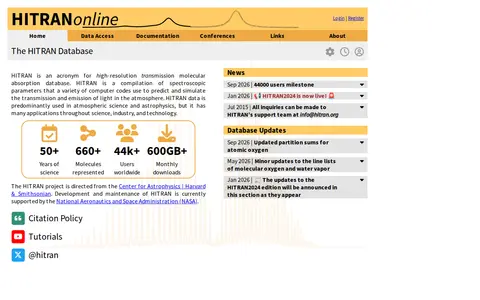
HITRANonline is a web interface to the HITRAN database, a compilation of high-resolution spectroscopic parameters used by computer codes to predict and simulate atmospheric transmission and emission of light. The database is chiefly applied in atmospheric science and astrophysics. The site provides data access, documentation, cross-section definitions, tutorials and citation policy.
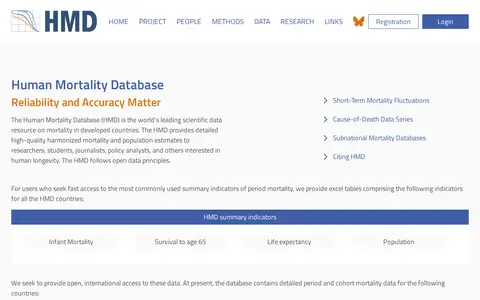
The Human Mortality Database is a scientific data resource on mortality in developed countries. It provides harmonized mortality and population estimates to researchers, students, journalists, and policy analysts. The database follows open data principles and is organized into zipped data files for rapid downloads, with summary indicators and data by country.
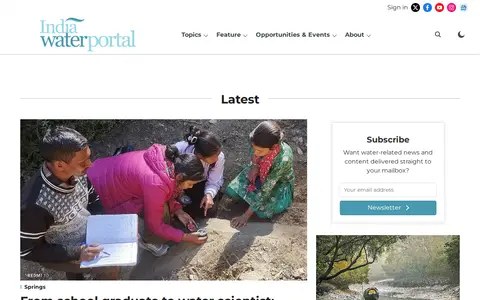
India Water Portal is a website covering water conservation, management, and sustainability in India. It publishes articles and FAQs on topics including water quality and pollution, disasters, governance and policy, agriculture, climate, rivers and lakes, ecology, and people and culture. The site also offers a Hindi portal and a data section.

Browse digitized texts, images, archives and cataloged cultural materials.
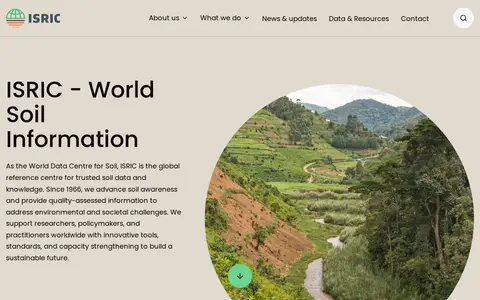
ISRIC is an independent science-based foundation serving as custodian of global soil information and the World Data Centre for Soil. It advances soil awareness and provides quality-assessed soil data and knowledge, supporting researchers, policymakers and practitioners with tools, standards and capacity strengthening.
The IUCN Red List of Threatened Species is a source of information on the global conservation status of animal, fungi and plant species used to inform biodiversity conservation and policy. The extract states the list divides species into nine categories, including Not Evaluated and Data Deficient.
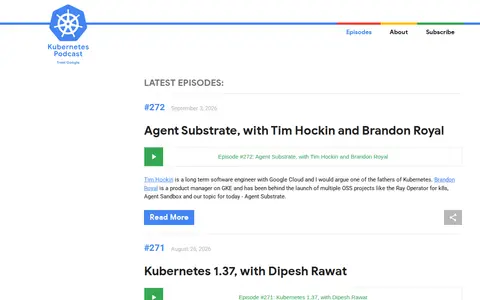
A weekly news and interview podcast covering the Kubernetes community, including release discussions, projects, and AI policy topics. Episodes feature guests from the Kubernetes ecosystem and are hosted as numbered installments with accompanying show notes.
The MPPDA Digital Archive is a database of extant General Correspondence records of the Motion Picture Producers and Distributors of America, covering 1922 to 1939 under chairman Will H. Hays. Designed and compiled by Richard Maltby and Ruth Vasey at Flinders University, it documents the industry trade association, including policy, public relations, distributor-exhibitor relations, censorship and self-regulation.