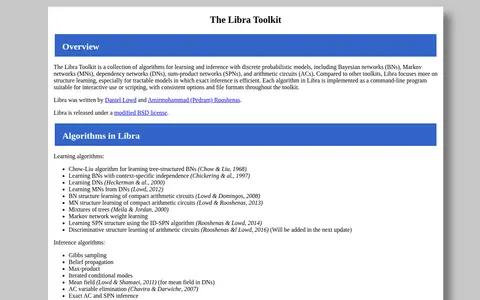
The Libra Toolkit is a collection of algorithms for learning and inference with discrete probabilistic models, including Bayesian networks, Markov networks, dependency networks, sum-product networks and arithmetic circuits. Each algorithm is implemented as a command-line program with consistent options and file formats, and all methods are written in OCaml.
Directory
Search results
Published directory entries matching your search.
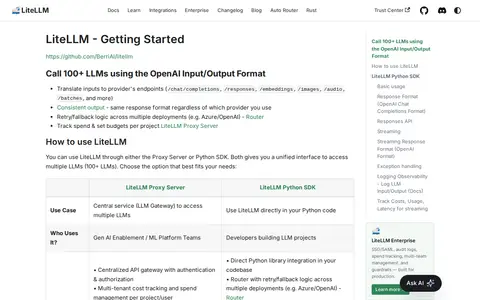
LiteLLM is an open-source library that provides a single, unified interface to call over 100 LLMs using the OpenAI format. It includes a Python SDK whose completion() function uses the same arguments across providers and returns responses in the OpenAI Chat Completions format, plus a self-hosted gateway with virtual keys, cost tracking and an admin UI.
A hub of integrations for LlamaIndex including data loaders, tools, vector databases, LLMs and more.
A tool that generates consolidated llms.txt text files from websites for LLM training and inference, powered by Firecrawl. The site states the API is being deprecated in favor of the main endpoints and will no longer be maintained after June 30, 2025, though the endpoint remains active.

Lunary is an observability and prompt management platform for LLM-based applications. It provides chatbot analytics, agent tracing, prompt templates, topic classification, PII masking and feedback tracking. A self-hostable option is offered. The Team cloud plan costs $20 per user per month, billed monthly, and payment is required to activate a workspace.
Mastra is a TypeScript AI framework for building agents and AI applications. It includes built-in memory, tool support, MCP compatibility, and observability features to support development from prototype to production. The framework also offers workflow tools, agent factory functionality, cloud deployment servers, and an agent builder for evaluation and iteration.
Bifrost is an open-source AI gateway for LLMs, MCP and agents, offered by Maxim AI. It provides routing, governance, guardrails and observability, and is described as a drop-in replacement for AI SDKs. Enterprise adds features such as SSO, RBAC, adaptive load balancing, cluster mode and in-VPC deployment, free for 14 days.
Metorial is an agentic infrastructure platform for AI-native companies. It provides a single unified platform for employees, AI agents, and AI clients to connect tools and skills, with built-in governance, access control, and tracing capabilities. The platform supports development of customer-facing agents, internal assistants, and scalable AI workforces.
Milvus is open source vector database for production AI, written in Go and C++, scalable and blazing fast for billions of embedding vectors.
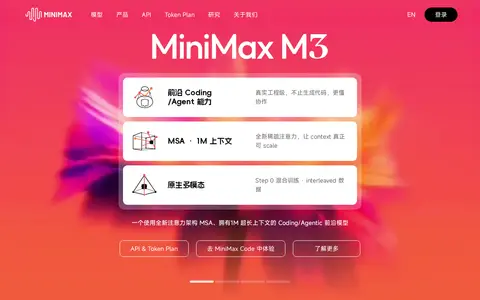
Full-stack AI platform focused on multimodal agents and consumer-scale deployment.
MLflow is an open source AI engineering platform for agents, LLMs, and ML models. It provides tools for debugging, evaluating, monitoring, and optimizing AI applications, including tracing, evaluation metrics, prompt management, an AI gateway, and an agent server. The project is released under the Apache 2.0 license.
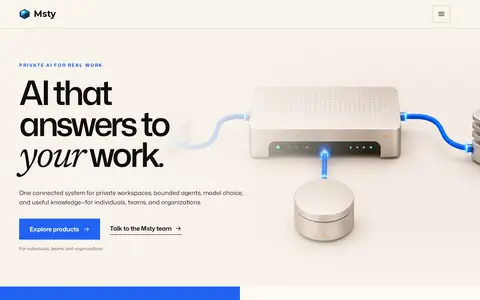
Msty describes private AI for individuals, teams and organizations, with four products connected as one system: Studio, a private AI workspace; Go, for agents; Nexus, a model gateway hub; and Stack, for organizing knowledge. Studio pricing lists a free tier and an Aurum plan billed yearly at $149 per user.
MyVibe is a tool that uses AI to transform web projects into deployable applications. It allows users to upload, convert, and publish their web creations instantly, and is powered by ArcBlock.
Nimblebox supports deploying, serving, monitoring, or operating AI and machine-learning systems.
Platform and SDK for AI Engineers providing tools for LLM evaluation, observability, and a version-controlled enhanced prompt playground.
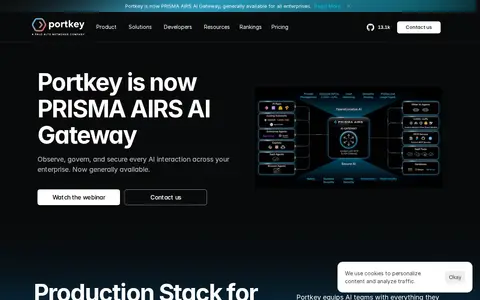
Portkey is a production stack for generative AI builders that offers a suite of tools including an AI gateway, observability features, guardrails and prompt management modules. It is designed to help organizations democratize and productionize generative AI.
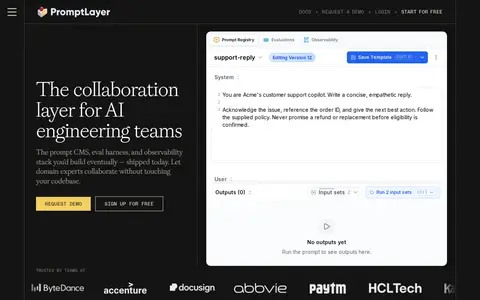
PromptLayer is a prompt management platform for AI engineering teams. It offers prompt versioning, large language model evaluation tools, and AI agent observability via tracing, logs, and regression sets, plus a visual editor for prompt iteration and collaboration.
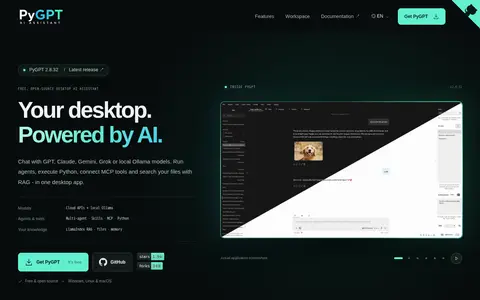
PyGPT is a free, open-source desktop AI assistant compatible with Windows, Linux and macOS operating systems. It supports both cloud-based and local AI models, and offers features including AI chat, multi-agent workflows, RAG-powered knowledge retrieval from user files, skills and plugin support, Python and MCP automation, and voice, vision and content generation capabilities.
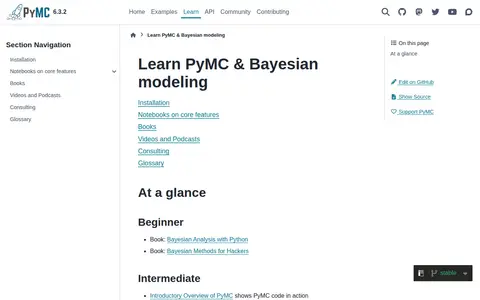
Python Library for Probabalistic Programming (Bayesian Inference and Machine Learning).
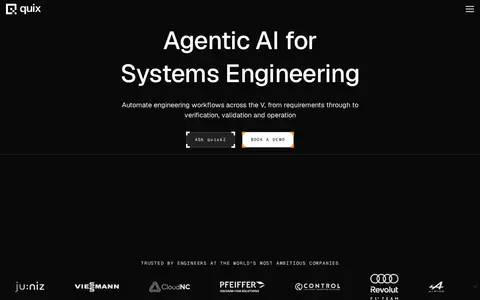
Quix is described as an agentic AI platform for hardware engineering. It turns test-rig and sensor data into real-time insight and is presented as automating engineering workflows across the V, from requirements through verification, validation and operation.
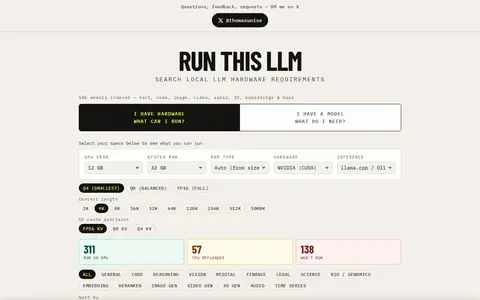
RunThisLLM is a website that provides hardware requirements for running local AI models. It lists over 295 models with full build specifications, performance estimates, and benchmarks. It also offers a Chrome extension and a custom machine building service.
SinglebaseCloud is an AI-native backend platform and Firebase alternative that combines document and vector databases, authentication, storage, and built-in AI services to support the development and scaling of modern applications.
SocialBu is a social media management tool for planning, scheduling, responding to, automating, and analyzing social media across connected accounts. It offers AI-assisted drafting and refinement of posts and captions, content curation, listening streams for mentions and keywords, a unified inbox, automation rules, and performance reports. A 7-day free trial is mentioned. An MCP Server connects compatible AI clients to supported tasks.
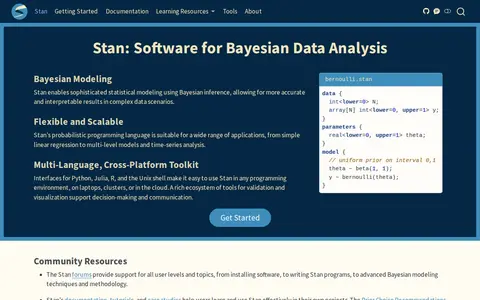
Stan is software for Bayesian data analysis that combines statistical modeling capabilities with user-friendly interfaces and open-source development. Its probabilistic programming language supports applications from simple linear regression to multi-level models and time-series analysis. Interfaces exist for Python, Julia, R, and the Unix shell, usable on laptops, clusters, or in the cloud. Official documentation covers the language, inference algorithms, and built-in functions.