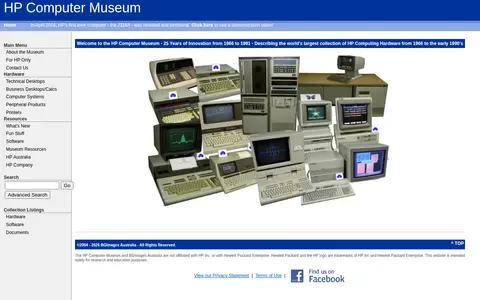
The HP Computer Museum is a collection of HP computing products introduced between 1966 and 1991. It covers calculators, desktop computers, computer systems, tape and disc drives, plotters, printers, digitizers and other hardware, plus software, documentation and promotional materials. The site states it is not affiliated with HP Inc. or Hewlett Packard Enterprise.
Directory
Search results
Published directory entries matching your search.
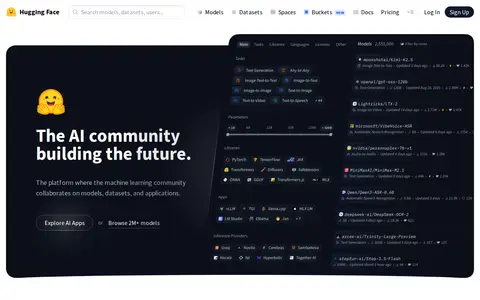
A collaboration platform where the machine learning community shares models, datasets and applications. It hosts public models, datasets and Spaces, and offers an open source stack including libraries such as Transformers, Datasets and Accelerate. It also provides paid Compute and Enterprise solutions, with an Inference Providers API giving access to models from multiple AI providers.
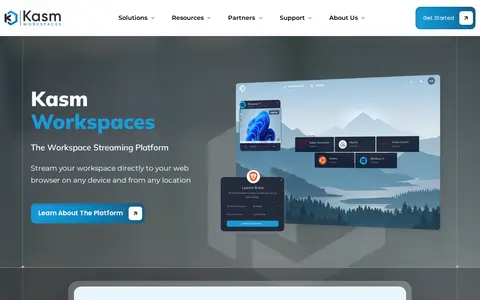
Kasm Workspaces is a platform that streams applications, desktops and web resources to a web browser. It covers remote browser isolation, Desktop as a Service and OSINT workloads. Editions include Community, Starter and Enterprise.

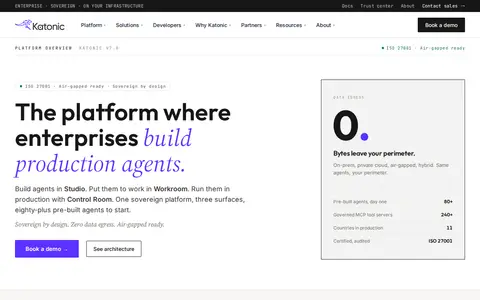
Katonic AI is a full-stack enterprise platform for building, deploying, and governing AI agents on customer-owned infrastructure, including on-premise, private cloud, and air-gapped environments. It incorporates NVIDIA NeMo guardrails, enforces zero data egress, and provides three core surfaces (Studio, Workroom, Control Room) alongside more than 80 pre-built agents and over 240 governed MCP tool servers.
KNIME Analytics Platform is free and open source data analytics software with a visual workflow builder for creating data science solutions. The page lists access, blending and transformation of data from any source, visualization and analysis, and saving, sharing and reuse of workflows. It also describes integrating scripting in Python, R and JavaScript and deploying solutions in the enterprise.
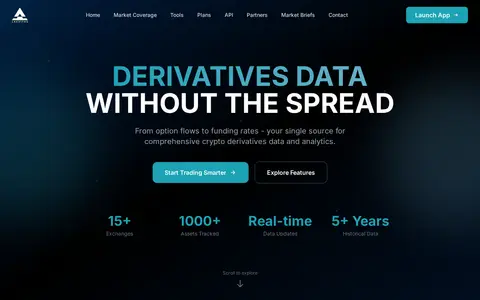
Laevitas provides crypto derivatives data and analytics across more than 15 exchanges and over 1,000 assets, covering options, perpetual and dated futures, and order books. It offers an options strategy builder, options backtesting and a spread analysis suite, plus programmatic access through a REST API, WebSocket and an MCP server for AI agents. Premium and Enterprise plans can be paid with USDC.
The Martinsville Bulletin is a newspaper covering Martinsville and Henry County, Virginia, with breaking news, weather, traffic, crime, sports, lifestyles, entertainment, politics and obituaries. It is a Lee Enterprises, Incorporated newspaper.
Mattermost is a collaboration platform offering secure messaging and workflow automation, deployable in sovereign cloud, on-premises, air-gapped and hybrid environments. It is described as built for national security, critical infrastructure and regulated enterprises, with per-channel permissions and retention.
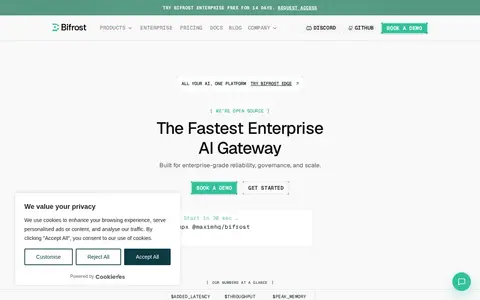
Bifrost is an open-source AI gateway for LLMs, MCP and agents, offered by Maxim AI. It provides routing, governance, guardrails and observability, and is described as a drop-in replacement for AI SDKs. Enterprise adds features such as SSO, RBAC, adaptive load balancing, cluster mode and in-VPC deployment, free for 14 days.
Mimi Panda is a service for converting images into coloring pages and paint by numbers, using graphic techniques and algorithms developed by its team. It offers free coloring pages and a paint by numbers converter, an API service for enterprise clients, and a subscription-based Mimi Profile service with higher quality and a personal account.
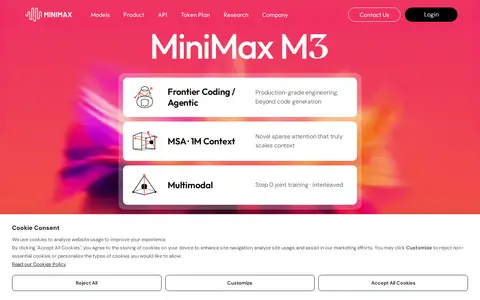
MiniMax is a general AI technology company that develops multimodal foundation models and AI-native products. Its models are described as handling text, audio, image, video, and music, and it offers an open platform for enterprises and developers.
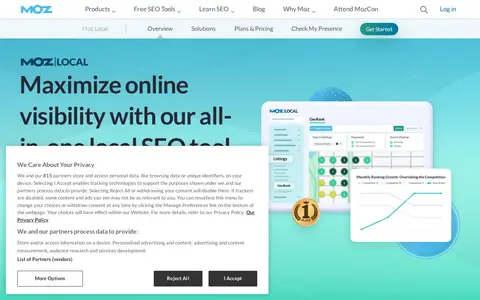
Moz Local is a local SEO tool for managing business listings across directories. It offers auto-syncing of listings, listing health monitoring, Google Business Profile performance insights, and centralized review management from one dashboard. Paid plans include Lite, Preferred and Elite tiers, with larger deployments handled through enterprise custom pricing.
Murf AI is an AI voice and conversational agent platform. It provides tools to generate human-like speech and deploy conversational agents for use by developers, businesses, and creators. The platform offers a text-to-speech API, supports over 200 voices across 35+ languages, includes voice cloning and video translation features, and provides enterprise-grade security. It is described as trusted by over 10 million developers, businesses, and creators.
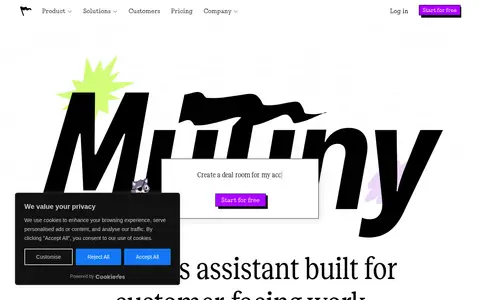
Mutiny is a sales assistant tool built specifically for customer-facing enterprise sales workflows. It creates custom sales assets including personalized decks, deal rooms, business cases, and mutual action plans using data sourced from user calls, emails, and customer relationship management systems. The tool also provides pre-loaded go-to-market playbooks and templates to reduce initial setup time for users.
NetBird is an open-source platform combining a WireGuard-based overlay network with Zero Trust Network Access for secure connectivity. It offers secure remote access, zero-configuration deployment, SSO with MFA, dynamic posture checks, centralized network management and detailed activity logging. The platform is positioned as a replacement for legacy VPNs, connecting remote users, hybrid-cloud and edge environments. Pricing lists Free, Team, Business and Enterprise plans.
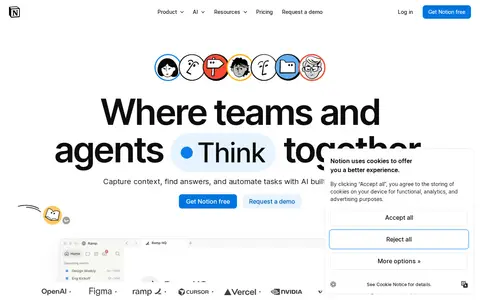
Notion is a collaborative workspace for capturing knowledge, finding answers across apps, and automating tasks. It offers block-based docs, databases, AI meeting notes, enterprise search across Notion, Slack, and Jira, and agents for team workflows. Features include wikis, teamspaces, real-time collaboration, data syncs, forms, imports, and mobile apps.
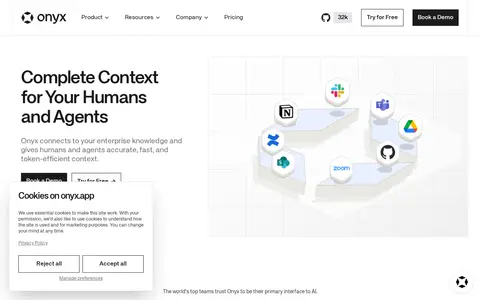
Onyx is an enterprise platform that connects to organizational knowledge sources to provide humans and AI agents with accurate, fast, and token-efficient context. It supports more than 50 connectors, works with any AI model, offers white-glove support, and is used by over 1,000 teams handling 1 million or more weekly queries.
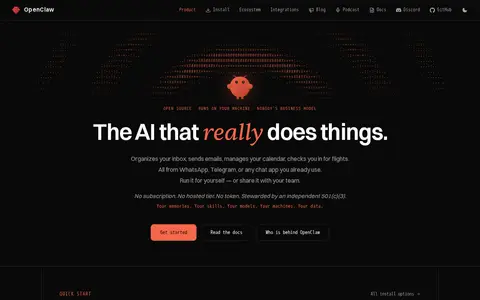
OpenClaw is an open-source AI assistant that runs on the user's machine and works from WhatsApp, Telegram or other chat apps. According to the site, it organizes inboxes, sends emails, manages calendars and checks users in for flights. Desktop apps are listed for macOS, Windows and Linux, and an enterprise platform is in development ahead of a 1.0 release.
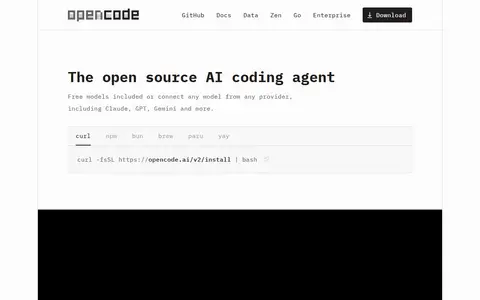
OpenCode is an open source AI coding agent available as a terminal-based interface, desktop app, or IDE extension. It supports multiple LLM providers and local models, and does not store code or context data. Enterprise options include centralized configuration, SSO integration, and an internal AI gateway.
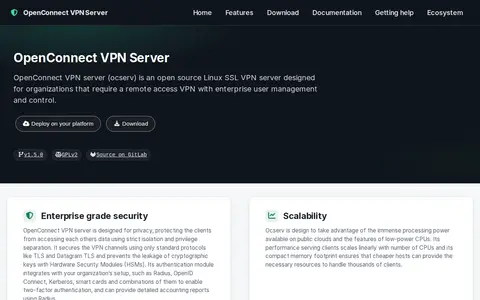
The OpenConnect VPN server (ocserv) is an open source Linux SSL VPN server designed for organizations requiring a remote access VPN with enterprise user management and control. It secures VPN channels using standard protocols like TLS and Datagram TLS, and its performance scales linearly with the number of CPUs.
Paperspace is a cloud GPU platform now owned by DigitalOcean. It provides access to NVIDIA H100 GPUs for AI and machine learning workloads, rendering, 3D graphics, simulations and cloud gaming. Users can develop, train and deploy AI applications on the platform, which is used by over 500,000 builders. Its product offerings include Gradient for AI model development, hosted notebooks, cloud desktops and deployment tools, with solutions tailored for machine learning, enterprise virtual desktops, gaming and rendering use cases.
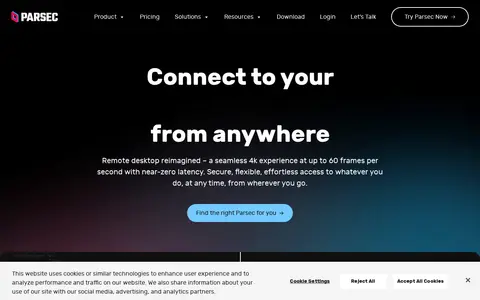
Parsec is a remote desktop tool for connecting to work, games, or projects from any screen. It lists a 4k experience at up to 60 frames per second with near-zero latency, peer-to-peer connections, and session sharing for collaboration. It supports keyboard mapping and gamepad support, and runs on PC, Mac, tablet, laptop, or phone. Teams and Enterprise plans add provisioning via admin panel or SSO.
PCI Lookup is a tool intended to help users find vendor and device descriptions needed to obtain drivers for a PC. It provides guidance on finding vendor and device IDs in Windows and lists walkthroughs for Debian and Red Hat Enterprise Support. The site mentions donations to expand functionality.
Picarta uses AI to predict where a photo was taken, returning estimated GPS coordinates, city, and country with confidence scores. It analyzes visual clues in the image rather than relying on EXIF metadata or embedded GPS tags. The project offers a web app and an API, with on-premise deployment for enterprise clients.