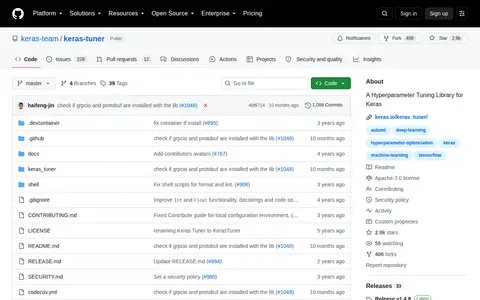

KerasTuner is a hyperparameter optimization framework for Keras. It provides a define-by-run syntax for configuring search spaces and includes Bayesian Optimization, Hyperband and Random Search algorithms. It requires Python 3.8+ and TensorFlow 2.0+.
Directory
Search results
Published directory entries matching your search.
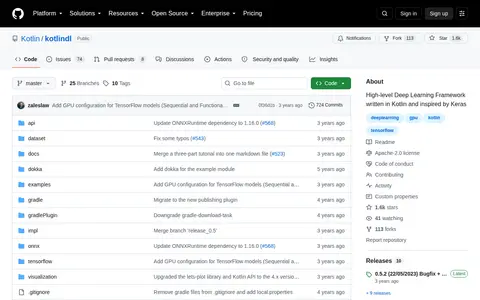
KotlinDL is a high-level deep learning API written in Kotlin and inspired by Keras. It uses TensorFlow Java API and ONNX Runtime API for Java, and offers APIs for training models from scratch, importing Keras and ONNX models for inference, and transfer learning.
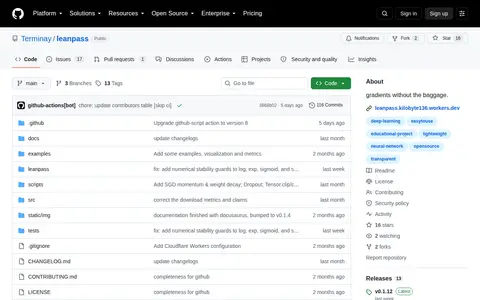
Leanpass is a NumPy-based autodiff library for small neural network experiments, designed to be readable and simple to inspect for learning how automatic differentiation works. It provides tensors with reverse-mode autodiff, activation functions, linear layers, multilayer perceptrons, loss utilities, and SGD and Adam optimizers. Its only dependency is NumPy.
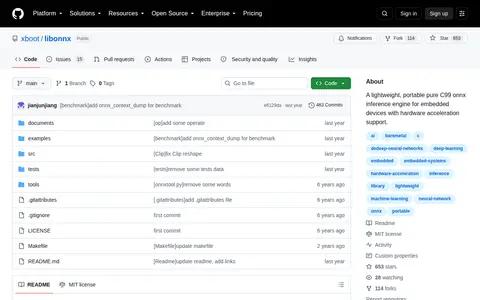
libonnx is a lightweight, portable pure C99 ONNX inference engine for embedded devices with hardware acceleration support. Its .c and .h files can be dropped into a project and compiled with it. Models are loaded from a file into a context, and inference runs on input tensors via onnx_run. It is based on ONNX version v1.17.0 with opset 24 support, and some operators are not implemented.
Machine Learning Mastery is a website that provides educational content such as tutorials, quick start guides, and eBooks to help developers learn and apply machine learning concepts and algorithms. It covers topics like deep learning, computer vision, natural language processing, and specific libraries including TensorFlow, PyTorch, and scikit-learn.
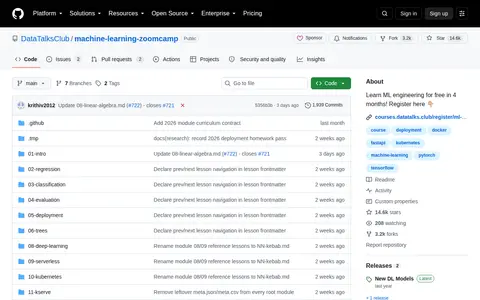
Machine Learning Zoomcamp is a free, hands-on course on building, evaluating, and deploying machine learning systems. It covers the path from framing a problem to preparing data, training and evaluating models, and deploying them, using Python, scikit-learn, TensorFlow, PyTorch, FastAPI, Docker, Kubernetes and AWS Lambda. No prior machine learning experience is required.
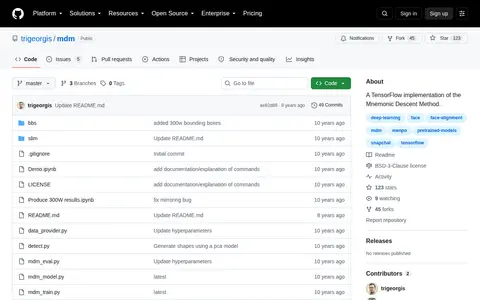
A TensorFlow implementation of the Mnemonic Descent Method.
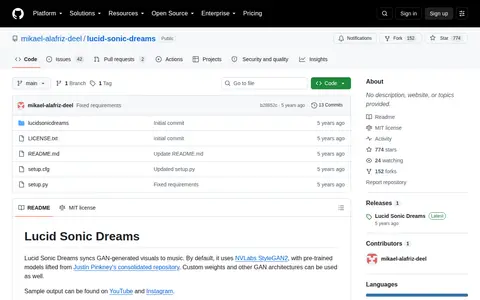
Lucid Sonic Dreams is an open-source project that syncs GAN-generated visuals to music. It uses NVLabs StyleGAN2 by default, with pre-trained models from Justin Pinkney's consolidated repository, and allows custom weights and other GAN architectures. It requires TensorFlow 1.15, supports Python 3.6 and 3.7, and is installed with pip.
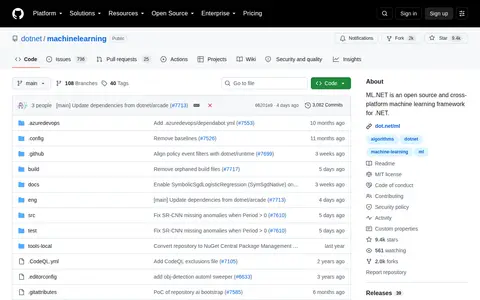
ML.NET is an open source, cross-platform machine learning framework for .NET. It lets developers build, train, deploy and consume custom models in .NET applications, with data loading from files and databases, data transformations and many ML algorithms. Models can be trained for scenarios such as classification, forecasting and anomaly detection, and TensorFlow and ONNX models can be consumed within the framework.
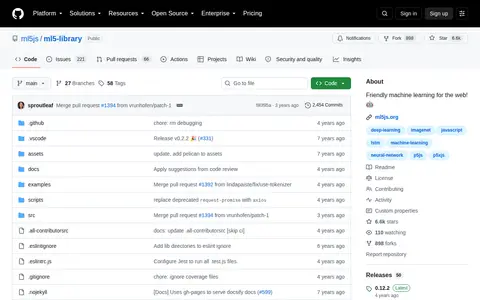
ml5.js is a JavaScript library providing access to machine learning algorithms and models in the browser, building on TensorFlow.js. It aims to make machine learning approachable for artists, creative coders and students, and is supported by code examples, tutorials and sample data sets. The project is described as currently in development.
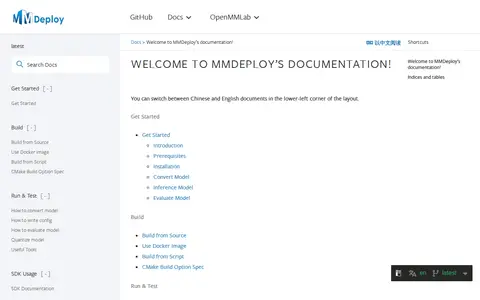
MMDeploy is documented at version 1.3.1 and covers getting started, converting, running, evaluating and quantizing models, building from source or Docker image, and SDK usage. Its backend support pages describe ncnn, ONNX Runtime, OpenVINO, PPLNN, SNPE, TensorRT, TorchScript, RKNN, TVM and Core ML, and its codebase support covers several OpenMMLab projects.
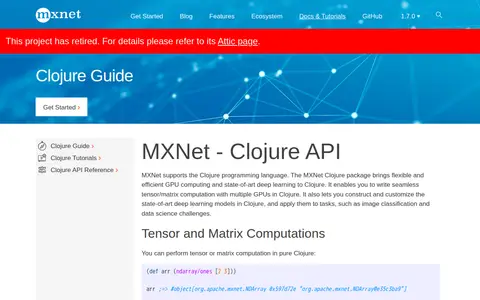
The MXNet Clojure package brings GPU computing and deep learning to the Clojure programming language. It enables tensor and matrix computation with multiple GPUs in Clojure, and allows constructing and customizing deep learning models for tasks such as image classification and data science challenges.
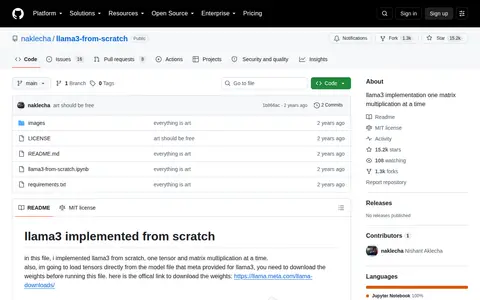
A notebook project that implements llama3 from scratch, one tensor and matrix multiplication at a time. It loads tensors directly from the model file Meta provided for llama3, and the weights must be downloaded before running the file. The author does not implement a BPE tokenizer and instead uses tiktoken.
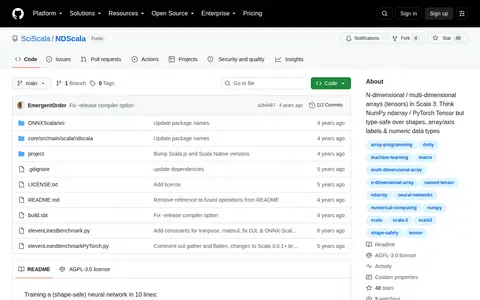
NDScala is a Scala 3 library for N-dimensional and multi-dimensional arrays (tensors), described as comparable to NumPy ndarray or PyTorch Tensor, with type safety over shapes, array and axis labels and numeric data types. The repository includes materials on shape-safe neural network training and an ONNXScala component.
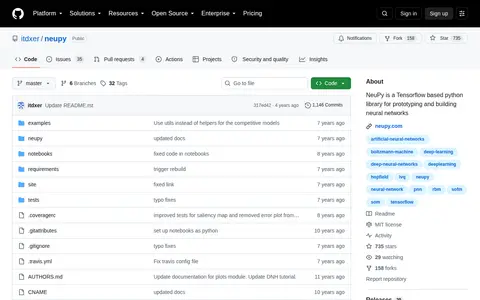
NeuPy is a Python library built on Tensorflow for prototyping and building neural networks. The repository notes that the library is no longer actively maintained. It includes examples and notebooks covering algorithms such as Boltzmann machines and self-organizing maps.
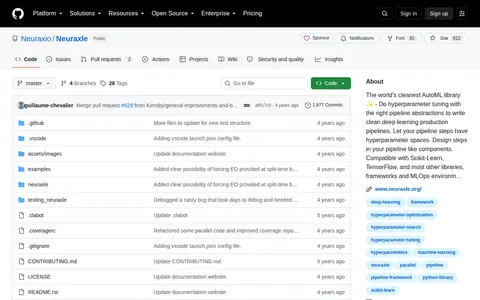
Neuraxle is an AutoML library that supports hyperparameter tuning via pipeline abstractions to build clean deep learning production pipelines. Pipeline steps can have associated hyperparameter spaces, and the library is compatible with Scikit-Learn, TensorFlow, and most other libraries, frameworks, and MLOps environments.
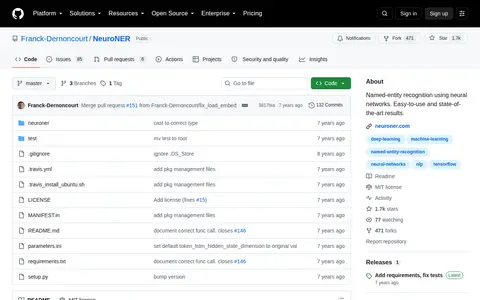
NeuroNER is a program that performs named-entity recognition using neural networks. It relies on Python 3 and TensorFlow 1.0+, optionally uses the BRAT annotation tool, and provides installation instructions, sample datasets and pretrained models.
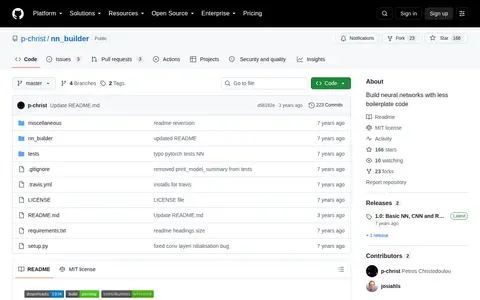
nn_builder is a tool for building neural networks with less boilerplate code; the user specifies the network type and it builds it. It supports NN, CNN and RNN networks for PyTorch and TensorFlow 2.0, taking arguments such as layers_info, hidden_activations and dropout.
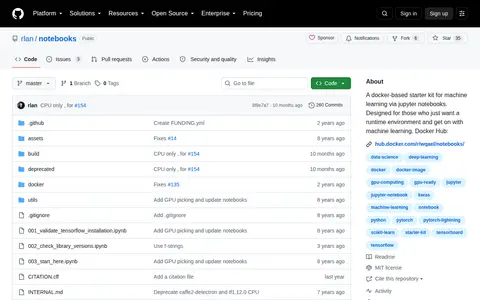
Notebooks is a Docker-based starter kit for machine learning through Jupyter notebooks, intended for users who want a ready runtime environment. Its images cover combinations of Keras, TensorFlow and PyTorch with CUDA v8 through v11, and include JupyterLab, scikit-learn, pandas and visualization, vision and NLP libraries. Python 3 only, as Python 2 is end-of-life.
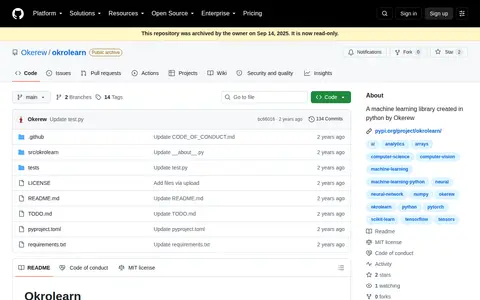
Okrolearn is a machine learning library created in Python by Okerew. It provides a Tensor type and can be installed from PyPI for CPU or GPU use. The repository was archived by its owner on Sep 14, 2025, and is now read-only.
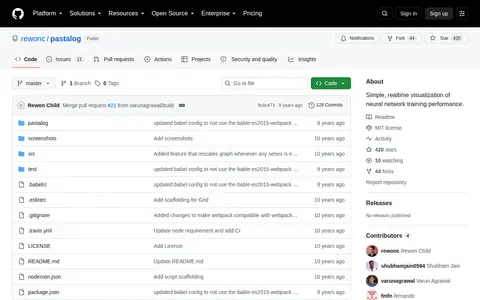
Pastalog is a realtime visualization server for neural network training performance. It works with Lasagne, Keras, Tensorflow, Torch, Theano and other frameworks. Data can be logged through a Python API, a Torch wrapper, or POST requests, and logged metrics update in real time at localhost.
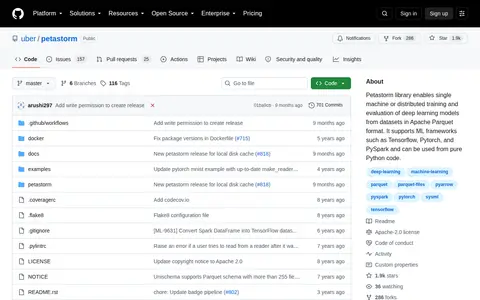
Petastorm is a library developed by Uber for deep learning model training and evaluation. It supports single-machine and distributed workflows with datasets in Apache Parquet format, is compatible with TensorFlow, PyTorch, and PySpark, and can be used via pure Python code.
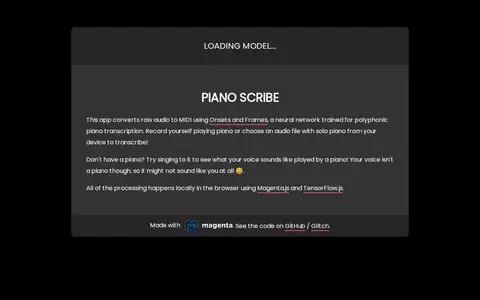
Piano Scribe is a web application that converts raw audio to MIDI using Onsets and Frames, a neural network trained for polyphonic piano transcription. Users can record themselves playing piano or choose a solo piano audio file from their device. All processing happens locally in the browser using Magenta.js and TensorFlow.js.
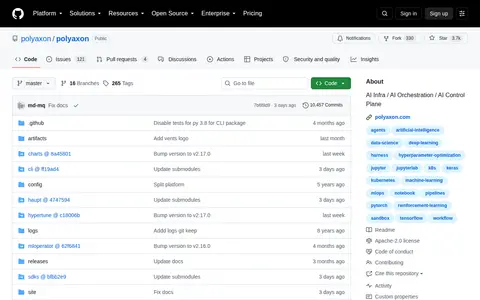
Polyaxon is a platform for building, training, and monitoring large-scale deep learning applications. It deploys into any data center or cloud provider and supports major deep learning frameworks such as Tensorflow, MXNet, Caffe, and Torch. It manages workloads with container and node management and offers hyperparameter tuning through experiment groups defining a search algorithm and search space.