
AI Context Linter is a GitHub Action that checks AI coding context files such as CLAUDE.md, .cursorrules and AGENTS.md for security issues, structural problems and AI anti-patterns. It auto-detects context files and runs 12 rules, including detection of hardcoded API keys and leaked home directory paths. Rules cover structure, vague or conflicting instructions and file-type specifics, with configurable token limits and disabled rules.
Directory
Search results
Published directory entries matching your search.
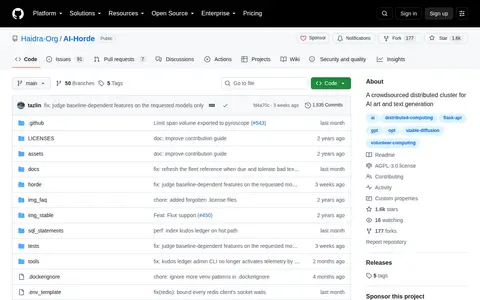
AI Horde is a crowdsourced distributed cluster for AI art and text generation. Volunteers share computer power through workers, and requests are matched to available volunteer computers. A kudos point system gives priority, and kudos cannot be bought or sold. The service is free and community-run.
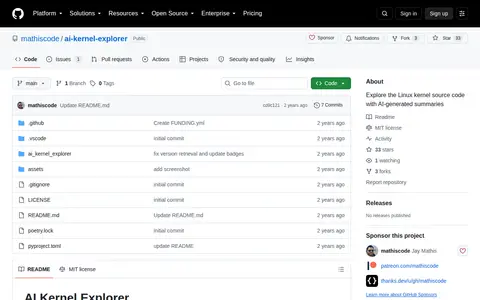
AI Kernel Explorer is a lightweight tool that uses GPT-4o to generate summaries of Linux kernel source code while the codebase is explored. It addresses the difficulty of understanding a codebase of over 30 million lines. It is installed via pip or pipx and requires an OpenAI API key; options include a cache path and a model selection.

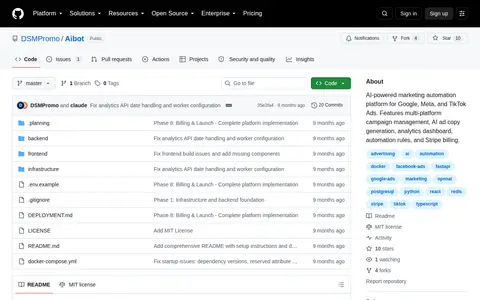
AI-powered marketing automation platform for Google, Meta, and TikTok Ads. Features multi-platform campaign management, AI ad copy generation, analytics dashboard, automation rules, and Stripe billing.
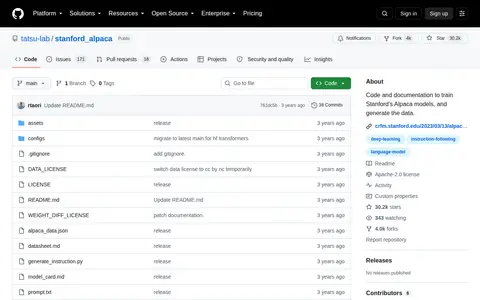
Alpaca is a project that provides code and documentation to train Stanford's Alpaca instruction-following LLaMA models and generate associated training data. It includes details on the data release, data generation process, and fine-tuning procedures.
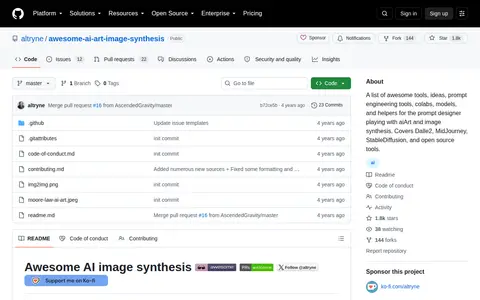
A GitHub repository compiling tools, ideas, prompt engineering resources, Colabs, models and helpers for prompt designers working with AI art and image synthesis. The list covers Dalle2, MidJourney, StableDiffusion and open source tools, and includes sections on commercial and free hosted tools, prompt engineering, post-processing and communities.
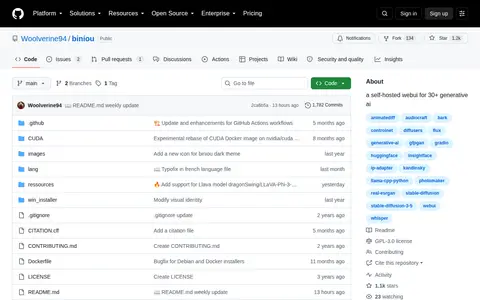
Creates or edits images with generative models and visual controls.
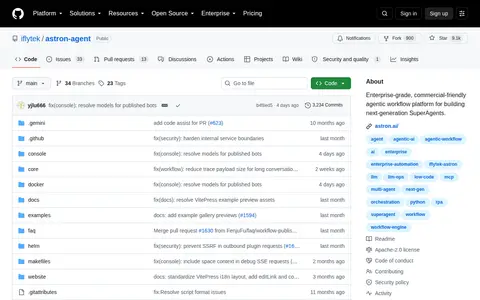
Enterprise-grade, commercial-friendly agentic workflow platform for building next-generation SuperAgents.
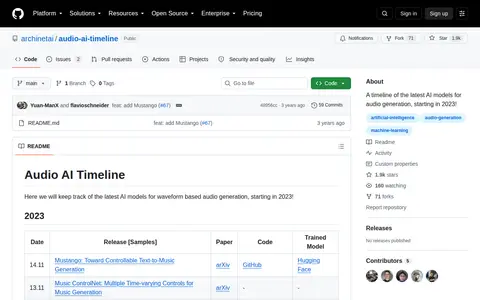
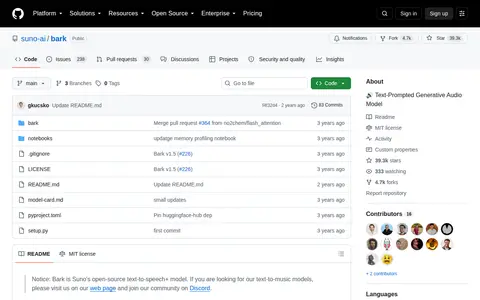
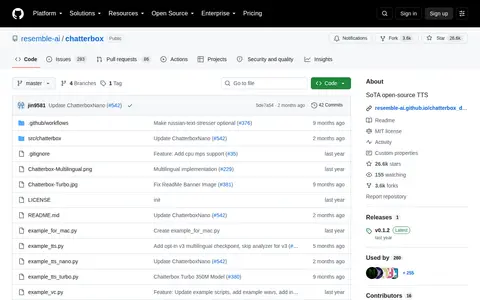
Open-source project that uses AI for speech, voice, transcription, music, or other audio workflows.
For a more complete list of AI writing assistants visit:.
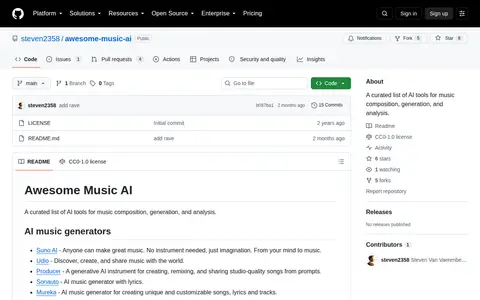
A curated list of AI tools for music composition, generation, and analysis.
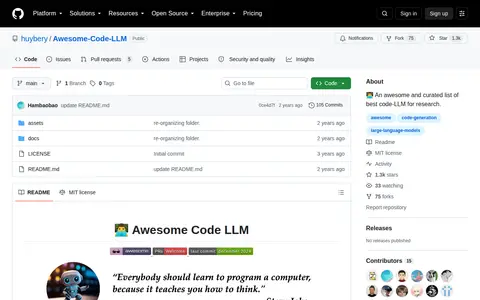
Awesome-Code-LLM is a curated list of code large language models for research, covering top code LLMs, evaluation toolkits, leaderboards and related papers. It also lists evaluation frameworks for autoregressive code generation models and a secure sandbox for judging generated code.
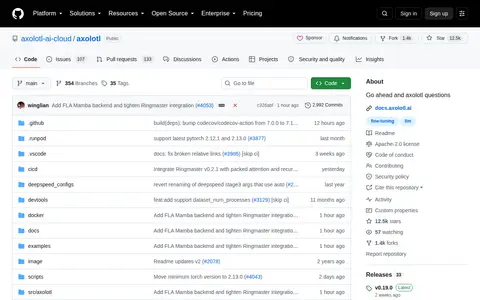
Tool designed to streamline the fine-tuning of various AI models, offering support for multiple configurations and architectures.
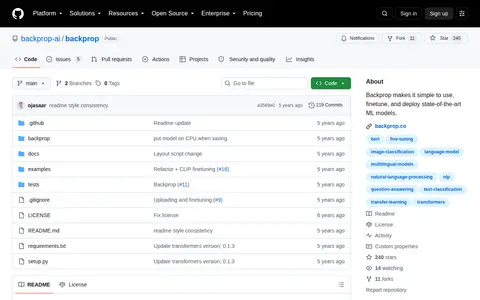
Backprop is a Python library, installable via PyPi, that enables use, finetuning and deployment of machine learning models. It provides task interfaces for conversational question answering, text classification in over 100 languages, image classification, summarisation, emotion detection and text generation, and models can be finetuned with a single line of code.
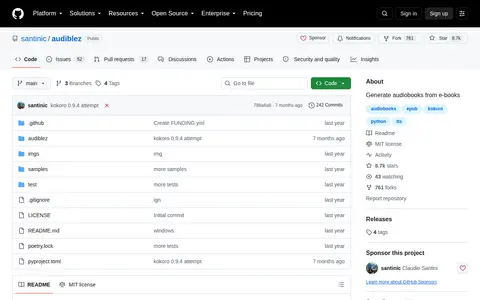
Open-source project that uses AI for speech, voice, transcription, music, or other audio workflows.
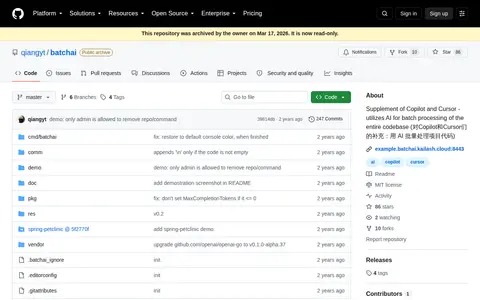
A supplement to Copilot and Cursor - utilizes AI for batch processing of project codes.
Open-source project that creates or edits images with generative AI and text-based controls.
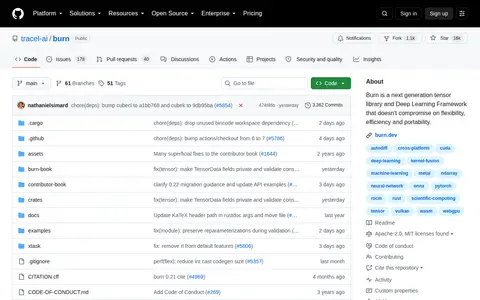
burn is a next-generation tensor library and deep learning framework developed by tracel-ai. It is designed to prioritize flexibility, efficiency, and portability, with available resources covering use with Rust, its ecosystem, supported backends, and training and inference functionality.
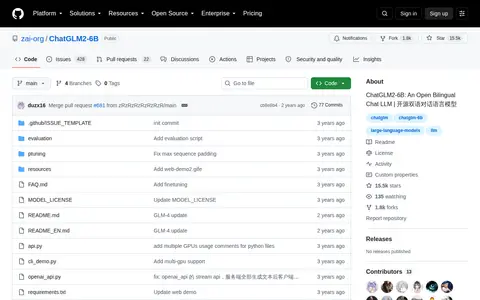
ChatGLM2-6B is the second-generation version of the open-source bilingual (Chinese-English) chat model ChatGLM-6B.
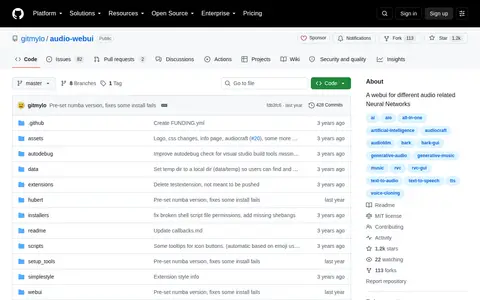
Open-source project that uses AI for speech, voice, transcription, music, or other audio workflows.
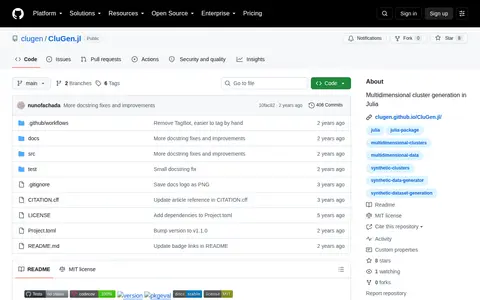
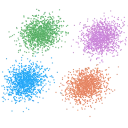
Multidimensional cluster generation in Julia.
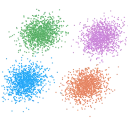
Multidimensional cluster generation in R.
CodeAlmanac is a GitHub repository maintained by AlmanacCode. It is a codebase wiki for AI coding agents, designed to capture information including decisions, flows, invariants, and gotchas that are not explicitly stated in code.