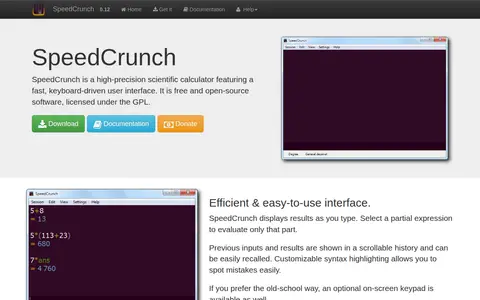
SpeedCrunch is a free, open-source high-precision scientific calculator licensed under the GPL. It features a fast, keyboard-driven interface that displays results as users type, with a scrollable input history, customizable syntax highlighting, and an optional on-screen keypad. The calculator supports over 80 built-in mathematical functions, user-defined functions, variables, calculations with up to 50 digits of precision, complex numbers, numeral bases, unit conversions, and includes a library of over 150 scientific constants and common formulas. It is available for Windows, macOS, and Linux in multiple languages.
Directory
Search results
Published directory entries matching your search.
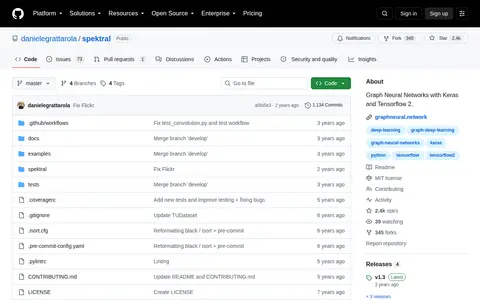
Open-source project that provides machine-learning models, research, training resources, or evaluation tools.
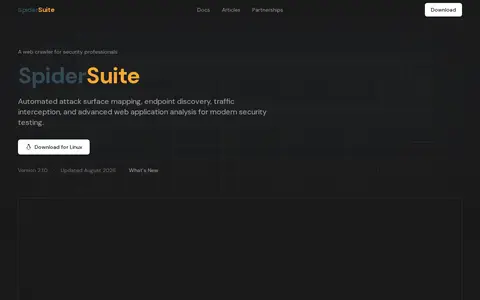
SpiderSuite is a web crawling and security testing platform for security professionals, penetration testers and researchers. It offers specialized crawlers, traffic interception, request crafting and fuzzing, along with source and graph views of crawl data, plus import and export in formats such as HAR, WARC, CSV and JSON.
SPIDR collects or organizes headlines and links for browsing news from multiple sources.
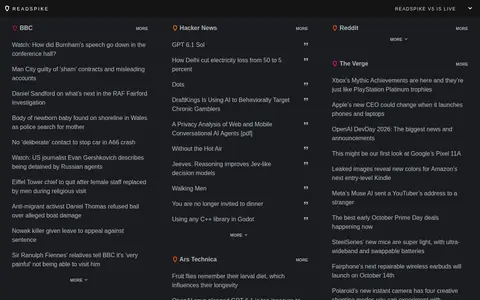
Spike is a simple news aggregator that collects news from around the web every minute. Its sources include BBC News, Hacker News, the r/Reddit Frontpage, Lobsters, Slashdot, The Register, The Onion, WIRED, Core77 and MacRumors.

Spike News collects or organizes headlines and links for browsing news from multiple sources.

Spiral is Imperial College London's institutional research repository built on DSpace-CRIS, a free open-source Research Information Management System. It enables secure, integrated, and interoperable management of research information and data, and supports key international standards for interoperability and data transfer. Users can deposit doctoral theses, master's dissertations, and publications via the platform. Imperial College London also operates the separate Helix repository for future research dataset deposits.
Splash Protocol is a decentralized trading protocol on Cardano. It offers a Temporal Liquidity Book that builds markets from multiple AMM liquidity pools and an order book, and composable orders executed by an execution engine. The protocol describes decentralized, permissionless automation and open-source smart contracts, plus SPLASH DAO governance through locked SPLASH tokens.
Spliit is a minimalist web application for sharing expenses with friends and family. It offers groups, categories, receipts, advanced splitting by percentage, shares, or amount, balances, and optimized reimbursements. The project is open source and states that no account is required.
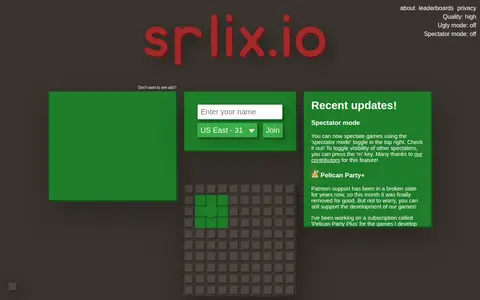
splix.io is a browser-based io game in which players compete to conquer as much land as possible. It offers spectator mode, global leaderboards and server selection. The server code was rewritten, and the game is now open source, allowing users to host their own server instance.
Spoo.me is an open-source link management platform with advanced analytics and an API-first core. It provides URL shortening, click analytics, QR codes and custom domains, and is self-hostable. The v1 API offers endpoints for shortening, managing and analyzing URLs, with no registration required to start shortening.
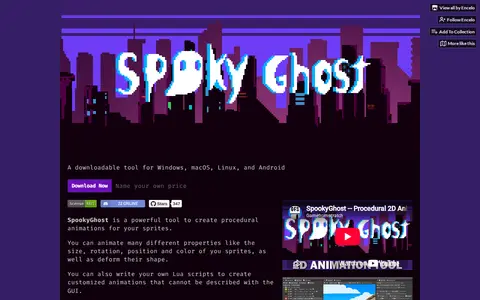
SpookyGhost is an open source tool by Encelo for creating procedural animations for sprites. It animates properties such as size, rotation, position and color, and allows users to deform sprite shapes. Lua scripts can be written for custom animations, and results can be exported as single frames or a spritesheet. Native versions are available for Windows, macOS, Linux and Android.
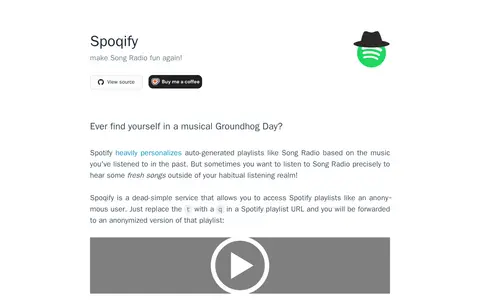
Spoqify is a service that accesses Spotify playlists such as Song Radio as an anonymous user. Users replace the t with a q in a Spotify playlist URL or paste the URL into a form, and the service opens the playlist without session cookies, extracts the song IDs, and creates a new playlist with the same songs. It is MIT-licensed and its source code is on GitHub.
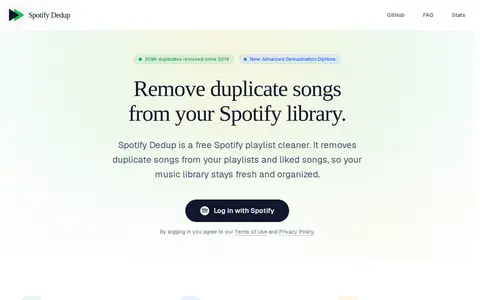
Spotify Dedup is a free browser-based tool that finds and removes duplicate songs from Spotify playlists and liked songs. Users log in, and the app uses the Spotify Web API to check the library and remove duplicates, leaving other songs untouched, with verification before deletion. It is open source, and the site states that 20M+ duplicates have been removed since 2014.
Sprout is an interactive anime recommendation engine that uses a machine learning model to generate tailored recommendations based on watch history and ratings from MyAnimeList or AniList profiles. It also provides stats and visualizations of personal watch history and preferences, plus the Atlas Visualization. Sprout is fully open source.
A fan-run, noncommercial archive for fandom works such as fanfiction, fanart, fandom meta, fan videos and podfic. It is a project of Squidge.org based on open-source code from the OTW. Users with an account can share fanworks, receive update notifications, take part in challenges and track visited and saved works.
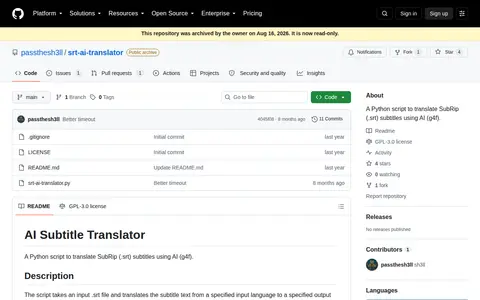
SRT AI Translator provides software and setup resources for accessing or managing video streams.
We’re on a journey to advance and democratize artificial intelligence through open source and open science.
An open source tool for running arbitrary queries against public data from the Stack Exchange network.
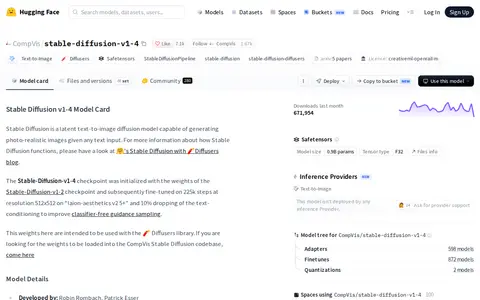
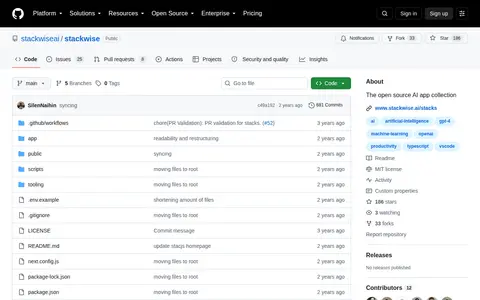
Open-source project that provides machine-learning models, research, training resources, or evaluation tools.
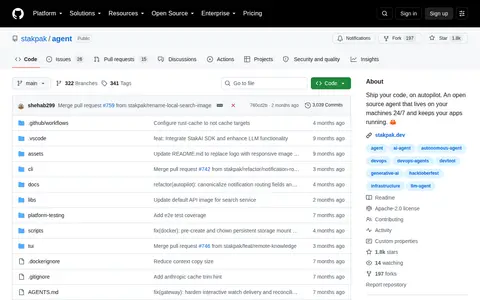
Open-source DevOps agent to help you secure, deploy, and maintain production-ready infrastructure.
Stalwart is an open-source mail and collaboration server written in Rust. It supports JMAP, IMAP4, POP3, SMTP, CalDAV, CardDAV and WebDAV, combining email, calendars, contacts and file storage in one server with built-in spam and phishing protection. It runs as a single node or as a cluster.
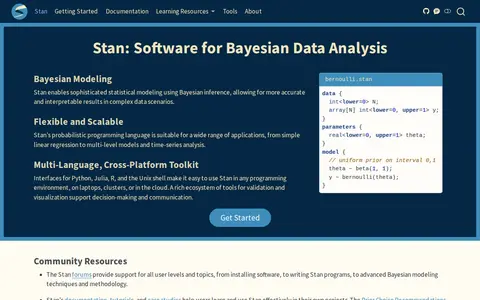
Stan is software for Bayesian data analysis that combines statistical modeling capabilities with user-friendly interfaces and open-source development. Its probabilistic programming language supports applications from simple linear regression to multi-level models and time-series analysis. Interfaces exist for Python, Julia, R, and the Unix shell, usable on laptops, clusters, or in the cloud. Official documentation covers the language, inference algorithms, and built-in functions.
Standard Ebooks is a volunteer-driven project producing new editions of public domain ebooks. It takes ebooks from sources like Project Gutenberg, formats and typesets them using a style manual, proofreads and corrects them, and builds new editions. The ebooks are free of cost and free of U.S. copyright restrictions.