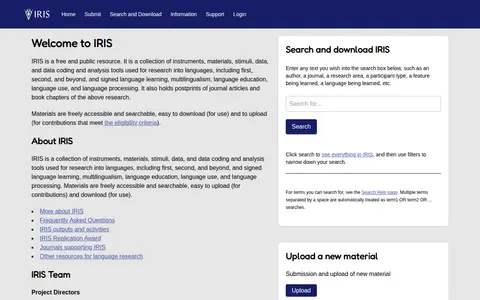
IRIS is a free public collection of instruments, materials, stimuli, data and coding and analysis tools used for research into languages, including first, second and signed language learning, multilingualism, language education, language use and language processing. It also holds postprints of journal articles and book chapters on that research, and materials are searchable and downloadable.
Directory
Search results
Published directory entries matching your search.
The Irish Examiner is an Irish news site carrying breaking local and international news and sport stories, with updates and analysis. Sections include news, sport, video shorts and insight, plus regular columnists, lifestyle, viewpoints and property, and a subscriber area. Arts and culture coverage includes the Irish Book Awards shortlist and the Guinness Cork Jazz Festival.
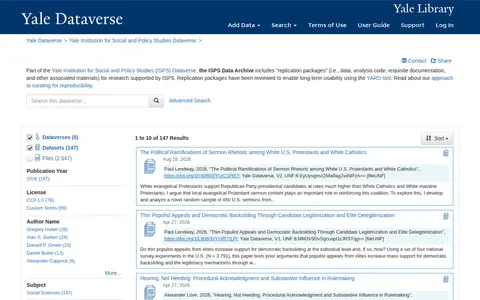
The ISPS Data Archive is part of the Yale Institution for Social and Policy Studies Dataverse. It holds replication packages, including data, analysis code and documentation, for research supported by ISPS. Replication packages have been reviewed to enable long-term usability using the YARD tool. The archive lists 147 results, with some items marked as updated with version notes.
iTnews is an Australian business technology news site carrying breaking news, analysis and opinion tailored for Australian CIOs, IT managers and IT professionals. It also publishes partner content, including features on agentic AI in healthcare and public sector transformation, alongside reporting on security, cloud, software and marketing.
ML, DL and Data Science - with a focus on text-/data-mining.
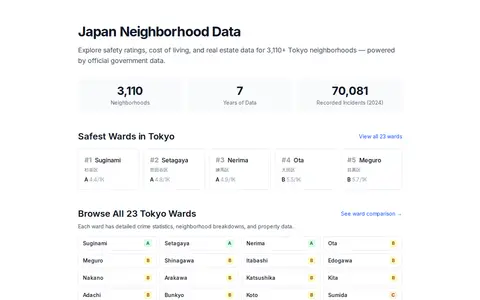
Japan Neighborhoods provides data-driven neighborhood guides for Japan. It offers crime statistics, safety scores, demographic data, cost of living, and real estate information for over 5,000 Tokyo neighborhoods. The data is sourced from official government sources and presented through safety rankings, interactive maps, and property listings.
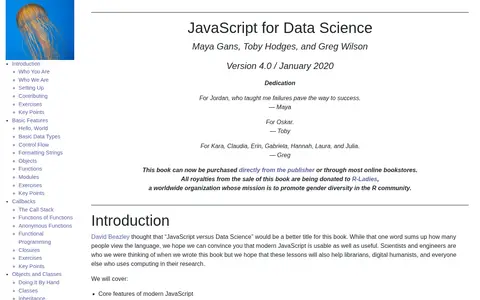
A book titled JavaScript for Data Science by Maya Gans, Toby Hodges, and Greg Wilson, version 4.0, dated January 2020. It covers topics such as callbacks, promises, objects, classes, HTML, CSS, React, data services, testing, data visualization, and a three-tier web application, with an even mix of browser and server programming. It is intended for scientists and engineers.
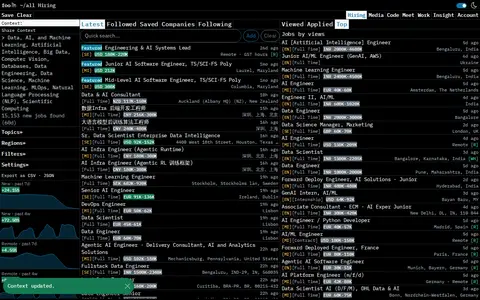
The go-to, no-nonsense, fast and lean job site in AI, ML, Data Science and Big Data.
The Journal of Artificial Intelligence Research (JAIR) is a journal dedicated to the rapid dissemination of important research results to the global AI community. Its scope encompasses all areas of AI, including agents and multi-agent systems, automated reasoning, knowledge representation, machine learning, natural language, planning and scheduling, robotics and vision, and uncertainty in AI.
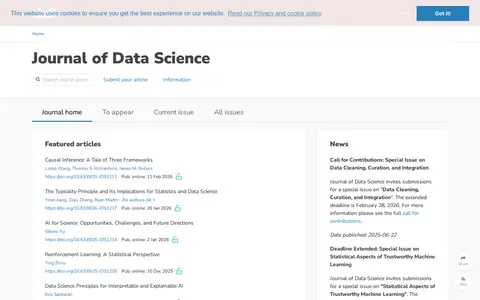
The Journal of Data Science is an academic journal listing featured articles, news, and calls for contributions. Featured articles include items on causal inference, reinforcement learning, and AI for science, each with a DOI and online publication date. The page also lists special issue calls for contributions and most-read articles.
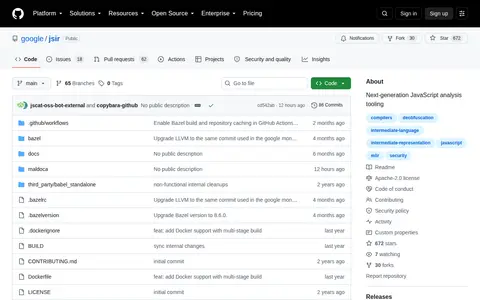
Next-generation JavaScript analysis tooling
JSON Schema is a declarative language for annotating and validating JSON documents' structure, constraints, and data types. It enables JSON data consistency, validity, and interoperability, and has a tooling ecosystem of validators, generators, and linters. Documentation covers schema design, guides, and keyword reference.
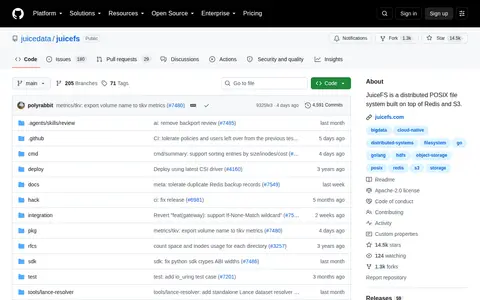
Distributed POSIX file system built on top of Redis and S3.
Jupyter Notebook is a web-based interactive computing platform combining live code, equations, narrative text, visualizations, and dashboards. It supports over 40 programming languages, including Python, R, Julia, and Scala, and notebooks can be shared via email, Dropbox, GitHub, and the Jupyter Notebook Viewer.
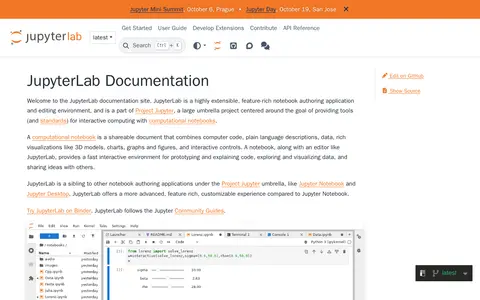
JupyterLab is an extensible notebook authoring application and editing environment within Project Jupyter. A notebook combines code, text descriptions, data and visualizations. JupyterLab provides an environment for prototyping and explaining code, exploring and visualizing data, and sharing ideas. It is a sibling to Jupyter Notebook and Jupyter Desktop and is described as offering a more advanced, customizable experience than Jupyter Notebook.
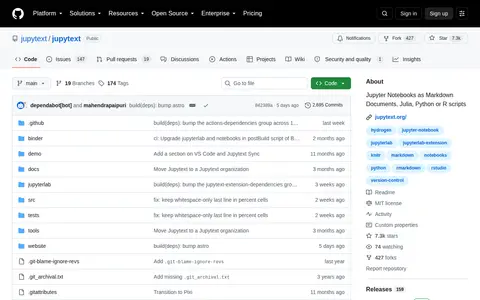
Jupyter Notebooks as Markdown Documents, Julia, Python or R scripts.
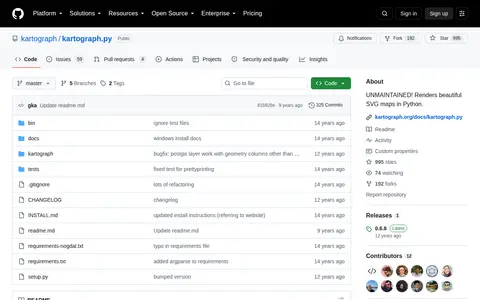
Kartograph.py is a Python library for rendering beautiful SVG maps. The project is currently unmaintained, but its source code remains available on GitHub. It allows users to create map visualizations programmatically.
Data Mining, Analytics, Big Data, Data, Science not a blog a portal.
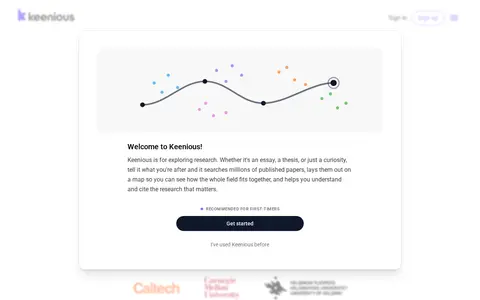
Keenious is an AI-assisted tool for exploring published academic research. It searches about 177M publications, groups results into research areas on a map, and explains unfamiliar terms, methods, and statistics beside the paper. It also translates studies published in other languages. The source states it does not write essays, paragraphs, or assignment outlines.
Analyst reporting on cybercrime marketplaces, underground actors, ransomware and stolen-data trends.
Kenya Open Data is an ArcGIS Hub-powered platform that enables users to discover, analyze, and download datasets in formats including CSV, KML, Zip, GeoJSON, GeoTIFF and PNG. It provides API links for GeoServices, WMS and WFS, supports analysis via charts and thematic maps, and allows creation of StoryMaps and Web Maps.
An article comparing the roles of data scientist and data engineer. It states that the positions are sometimes confused for each other and are often treated as the same, though the two roles work together. It notes that companies can encounter problems with team efficiency and system performance when the roles are conflated, and that the average company needs far more data engineers.
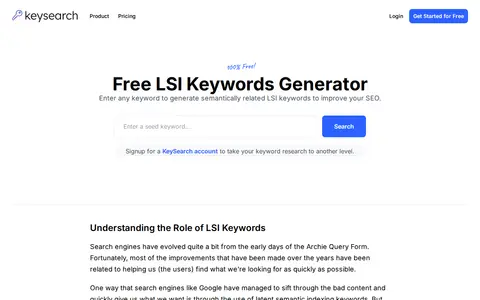
KeySearch provides a free LSI keywords generator that accepts a keyword and returns semantically related keywords. The tool is described as using a basic LSI finding algorithm, while more in-depth LSI analysis is available with a KeySearch account.
Kielipankki, the Language Bank of Finland, is a service for researchers in digital humanities and social sciences coordinated by the national FIN-CLARIN consortium of Finnish universities and research organizations, and part of the international CLARIN network. It offers a wide range of text and speech corpora and associated tools for analysis and processing; some resources are publicly accessible, others require login, and access is free for researchers and students, with electronic application available for restricted resources.