
Think Stats is an introduction to probability and statistics for Python programmers, emphasizing simple techniques for exploring real data sets and answering questions. It includes case studies using datasets from the National Institutes of Health and other sources, with exercises using short programs. The second edition is no longer current and is available under a Creative Commons license.
Directory
Search results
Published directory entries matching your search.
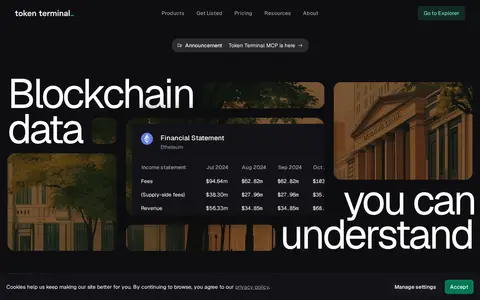
Token Terminal provides standardized financial and usage metrics for blockchains, apps and tokenized assets, allowing comparison of fees, revenue and users across crypto. Core onchain data is free, with paid plans adding data customization, downloads, and integrations via Sheets, API, MCP and BigQuery.
TokenUnlocks tracks specialized crypto metrics such as networks, unlocks, staking, or tokenized assets.
TuxSEO helps plan, write, optimize, or analyze content for SEO and search visibility.
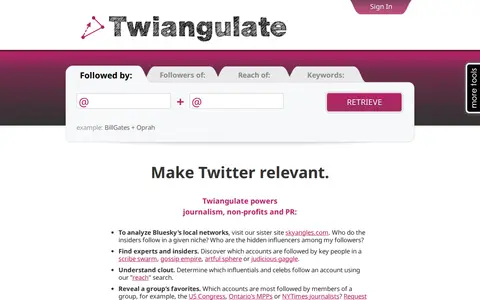
Twiangulate is a tool for search, analytics and mapping of connections between Twitter friends and followers. It is used to find which accounts are followed by key people and to see which accounts are most followed by members of a group. The site also points to a sister site, skyangles.com, for analyzing Bluesky's local networks.
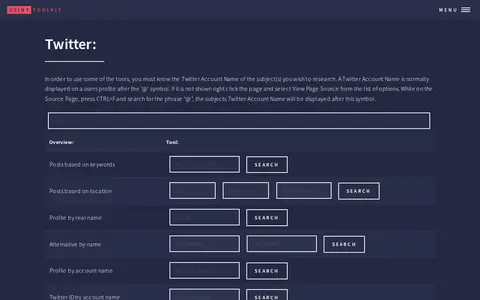
A Twitter research tool page in the OSINT Toolkit listing. It notes that some tools require the subject's Twitter account name and lists capabilities such as posts based on keywords or location, profiles by real name or account name, account bio changes, tweets between specific dates, media search, keyword and account analytics, and mutual follows.
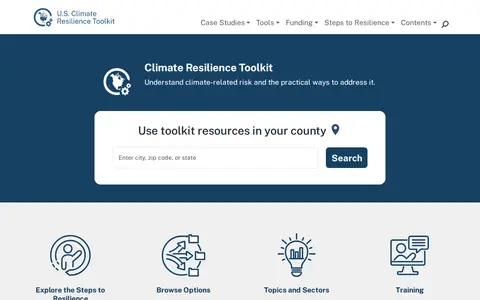
The U.S. Climate Resilience Toolkit is a website offering resources on understanding climate-related risk and practical ways to address it. It includes Steps to Resilience, topics and sectors, training, a registry of experts, and a help desk with FAQs and technical resources.
The University of North Dakota is described as the oldest and largest college in North Dakota. It offers more than 250 accredited on-campus and online degrees, with programs including cyber security, music therapy, air traffic management and business analytics.
Handbook and recipes for data-driven solutions of real-world problems.
Vaex is an open-source Python DataFrame library for working with large tabular datasets without loading them fully into memory. It supports lazy opening of CSV files and processing of hundreds of millions or billions of rows per second. The project also offers consultancy and training services.
Variance applies AI to data analysis, extraction, visualization, or business intelligence.

Vaults.fyi is a DeFi yield API offering market data, transaction calldata and portfolio tracking across 80+ protocols and over 1,000 vaults on 20+ networks. Data is indexed from onchain contract state and uses one schema across protocols, with base, reward and total yield broken out per vault. It targets wallets, stablecoin apps, protocols, researchers and AI agents.

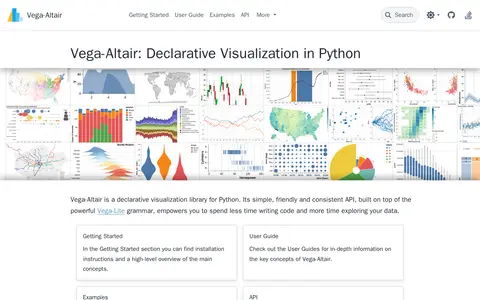
Vega-Altair is a declarative visualization library for Python with a simple, friendly and consistent API built on the Vega-Lite grammar. The project states it is not affiliated with Altair Engineering, Inc.
Vencord is a modification for the Discord client. It offers a graphical installer, comes with plugins preinstalled that users enable as desired, works inside browsers, blocks Discord analytics and crash reports, and provides a plugin system with APIs for developers.
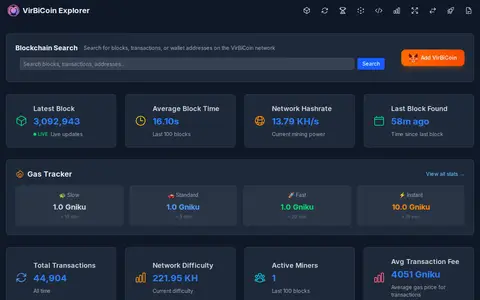
Blockchain explorer for VirBiCoin providing real-time transaction data, block information, address tracking and token analytics, plus a gas tracker and blockchain search. REST API documentation covers blocks, transactions, addresses, tokens, contracts and statistics endpoints, including an Etherscan-compatible API for contract verification used with Hardhat and Foundry.
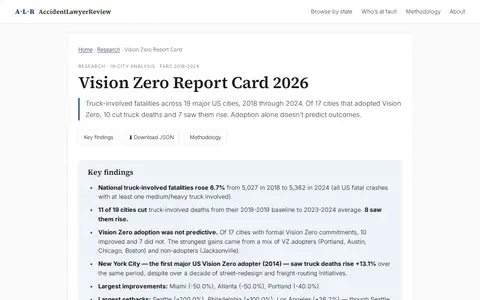
Research report examining seven years of truck-involved fatalities, 2018 through 2024, across 19 major US cities, based on FARS data. It compares each city's 2018-2019 baseline average with its 2023-2024 average and notes that of 17 Vision Zero adopters, 10 improved and 7 did not.
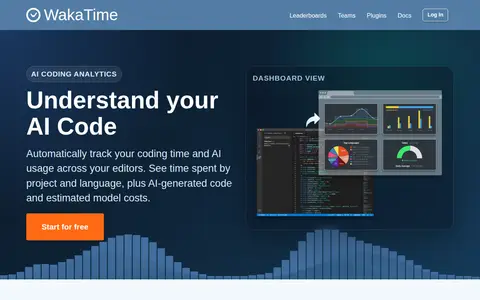
WakaTime is a coding analytics tool that automatically tracks coding time and AI usage across editors and tools. It reports time by project and language, AI-generated code, per-model breakdowns, token and prompt metrics, and estimated model costs. It offers a REST API for data access, and its plugins are open source.
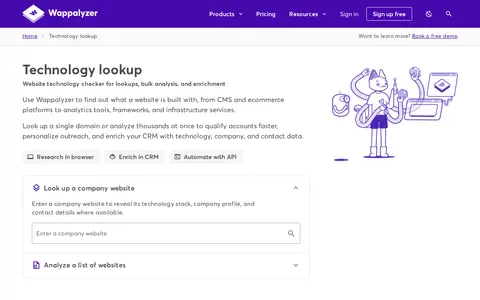
Wappalyzer is a website technology checker that identifies the technologies a site is built with, including CMS and ecommerce platforms, analytics tools, frameworks and infrastructure services. It supports single-domain lookups or bulk analysis of thousands of sites, and can also be used in the browser, in a CRM, or through an API.
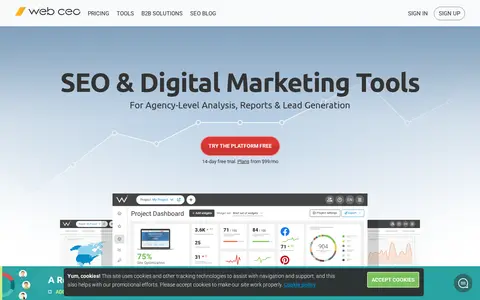
WebCEO is an all-in-one SEO platform offering 24 online SEO tools for digital marketing, including keyword research, rankings, audits, backlink monitoring, link building and competitor research. It provides team collaboration, task management and branded SEO reports. A 14-day free trial is offered, and plans start from $99 per month.
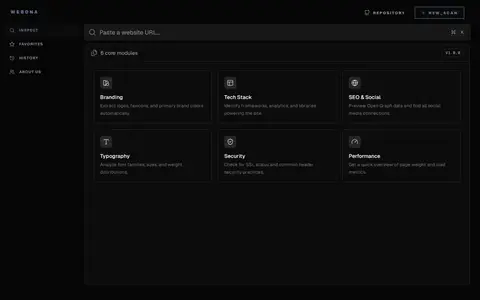
WebDNA is a website analysis tool that examines six core modules of a site. It extracts logos, favicons and brand colors, identifies frameworks, analytics and libraries, previews Open Graph data and social connections, analyzes font families, sizes and weights, checks SSL status and header security practices, and gives an overview of page weight and load metrics.
Wharton Research Data Services is a business research platform that aggregates 600+ databases from 60+ data vendors, incorporating over 550 terabytes of data. It offers data access, research applications, linking tools, classroom teaching resources, analytics tools and data validation.
WhatSTheBigData applies AI to data analysis, extraction, visualization, or business intelligence.
Whitespark offers software and services for local SEO. Its tools cover Google Business Profile management, local ranking grids, rank tracking, citation finding and review generation. Services include SEO and citation building for small businesses, agencies and multi-location enterprises.
An article comparing Topological Data Analysis results with those from t-SNE and UMAP packages. It discusses advantages of TDA coupled with self-supervised learning and covers case studies in IoT, image analysis and text analysis, plus open-source libraries for starting with TDA.