
Osaurus provides AI agents that run locally on a computer rather than in a cloud. Agents work from files, keep memory on the computer, and request approval before editing files. A privacy filter can remove identifying details before cloud use. Osaurus is free and MIT licensed; Workspaces starts at $20 per workspace per month.
Directory
Search results
Published directory entries matching your search.
p7zip is a port of 7za.exe, the command line version of 7-Zip, a file archiver with highest compression ratio. It targets POSIX systems such as Unix and MacOS X, as well as BeOS and Amiga. Since version 4.10 it supports little-endian and big-endian machines.

Pacstall is a package management tool built for Ubuntu operating systems. It automates the processes of downloading source packages, installing required dependencies, and carrying out software installation. The project is positioned as the equivalent of the Arch User Repository for Ubuntu, simplifying software installation for Ubuntu users.
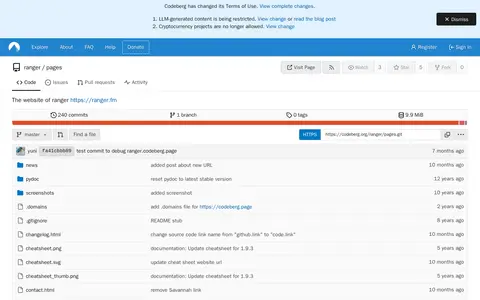
Pages is a repository hosting the website of ranger, a file manager. The repository contains the site's HTML, CSS, and JavaScript files, and documents how to build the site, add news, and deploy it.
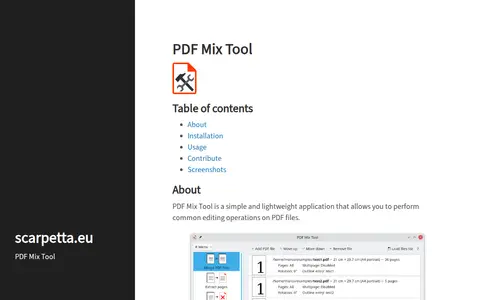
PDF Mix Tool is a lightweight application for common editing operations on PDF files, including merging, rotating, and composing pages. It can also alternate pages, generate booklets, add, delete, or extract pages, and edit document information. It is written in C++ and depends on Qt and qpdf, and is free software under the GNU GPLv3 license.
Photon is an RSS/Atom reader focused on speed and usability, designed as a terminal-based viewer with image support via sixel. It is extensible with Lua plugins and can use OpenCL for image scaling. Photon does not include features for adding or managing feeds; feed URLs are supplied via command-line arguments, text files, or external commands.
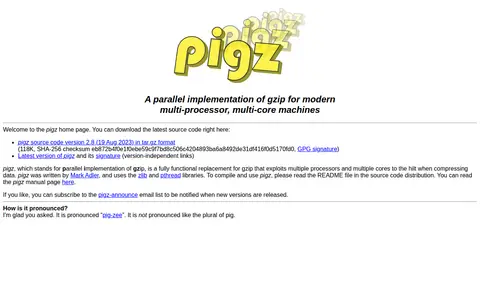
pigz is a parallel implementation of gzip for multi-processor, multi-core machines. It is a fully functional replacement for gzip that exploits multiple processors and cores when compressing data. It was written by Mark Adler and uses the zlib and pthread libraries.
Pika Backup is a project hosted on GitLab under the World group. It is written in Rust and uses borg for backups. The project is licensed under the GNU GPLv3.
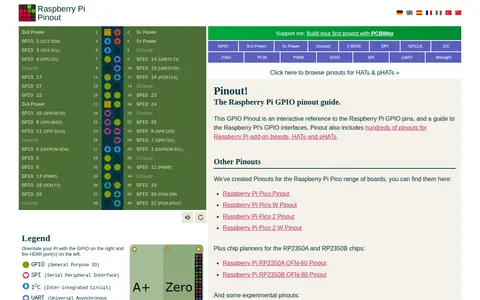
Pinout! is an interactive reference to the Raspberry Pi GPIO pins and a guide to the Raspberry Pi's GPIO interfaces. It also includes hundreds of pinouts for Raspberry Pi add-on boards, HATs and pHATs, plus pinouts for the Raspberry Pi Pico range and chip planners for the RP2350A and RP2350B chips.
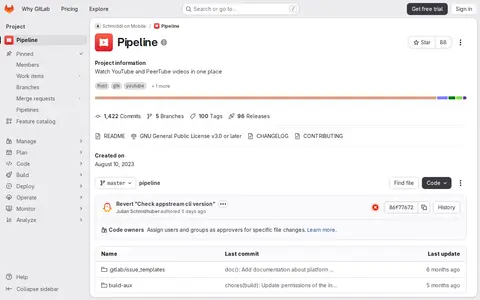
Pipeline is a Rust and GTK application for watching YouTube and PeerTube videos in one place. The project is hosted on GitLab and licensed under the GNU General Public License v3.0 or later.
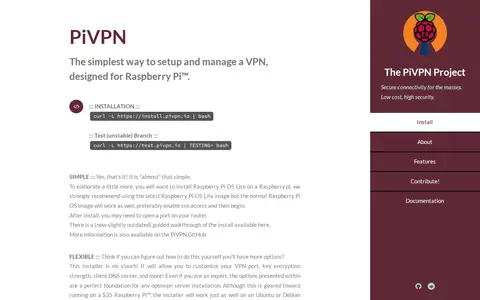
PiVPN is a set of shell scripts designed to set up and manage a VPN on a Raspberry Pi, and the installer also works on Ubuntu or Debian. It allows customization of the VPN port, key encryption strength and client DNS server, and provides a pivpn command for adding or revoking client profiles.
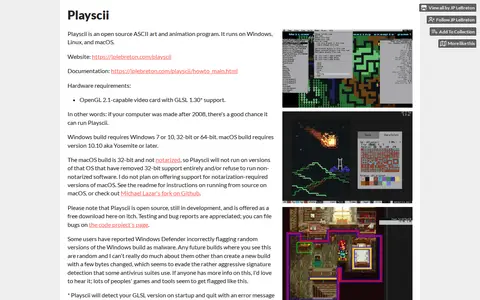
Playscii is an open-source ASCII art, animation, and game creation tool by JP LeBreton for Windows, macOS, and Linux. It requires an OpenGL 2.1-capable video card with GLSL 1.30 support and is offered as a free download. The developer notes that the macOS build is 32-bit and not notarized.
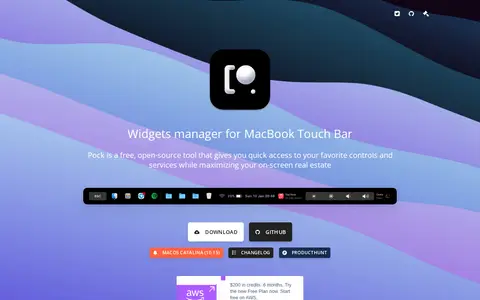
Pock is a free, open-source widget manager for the MacBook Touch Bar. It provides quick access to controls and services while preserving on-screen space, and includes default widgets such as Dock, Now Playing, Status, Control Center and Weather. PockKit allows developers to build custom widgets.
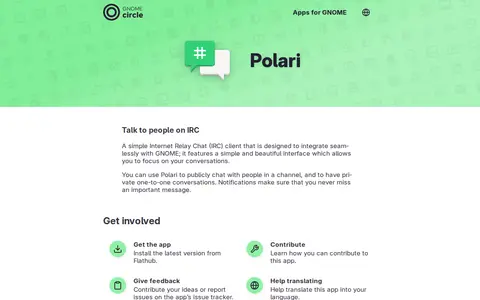
Polari is a simple Internet Relay Chat (IRC) client designed to integrate with GNOME. It has a simple, interface intended to keep focus on conversations. It can be used to publicly chat with people in a channel and to hold private one-to-one conversations. Notifications alert users to important messages. The latest version is available from Flathub.
Polari is a simple IRC client designed to integrate with GNOME 3. The project is hosted on GNOME's GitLab and distributed under the GNU Library General Public License v2 only.
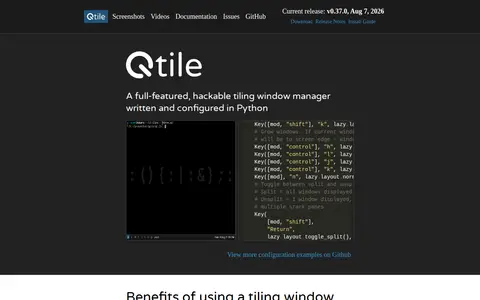
Qtile is a full-featured, hackable tiling window manager written and configured in Python. It defines key bindings, groups, layouts and widgets such as a bar and prompt in its configuration, and supports switching virtual terminals on Wayland.
r/unixporn points to a Reddit community or thread with discussion, guides, updates, or shared resources.
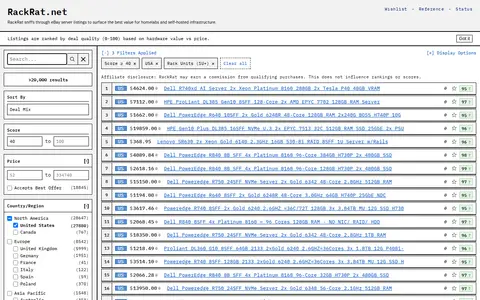
RackRat is a deal finder for rackmount servers listed on eBay. Listings are ranked by the site's deal score, and filters cover rack units, drive bays, power supplies, rails and pickup or variable shipping. The site notes that it may earn a commission from qualifying purchases.
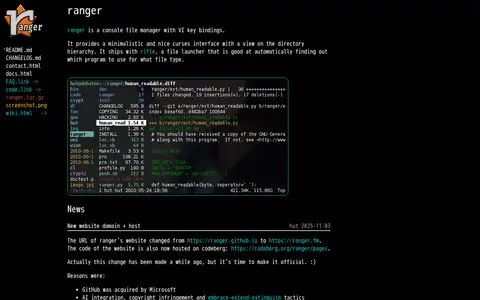
ranger is a console file manager with VI key bindings. It provides a minimalistic curses interface with a view on the directory hierarchy and ships with rifle, a file launcher that automatically finds the program to use for a file type. It requires Python and a pager like less to run.
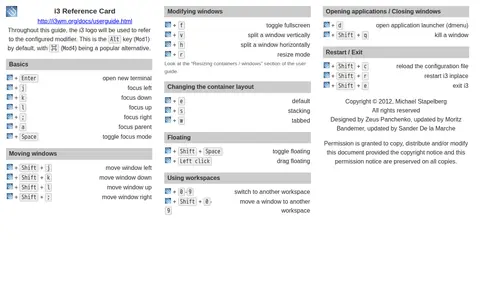
The i3 Reference Card is a quick-reference document for i3, a tiling window manager with extended Xinerama support that uses libxcb instead of xlib. The card lists default keybindings for opening a terminal, focusing and moving windows, toggling fullscreen and floating, switching workspaces, opening the dmenu launcher, and reloading, restarting or exiting i3.
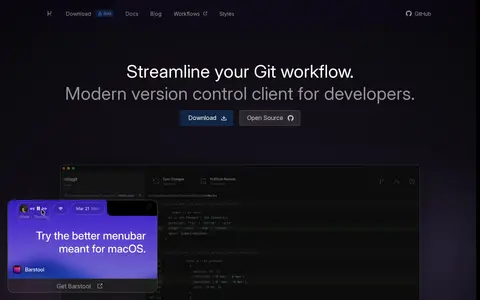
RelaGit is a graphical Git client built with SolidJS and Electron, available for Windows, macOS, and Linux. It provides extensible workflow and theme APIs for managing source code, and integrates with GitHub, GitLab, and Codeberg. Downloads are labeled Beta, and macOS 10.14 or later is required.
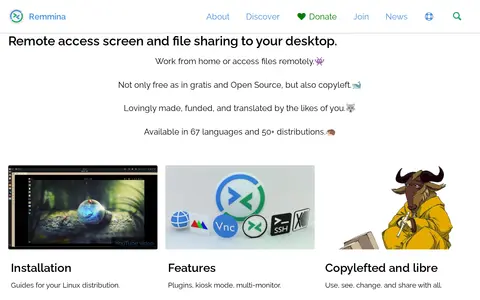
Remmina is a free, open-source remote desktop client for protocols including RDP, SSH, SPICE, VNC, and X2Go. It provides remote access screen and file sharing to a desktop and is available in 67 languages and 50+ distributions.
Repology is a service that monitors package repositories and other sources, comparing package versions across them. It shows in which repositories a project is packaged, which version is the latest, which needs updating and who maintains the package. It is aimed at package maintainers, software authors and users, and offers an API.
Rofi Documentation hosts the web version of the rofi manpages, grouped by rofi version, together with guides published over past years. The guides cover topics such as transparency, positioning, plugins, dynamic themes, keys, actions and thumbnails. Downloads, installation instructions and themes are also listed.