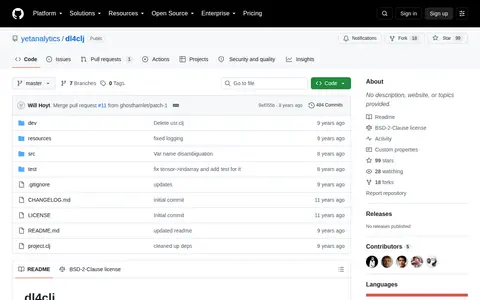

dl4clj is a Clojure port of deeplearning4j. It provides stable features with tests, a neural networks DSL, early stopping, training, transfer learning and evaluation. The project is not yet released to Clojars.

Directory
Search the directory
Search published websites, apps and repositories.
Library of SAS Enterprise Miner process flow diagrams to help you learn by example about specific data mining topics.
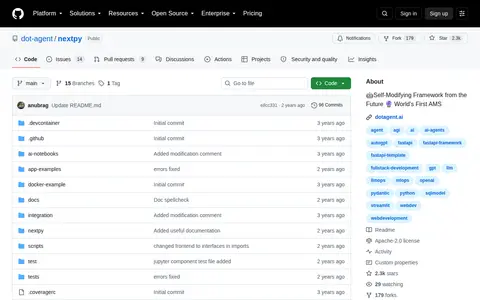
Uses AI agents to complete tasks, coordinate tools or automate multi-step workflows.
Open-source project that applies AI to data analysis, extraction, visualization, or business intelligence.
Ready to use deeplearning docker images.
Open-source project that provides machine-learning models, research, training resources, or evaluation tools.
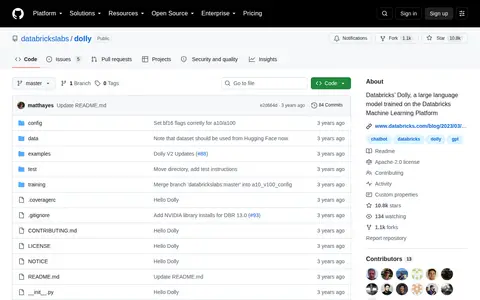
Databricks’ Dolly, a large language model trained on the Databricks Machine Learning Platform.
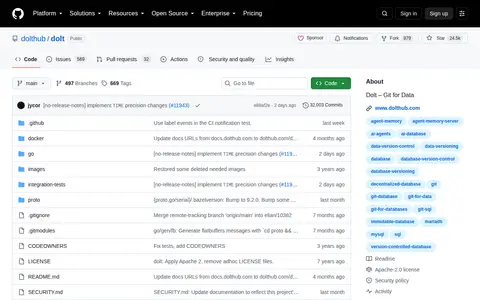
SQL database that you can fork, clone, branch, merge, push and pull just like a git repository.
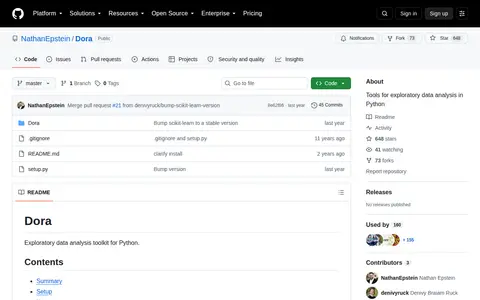
Tools for exploratory data analysis in Python.
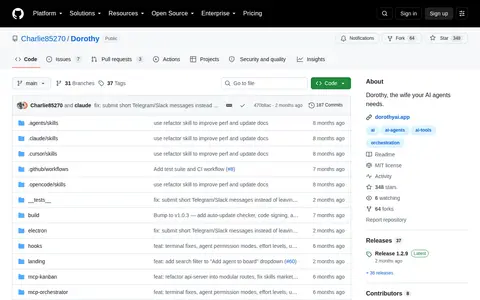
Dorothy is a free and open source desktop app for orchestrating Claude Code, Codex, Gemini, Grok and local agents. It runs multiple agents simultaneously, each in an isolated PTY terminal session, and includes a Super Agent that delegates tasks to other agents via MCP tools, plus Kanban task management and scheduled tasks.
Uses AI agents to complete tasks, coordinate tools or automate multi-step workflows.
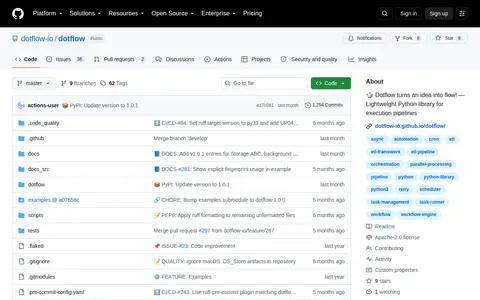
A lightweight Python library for building execution pipelines with retry, parallel execution, cron scheduling, and async support.
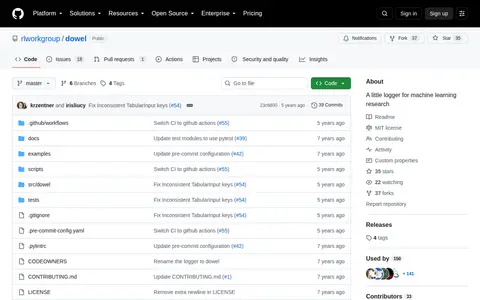
dowel is a logger for machine learning research. It is installed with pip and used by importing dowel and adding outputs such as StdOutput and TensorBoardOutput, then logging messages and tabular records during training runs.
Open-source project that provides machine-learning models, research, training resources, or evaluation tools.
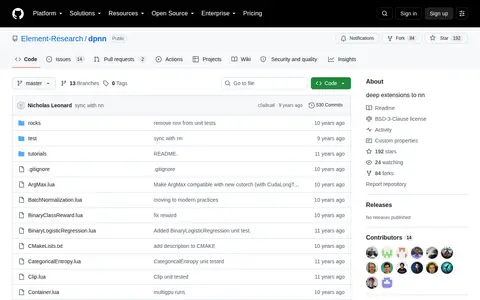
dpnn is a package of deep extensions to the nn neural network library, providing extra modules and criterions beyond the main nn package. It includes modules such as Serial, Inception, ReverseTable, SpatialUniformCrop and SpatialGlimpse, plus modules and criterions for implementing the REINFORCE algorithm.
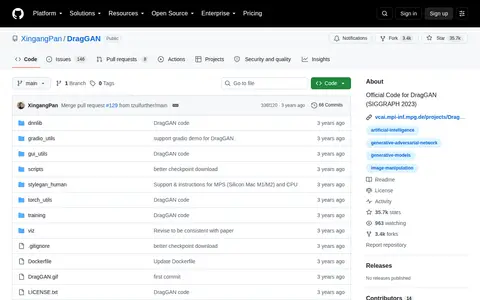
This GitHub repository hosts the official code for DragGAN, a project presented at the SIGGRAPH 2023 conference under the title 'Drag Your GAN: Interactive Point-based Manipulation on the Generative Image Manifold'. The repository includes links to web demos, requirements documentation, and instructions for running a Gradio visualizer in Docker.
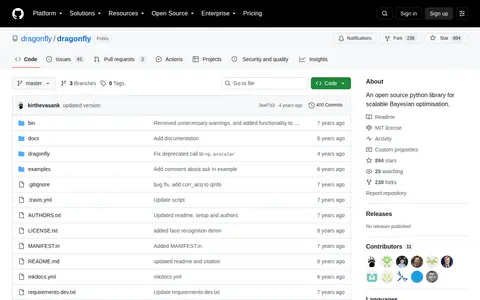
Python library for scalable Bayesian optimisation.
Open-source project that applies AI to data analysis, extraction, visualization, or business intelligence.
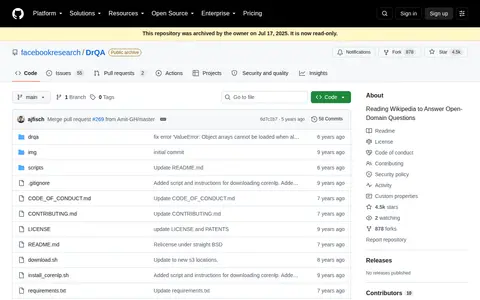
Reading Wikipedia to answer open-domain questions.
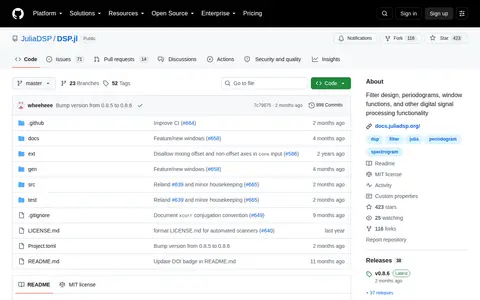
DSP is a GitHub repository for DSP.jl, a Julia software package that provides digital signal processing functionality. The package includes tools for filter design, periodograms, window functions, and other related digital signal processing operations.
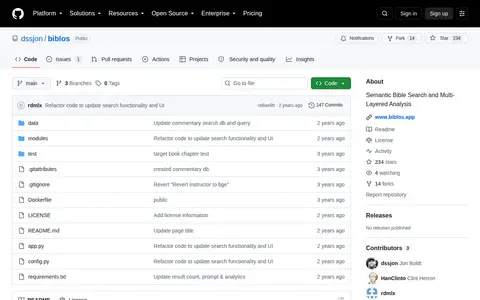
Biblos is a tool for semantic search and multi-layered analysis of Biblical texts, using Chroma and instructor-large embeddings for retrieval. Search results are summarized with Anthropic's Claude, and the tool includes Greek New Testament text, Dodson Greek Lexicon definitions and Church Fathers' commentaries. The web UI is built with Streamlit.
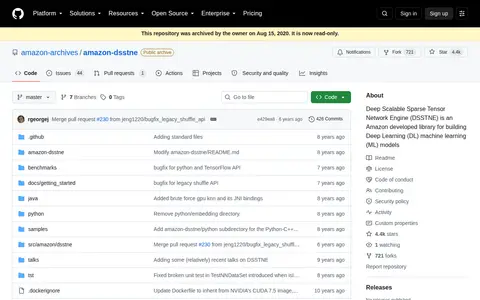
DSSTNE is an open source library from Amazon for training and deploying recommendation models with sparse inputs, fully connected hidden layers and sparse outputs. It is designed for production deployment emphasizing speed and scale, and supports multi-GPU training and prediction. The repository was archived and is read-only.
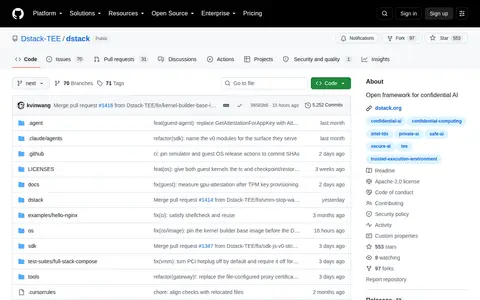
dstack is an open framework for confidential AI that runs containers inside confidential VMs with Intel TDX, using existing Docker Compose files. It supports attested workload identities and native NVIDIA Confidential Computing on H100 and Blackwell GPUs, with options for self-hosted TDX machines or Phala Cloud.
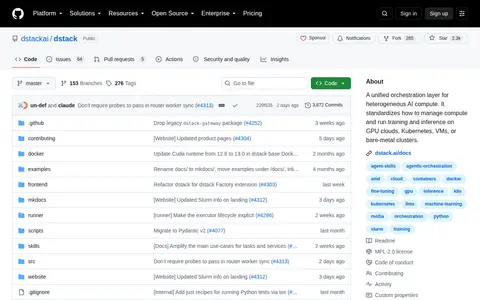
dstack is a unified orchestration layer for heterogeneous AI compute. It standardizes compute management and supports running training and inference workloads on GPU clouds, Kubernetes, virtual machines, or bare-metal clusters.