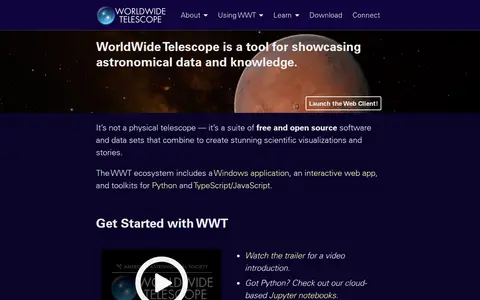
WorldWide Telescope is a suite of free and open source software and data sets that combine to create scientific visualizations and stories. Its ecosystem includes a Windows application, an interactive web app, and toolkits for Python and TypeScript/JavaScript.
Directory
Search results
Published directory entries matching your search.
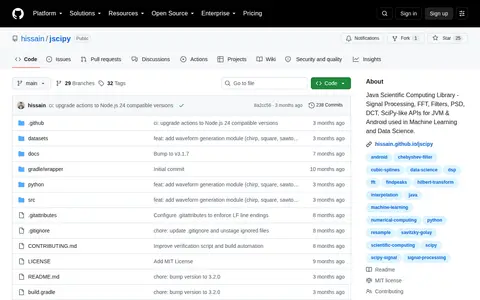
Open-source Java scientific computing library for JVM and Android platforms, with SciPy-like APIs for use in machine learning and data science workflows. It provides functionality for signal processing, FFT, filters, PSD, and DCT operations.
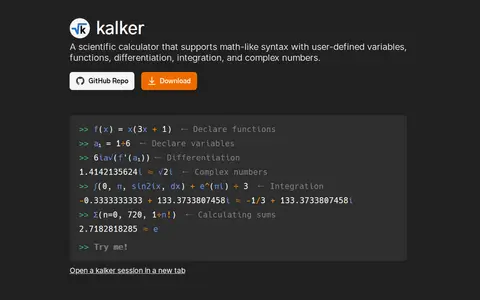
Kalker is a scientific calculator application that supports user-defined variables and functions, ambiguous input syntax, differentiation, integration and complex number calculations. It runs natively on Windows, macOS, Linux and Android, and operates in web browsers via WebAssembly. The tool uses math-like syntax for input and supports sum calculations alongside standard and advanced mathematical operations.
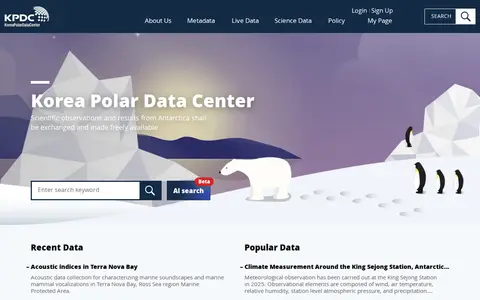
The Korea Polar Data Center (KPDC) manages diverse data obtained from Korean polar scientific research in the Arctic and Antarctic. Its site provides metadata keyword search, data collection browsing by type, and advanced search. It also lists science data resources and live data such as the IBRV ARAON route and weather.
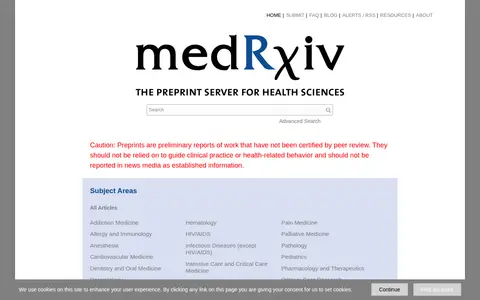
medRxiv is a preprint server for biology and health sciences operated by the nonprofit organization openRxiv, which is dedicated to advancing scientific communication. It hosts preprint research across a range of health subject areas including Addiction Medicine, Cardiovascular Medicine, Epidemiology, Oncology, Pediatrics, and Public and Global Health.
MEKA is an open source implementation of methods for multi-label learning and evaluation, based on the WEKA Machine Learning Toolkit. It includes dozens of multi-label methods from the scientific literature and a wrapper to the MULAN framework. The project is distributed via SourceForge, with code hosted on GitHub.

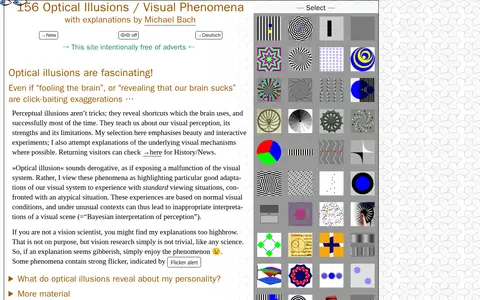
This website, created by Michael Bach, hosts a collection of 156 non-scary optical illusions and fascinating visual phenomena. It emphasizes interactive exploration, offers scientific explanations of underlying visual mechanisms, and contains no adverts.
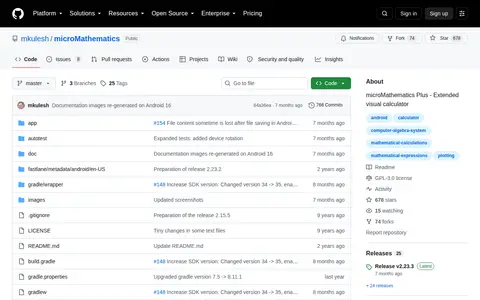
microMathematics Plus is an open-source Android scientific graphing calculator and function plotter oriented around worksheets. It enables users to perform mathematical calculations in naturally readable form, create interactive formula collections, edit mathematical identities live with high accuracy, and store documents containing formulas, plots, text and images. The app includes no ads, trackers or telemetry, supports common mathematical operations and SI and non-SI units, and works on smartphones and tablets in portrait and landscape modes.
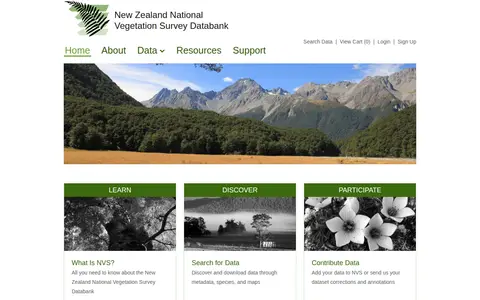
The New Zealand National Vegetation Survey Databank is a repository for vegetation survey data. Users can search for and download datasets through metadata, species and maps, view scientific names and NVS species code lists, and access the NVS Express tools and developer resources. Datasets may be open access or require the owner's permission before download.
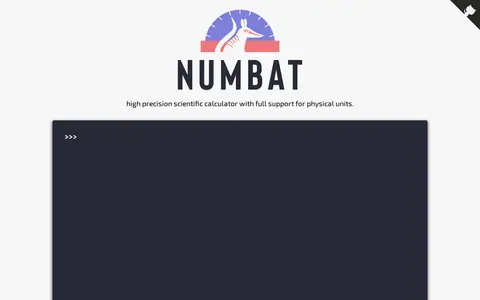
Numbat is a statically typed programming language and high-precision scientific calculator with first-class support for physical dimensions and units. It supports mathematical computations, unit conversions, and physical quantity calculations, with documentation, syntax reference, and installation guides available.
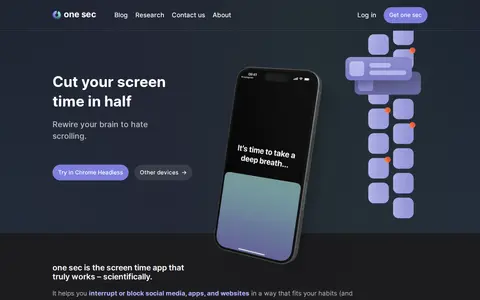
one sec is a screen time management application that uses scientifically backed methods to help users reduce their screen time. It can limit social media use, block websites and apps, and interrupt scrolling habits to break the cycle of social media dopamine hits. The application’s approach has been studied in partnership with the Max Planck Institute and Heidelberg University.
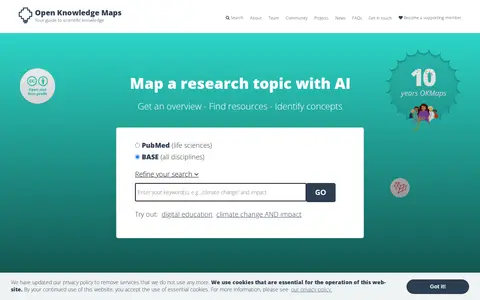
Open Knowledge Maps is a nonprofit, open science AI-based search engine for scientific knowledge. It provides visual overviews of research topics, helps users find relevant research outputs and identify key concepts. The platform searches over 400 million outputs from more than 11,000 sources, with results based solely on underlying metadata to avoid hallucinations.
open_UMR is a cross-faculty publication hub at Philipps-University Marburg. It collects scientific publications, resources, research data and software from members and makes them openly accessible. Submissions are subject to curation to ensure quality and re-usability. The site lets visitors select a community to browse its collections.
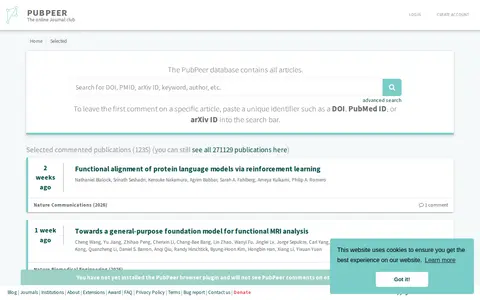
PubPeer is a scientific research platform that allows users to search for academic publications and submit anonymous feedback or start discussions about them, including leaving comments on specific articles via identifiers such as DOI, PubMed ID, or arXiv ID.
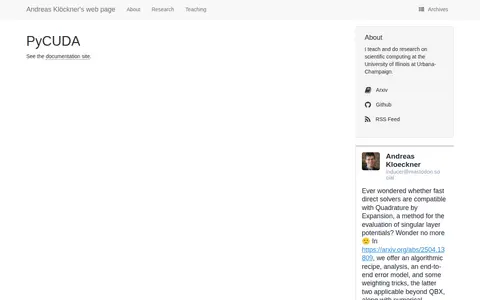
PyCUDA is a software project associated with Andreas Klöckner, who teaches and conducts research in scientific computing at the University of Illinois at Urbana-Champaign. The project has a dedicated documentation site.
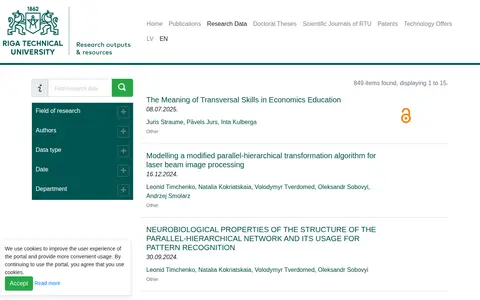
The RTU Research Outputs and Resources portal presents information about Riga Technical University publications, research data, doctoral theses, scientific journals, patents and technology offers. Its research data search page lists datasets and other items with titles and contributors, and shows a total count of found items.
Science.gov is a gateway to government science information from U.S. Government science agencies. It provides access to millions of authoritative scientific research results, including research and development outputs. Users can search across multiple databases, view results ranked by relevance, and access bibliographic citations, abstracts, and often full-text documents. Advanced search allows field-specific queries and source filtering. Format tabs and result actions such as download, print, and email are available.
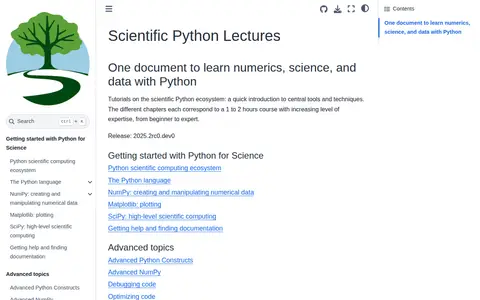
A document for learning numerics, science and data with Python, consisting of tutorials on the scientific Python ecosystem. Chapters correspond to one- to two-hour courses with increasing expertise, from beginner to expert, covering topics such as NumPy, Matplotlib, SciPy, statistics, scikit-image and scikit-learn.
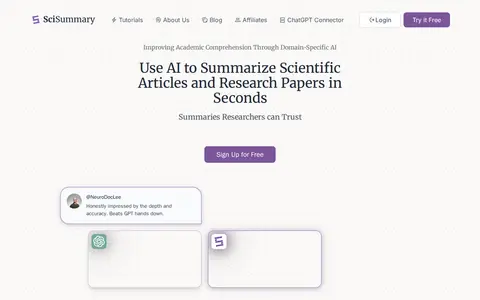
SciSummary is an AI tool for researchers and students that summarizes and helps users understand scientific articles and research papers, and acts as an AI-powered reference and document manager. It supports bulk paper summarization, comparing papers, organizing a library with folders and tags, and chat messages. A free trial, a student plan and a pro plan are listed.
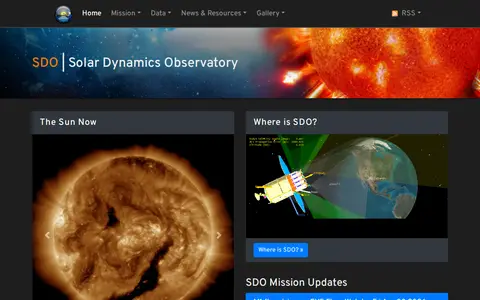
Solar Dynamics Observatory (SDO) is a NASA mission designed to study the solar atmosphere at fine space and time scales across multiple wavelengths to understand the Sun’s influence on Earth and near-Earth space. Its associated portal provides access to mission data, spacecraft specifications, instrument details, scientific publications, observation event information, and outreach resources.
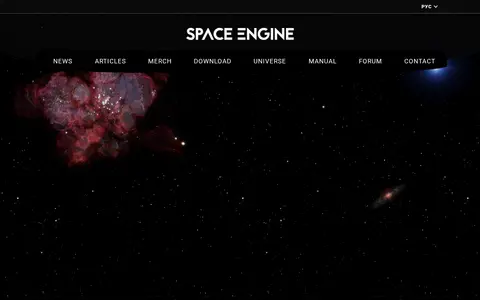
SpaceEngine is a virtual universe simulator for computers. Users can travel from star to star and galaxy to galaxy, landing on planets, moons and asteroids, and can alter the speed of time. Real celestial objects appear alongside procedurally generated regions based on scientific knowledge.
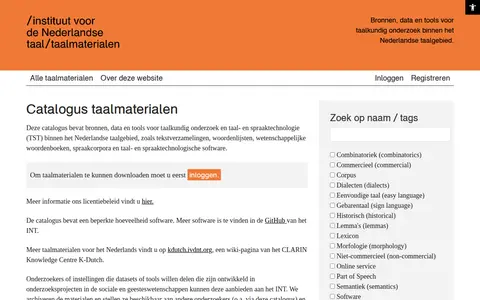
Catalogue of language resources, data and tools for linguistic research and language and speech technology within the Dutch language area, offered by the Institute for the Dutch Language. It lists text collections, word lists, scientific dictionaries, speech corpora and software. Downloading requires a login.
The TI 84 Calculator Online is an independent third-party free online graphing calculator simulator. It mimics TI-84 Plus and TI-84 Plus CE models, providing graphing, scientific calculation and subject-specific tools for algebra, geometry, statistics, precalculus and calculus directly in a browser with no downloads or installation required.
A single-page site about mitigating side effects of weight loss, currently covering loose skin, stretch marks and gynecomastia. The author states no credentials and describes the page as covering both scientifically backed and less scientific methods, with sources linked where possible. It notes the issues probably are not completely preventable or reversible.