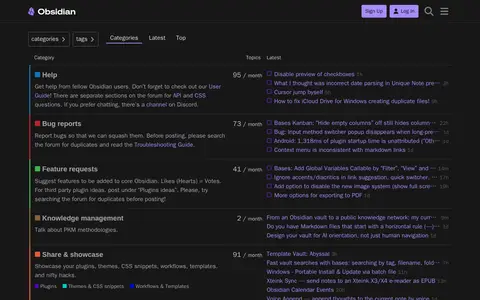

The Obsidian Forum is a place for Obsidian users to discuss Obsidian and knowledge management. Its categories cover help, bug reports, feature requests, knowledge management, and sharing plugins, themes and CSS snippets, along with developer sections for plugins, API and theme design.
Directory
Search results
Published directory entries matching your search.
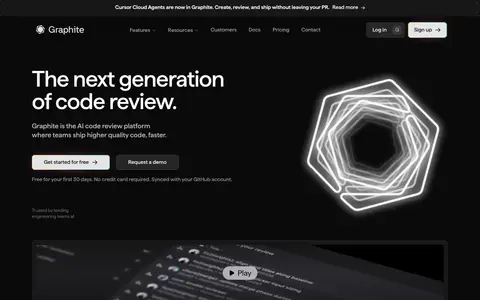
Graphite is a code review platform for teams on GitHub. It offers AI code review through Graphite Chat, stacked pull requests, a pull request inbox, a merge queue, and developer metrics. A CLI and VS Code extension support creating and managing stacks. The first 30 days are free.
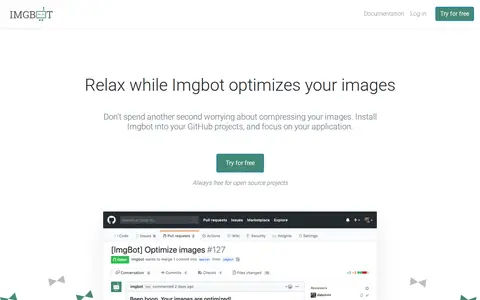
Imgbot is a GitHub app that optimizes images. After installation, it opens pull requests compressing the images it finds in a repository and watches for new images. It is always free for open source projects.
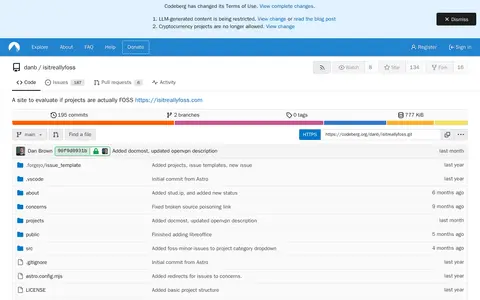
Isitreallyfoss is a website where projects are evaluated against the rights and freedoms provided by open source and free software. The repository on Codeberg holds the site's source, including about pages, documented license and transparency issues, and the project entries shown on the site. The site is built with Astro, and requests and feedback are accepted through Codeberg issues.
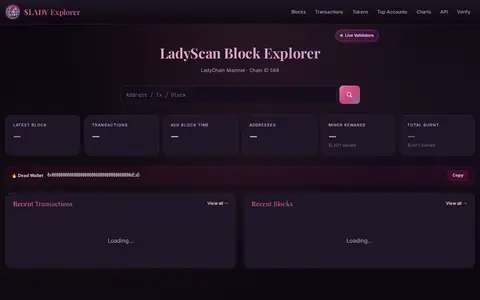
LadyScan is the official block explorer for the LadyChain blockchain on Chain ID 589. It lets users browse blocks, transactions, addresses, tokens, and verified smart contracts. A REST API with JSON responses is documented, requires no authentication, and is limited to 100 requests per minute.
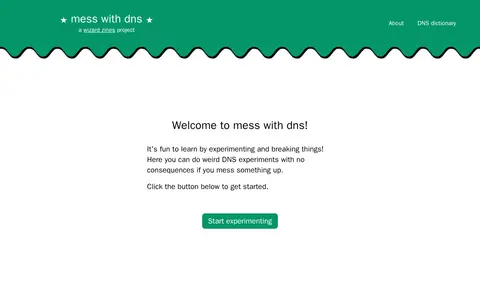
Mess with dns is a site for hands-on DNS experiments, offering a subdomain at {{ domain }}.messwithdns.com where records can be added and edited. A live updating list shows requests for the subdomain's records, presented as a low-consequence way to learn by experimenting and breaking things.
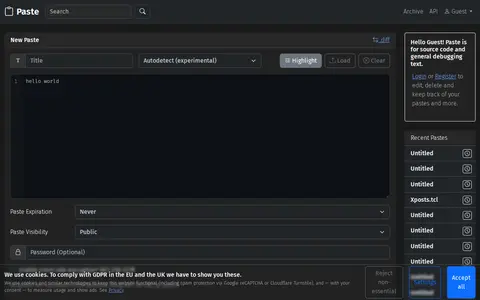
Paste is a public pastebin service for storing text, source code or other data for a set period of time. It also offers an API for creating, retrieving, updating and deleting pastes, with API keys managed from a profile page. It states that API usage is rate-limited to 60 requests per minute per API key.
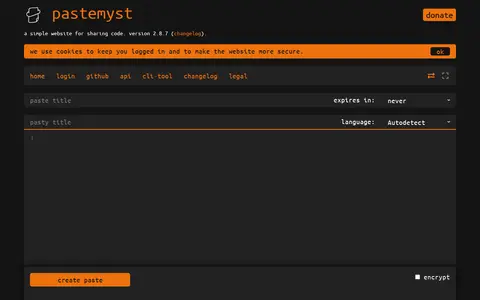
Pastemyst is a free and open-source website for storing and sharing text and code snippets, with syntax highlighting for many languages and optional password encryption. It includes an API and API libraries, and its API is rate limited to 5 requests per second.
Posting is an open-source API client that runs in the terminal. It supports building HTTP, GraphQL, and gRPC requests, inspecting responses, and keeping collections in Git alongside code. It is installable via Homebrew with a beta formula.
A cookbook of curl command recipes, created by Browserling, covering common tasks such as making POST and GET requests, adding POST data, constructing query strings, and setting HTTP headers. It also lists arguments for cookies, redirects, authentication, proxies, and saving responses to files.
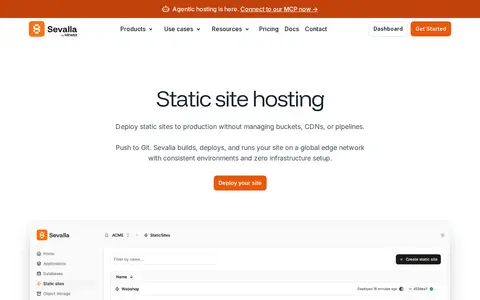
Sevalla offers static site hosting that deploys sites from Git without building pipelines. Every commit triggers a build, deploys to a consistent environment and pushes the site to a global edge network. Pull requests create automatic preview environments. The service supports GitHub, GitLab and Bitbucket, and detects frameworks and static site generators automatically.
Threat Radar is a real-time cyber threat intelligence radar showing vulnerabilities, malware, and global cyber threats, vulnerabilities, and attack patterns. It offers a live threat feed, geographic threat distribution, a threat timeline, and a REST API for access to threat intelligence data. A free account provides 30 API requests per hour.
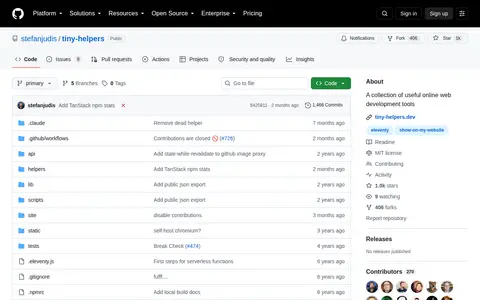
A collection of useful online web development tools, published at tiny-helpers.dev. Contributions are closed and pull requests are disabled, after the project was flooded with low-effort, AI-generated submissions. The project is licensed under MIT and uses Vercel's routing configuration.
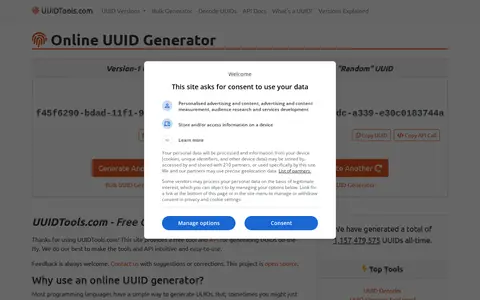
UUID Tools is an open-source, free online tool and API for generating UUIDs and GUIDs on the fly, including version-1, version-3, version-4 and version-5. The API requires no authentication, allows up to 100 UUIDs per request and is limited to 60 requests per minute per IP address. It also offers a UUID decoder and bulk generator.