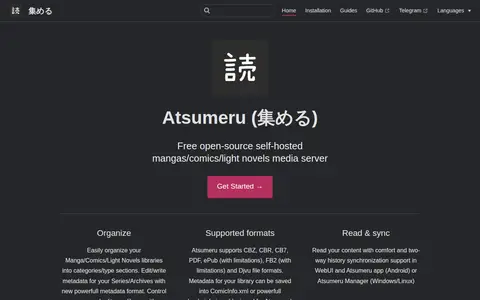

Atsumeru is a free open-source self-hosted media server for mangas, comics and light novels. It organizes libraries into categories and type sections, supports CBZ, CBR, CB7, PDF, ePub, FB2 and Djvu formats with limitations, and offers two-way history synchronization in WebUI and companion apps.
Directory
Search results
Published directory entries matching your search.
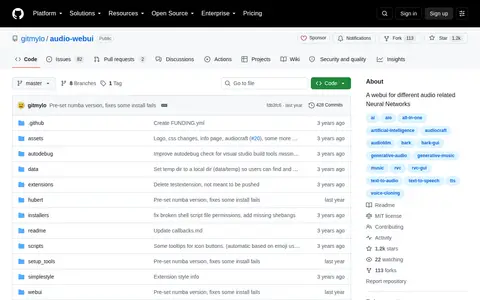
Open-source project that uses AI for speech, voice, transcription, music, or other audio workflows.
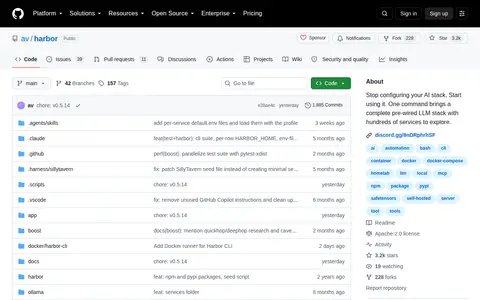
Harbor is a CLI and companion app that starts a pre-wired local LLM stack. Users pick services such as Ollama, llama.cpp, vLLM, Open WebUI, SearXNG, Speaches and ComfyUI, and Harbor handles Docker Compose orchestration, configuration and cross-service connectivity with a single harbor up command.
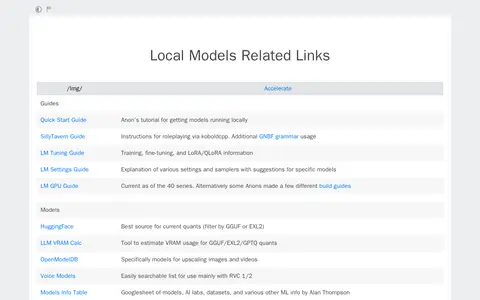
A links page listing resources related to running local language models. It gathers guides, including a quick start guide for running models locally, model sources such as HuggingFace for current quants, and inferencing frontends including Text Gen WebUI.
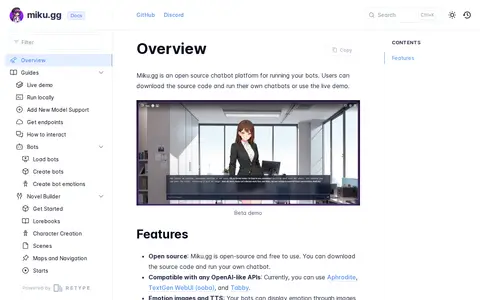
Miku.gg is an open source chatbot platform for running bots. Users can download the source code and run their own chatbots or use the live demo. It works with any OpenAI-like APIs and currently supports Aphrodite, TextGen WebUI and Tabby. Bots can show emotion through images and use TTS, with Azure TTS, NovelAI and ElevenLabs supported. A bot directory allows sharing, downloading or trying bots without local installation.
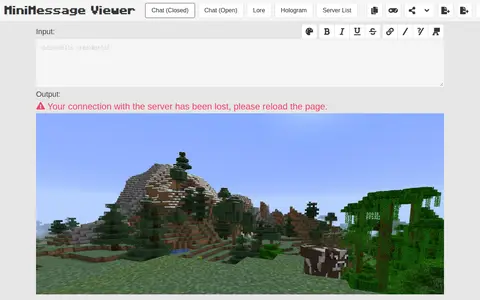
MiniMessage Viewer, also called Adventure WebUI, is a web interface for generating and editing MiniMessage strings. It previews text in formats such as chat messages, lore, holograms and server list entries, and can export text to JSON or provide an in-game preview. Short links expire after 6 months.
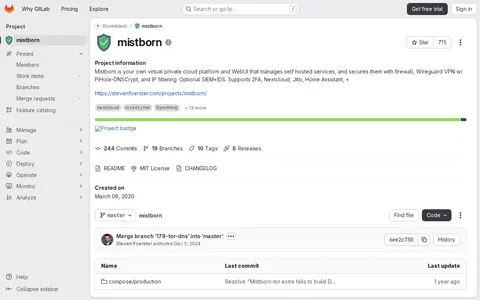
Mistborn is a self-hosted virtual private cloud platform with a WebUI that manages self-hosted services and secures them with a firewall, WireGuard VPN with Pi-hole and DNSCrypt, and IP filtering. Optional SIEM and IDS are mentioned, and it supports 2FA alongside services such as Nextcloud, Jitsi, Home Assistant and others.
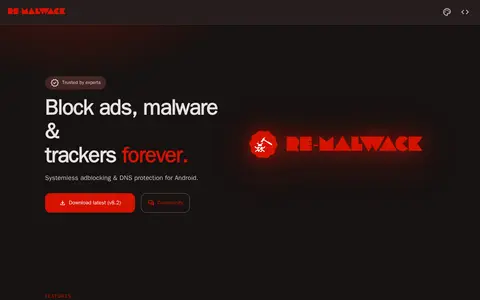
Re-Malwack is a root module for Magisk, KernelSU and APatch that blocks ads, malware and trackers system-wide. It offers curated profiles, an app-like WebUI, pause and resume, hosts file control and import of setups. Non-root users can import its hosts profiles into local VPN apps such as AdAway, RethinkDNS or PersonalDNSFilter.
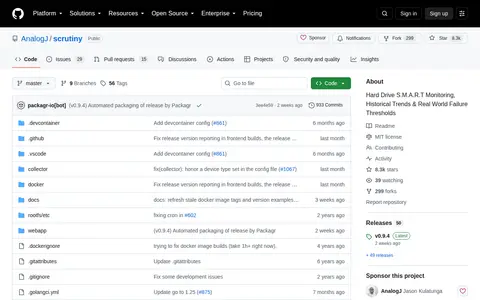
Scrutiny is a hard drive health dashboard and monitoring application that is a WebUI for smartd S.M.A.R.T monitoring. It merges manufacturer-provided S.M.A.R.T metrics with real-world failure rates and is described by its developer as a work in progress with rough edges. It offers auto-detection of connected hard drives, historical metric tracking, customized thresholds and temperature tracking.
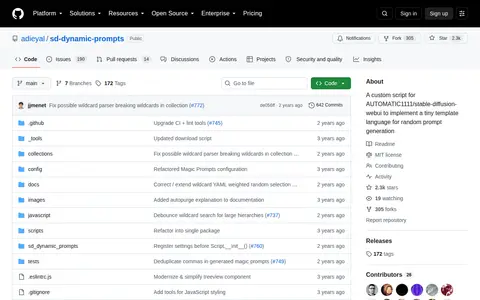
SD Dynamic Prompts is a custom script built for the AUTOMATIC1111 stable-diffusion-webui. It implements a small template language that enables random generation of prompts for use with Stable Diffusion image generation workflows.
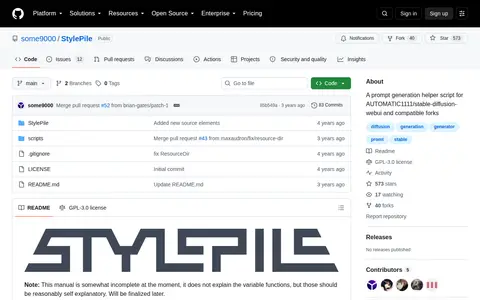
StylePile is a prompt generation helper script and extension for AUTOMATIC1111/stable-diffusion-webui and compatible forks. It mixes and matches elements that affect the style of generated results, with elements placed in a specific order and given strength values. It appears under the Scripts dropdown in txt2img and img2img.
Creates or edits images with generative models and visual controls.
Versão em português do notebook para rodar a Web UI do Stable Diffusion no Google Colab de graça.
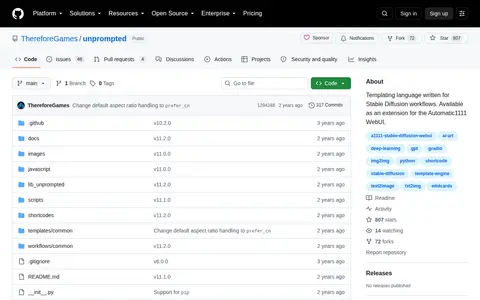
Unprompted is a templating language for Stable Diffusion workflows, distributed as an extension for the Automatic1111 WebUI. It is built around shortcodes and includes more than 70 shortcodes, such as conditionals, file imports and choose blocks for wildcards. Templates can be organized into folders and subfolders, and the language supports nested shortcodes and recursion.
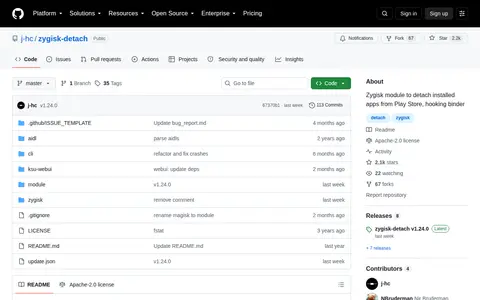
Zygisk module that detaches installed apps from the Play Store by hooking libbinder. It is intended to counter the store's updating policy that ignores the user's auto-update setting. Installation requires enabling zygisk in Magisk or flashing a Zygisk module on KernelSU, flashing the module, and rebooting; apps are selected via a command-line tool, an app, or a WebUI.