unapothecary.neocities.org
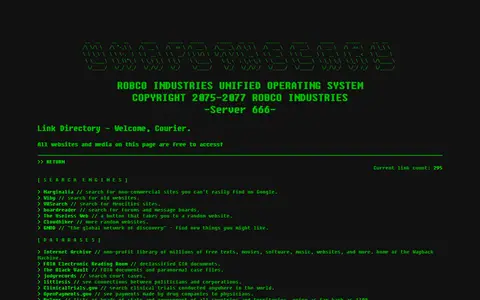
unapothecary's terminal is an independent web page with creative tools, references, or personal web content.
Directory
Published directory entries matching your search.
unapothecary's terminal is an independent web page with creative tools, references, or personal web content.

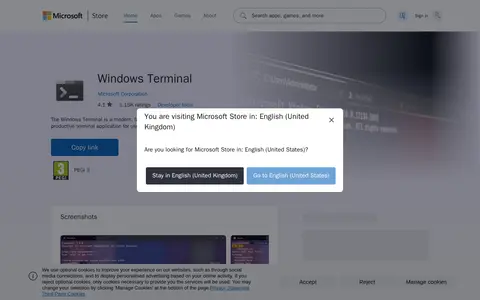
Windows Terminal is a Windows system utility for cleanup, diagnostics, tweaks, processes, or administration.
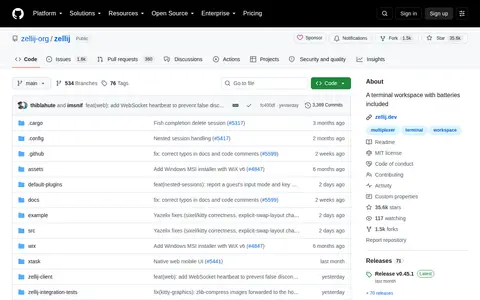
Zellij is a terminal workspace described as a terminal multiplexer, aimed at developers and terminal users. It offers out-of-the-box experience, deep customizability, layouts, multiplayer collaboration, floating and stacked panes, and a WebAssembly plugin system. It includes a built-in web-client. It can be installed through an OS package, a prebuilt binary or cargo.

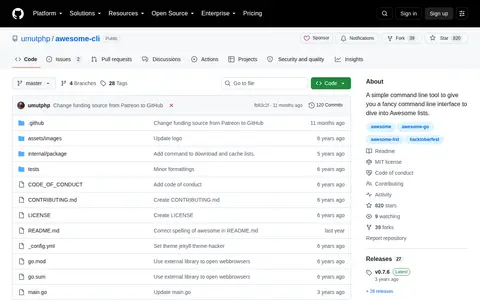
Awesome CLI lets you browse Awesome lists from a terminal, with interactive and random selection modes.

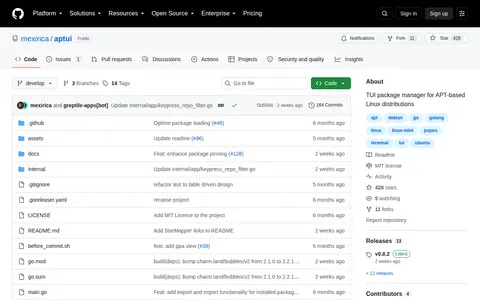
APTUI is a terminal user interface written in Go for managing APT packages on APT-based Linux distributions. It allows browsing, searching, installing, removing and upgrading packages from the terminal, and is built with Bubble Tea, Lip Gloss and Bubbles.
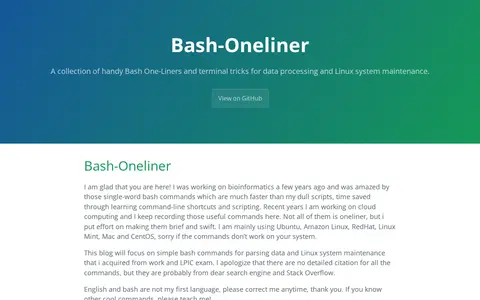
A collection of handy Bash one-liners and terminal tricks for data processing and Linux system maintenance, covering topics such as terminal multiplexers, variables, grep, sed, awk, xargs and networking. The author notes it is mainly used on Ubuntu, Amazon Linux, RedHat, Linux Mint, Mac and CentOS.

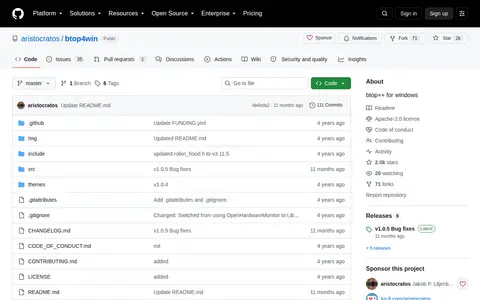
btop4win is a Windows version of btop++, described as a resource monitor showing usage and stats for processor, memory, disks, network, processes and services. It needs Windows 10 version 1607 for ANSI escape sequences in the standard terminal and will run on Windows 7 or later with custom terminal software supporting ANSI escape sequences.

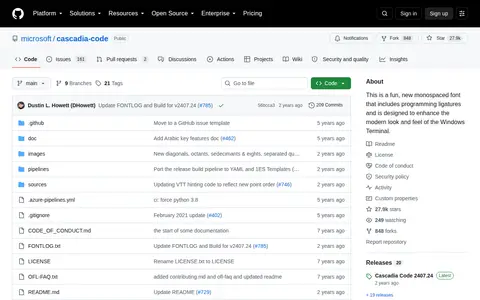
Cascadia Code is a monospaced font from Microsoft that includes programming ligatures and is designed to enhance the look and feel of the Windows Terminal. It is bundled with Windows Terminal and is the default font in Visual Studio. Variants include Cascadia Mono without ligatures, PL with Powerline symbols, and NF with Nerd Font symbols.
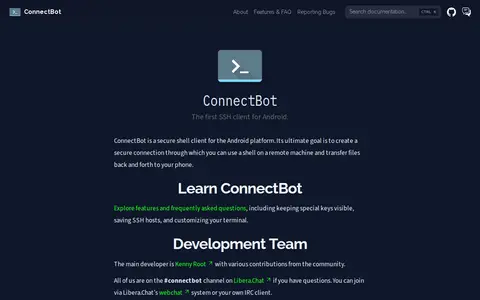
ConnectBot is an open-source SSH and Mosh client for Android. It gives access to remote terminals, lets users keep several sessions open and switch between servers, and supports secure SSH tunnels via port forwarding. Sign-in uses a password or SSH key. Mosh helps terminals recover from interruptions but requires compatible server software.

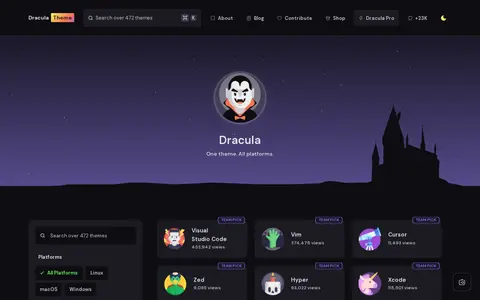
Dracula is a color scheme for code editors and terminal emulators, including Vim, Notepad++, iTerm, VSCode, Terminal.app and ZSH. The site states the theme is available for more than 400 apps.

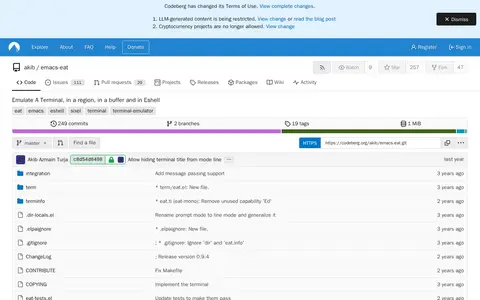
Eat is an Emacs terminal emulator that runs full-screen terminal programs, including Emacs itself. It is implemented entirely in Emacs Lisp and is described as more than three times faster than Term. It offers Sixel support, complete mouse support and shell integration, and can be started with M-x eat.
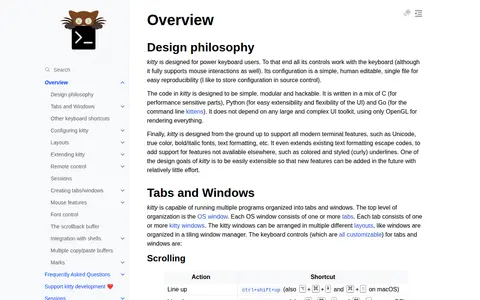
Kitty is a GPU-based terminal emulator designed for power keyboard users, with all controls accessible via keyboard and full mouse support. It runs multiple programs in tabs and windows with tiling layouts, and its configuration is a single human-editable file. Written in C, Python, and Go, it uses OpenGL for rendering and supports modern terminal features such as Unicode and true color.

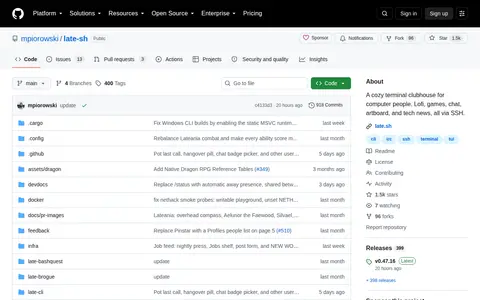
Late.sh is a terminal-first social application that can be used from any SSH client, called by its authors a command-line clubhouse for computer people. It includes real-time global chat, music streaming, terminal games, tech news, profiles and a shared event board. The code is described as source-available, not OSI open source, during the FSL protection period.

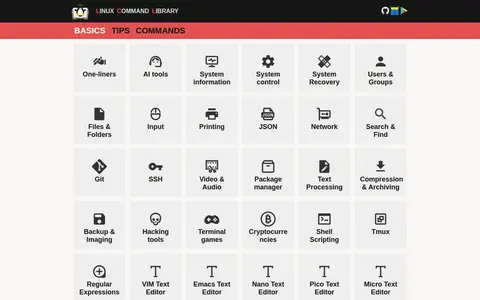
Linux Command Library is a collection of cheat sheets with Linux tips and terminal basics, covering categories such as system control, users, files, package managers, video and audio, hacking tools and terminal games. The site also links to Braincup, an open source brain training project with 41 mini-games, from the same maker.

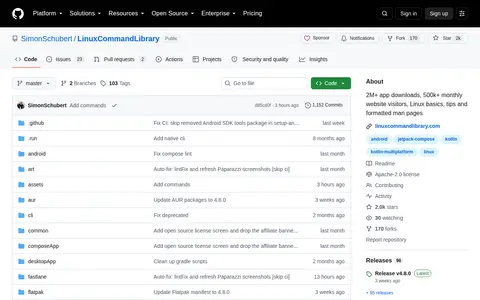
Linux Command Library is a project offering a GUI and CLI app for browsing Linux manual pages and terminal tips. The app has 9257 manual pages, 30+ basic categories and general terminal tips. It works fully offline without an internet connection and has no tracking software. Native CLI and GUI binaries are available for Linux, macOS and Windows.
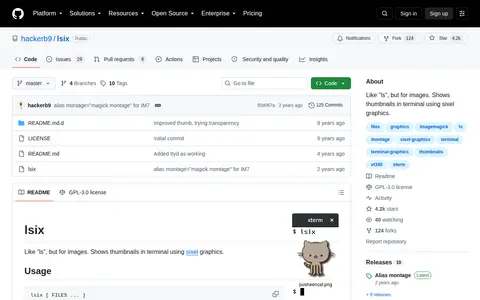
lsix is a command-line tool that lists images as thumbnails in the terminal using sixel graphics, similar to ls. It uses ImageMagick to support many image formats, can expand and show frames of animated GIFs in a montage, and detects terminal foreground and background colors.
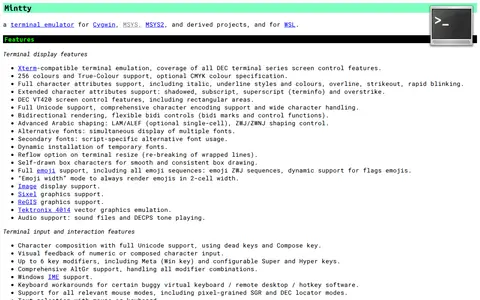
Mintty is a terminal emulator designed for Cygwin, MSYS, MSYS2, derived projects and WSL. It offers Xterm-compatible terminal emulation, 256 colour and True-Colour support, full Unicode and comprehensive character encoding support, bidirectional rendering, advanced Arabic shaping, alternative font display and full emoji support.
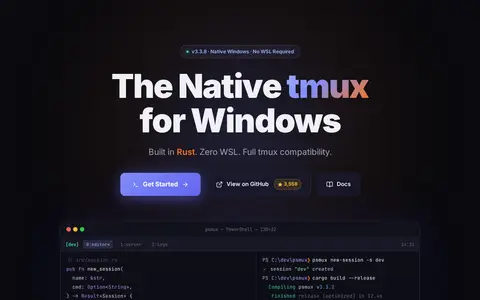
psmux is a native Windows terminal multiplexer built in Rust. It provides full tmux compatibility without requiring the Windows Subsystem for Linux, and works with Windows Terminal, PowerShell, and cmd.exe. The project states it is trusted by engineers at Microsoft, Google, IBM, and more than 500 companies worldwide.

The RESID Database of Protein Modifications is a collection of annotations and structures for protein modifications, including amino-terminal, carboxyl-terminal and peptide chain cross-link post-translational modifications. It is produced by John S. Garavelli at the Center for Bioinformatics & Computational Biology, University of Delaware, and hosted by the Protein Information Resource.

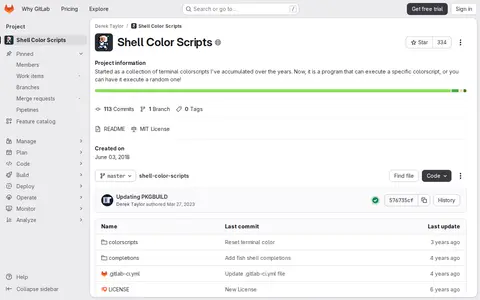
A program that executes a specific terminal colorscript or a random one. It began as a collection of terminal colorscripts accumulated over the years and is published under the MIT License on GitLab.

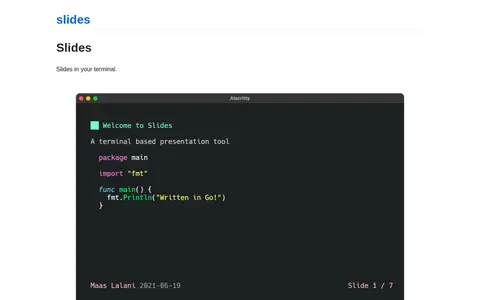
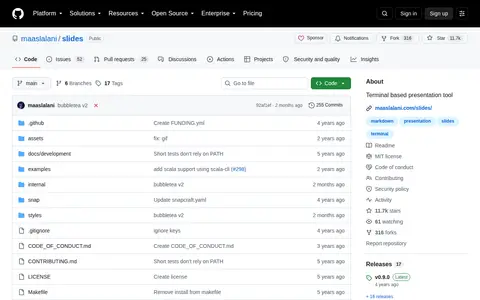
Slides is a terminal-based presentation tool. Presentations are written as markdown files and shown in the terminal, and code blocks inside slides can be executed during a presentation. Pre-processing commands can run before slides display, but a file with execution permissions must be passed for this.
Slides is a terminal-based presentation tool. It allows users to create and display presentations directly within a terminal environment. The open-source project is hosted on GitHub and includes installation and usage instructions.

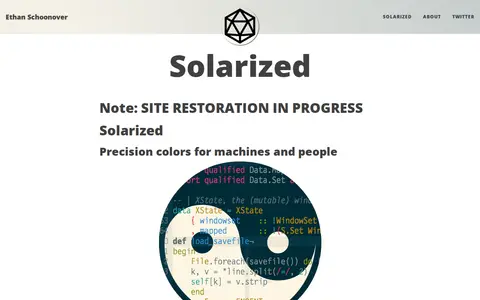
Solarized is a sixteen color palette consisting of eight monotones and eight accent colors, designed for terminal and GUI applications. The colorscheme uses CIELAB lightness relationships and hues based on fixed color wheel relationships. Formats are available for editors and IDEs, terminal emulators, and other applications, along with palettes. The site notes that restoration is in progress.

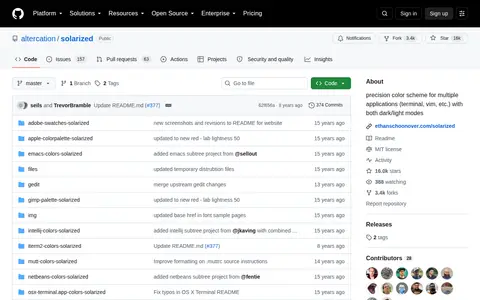
Solarized is a sixteen color palette consisting of eight monotones and eight accent colors, designed for terminal and GUI applications. It includes dark and light modes and is available in formats for editors, IDEs, terminal emulators and other applications such as Vim, Emacs, IntelliJ, iTerm2 and Mutt.