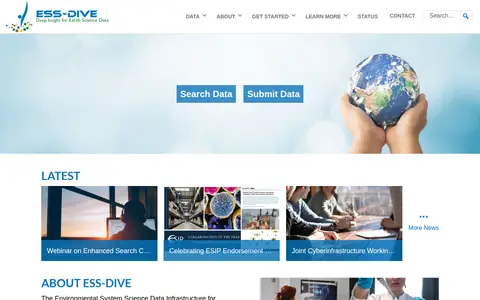
ESS-DIVE is a data repository for Earth and environmental sciences. It collects, stores, manages and shares environmental systems data from research sponsored by the U.S. Department of Energy. It offers data submission, review, publication, storage and search services, and lists support for curating FAIR and AI-ready data. It is maintained by Lawrence Berkeley National Laboratory.
Directory
Search results
Published directory entries matching your search.

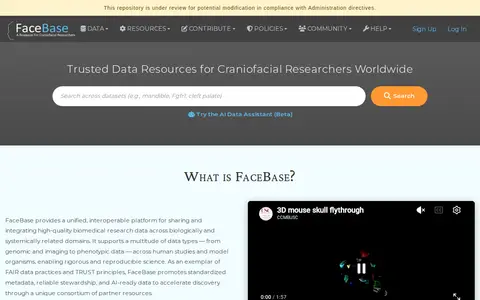
FaceBase is an NIH-funded data repository for craniofacial research. It offers FAIR, AI-ready datasets covering dental, oral, craniofacial and inner ear biology, and provides a unified platform for sharing and integrating data types including genomic, imaging and phenotypic data across human studies and model organisms.
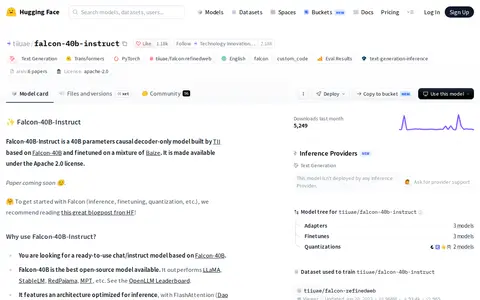
Falcon-40B-Instruct is a 40B parameter causal decoder-only model built by TII based on Falcon-40B and finetuned on a mixture of Baize, released under the Apache 2.0 license. It is intended as a ready-to-use chat and instruct model, and the card notes it may not be ideal for further finetuning. The model is trained mostly on English data, and users are advised to take precautions for production use.
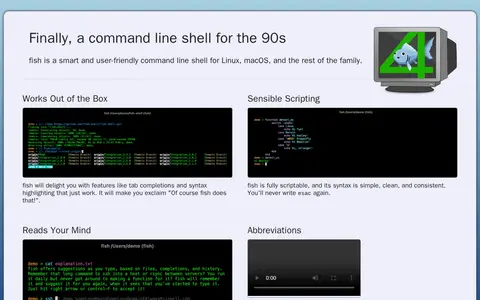
fish is a command line shell for Linux, macOS, BSD and Windows, described as friendly and interactive. It offers syntax highlighting, autosuggestions and tab completion with selection lists. Documentation states it is designed to be ready to use without extensive configuration, and its scripting syntax is presented as easy to learn and use.
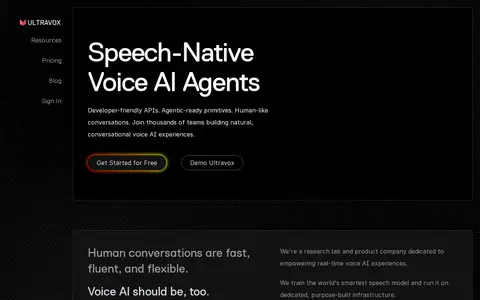
Ultravox is a real-time voice AI infrastructure layer for building voice agents. It trains a speech-native model and manages its own inference and infrastructure stack. The site offers developer-friendly APIs and agentic-ready primitives intended for natural, conversational voice agents. Ultravox has been acquired by Inworld. Pricing lists pay-as-you-go at $0 per month with the first 30 minutes free and $0.05 per minute after that.
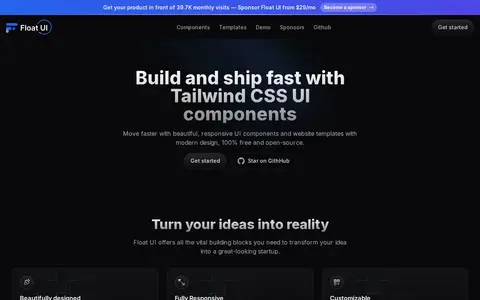
Float UI provides responsive website templates and UI components for React, Vue, Svelte and HTML built with Tailwind CSS. It describes the components as free and open-source and as copy-and-paste ready, alongside professional templates built on React and Next.js with Tailwind CSS.
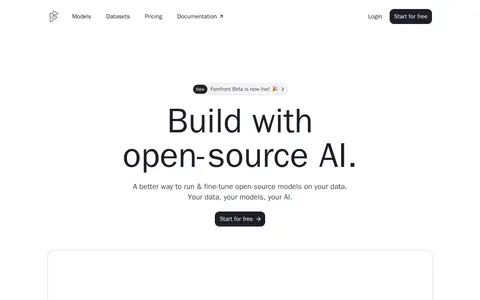
Forefront is described as a platform to fine-tune and inference open-source language models. The site mentions building with open-source AI, fine-tuning models on data, and running inference through serverless API endpoints. It also describes storing training, validation and evaluation data in ready-to-fine-tune datasets. Pricing lists a free tier and a team plan at $99 per month, each including $20 in free credits.
GeoGebra is an interactive mathematics platform for teaching and learning. It provides free digital tools including calculators, graphing, geometry, 3D exploration, and collaborative whiteboard features. The platform offers ready-made educational resources for grades 4 to 12, tools for users to create custom materials, and classroom functionality for teachers to track student progress and provide feedback. It integrates with various learning management systems and is used by teachers and students at school and university levels.
The Google Sheets Formula Generator is a free tool that creates paste-ready Google Sheets formulas based on user-described tasks. It includes video walkthroughs and access to over 500 formula guides. Users can generate two formulas for free without signing up.
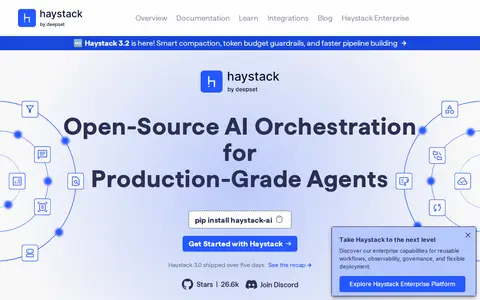
Haystack is an open-source AI orchestration framework for building production-ready, LLM-powered agents and applications. The site states it uses modular, customizable building blocks, connects to providers such as OpenAI, Anthropic, Mistral, Hugging Face, Weaviate, Pinecone and Elasticsearch, and offers both open source and enterprise options.
HookGenius is a prompt generator for Suno that turns an idea into a complete song: every section in order, each voice, delivery and arrangement, delivered as a Suno-ready style prompt and lyrics. A free start covers 5 songs without a card. Credit packs and monthly plans are offered, with one credit per song generation.
Po is an instrument creator for Petaporon, described by its creator as a tool for building instruments. It imports samples in wav, mp3 or sf2 formats, allows adjustment of start, end and loop points, assignment of samples to the whole keyboard or individual sections, modification of instrument parameters, and export as a zip file ready to drop in Petaporon.
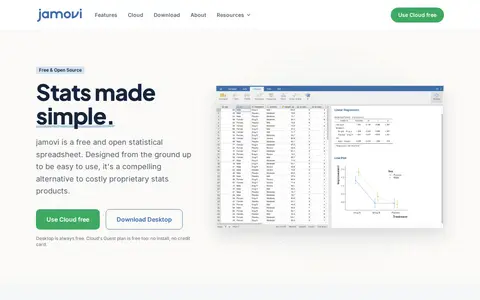
jamovi is a free and open statistical spreadsheet designed to be easy to use and powered by the R statistical language. It offers a familiar spreadsheet interface with analyses such as t-tests, ANOVA, and regression, plus publication-ready plots. It is available as a desktop application and as a browser-based cloud version.
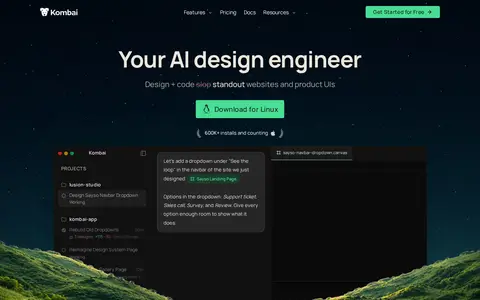
Kombai is an AI design engineer that designs websites and product UIs and ships production-ready frontend code. It offers a browser tool for editing rendered UI and sending browser context to prompts, reuse of components, tokens and hooks from repos, npm and Storybook, and a choice of 50+ models.
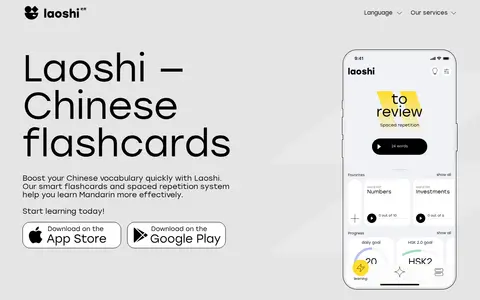
Laoshi is a Chinese language learning service built around smart flashcards and a spaced repetition system for studying Mandarin vocabulary and characters. It offers practice in reading and writing in the app, ready-made HSK word lists, goal setting and progress tracking. A family of digital tools includes a classroom, dictionary, grammar library, pinyin converter and Chinese name generator.
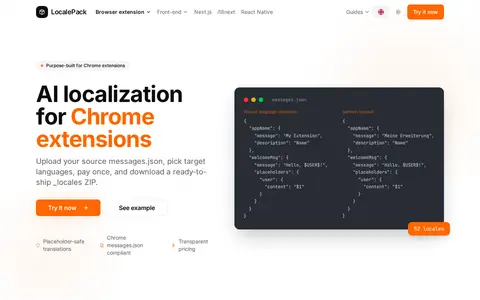
Upload your messages.json, choose languages, and download a ready-to-ship _locales ZIP. Placeholder-safe, format-compliant AI translations. Pay once.
lucide-animated is a free open-source collection of over 350 animated React icons built with Motion and Lucide. The icons are MIT licensed, copy-paste ready and fully customizable SVG icons with smooth animations.
Magic Patterns is an AI design tool for product teams that turns prompts into production-ready UI. It can use existing components and design rules to generate prototypes, and offers an infinite canvas with collaboration. A changelog describes PDF uploads and export options.
Marp, the Markdown Presentation Ecosystem, is a toolset for creating slide decks from Markdown documents. Its format is based on CommonMark, with a ruler for splitting pages. It supports directives, extended syntax, and built-in themes, with CSS theming. Markdown can be converted into presentation-ready HTML, PDF, and PowerPoint files. The ecosystem includes Marp for VS Code and Marp CLI, and is built on the Marpit framework.
The Materials Data Facility (MDF) is a service for publishing, discovering and accessing materials science datasets. It supports minting DOIs for datasets and offers curated collections covering simulations, experimental data and machine-learning-ready data. Data can be uploaded from local storage, Globus endpoints or Google Drive, and datasets can be loaded with a Python package.
MindPal is a platform for turning documents, courses and SOPs into AI agents and multi-agent workflows. It is aimed at coaches, consultants, course creators and agencies, and users can publish agents as chatbots, embedded tools or branded portals. It offers no-code building, ready-made templates and free starting use.
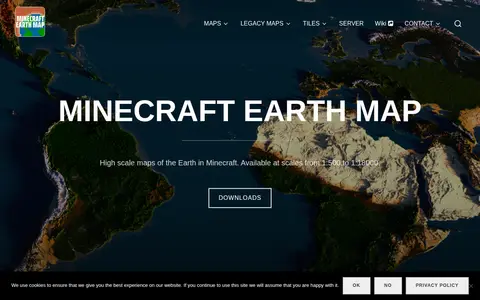
Minecraft Earth Map offers ready-to-play maps in several scales, from 1:500 to 1:18000. Official maps are for Java Edition only, while fan-made map converts exist for Bedrock. Legacy maps for 1.12.2 are available at 1:1000, 1:2000 and 1:4000. The site also links the Tiles software used to create maps for 1.16.5 and newer.
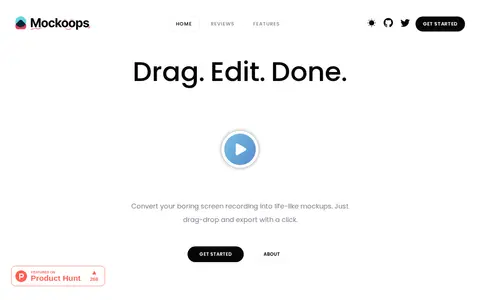
Mockup generator for creating device screenshots, product visuals, and presentation-ready images.
Morse Typing Trainer is a Google experiment for learning Morse code, created to make the learning process more fun. It is intended for people who have set up Morse code for Gboard and are ready to learn. The experiment is part of a larger project supporting Morse code for accessible communication and was built by Use All Five and Google Creative Lab.