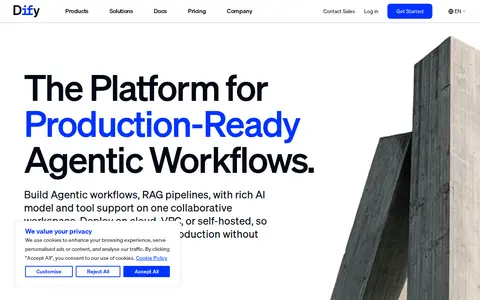
Dify is a platform for building agentic workflows on one canvas, covering agents, knowledge pipelines, models and tools. Deployments include Dify Cloud, a VPC or self-hosted setup, and a source-available Community Edition. The platform also supports RAG pipelines with AI model and tool support.
Directory
Search results
Published directory entries matching your search.
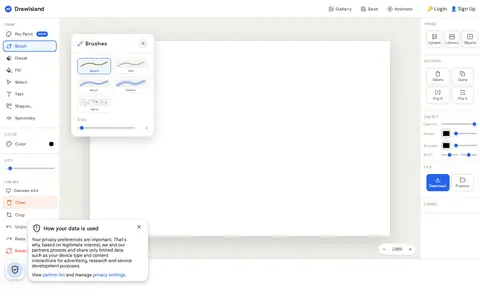
DrawIsland is a free online drawing tool for sketching, painting and digital art in the browser without a download. It includes multiple brushes, an eraser, flood fill, editable text, shapes, object selection with layer ordering, opacity, stroke and shadow controls, image adjustments and a layers panel on an 800 × 520 px canvas.
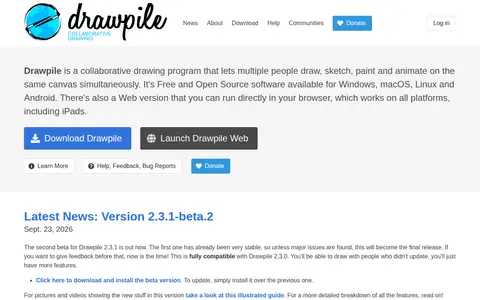
Drawpile is a free, open source collaborative drawing program that lets multiple people draw, sketch, paint and animate on the same canvas at once. It also works offline as a lightweight drawing program. It is available for Windows, macOS, Linux and Android, plus a browser version.
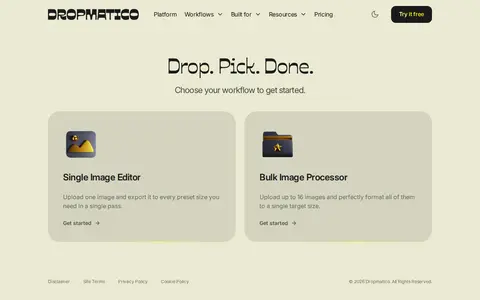
Dropmatico is a browser-based image workflow tool with two engines. The Single Image Editor renders one master image for each destination, while the Bulk Image Processor handles up to 16 images per session for a single destination. Processing runs locally via the Canvas 2D API, with no uploads, account or analytics. Presets cover 90+ destinations across 34 platforms.
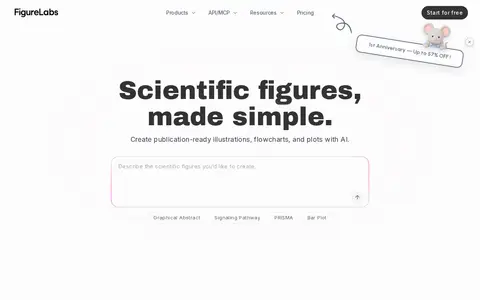
FigureLabs is an AI scientific figure generator that creates illustrations, flowcharts and plots. It accepts text, sketches, lab photos, spreadsheets, PDFs or reference figures as input, then allows editing of text, colors, backgrounds and resolution on a canvas. Figures can be exported as editable PPTX or SVG, or as PNG and JPG images.
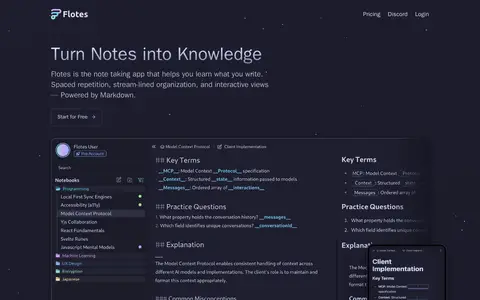
Flotes is a Markdown note-taking application designed for learning. It organizes notes into notebooks and offers study, summary, canvas and wiki views, including fill-in-the-blank study with spaced repetition. Notes are written in plain Markdown and can be imported, exported and shared.
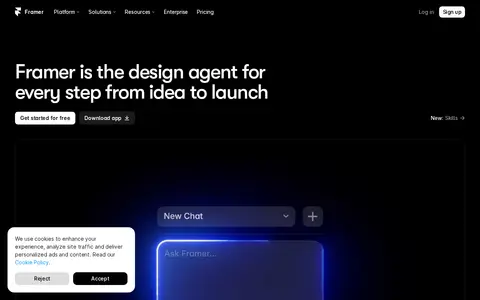
Framer is an AI design agent that assists users in designing and building projects on a canvas. It includes built-in hosting, security, analytics, content management system, and search engine optimization functionality, with all changes remaining editable.
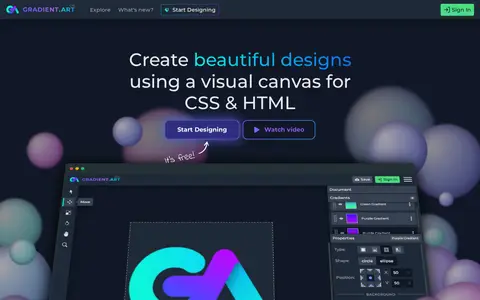
GradientArt is a CSS gradient editor with a visual canvas, a full path editor, alignment and spread tools, and clipping masks. It supports layers in folders and exports customizable HTML, CSS and SVG. Saving a project requires signing in; editing is not autosaving.
Imperial College London is a university focused on science, technology, engineering, medicine and business. It operates London campuses and an international network of hubs, and states that it uses science to tackle global challenges. Its study help pages cover undergraduate and postgraduate admissions, tuition fees, funding and scholarships, and student support. Canvas is the learning management system used at Imperial, replacing Blackboard.
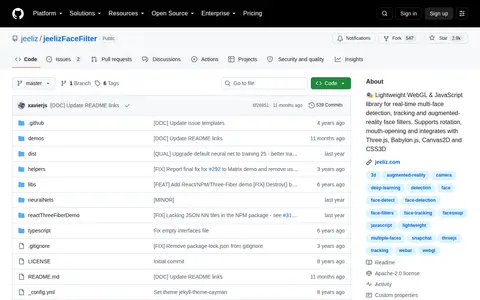
🎭 Lightweight WebGL & JavaScript library for real-time multi-face detection, tracking and augmented-reality face filters. Supports rotation, mouth-opening and integrates with Three.js, Babylon.js, Canvas2D and CSS3D
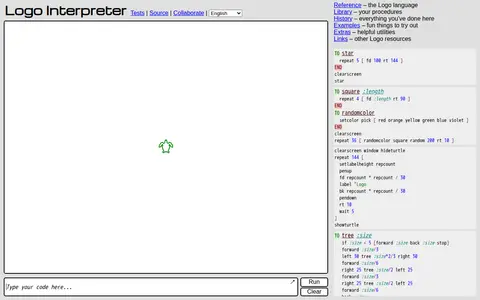
A browser-based Logo interpreter with a reference for the Logo language, a library for user procedures, a command history, and example programs. It requires browser canvas support and includes syntax highlighting by CodeMirror.
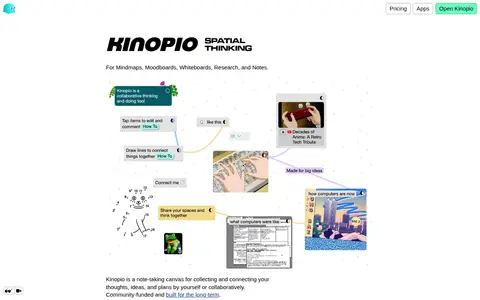
Kinopio is a spatial note-taking canvas for collecting and connecting thoughts, ideas, and plans, alone or collaboratively. Cards can be connected, grouped into boxes and lists, and edited in bulk by painting over items. It also offers an API for reading and editing cards and spaces, and help documentation. The site states it is free for 100 cards with no sign up required.
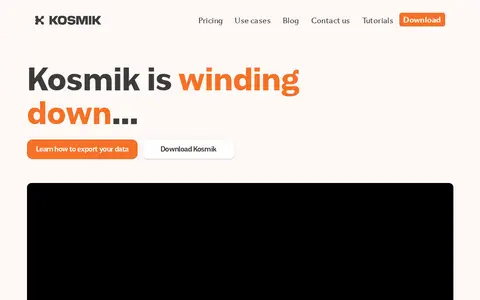
Kosmik is an AI-powered moodboard maker that provides an infinite canvas, built-in browser, and real-time collaboration features for creative workflows. After eight years of operation, the service has announced it will sunset on May 31, 2026, with resources available for users to export their data.
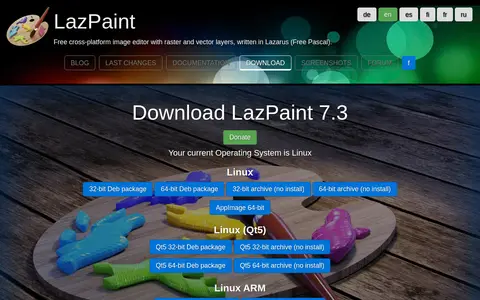
LazPaint is an image editor with a hybrid single-window or multi-window interface and a main drawing canvas. It offers drawing tools such as brush/pen, eraser and fill, plus selection tools, layers, transformations, color adjustments, filters and effects. Builds are listed for Windows, Linux, Linux ARM, UNIX, macOS and a Qt5 variant; panels can be floated, and a dark theme is available.
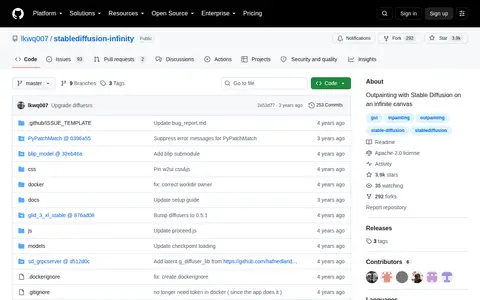
Outpainting with Stable Diffusion on an infinite canvas.
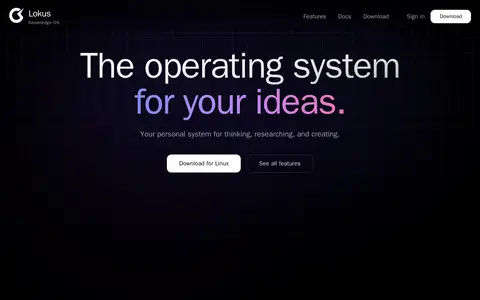
Lokus is a personal knowledge OS for macOS, Windows, and Linux. It offers a markdown editor, wiki links and backlinks, 2D and 3D graph views, an infinite canvas, a template system, and community plugins, and runs locally so notes remain available offline.
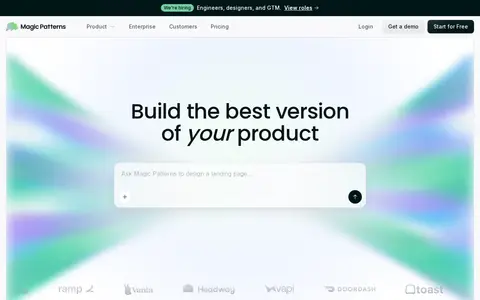
Magic Patterns is an AI design tool for product teams that turns prompts into production-ready UI. It can use existing components and design rules to generate prototypes, and offers an infinite canvas with collaboration. A changelog describes PDF uploads and export options.
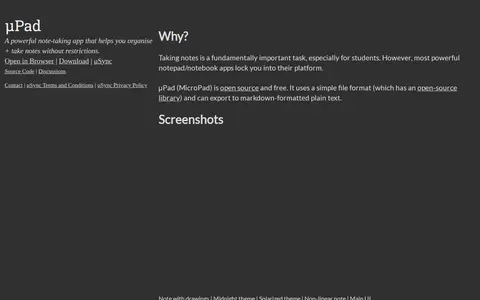
MicroPad is an open-source, free non-linear note-taking app with an infinite canvas for organising notes and notebooks. It runs in a web browser and on Windows, macOS and Linux, and supports μSync for synchronising notes across devices. It can import Evernote enex files and Markdown files, and export notes to markdown-formatted plain text.
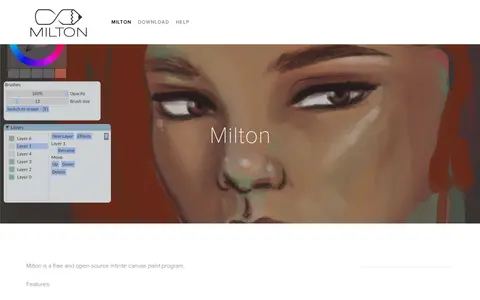
Milton is a free and open-source infinite canvas paint program for Windows, macOS and Linux. It works with vectors while feeling raster-based and saves changes automatically without a save button. Features include layers, blur, lines, unlimited undo and redo, and export to JPEG or PNG at any supported resolution.
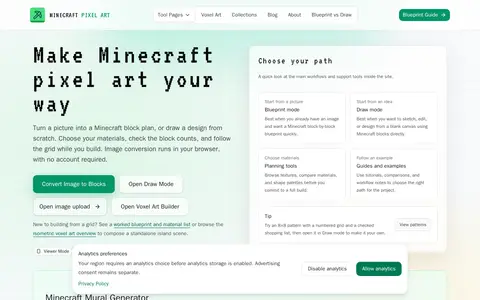
Minecraft Pixel Art is a site for planning and building Minecraft block art. Blueprint mode converts an image into a block plan, while Draw mode starts from a blank canvas. Planning tools include material browsing, block counts, shopping lists and palette filters. Image conversion runs in the browser with no account required. Plans can be shared by QR to a phone or exported.
Minimator is a minimalist graphical editor that runs in the browser and on the go. Drawings are made of lines on a grid-based canvas, and the lines are limited to vertical and horizontal lines and quarter circles.
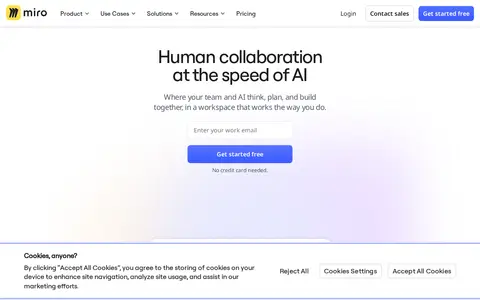
Miro is an AI-powered visual innovation workspace designed to speed up product development from ideation to launch. It helps align teams, break down tool silos, and deliver customer-needed products, with features including an intelligent canvas, AI workflows, connectors, and an MCP server, supporting use cases such as research, roadmap planning, diagramming, and workshops.
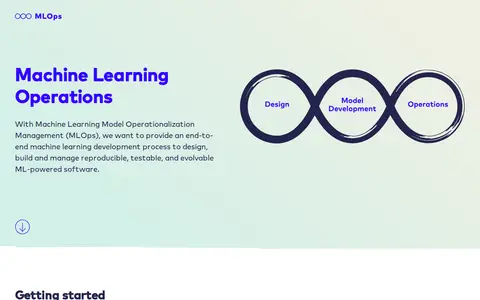
ML-Ops is a site about Machine Learning Operations. It covers motivation for MLOps, designing ML-powered software, the end-to-end ML workflow lifecycle, three levels of ML-based software, MLOps principles, CRISP-ML(Q), the MLOps Stack Canvas and ML model governance. It describes MLOps as aiming to unify the release cycle for machine learning and software.
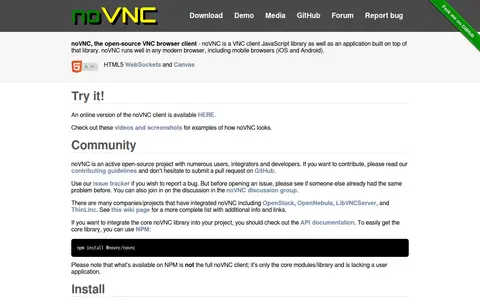
noVNC is an open-source VNC browser client, distributed as a JavaScript library and an application built on it. It runs in modern browsers, including mobile browsers on iOS and Android, and uses HTML5 WebSockets and Canvas. It requires a browser with support for modern features and does not work in Internet Explorer. The license is MPL-2.0.