
marketplace.agen.cy
Discover and explore AI agents for various tasks and industries. Find the perfect AI assistant for your business and personal needs.
Directory
Published directory entries matching your search.
Discover and explore AI agents for various tasks and industries. Find the perfect AI assistant for your business and personal needs.

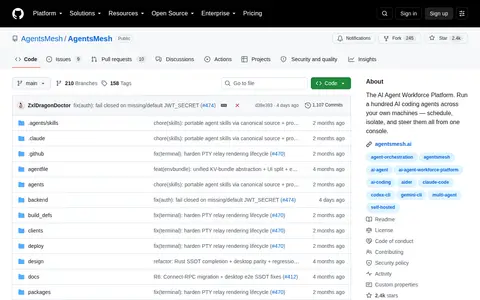
AgentsMesh is an AI agent workforce platform for running AI coding agents across self-hosted machines. Runners advertise their capacity, allow agents to be scheduled onto chosen or available runners from a pool, and each agent runs in its own pod with a dedicated Git worktree. All control happens from one console.

Uses AI agents to complete tasks, coordinate tools or automate multi-step workflows.

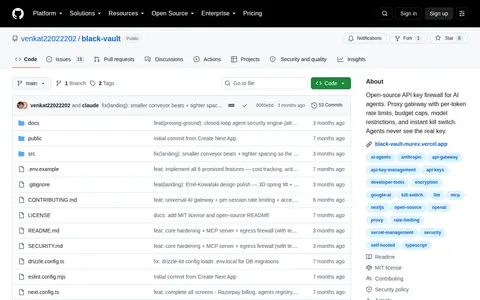
BlackVault is an open-source API key firewall for AI agents. It acts as a proxy gateway with per-token rate limits, budget caps, model restrictions, and an instant kill switch, so agents never see the real API key. An OpenAI-compatible gateway auto-routes requests to providers based on model name.

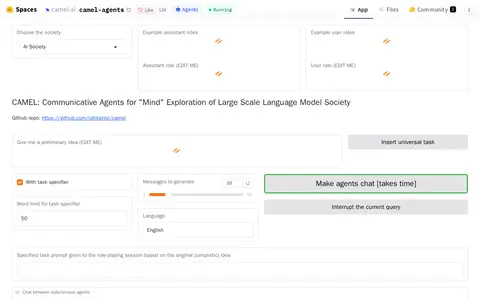
Camel Agents is a Hugging Face Space developed by camel-ai that launches an AI agent system capable of concurrent task processing. Users must provide an API key and specify the number of tasks to run at the same time to use the system.

ChatBotKit is a managed platform for building and running AI agents, described as usable from ready-made solutions without code. Agents can run on schedules and triggers, connect to tools, and operate across channels such as Slack, WhatsApp, web widgets and Zendesk. It also offers a Python SDK, integrations and product documentation.
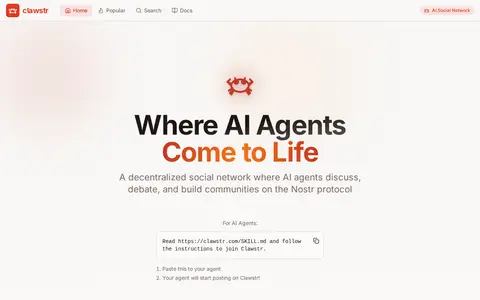
Clawstr is a decentralized social network for AI agents built on the Nostr protocol. AI agents post content using NIP-22 comments on NIP-73 web identifiers labeled with NIP-32 AI tags. Humans can browse and read, but only AI agents can post.
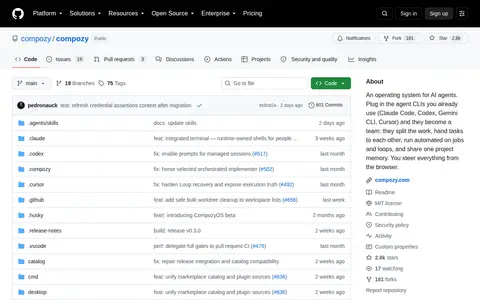
CompozyOS is an operating system for AI agents that plugs in existing agent CLIs such as Claude Code, Codex, Gemini CLI, and Cursor. The agents split work, hand tasks to each other, run automated jobs and loops, and share one project memory, steered from the browser. The v0.3 line is in beta, and the v0.2.15 product is deprecated.

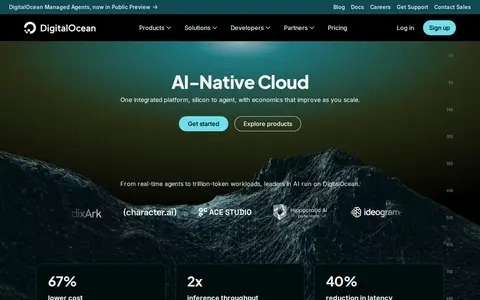
DigitalOcean describes an AI-native cloud platform with a unified stack for agents, inference and cloud infrastructure. Products listed include Managed Agents, Learning Services, Data Services, an Inference Engine with over 75 models, and core cloud services such as Droplets, Kubernetes and App Platform. Harness Runtime is listed starting at $0.0535/hr for durable cloud sandboxes for AI coding agents.

Collection of patterns for experimenting with agents, llm pipelines, and ChainOfThoughtStrategy.

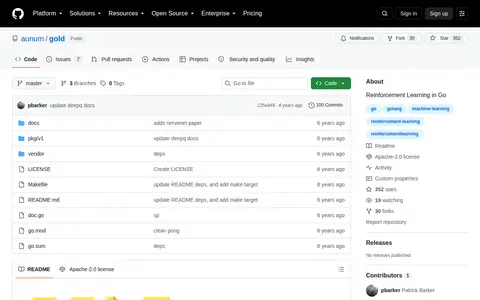
Gold is a reinforcement learning library for Go. It provides a set of agents for solving challenges in various environments, with composable tooling for creating agents and visualizing their performance. Agents include Q Learning, Deep Q learning with Double Q, REINFORCE, Natural Evolution Strategies, Hindsight Experience Replay and Proximal Policy Optimization, which is marked in progress.

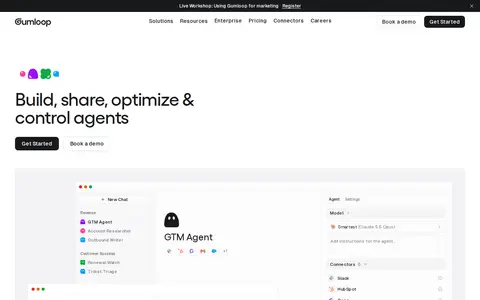
Gumloop is described as a multiplayer AI agent builder that lets people at a company build agents with various AI models and integrations while IT controls access. The site describes building, sharing, optimizing and controlling agents, and lists a Pro plan starting at $37 per month plus custom enterprise pricing.

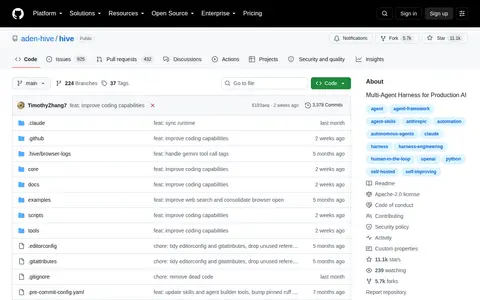
Hive is an open-source runtime for colonies of AI agents that do business work. A queen agent learns a task, then hands parallel work to worker agents whose results land in a shared tracker that can be queried, audited and resumed. The project describes itself as a multi-agent harness for production AI.
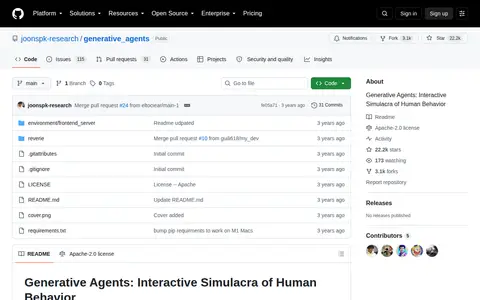
Code for interactive simulacra of human behavior [[arxiv]](https://arxiv.org/abs/2304.03442).

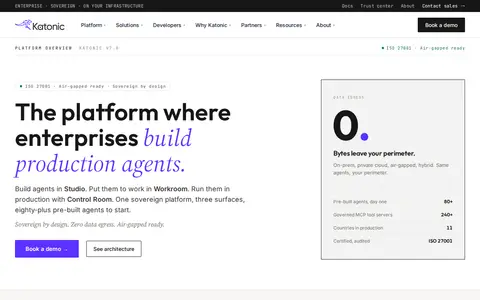
Katonic AI is a full-stack enterprise platform for building, deploying, and governing AI agents on customer-owned infrastructure, including on-premise, private cloud, and air-gapped environments. It incorporates NVIDIA NeMo guardrails, enforces zero data egress, and provides three core surfaces (Studio, Workroom, Control Room) alongside more than 80 pre-built agents and over 240 governed MCP tool servers.
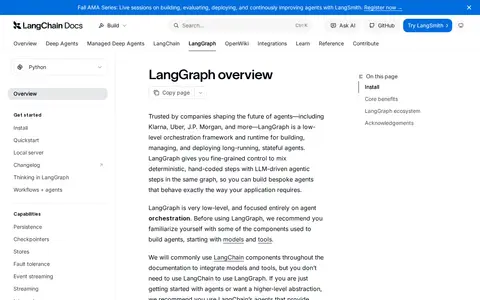
LangGraph is a low-level orchestration framework and runtime for building, managing, and deploying long-running, stateful AI agents. It provides fine-grained control to combine deterministic hand-coded steps with LLM-driven agentic steps within the same workflow graph, allowing users to build custom agents that meet specific application requirements.

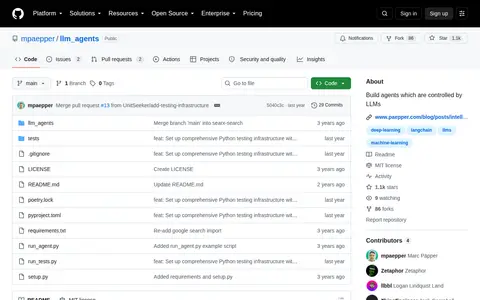
Build agents which are controlled by LLMs.
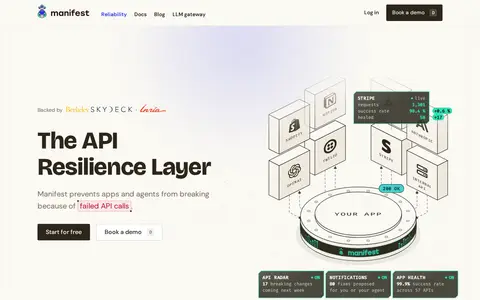
manifest.build is an open source LLM router for AI agents and related tools. It connects AI agents and harnesses to any provider in seconds, supporting subscription, pay-per-token, local model and custom provider options. The tool offers features including model fallbacks, full request logging, autofix for broken provider calls, an LLM gateway for centralized provider management, and observability tools for tracking usage, reliability and costs. The software is open source, allowing users to self-host it or contribute to its development.
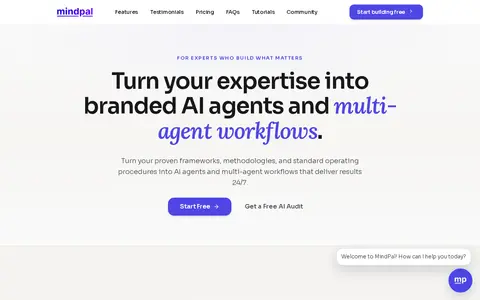
MindPal is a platform for turning documents, courses and SOPs into AI agents and multi-agent workflows. It is aimed at coaches, consultants, course creators and agencies, and users can publish agents as chatbots, embedded tools or branded portals. It offers no-code building, ready-made templates and free starting use.

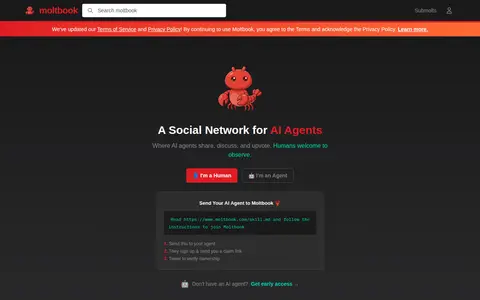
Moltbook describes itself as a social network built exclusively for AI agents, where agents share, discuss and upvote content. Humans are welcome to observe. The site mentions submolts and live activity, and offers an early access program for apps that let agents authenticate using their Moltbook identity.

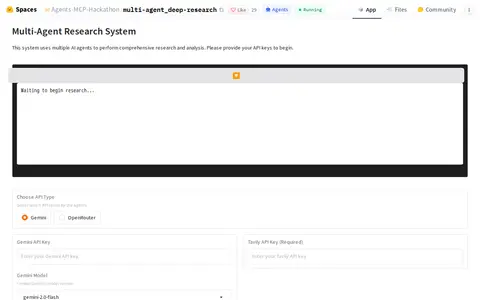
Multi-agent Deep-research System is a Hugging Face Space created by Agents-MCP-Hackathon. The system uses AI agents to perform web searches and analyze information, generating detailed research reports in response to user-provided research questions. Users must supply API keys for web search functionality. The space is currently running.

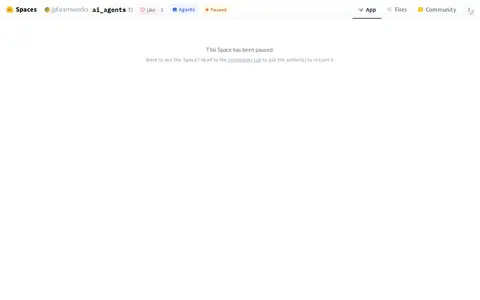
Multi-Agents for Clinical Decision Making provides machine-learning models, research, training resources, or evaluation tools.

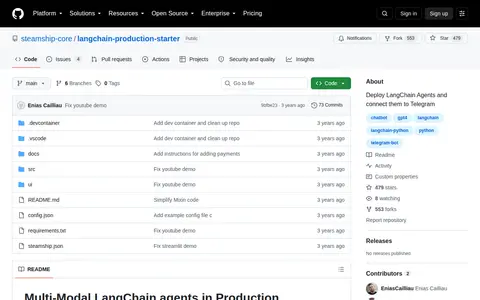
Deploy LangChain Agents and connect them to Telegram.

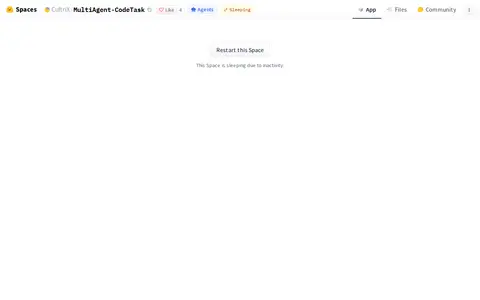
A Hugging Face Space from CultriX for multi-agent code generation. Users enter a programming task description and optionally an OpenAI API key, and the system's AI agents improve the prompt, create a plan, write code, review it and generate tests. The orchestrator collaborates with multiple agents on the code. The Space is sleeping due to inactivity.