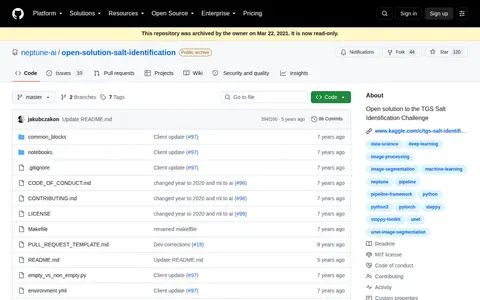

A repository archived by its owner and now read-only. It is an open solution to the TGS Salt Identification Challenge. The project is listed with data science and image segmentation topics. The readme states that support can no longer be provided.
Directory
Search results
Published directory entries matching your search.
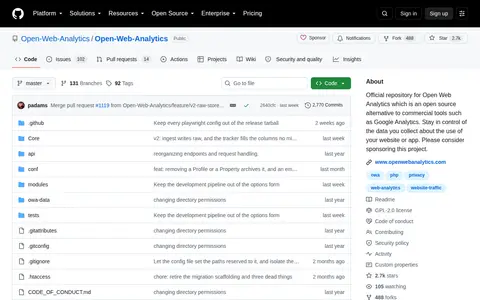
Official repository for Open Web Analytics which is an open source alternative to commercial tools such as Google Analytics. Stay in control of the data you collect about the use of your website or app. Please consider sponsoring this project.
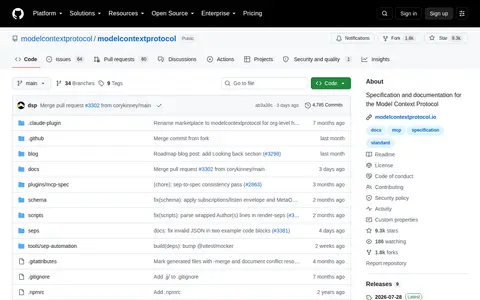
Model Context Protocol - An open standard for connecting AI models to external tools and data sources. MCP Registry.
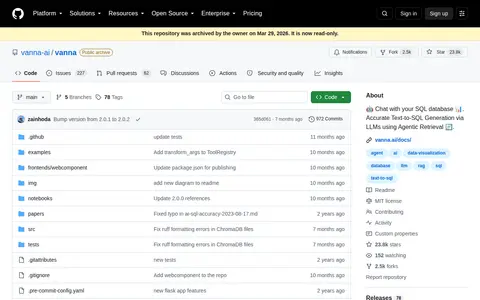
Vanna is an open source tool that enables users to interact with SQL databases via natural language. It uses large language models and agentic retrieval to generate accurate text-to-SQL queries.
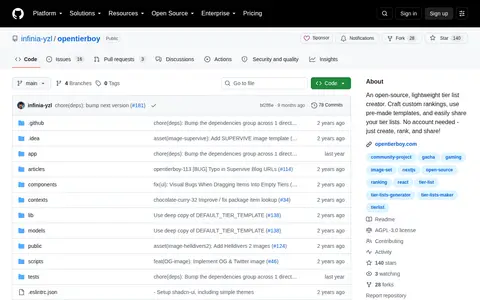
Opentierboy is an open-source, lightweight tier list creator. It enables users to craft custom rankings, use pre-made templates, share tier lists without requiring an account, upload personal images, share rankings via stateful URL or screenshot, and operates with no ads, tracking, or database, using only local storage for functionality.
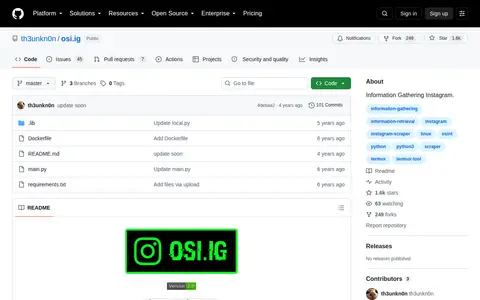
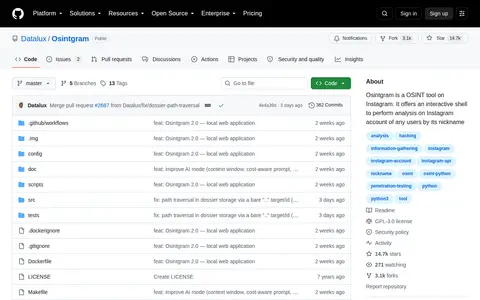
Instagram OSINT script for gathering public account information from profile data.
Instagram OSINT tool for collecting profile data, followers, posts, comments, and account signals.
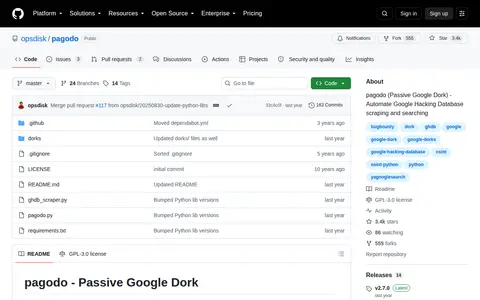
pagodo (Passive Google Dork) is a Python security tool that automates scraping of the Google Hacking Database and subsequent Google searches to identify potentially vulnerable web pages and applications. It replaces manual Google dork searches, consists of a dork retrieval component and a search execution component, uses the yagooglesearch library, and supports native HTTP(S) and SOCKS5 proxy support. Scraping Google Search results may violate Google's Terms of Service.
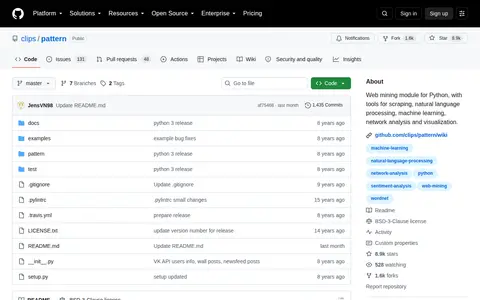
Pattern is a web mining module for Python with tools for data mining, natural language processing, machine learning, and network analysis and visualization. The repository is archived and no longer maintained, receiving no further updates, bug fixes or security patches.
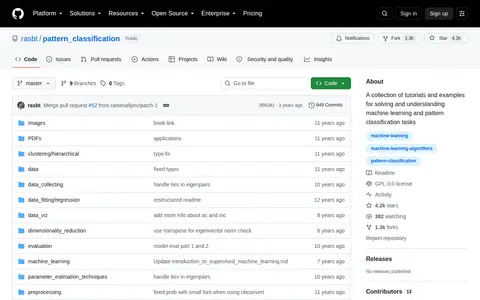
A collection of tutorials and examples for solving and understanding machine learning and pattern classification tasks. Materials are organized into sections covering preprocessing, model evaluation, parameter estimation, algorithms, clustering and data visualization.
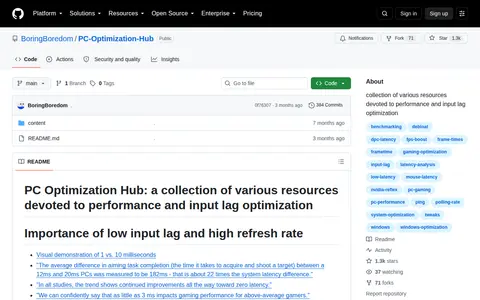
PC-Optimization-Hub is a GitHub repository collecting various resources devoted to performance and input lag optimization. It covers topics including benchmarking, debloat, DPC latency, frame times, polling rates and Windows optimization, and includes sections on data collection and physical setup.
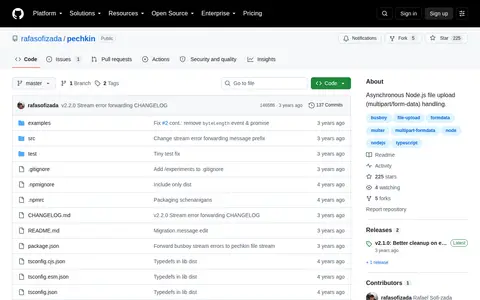
Pechkin is a Node.js library written in TypeScript for handling file uploads, meaning multipart/form-data requests. It is asynchronous and Promise- and AsyncIterator-based, built on busboy, and creates no temporary files and does not load files in memory. Configuration options can be overridden per field, and all fields in a request should come before any files.
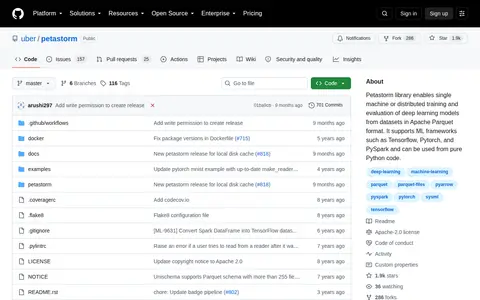
Petastorm is a library developed by Uber for deep learning model training and evaluation. It supports single-machine and distributed workflows with datasets in Apache Parquet format, is compatible with TensorFlow, PyTorch, and PySpark, and can be used via pure Python code.
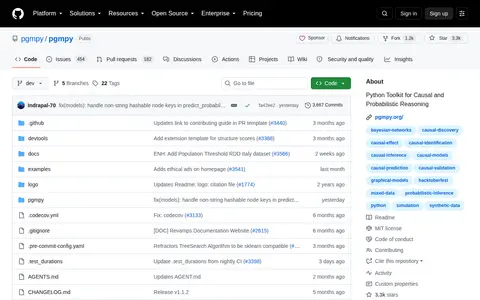
pgmpy is a Python toolkit for causal and probabilistic reasoning using graphical models. It implements data structures for models such as DAGs, PDAGs, MAGs, PAGs, Bayesian Networks, Dynamic Bayesian Networks and Structural Equation Models, with algorithms for tasks including causal discovery, causal identification, inference, model validation, parameter estimation and simulations. Algorithms follow a unified composable API and are scikit-learn compatible when possible. It is available on PyPI and conda.
pgvecto.rs is an open-source tool that provides scalable, low-latency, hybrid-enabled vector search for PostgreSQL. It is designed to enhance vector search capabilities without modifying the core database system, per its official GitHub repository.
Ploomber is a tool for building data pipelines. It offers a YAML API and a Python API, and its features include caching previous pipeline results and running on Kubernetes, Airflow, AWS Batch or SLURM. It can convert monolithic notebooks into modular pipelines. The repository was archived on Jul 12, 2025 and is read-only.
Polyaxon is a platform for building, training, and monitoring large-scale deep learning applications. It deploys into any data center or cloud provider and supports major deep learning frameworks such as Tensorflow, MXNet, Caffe, and Torch. It manages workloads with container and node management and offers hyperparameter tuning through experiment groups defining a search algorithm and search space.
Pose Search is a project hosted on GitHub under the repository x6ud/pose-search, associated with the demo site x6ud.github.io/pose-search. The repository includes project setup, development, and production build and minification functionality, with documentation for adding data to the project.
PowerShell is a cross-platform automation and configuration tool and framework for Windows, Linux and macOS. It includes a command-line shell, a scripting language and a framework for processing cmdlets, and is optimized for structured data, REST APIs and object models. The repository covers PowerShell 7.x and higher; changes are not ported back to Windows PowerShell 5.1.
pprof is a tool for visualization and analysis of profiling data
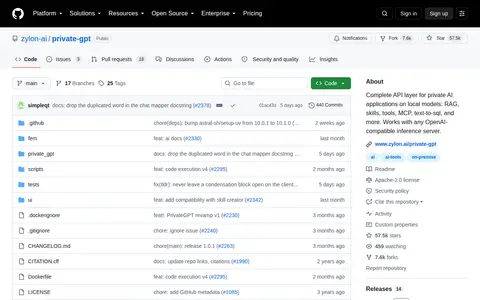
PrivateGPT is an open-source API layer for building private AI applications on local models, following the Claude API model. It provides a messages API, file and artifact ingestion, retrieval with citations and agentic RAG, built-in and custom tools, MCP connectors, structured database and CSV access, and embeddings. It connects to any OpenAI-compatible inference server and does not run models itself.
Build tool for data science pipelines.
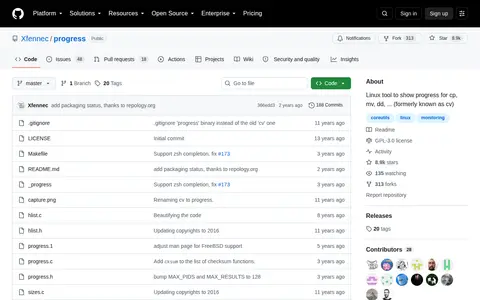
Progress is a small C command that looks for coreutils basic commands such as cp, mv, dd, tar, gzip and cat running on the system and displays the percentage of copied data. It can also show estimated time and throughput and provides a top-like monitoring mode. It works on Linux, FreeBSD and macOS.
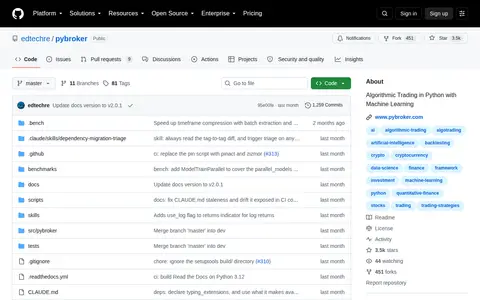
PyBroker is a Python framework for developing algorithmic trading strategies with a focus on machine learning. It provides a backtesting engine built in NumPy and accelerated with Numba, model training and backtesting using Walkforward Analysis, parameter optimization with Optuna, and access to historical data from Alpaca, Yahoo Finance, and AKShare. It supports Python 3.11+ on Windows, Mac, and Linux.